


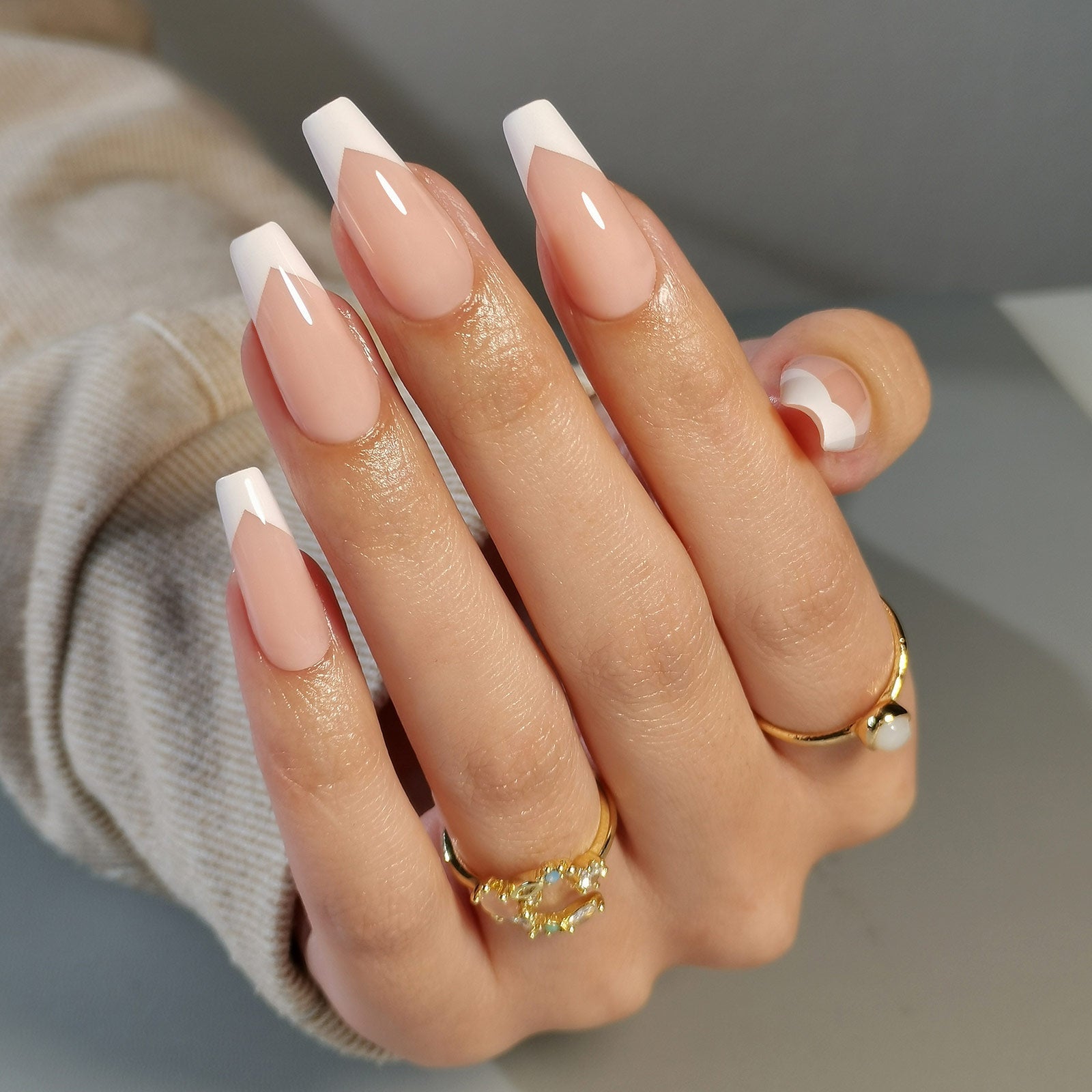











フレンチチップ プレスオンネイル(Press-on Nails):完全ガイド & おすすめベストセレクション 2026
著者:SHANGMENG Team — プレスオンネイル製造実績20年以上。
主なポイント: フレンチチップ プレスオンネイルなら、ネイリスト不要、UVランプ不要、60〜80ドルのサロン予約も不要で、サロンクオリティのフレンチマニキュアが自宅で10分以内に完成します。ABSプラスチックではなくソフトジェル素材を選び、16サイズすべてを合わせて甘皮から爪先までぴったりフィットさせ、10〜14日間長持ちさせたい場合は粘着タブ単体での使用を避けましょう。

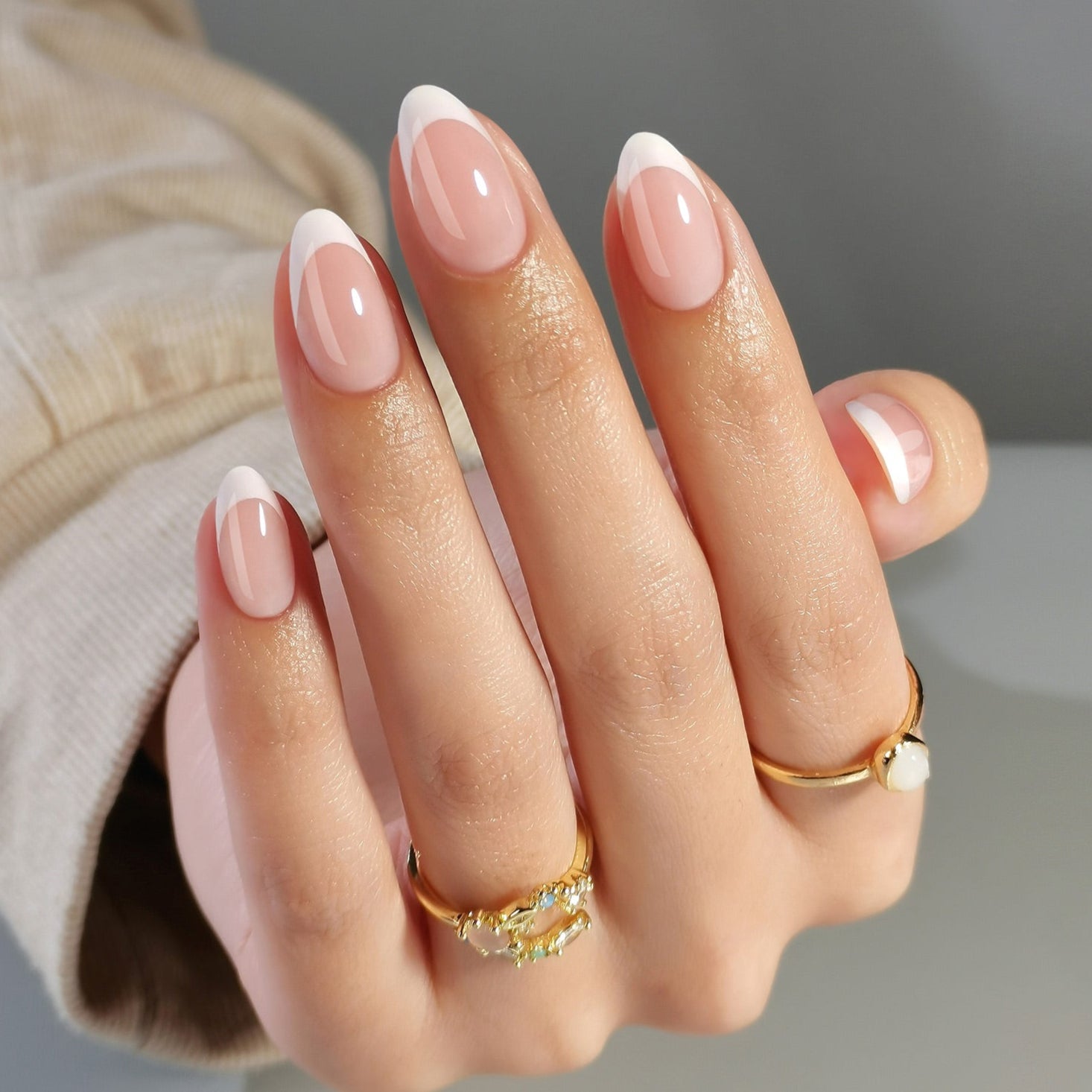
フレンチチップ プレスオンネイルは、シアーまたはヌードカラーのベースに、ホワイト(またはカラー)のチップがあらかじめデザインまたは成形された人工爪です。大人気のフレンチマニキュアスタイルを、貼るだけで簡単に楽しめます。ソフトジェル製のセットは10〜18ドルほどで、16サイズ・32枚(32pcs Nails · 16 Size)が含まれており、ネイルグルーを使用すれば10〜14日間持続します。世界中で最も愛されているネイルデザインを、最もコストパフォーマンス高く楽しむ方法です。
より広い背景知識として、自宅でのネイルケアとサロンの仕上がりを比較する際、米国皮膚科学会(AAD)による健康な爪の基本や人工爪によるダメージを減らすコツは、信頼できる独立した参考情報として役立ちます。
フレンチマニキュアは、40年以上にわたりサロンの予約リストのトップに君臨し続けています。その理由は、就職活動の面接、結婚式、ブランチ、デートなど、あらゆるシーンに完璧にマッチするからです。2024年から2026年にかけて変化したのは、その「チップ(先端)」自体です。クラシックなホワイトは、今やネイビーブルー、バーガンディ、クローム、マイクロライン、ダブルラインなど、十数種類以上あるバリエーションの1つに過ぎません。そしてプレスオン技術の進化により、ネイリストのようなブレのない手元がなくても、あの精密なスマイルラインを描くことができます。10本の爪すべてに、最初から完璧に均一なラインが施されているからです。
このガイドでは、購入者が知っておくべきすべての情報を網羅しています。プレスオンのフレンチチップとサロンの比較、比較表を交えた5つの主要スタイルバリエーション、爪の形に合わせたおすすめ、厳選された15のアイテム、美しいチップラインに仕上げるための貼り方、そして情報源を明記したFAQをお届けします。
フレンチチップ プレスオンネイルがサロンのフレンチに勝る理由

サロンでのフレンチマニキュアは、シアーなベースコートを塗った後、細いブラシで正確に白いエッジを描くという2ステップの塗装プロセスです。上手に行われればエレガントですが、忙しいスケジュールの中で疲れたネイリストが施術すると、チップのラインがブレてしまうことがあります。しかも、チップ(先端)がジェルよりも早く欠けてしまう仕上がりに、チップ(心付け)を払う前で60〜80ドルもかかります。
フレンチチップ プレスオンネイルは、サロンフレンチにおける3つの核心的な問題を解決します。
チップラインの美しさ。 すべてのプレスオン・フレンチチップは、徹底管理された環境下で、あらかじめチップが施された状態で製造されています。UV硬化ジェル、均一な厚み、完璧なスマイルラインの対称性を備えており、人の手によるブレがありません。その結果、サロンでの施術の8割以上よりも一貫して美しい仕上がりが得られます。
コストパフォーマンス。 SHANGMENGのフレンチチップ プレスオンネイル1セットの価格は、サロン1回の予約代金よりも安価です。1回着用するだけでも、そのお得さは一目瞭然です。複数のセットを交互に繰り返し使用すれば、毎月サロンに通う場合と比較して、年間500〜800ドルの節約になります。これは、Allure誌がプレスオンネイルについて取り上げた自宅での手軽さやスタイルの幅広さという魅力とも一致しています。
手軽さと自由度。 サロンのジェルフレンチは、UVランプでの硬化とアセトンによるオフが必要で、施術とオフのサイクルごとに最低45分はかかります。一方、プレスオンネイルなら、温水とキューティクルオイルを使えば5分足らずでオフでき、アセトンも必要ありません。
サロンフレンチがプレスオンに勝る唯一の点は、自爪に直接ペイントするため、より「本物感」があると感じる人がいることです。それを最優先するならサロンが適しています。しかし、一貫したクオリティ、低コスト、そして時間の節約を重視するなら、4つのカテゴリーのうち3つでプレスオンネイルが優位に立ちます。
フレンチチップの種類:5つのバリエーション比較

「フレンチチップ」というカテゴリーは、5年前と比べて格段に進化し、多様な広がりを見せています。ここでは、プレスオンネイル(press-on nails)形式で手に入る主な5つのバリエーションを比較します。
| スタイル | チップ(先端)の色 | チップの幅 | 最適な用途 | おすすめな人 |
|---|---|---|---|---|
| クラシックホワイト | ブライトホワイト | 標準(3〜5mm) | あらゆるシーン | すべての人 — 万能なスタート地点 |
| カラーフレンチ | ネイビー、バーガンディ、グリーン、ピンク | 標準(3〜5mm) | 季節感の演出、トレンドルック | カラーを取り入れたいすべての人 |
| クロムフレンチ | シルバー、ゴールド、ローズゴールド | 標準(3〜5mm) | イベント、写真撮影、夜のお出かけ | 華やかでドラマチックな印象にしたい人 |
| マイクロフレンチ | ホワイトまたはシアー | 極細(1〜2mm) | オフィス、控えめなスタイル | ミニマリスト、スクエアやスクエアオフの爪の形 |
| ダブルライン | ホワイト + アクセントライン | 2層の幾何学的デザイン | トレンド重視、イベント | 長めの爪の形(アーモンド、コフィン) |
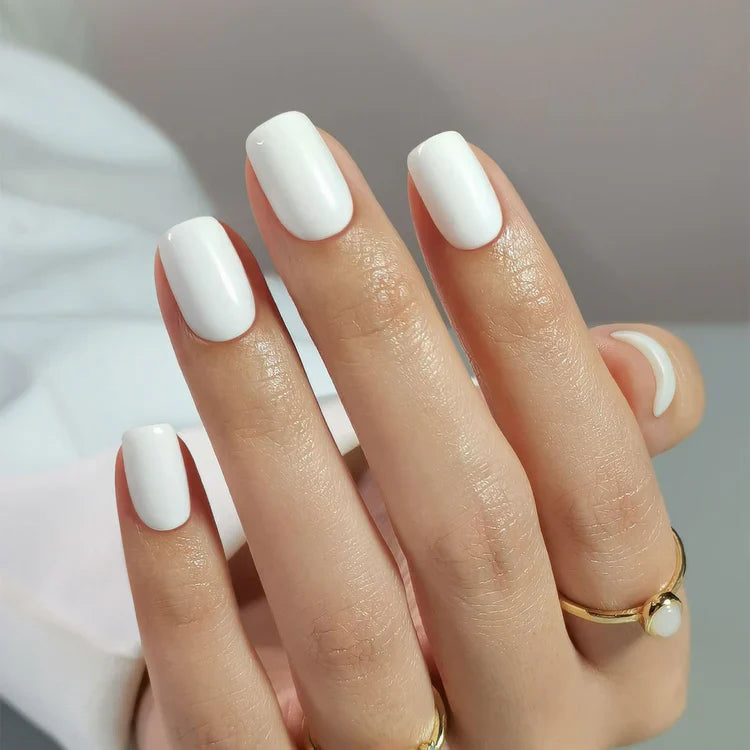
クラシックホワイトは、今でも定番のスタート地点です。フレンチチップのプレスオンネイルを初めて試すなら、まずはここから始めましょう。完成されたデザインであり、どんなシーンにも合わせやすく、カラーやクロムのバリエーションを試す前に、フィット感や持ちの良さを評価する基準になります。
カラーフレンチは、2025年にトレンドカテゴリーとして急上昇し、現在もその人気は衰えていません。Byrdieの年間ネイルトレンドレポートでは、カラーチップのフレンチマニキュアが2025年のネイルルック第1位に選ばれ、第3四半期と第4四半期にはバーガンディとネイビーの予約が殺到しました。デザインの形状はクラシックホワイトと全く同じで、違いは先端のカラーだけです。特にブルーやネイビーについて詳しく知りたい方は、blue French nail designsのガイドをご覧ください。
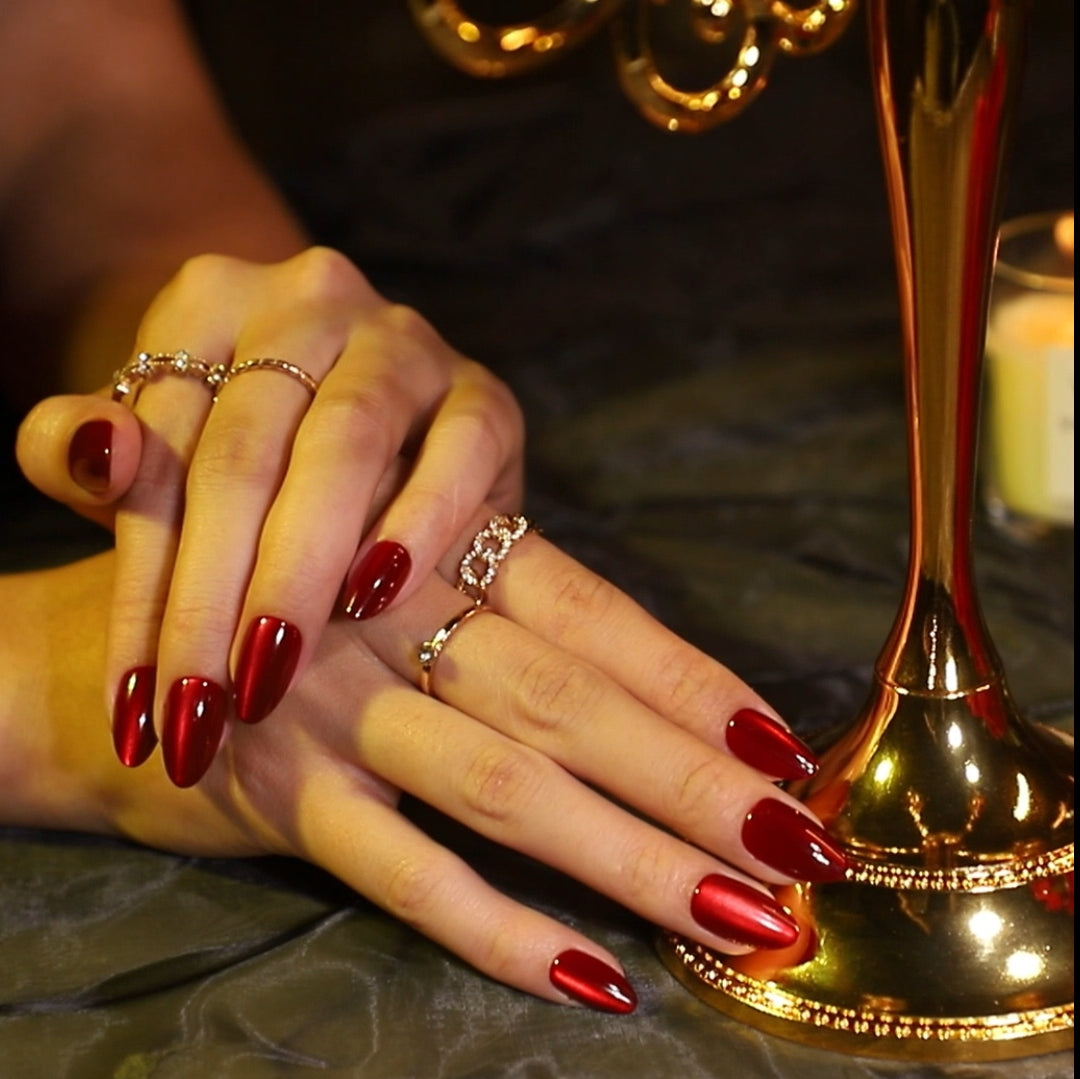
クロムフレンチは、フレンチマニキュアの洗練された美しいフォルムに、鏡のようなメタリックな輝きを融合させたスタイルです。クロム層はジェルの製造工程で直接UV硬化されているため、ジェルコートの上にパウダーを擦り付ける必要がなく、追加の手間なしで工場仕上げの美しい表面を手に入れることができます。2026年はシルバーが人気をリードしていますが、ファッション界におけるメタリックブームの継続に伴い、温かみのあるゴールドやローズゴールドも人気が急上昇しています。
マイクロフレンチは、先端の白いラインを1〜2mmにまで細くしたもので、爪先にかろうじて見える程度の、至近距離で気づく繊細なデザインです。これは「フレンチに見えないフレンチ(no-French French)」という、あえて控えめにする美学をプレスオンネイルで再現したものです。平らなスマイルラインが爪先の直線的な形状と美しく調和するため、スクエアやスクエアオフの爪の形で特に写真映えします。
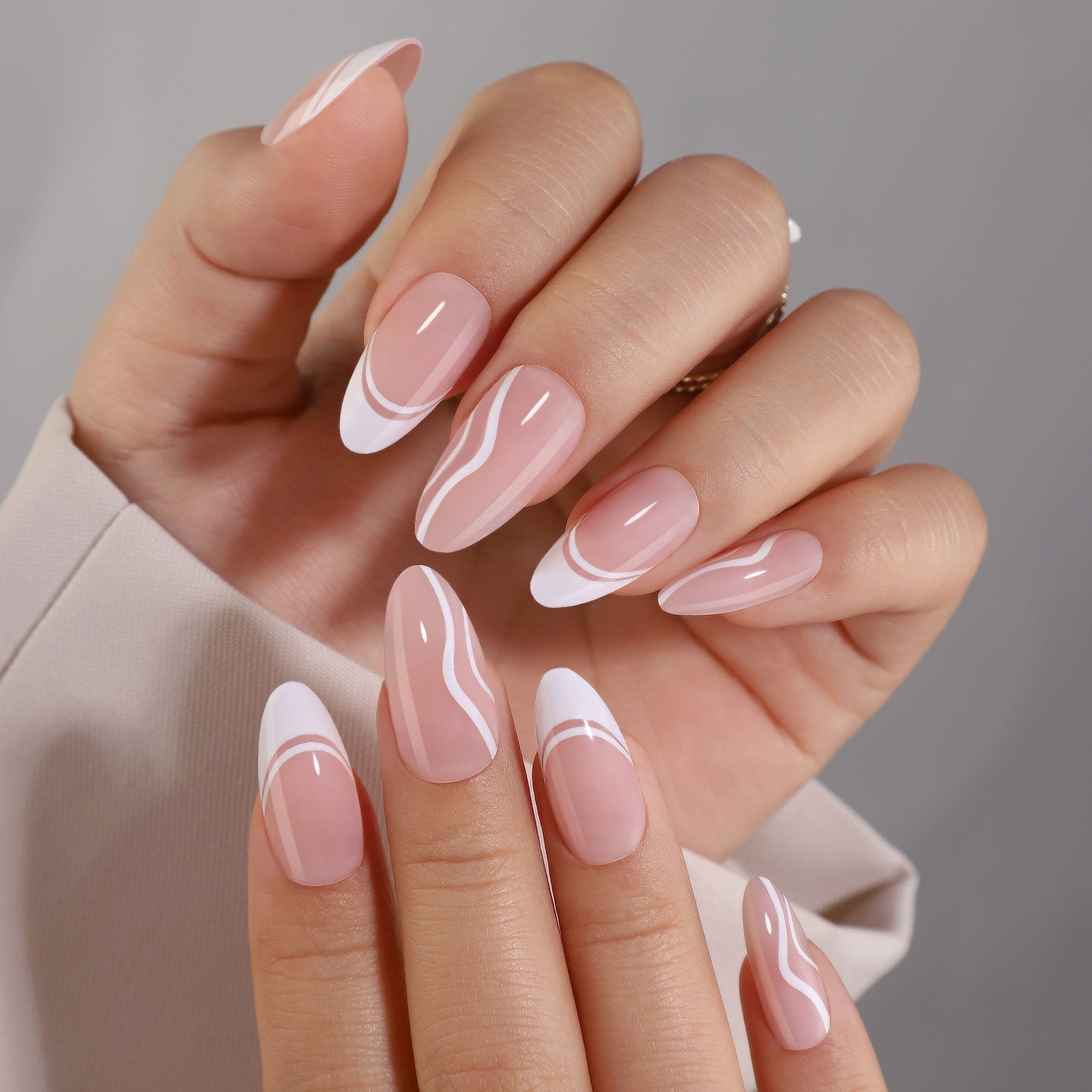
ダブルラインフレンチは、メインのチップラインのすぐ下、または平行に、通常はメタリックやコントラストカラーの2本目の細いラインを追加したスタイルです。トレンド感のあるデザインで、レイヤードされた幾何学デザインが映える、長さのあるアーモンド、コフィン、スティレットなどの爪の形によく映えます。
爪の形別:おすすめのフレンチチップ・プレスオンネイル
フレンチチップは、爪の形によって仕上がりの印象が大きく変わります。短くて平らな形には、マイクロフレンチやクラシックホワイトが最もよく合います。一方で、長くて存在感のある形には、より大胆なフレンチデザインが映えます。
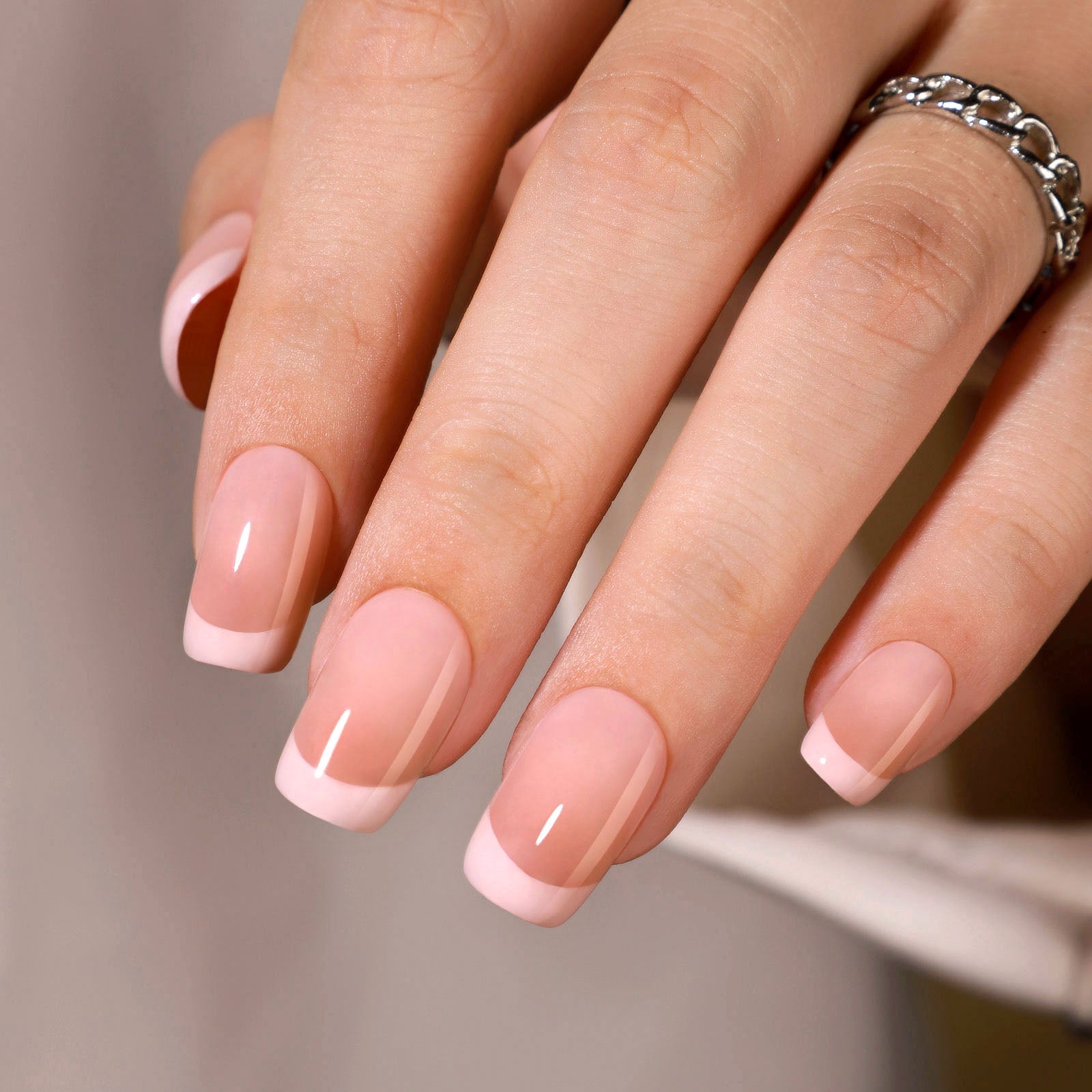
スクエア & スクエアオフ: クラシックフレンチの平らなスマイルラインは、スクエアネイルの直線的な先端と構造的に美しく調和します。クラシックホワイト、マイクロフレンチ、そしてカラーフレンチ(特にネイビーやバーガンディ)がよく似合います。非常に短いスクエアネイルの場合、デザインが窮屈に見えてしまうため、ダブルラインは避けた方が無難です。
アーモンド: すぼまったサイドと丸みのある先端を持つこの形は、ほぼすべてのフレンチバリエーションが映える万能なキャンバスです。カラーフレンチもクロムフレンチも、アーモンドの縦長シルエットによって、よりエレガントに仕上がります。デザインのインスピレーションや具体的なアーモンドフレンチのルックについては、20以上の実例を紹介しているfrench tip almond nails designs guideをご覧ください。
コフィン/バレリーナ: 平らな先端を持つコフィンは、ダブルラインフレンチに最適な形です。直線的なエッジが、2本目のラインをきれいに描くためのベースとなります。また、クロムフレンチも、広いミラーの表面積が光を多く反射するため、コフィン型で非常にドラマチックに映えます。
スティレット: 先の尖ったシャープな形状は、クラシックホワイトを合わせることで、攻撃的にならず、驚くほど繊細な印象を与えます。ダブルラインやクロムも、スティレットに合わせることでハイファッションな仕上がりになります。この形状は先端が構造的に細いため、より丁寧な装着が必要です。
ショート/エキストラショート: マイクロフレンチは、短い爪のために特別にデザインされたスタイルです。クラシックホワイトも合いますが、爪床に対して先端のライン幅を比例して細め(最大2〜3mm)に保つのがポイントです。カラーフレンチは、非常に短い爪だと色が主張しすぎてしまうことがあるため、淡いトーンのカラーを選ぶと良いでしょう。
さまざまな爪の形やシーンに合わせたフレンチチップのデザインを幅広く知りたい方は、デザインの歴史や季節ごとのバリエーションを詳しく解説しているfrench tip press-on nails guideをご覧ください。
2026年におすすめのフレンチチップ press-on nails 15選
これらのセレクトは、ブランド別ではなくバリエーション別に構成されています。それぞれのスタイルにおける具体的なビジュアルのゴールをイメージしやすくすることを目的としています。
クラシックホワイト(タイムレス)
1. クラシックホワイト・アーモンド: シアーピンクのベースにホワイトの先端、アーモンドシェイプ。定番中の定番。月曜日から日曜日まで、あらゆるシーンにマッチします。
2. ホワイトフレンチ・コフィン(ミディアム丈): コフィンシェイプにすることで、クラシックなホワイトが、派手すぎずこだわりを感じさせる印象に仕上がります。ミディアム丈(指先から5〜7mm)で実用性もキープ。
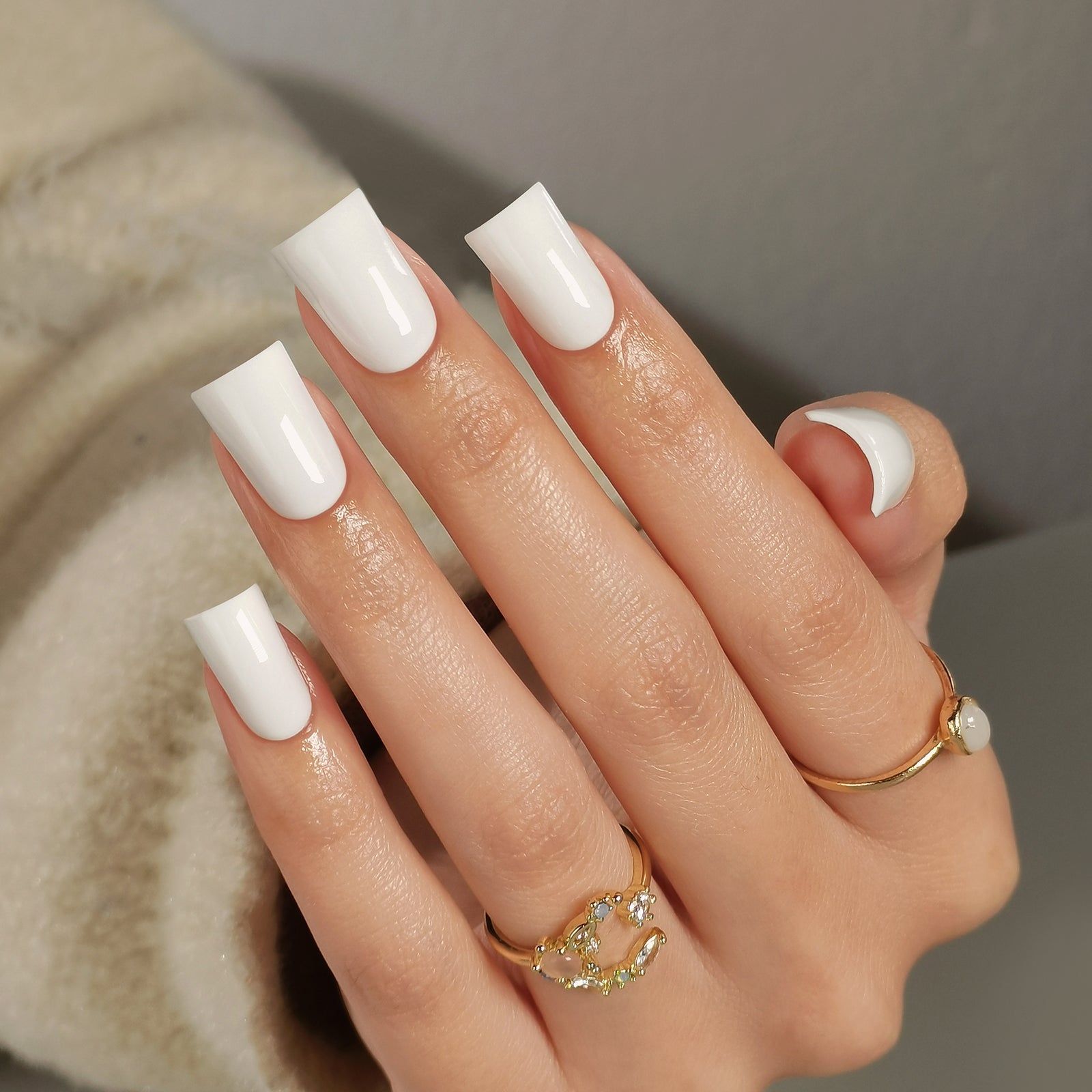
3. ホワイト・ショートスクエア: オフィスネイルの代表格。フラットなスマイルライン、スクエアシェイプ、2〜3mmのホワイトバンド。プロフェッショナルに見える清潔感と、手入れの行き届いた上品さを両立しています。
4. ミルキーホワイト・フレンチ: 明るいホワイトではなく、クリームやアイボリーに近いオフホワイト。柔らかなトーンにすることで、ベースから先端へのグラデーションがより自然になります。コントラストの強い明るいホワイトが浮いて見えがちな、色白の肌トーンの方に特におすすめです。
カラーフレンチ(トレンドフォワード)
5. ネイビー・アーモンド: ヌードベースに深みのあるネイビーの先端、アーモンドシェイプ。カラーフレンチのトレンドの火付け役となったスタイルです。デニムやネイビーのセットアップ、ホワイトやクリーム系のアイテムと相性抜群。SHANGMENGの2025年ラインナップでも、トップクラスの人気を誇るカラーフレンチです。
6. バーガンディ・コフィン: ミルキーなベースにバーガンディの先端、コフィンシェイプ。深みのあるワインカラーが、クラシックなホワイトよりもドラマチックなフレンチ構造を演出します。季節を問わず、9月から4月まで長く楽しめます。
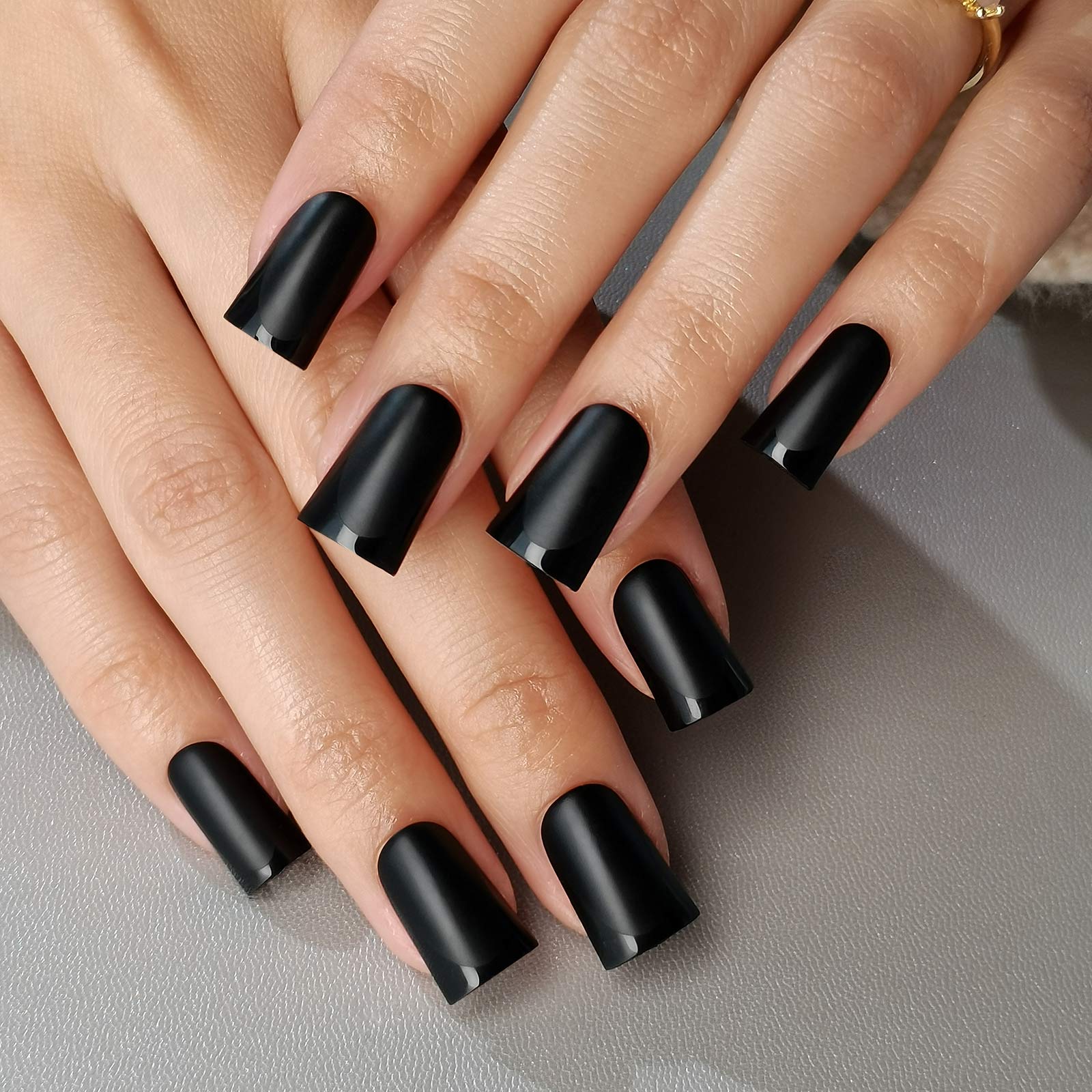
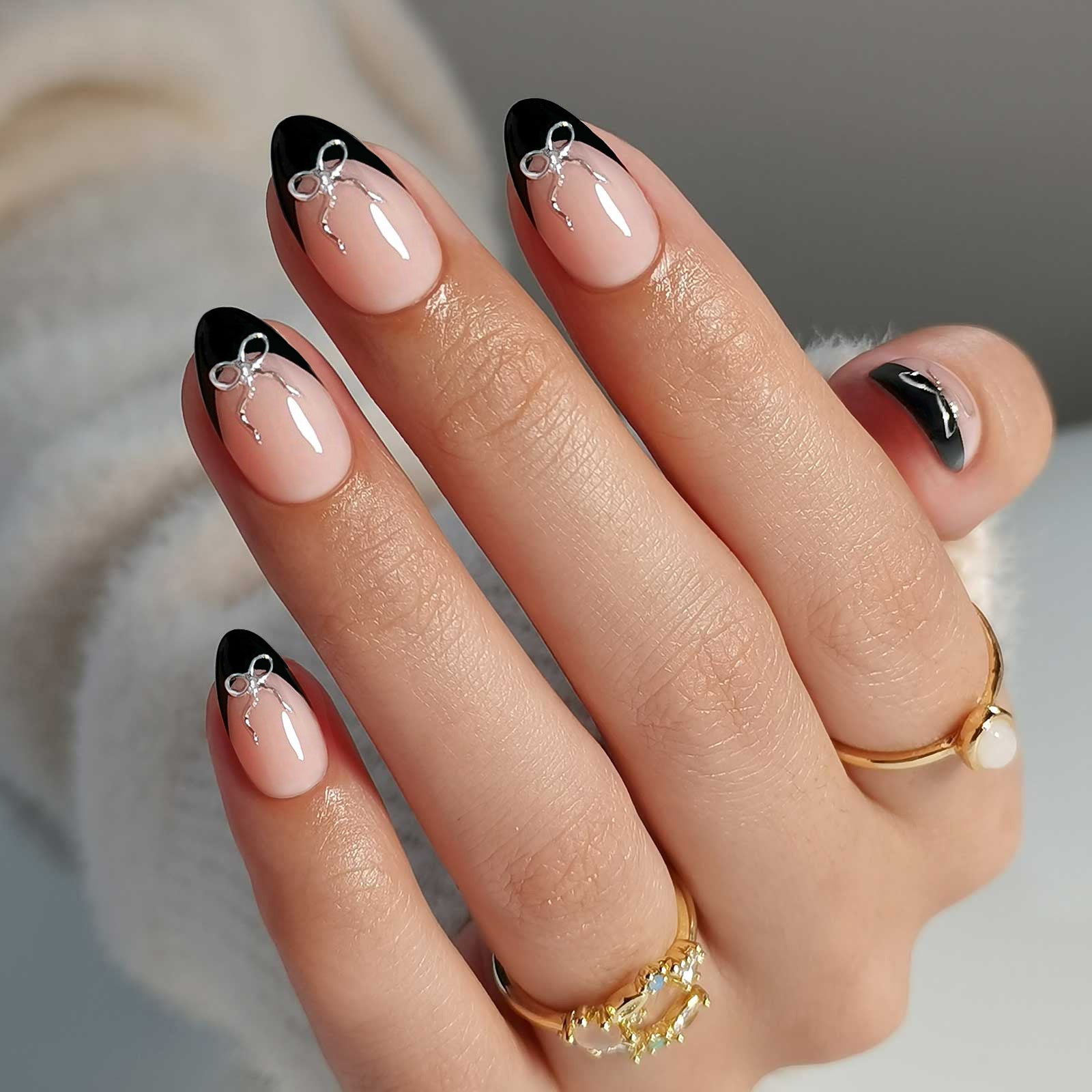
7. ブラックフレンチチップ・アーモンド: 黒の先端は、黒縁メガネがクラシックなスーツをモダンに見せるのと同じように、フレンチマニキュアを現代的にアップデートします。エレガントな構造はそのままに、コンテンポラリーな仕上がりに。さらに多くのブラックフレンチのバリエーションについては、black French tip nails guideをご覧ください。
8. セージグリーン・フレンチスクエア: ヌードベースに落ち着いたセージグリーン。2023年から人気が高まっているアースカラー・ニュートラルトレンドを取り入れたスタイルです。スクエアシェイプにすることで、セージグリーンがカジュアルになりすぎるのを防ぎます。
9. ブラッシュピンク・アーモンド: 柔らかいダスティピンクの先端。ベースと同系色で、1〜2トーンだけ彩度を高くしています。控えめなフレンチでありながら、写真映えは抜群。カラーを主張させずに上品に仕上げたい、結婚式やフォーマルなイベントに最適です。
クロームフレンチ(エレガント&ドラマチック)

10. シルバークローム・コフィン: シアーベースにミラー仕上げのシルバーの先端、コフィンシェイプ。コフィンの平らで広い先端部分で、ミラー効果がより際立ちます。非常に写真映えするため、イベントや夜のお出かけ、手元が写真に写るシーンに最適です。
どれを最初に試すべきか迷っていますか?フィット感、仕上がり、持ちの良さ、価格など、あなたが重視するポイントを解決してくれるセットを選んでみましょう。


11. ゴールドクローム・アーモンド: 温かみのあるゴールドクロームが、クラシックなホワイトに代わる洗練された選択肢に。シルバーほどエッジが効きすぎず、マット系よりも華やか。11月から1月にかけてのプレミアムな雰囲気にぴったりですが、年間を通して愛用できる万能さも魅力です。
12. ローズゴールドクローム・スティレット: 温かみのあるメタリックカラーをスティレットシェイプに合わせることで、シルバーのスティレットほどキツい印象にならず、ファッショナブルに仕上がります。ローズゴールドの輝きが、シャープなフォルムを柔らかく見せてくれます。
マイクロフレンチ&ダブルライン(ミニマルから幾何学デザインまで)
13. マイクロフレンチ・スクオーバル: スクオーバルシェイプ(角を丸くした四角)に、ホワイトのラインを1〜1.5mmと極限まで細く施したデザイン。定番のフレンチは主張が強すぎるけれど、近くで見たときに「手入れされている感」を出したい方にぴったりです。スクオーバルチップが、極細ラインを意図的でおしゃれなデザインに見せてくれます。
14. ダブルライン ホワイト+ゴールド・アーモンド: 定番のホワイトフレンチのすぐ下に、細いゴールドのラインを重ねたデザイン。2本のラインが先端とベースを幾何学的にセパレートし、定番のフレンチとは一線を画す、こだわりのネイルアートとして映えます。ミディアムからロングのアーモンドシェイプに最適です。
15. レインボー マイクロフレンチ・ショートスクエア: ショートスクエアの爪に、ブラッシュからライラック、ミントへと色が移り変わる極細のグラデーションラインを施したスタイル。先端の面積が狭いためグラデーションが凝縮され、派手すぎず鮮やかに発色します。「さりげないけれど、しっかりおしゃれ」なスタイルとして、SNSでも高い人気を集めています。
フレンチチップのプレスオンネイルを美しく仕上げる貼り方
フレンチのプレスオンネイルのフレンチライン(スマイルライン)は、あらかじめ綺麗に描かれて固定されています。あなたの役割は、自爪の正しい位置にスマイルラインがくるように、プレスオンネイルを正確に配置することです。フレンチチップのプレスオンネイルで最も起こりやすい見た目の問題は「位置のズレ」ですが、これは事前の対策で防ぐことができます。
ステップ 1:爪の表面を整える。 甘皮を押し上げます。180グリットのバッファーで爪の表面を軽く磨きます。91%以上のイソプロピルアルコールを湿らせた糸くずの出ない布で拭き取ります。完全に乾かします。数時間前に塗ったハンドクリームの残りなど、少しでも油分が残っていると、密着力が低下し、プレスオンネイルが浮いてフレンチラインがズレる原因になります。
ステップ 2:接着前にサイズを合わせる。 接着剤をつける前に、各プレスオンネイルを自爪に合わせてみます。横幅は、皮膚に重なることなく、爪床の端から端までをカバーしている必要があります。プレスオンネイルの甘皮側の端は、甘皮ラインの上にのるのではなく、甘皮のカーブにぴったり沿うようにします。このステップは、特にフレンチチップにおいては妥協できません。サイズが合っていないと、指先に対するスマイルラインの位置が変わってしまうため、ズレがすぐに目立ってしまいます。
ステップ 3:自爪にのみグルーを薄く塗る。 ネイルグルーはプレスオンネイル側ではなく、自爪に塗ります。表面全体に薄く均一に広げ、端の方まで伸ばします。グルーが厚すぎると液だまりができ、プレスオンネイルが浮いてフレンチラインがズレる原因になります。
ステップ 4:甘皮側から爪先に向かってプレスする。 まず甘皮側の位置を合わせ、次に爪先に向かって押し下げます。30秒間しっかりと押し当てます。さらに、端や爪先に沿って、もう30秒間しっかりと圧力をかけます。フレンチのプレスオンネイルの爪先部分は、特にしっかりと密着させる必要があります。スマイルラインのエリアはネイルの本体部分とは構造的に異なるため、直接圧力をかけるのが効果的です。
ステップ 5:最初の2時間。 水、食器用洗剤、その他爪の間に入り込むようなものは避けてください。2時間経つと、グルーが部分的に硬化します。24時間で完全に定着します。プレスオンネイルと自爪の境目を軽くバッフィングすると、より境目がなじんで自然に見えるという方もいます。
SHANGMENG の Judge.me レビューに寄せられたお客様の声:"10日経ってもスマイルラインが完璧なままです。爪先から浮いて不自然に見えないか心配でしたが、ぴったりと密着したままでした。" このような持ちの良さは、偶然ではなく、正確なサイズ選びと丁寧なグルーの塗布によるものです。
プレスオンネイルをより長持ちさせるための完全ガイドは、how to make press-on nails last 2+ weeks をご覧ください。
プレスオンネイル vs セルフのフレンチネイル:本当に優秀なのはどっち?
自宅でフレンチネイルを仕上げるもう一つの選択肢は、ホワイトのマニキュアと細筆、またはフレンチネイル用ガイドテープを使って、自分で先端を塗ることです。技術的には可能ですが、ネイルコミュニティで最も多く寄せられる技術的な質問でもあります。なぜなら、多くの人にとって、これを毎回きれいに仕上げるのは非常に難しいからです。
| フレンチチップのプレスオンネイル | セルフのフレンチネイル(手描き) | |
|---|---|---|
| フレンチラインの均一さ | 10本すべてが工場クオリティの完璧さ | 完全に手の震えや器用さに左右される |
| 装着にかかる時間 | 10〜15分 | 30〜45分(乾燥時間を含む) |
| 必要な技術 | 不要 | きれいなスマイルラインを描くには中〜高度な技術が必要 |
| 持ちの長さ | グルー使用で10〜14日間 | 欠け始めるまで5〜7日間 |
| 1回あたりのコスト | $10–18 | $5–10(ポリッシュ+道具代)だが、やり直しの回数が増える |
| オフのしやすさ | お湯 + キューティクルオイル | アセトンベースの除光液 |
セルフで塗る方法は、普段から自分でネイルをしていて、手先が器用な人に向いています。それ以外の人、特に「一発で完璧に仕上げたい」という大切なイベントなどの場面では、プレスオンネイルの方が圧倒的に信頼できる選択肢です。プレスオンネイルのフレンチラインは、手描きではなく製造過程で作られているため、手の震えや疲労によって仕上がりが左右されることはありません。
セルフネイルのメリットは、プレスオンネイルのセットにはない、極細のライン幅や絶妙なカラーの組み合わせを自由に追求できる点です。例えば、非常にマニアックなマッシュルームグレーの極細マイクロフレンチにしたい場合は、自分で塗る必要があります。しかし、定番の美しいフレンチスタイルを、数あるデザインの中から選んで手軽に楽しみたいのであれば、プレスオンネイルの方が手描きよりも一貫して優れた仕上がりを提供してくれます。
フレンチチップを長持ちさせる方法
フレンチチップの press-on nails は、ワンカラーの press-on nails と比較して、もう一つ考慮すべき摩耗ポイントがあります。それが「先端(チップ)部分」です。爪の先端は最もよく使われる部位(キーボードを叩く、段ボールを開ける、物を拾うなど)であるため、より多くの物理的ストレスを受けます。ここでは、先端を保護する方法をご紹介します。
サイズ選びが最も重要な要素です。 サイドがぴったりフィットしていないフレンチチップの press-on nails は、まず先端から浮き始めます。端が物に引っかかることで、press-on nails を上方に押し上げるテコの力が働くためです。適切なサイズを選ぶことで、これを防ぐことができます。もしフレンチチップがいつも3〜5日以内に先端のラインから剥がれてしまう場合は、最も幅の広い爪のサイズを一段階下げてみてください。
境目にトップコートを塗る。 グルーが完全に硬化した後(24時間待ってください)、チップの境目部分にクリアトップコートを薄く塗り、フレンチの境目をまたいで自爪のほうまで少し伸ばして塗ります。これにより移行領域が密着し、先端の欠けを劇的に減らすことができます。
装着後にピンチテストを行う。 押し当てて固定した後に、親指と人差し指で先端を10秒間つまみ(ピンチし)、先端の端まで完全に密着していることを確認します。先端はグルーの中心から最も遠い位置にあるため、ここに直接圧力をかけることで、しっかりと接着させることができます。
爪先を道具代わりに使わない。 缶を開けるときはフレンチチップではなく、コインを使いましょう。タイピングはできるだけ指の腹で行います。これは技術というよりも意識の問題です。お気に入りのネイルを装着すると、直感的に手の動かし方が変わってくるはずです。
正しいサイズ選び、グルーの塗布、そしてトップコートを使用すれば、ソフトジェルのフレンチチップで10〜14日間の持ちを実現できます。デハイドレーター(乾燥剤)の使用、隙間の補修、お湯でのオフ方法など、持ちを延ばす9つのテクニックすべてに関する包括的な解説は、press-on nails を2週間以上長持ちさせる方法のフルガイドをご覧ください。
press-on nails 自体が初めての初心者の方は、フレンチチップのデザインに挑戦する前に、装着の基本概念を解説している 初心者向け press-on nails ガイド をご覧ください。
関連コレクション
あなたのスタイルにぴったりの press-on nails を見つけるために、厳選されたコレクションをご覧ください:
よくある質問(FAQ)
フレンチチップの press-on nails とは何ですか?
フレンチチップの press-on nails は、シアーまたはヌードのベースに、ペイントされた先端(クラシックなホワイトのほか、現在はカラーやメタリック仕上げもあります)というフレンチマニキュアのルックを再現した、すぐに貼れる接着タイプのデザイン済みのつけ爪です。複数のサイズにわたる24〜32枚のネイルセットで提供され、15分未満で装着でき、ネイルグルーを使用すれば10〜14日間持続します。UVランプも、ネイリストの技術も、アートのスキルも必要ありません。先端のラインは工場で仕上げられているため、多くの場合、サロンで手描きされるフレンチよりも均一で美しい仕上がりになります。米国皮膚科学会(AAD)によると、正しく装着および除去すれば、press-on nails はジェルやアクリルネイルに代わる安全な選択肢です。
フレンチチップの press-on nails はどのくらい持ちますか?
ネイルグルーを使用し、適切な事前準備を行えば、ソフトジェルのフレンチチップ press-on nails は10〜14日間持続します。ABSプラスチック製のセットは通常7〜10日間持続します。グルーを使用しない粘着シール(ネイルチップ用両面テープ)の場合は、通常の条件下で3〜5日間持続します。重要なポイントは、自爪の準備(装着前のアルコール綿での拭き取り)、サイズ選び(press-on nails が爪床にぴったりフィットしていること)、そして装着後最初の24時間のケア(長時間の水濡れを避けること)です。フレンチの press-on nails の先端部分は、ワンカラーのネイルよりも物理的なストレスを受けやすいため、装着から24時間後にスマイルラインの境目にクリアトップコートを塗ることで、先端の美しさを数日間長持ちさせることができます。
ホワイト以外の色のフレンチチップ press-on nails はありますか?
はい。カラーフレンチチップは、現在最も急速に成長しているネイルトレンドの一つです。ネイビー、バーガンディ、ブラック、セージグリーン、ベビーブルー、ブラッシュピンク、クロームメタリックなどが、press-on nails のフォーマットで幅広く展開されています。形状はクラシックなホワイトとまったく同じで、先端のピグメント(色)だけが異なります。カラーフレンチチップは、フレンチマニキュアの構造的なエレガンスに季節のカラーを取り入れたスタイルとして、Byrdie や Allure によって2025〜2026年のナンバーワンネイルトレンドに選ばれました。SHANGMENG では、複数のネイルシェイプでネイビー、ブラック、メタリッククロームのバリエーションをご用意しています。
フレンチチップの press-on nails に最適な爪の形(シェイプ)は何ですか?
クラシックなホワイトフレンチはどんな形にも合いますが、形によって印象が変わります。スクエアやスクオバルは、フラットなスマイルラインを建築的でシャープに見せ、アルモンドはエレガンスと指先を長く見せる効果をプラスします。コフィンは、先端の平らな面積が広いため、クロームやダブルラインのデザインが特に映えます。最も万能なフレンチチップ press-on nails の体験としては、アルモンドが最初のシェイプとして最適です。どんな長さでも機能し、ほとんどの手のタイプに馴染み、マイクロフレンチからダブルラインまで、あらゆるフレンチのバリエーションに対応します。シェイプごとの具体的なデザインの組み合わせについては、専用の フレンチチップ アルモンドネイル ガイド をご覧ください。
自爪を傷めずにフレンチチップの press-on nails を外すにはどうすればよいですか?
指先をぬるま湯に10〜15分間浸します。爪の端の周りにキューティクルオイルを塗り、木製のウッドスティック(キューティクルプッシャー)を使って、サイドから優しく press-on nails を持ち上げます。先端から引っ張ったり、金属製の道具でこじ開けたりしないでください。グルーの接着力は端が最も弱いため、サイドからアプローチするのが効果的です。簡単に剥がれない場合は、無理に剥がそうとせず、さらに5分間お湯に浸してください。取り外した後は、自爪にキューティクルオイルをマッサージするように塗り、次の装着まで24〜48時間休ませてください。グルーで接着した press-on nails の場合、ジェルのオフとは異なり、アセトンは必要ありません。この方法であれば、自爪を傷つけることはありません。
フレンチチップの press-on nails は短い爪にも合いますか?
はい。マイクロフレンチの press-on nails は、短い爪の長さのために特別にデザインされています。先端のライン幅が1〜2mmに狭められており、短い爪床に対してプロポーションが最適化されています。短い爪で標準的なクラシックホワイトフレンチを使用する場合は、爪床の幅に対してホワイトのライン幅を最大2〜3mmに抑えるようにしてください。非常に短い長さでの主張の強いカラーフレンチ(バーガンディ、ネイビーなど)は避けてください。先端とベースの比率により、カラーが綺麗に映えにくくなります。ショートスクエアやスクオバルは、マイクロフレンチやクラシックホワイトを最もエレガントに引き立てます。すべてのスタイルにおける短い爪の選択肢を幅広く見るには、長さごとの推奨事項をカバーしている フレンチチップ press-on nails スタイルガイド をご覧ください。
情報源:米国皮膚科学会(press-on nail の安全性ガイドライン)、Byrdie 2025–2026年ネイルトレンドレポート(カラーフレンチチップのトレンドランキング)、Allure ネイルケアコスト分析 2025(サロンと自宅でのコスト比較)。
シェア