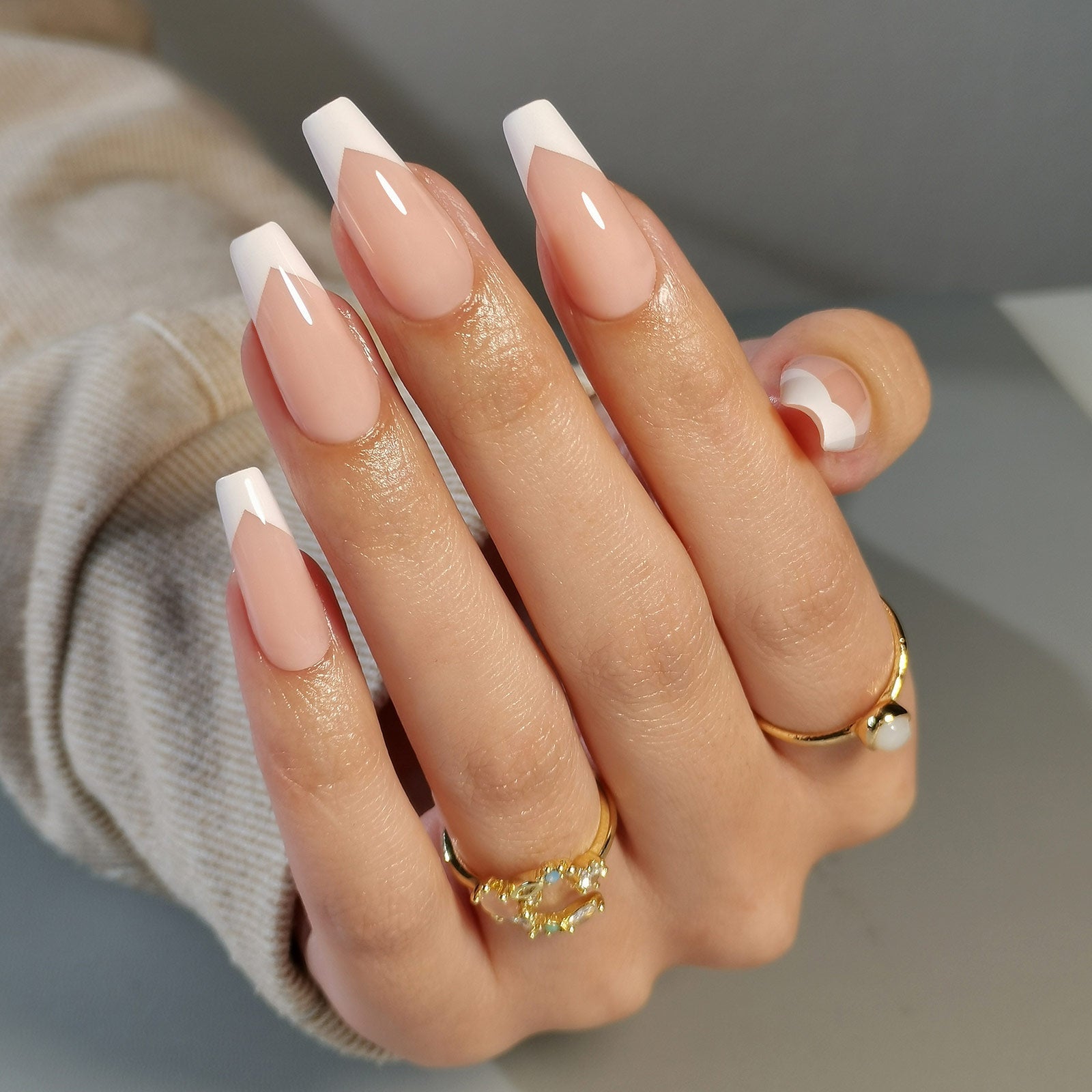
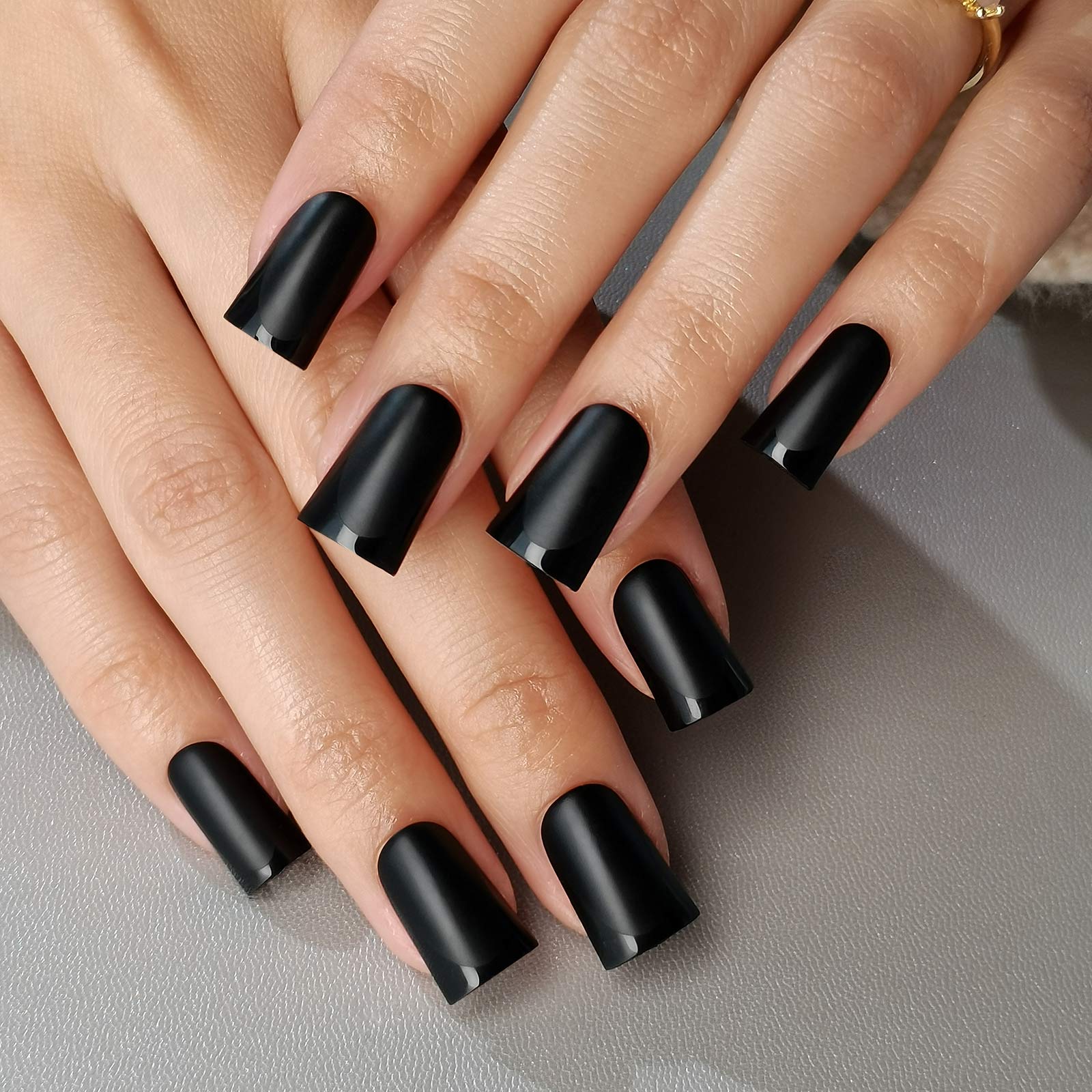
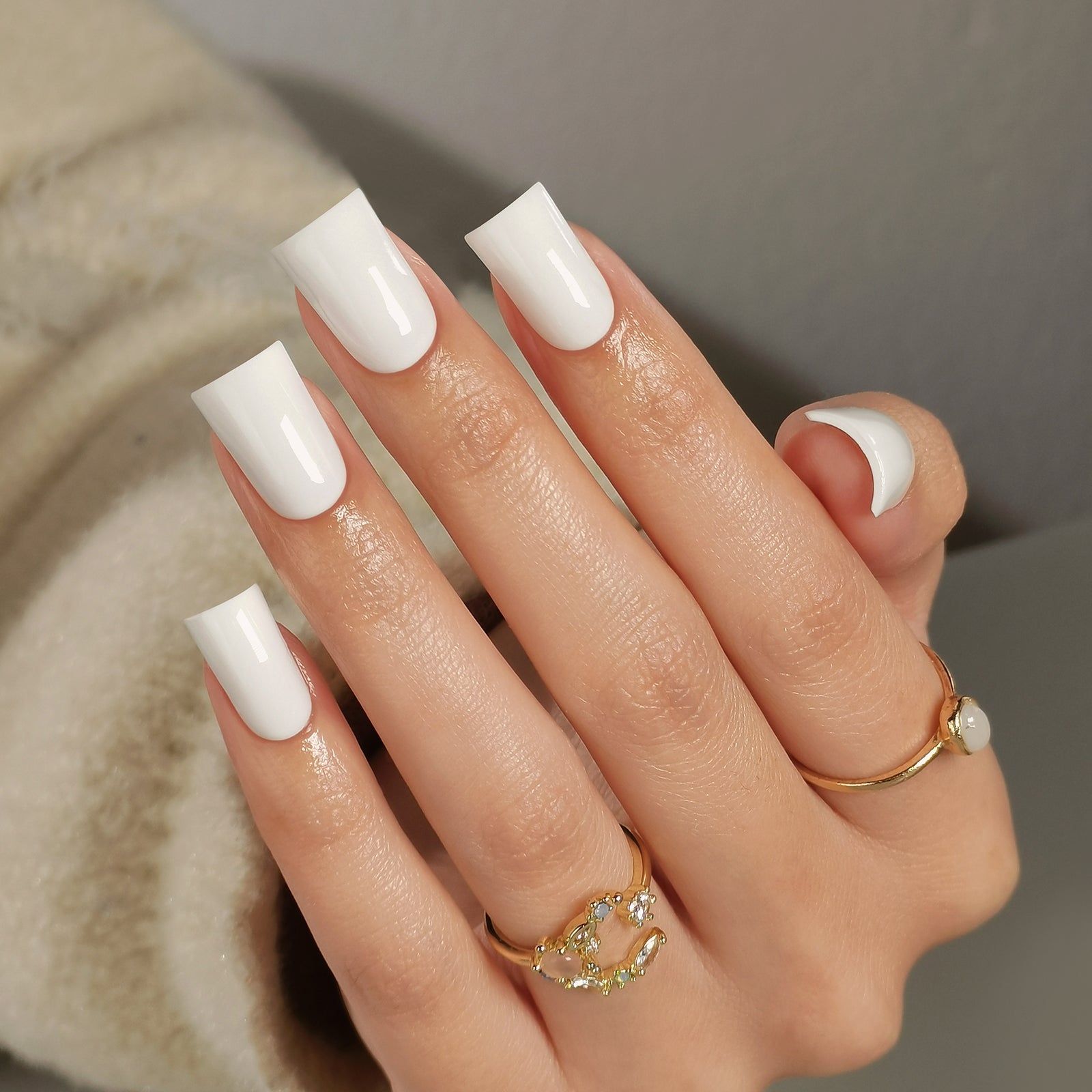
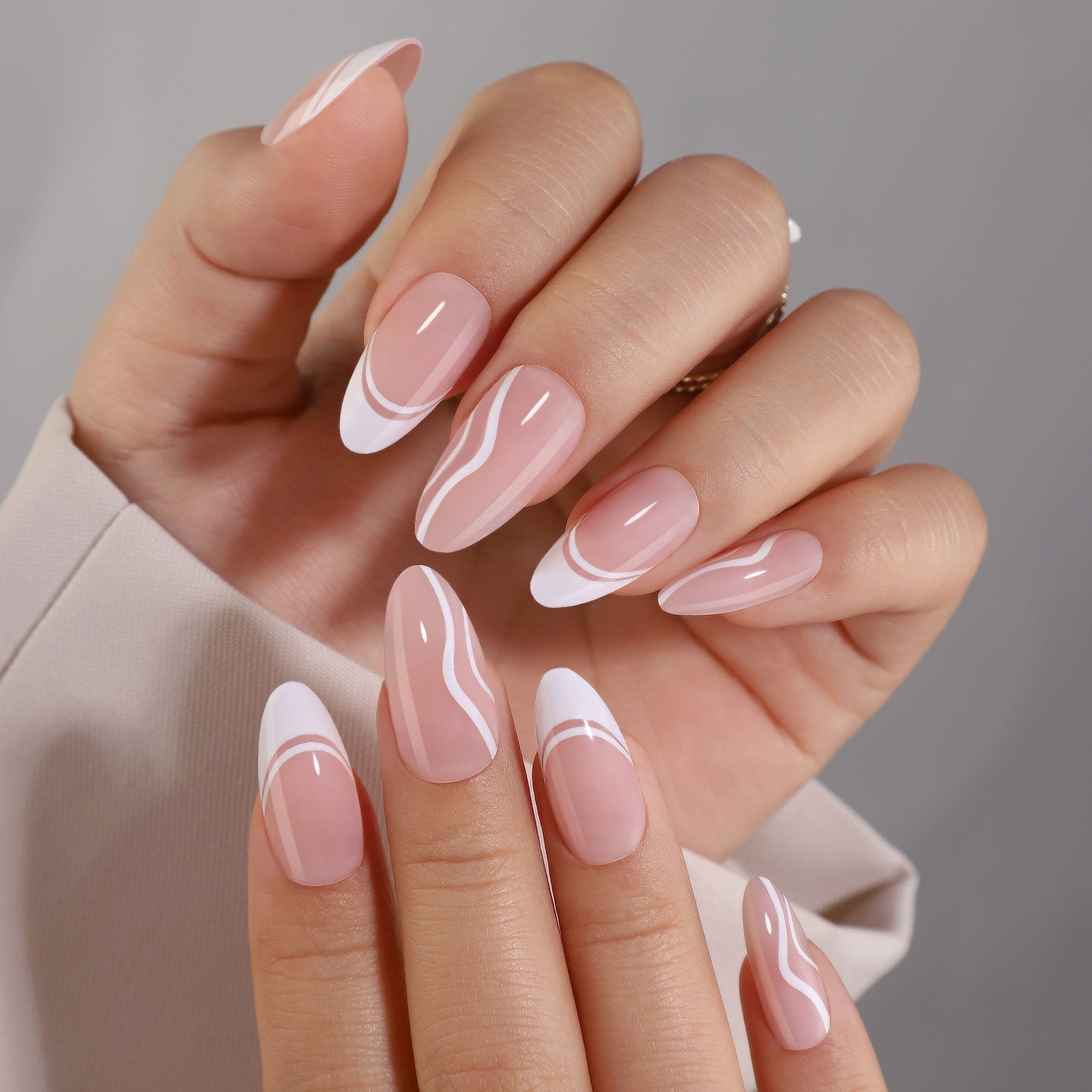
KISS vs imPRESS vs Soft Gel Press-Ons

By SHANGMENG Team — Press-on nail specialists with 20+ years manufacturing experience.

KISS, imPRESS, and soft gel press-ons are three at-home options that differ in material and wear — KISS (ABS, $5–9) suits 1–3 day events, imPRESS (ABS, $5–9) lasts 3–5 days, and soft gel ($10–15) lasts 7–14 days and reuses 2–4 times. KISS and imPRESS are ABS plastic sets sold at drugstores for $5–9; soft gel press-ons are made from a flexible polymer that behaves more like a natural nail, typically sold online for $10–15. Knowing which format fits your schedule, budget, and expected wear time takes about three minutes.

This guide covers all three honestly — the real strengths, the real trade-offs, and a price-per-wear breakdown that changes the cost math considerably.

Quick Summary: - KISS: Cheapest, widest retail availability, ABS plastic, 24-nail count, works well for 1–3 day events - imPRESS: Pre-applied adhesive tab for speed, ABS plastic, limited design range, 3–5 day typical wear - Soft gel: Flexible polymer, thinner profile, salon-grade finishes, 32 nails in 16 sizes, reusable for cost savings


Not sure which shape, length, or size fits your natural nails?

Head-to-Head Comparison: KISS vs imPRESS vs Soft Gel

Comparison table graphic showing KISS, imPRESS, and soft gel press-on nails side by side across six categories: material, price, nail count, wear time, removal, and finish options, printed in clean sans-serif typography on a light background

KISS imPRESS Soft Gel (e.g., SHANGMENG)
Material ABS plastic ABS plastic Soft gel polymer
Price per set $5–$8 $7–$9 $10–$15
Nails per set 24 (12 sizes) 24–30 (12 sizes) 32 (16 sizes)
Wear time 3–7 days 3–5 days 7–14+ days (prep-dependent)
Adhesive Tabs or glue included Pre-applied pressure tabs Tabs or glue (separate purchase)
Removal Warm water soak Tab peel-off Warm water soak
Finish options Solid, French, shimmer Solid, glitter, pattern prints Chrome, cat-eye, ombre, 3D gel, French
Availability CVS, Walmart, Target CVS, Walmart, Target Primarily online (Amazon, brand site)
Reusability Single use in practice Single use 2–4 uses with proper removal

The table covers the mechanical differences. The sections below go deeper on each, including the details that matter most for daily wear — fit, feel, and finish durability.


KISS Press-On Nails: Full Review

KISS press-on nail package displayed on a pharmacy shelf background showing the standard retail packaging with color swatch and French tip styles, representing the budget drugstore option

KISS has been making press-on nails since the 1980s and remains the most recognizable name in the category. Their products sit at the entry tier of the press-on market — accessible, affordable, and consistently available everywhere nail products are sold.

What KISS does well

Price and availability are where KISS has no competition. A full set runs $5–8 at CVS, Walgreens, Walmart, and Target, which means impulse purchase at checkout is a real use case. If you forget about a dinner reservation until 20 minutes before leaving, KISS is the practical solution.

Color variety is genuinely strong at this price point. KISS produces dozens of SKUs covering solid pastels, French tips, chrome finishes, and seasonal collections. For trying a color before committing to gel or acrylics, the cost-of-experimentation is very low.

Ease of removal is a consistent KISS strength. Their adhesive tabs peel cleanly in most cases, and warm water soaks handle the rest. The American Academy of Dermatology's artificial nail guidance also emphasizes careful application, sizing, and removal for any artificial nail format. This makes KISS a reasonable choice for anyone with nail health concerns who wants something genuinely temporary.

Where KISS has limitations

Material thickness is the most common complaint from regular press-on users. ABS plastic, which is the same material used in LEGO bricks and car interior panels, does not flex with the finger the same way a natural nail does. On shorter styles this is less noticeable; on longer nail lengths, the rigidity becomes apparent, particularly when pressing on keys or typing.

24-nail count in 12 sizes means that for anyone with a non-standard nail width profile — wider pinkies, narrower ring fingers, uneven sizing across hands — the fit is a compromise. You end up sizing up or down, which creates small gaps at the cuticle line or overhanging edges.

Wear time in real-world conditions typically falls shorter than packaging claims for most users. Adhesive tabs under full ABS nail plates with daily washing and hand activity last 2–4 days for the majority of buyers. Switching to nail glue extends that, but adds a step that requires proper glue removal to avoid nail damage.

Best for: One-time events, quick color changes, first-time press-on buyers testing the format, budget-constrained shoppers.


imPRESS Press-On Nails: Full Review

imPRESS by Kiss press-on nail kit with the distinctive compact packaging showing pre-applied adhesive nail peel, representing the convenience-focused drugstore option available at major retail chains

imPRESS is also a KISS brand product — a sub-line positioned around speed and convenience, with adhesive already applied to each nail. The pitch is zero-prep manicure in under five minutes.

What imPRESS does well

Application speed is genuinely the fastest in the category. Because the adhesive is pre-applied and protected by a peel tab, there is no glue dispensing, no adhesive tab placement, and no waiting for anything to dry. Press and hold for ten seconds per nail. For someone doing nails in a car park or during a commute, imPRESS is legitimately fast.

Beginner-friendliness follows from the same design logic. Fewer variables, fewer failure points. Press-on veterans have their preferred glues and application routines, but for a first-timer, removing the adhesive step entirely makes the process less intimidating.

Retail availability matches KISS — same stores, similar price bracket, and frequent Buy One Get One promotions at drugstore chains.

Where imPRESS has limitations

The pre-applied adhesive is also the biggest complaint. Reddit discussions about imPRESS consistently cite "gummy tabs" and a sticky residue feeling on the nail. Because the adhesive is applied in a fixed thickness and cannot be customized, it sits between the nail and nail plate with a slight cushion that some users find unnatural. This is a preference issue, but it is consistent enough across reviews to be worth flagging.

Wear time is among the shortest in the press-on category — typically 3–5 days under normal conditions. The pre-applied adhesive is optimized for easy removal, not longevity, which is a deliberate design trade-off. For weekly nail wearers, this means frequent replacement.

Design range leans toward prints and patterns rather than sophisticated finishes. imPRESS does glitter and pattern well; it does not offer chrome, cat-eye magnetic effects, ombre gradients, or 3D gel structures.

Limited size differentiation mirrors KISS — 12 sizes in a 24–30 nail set. Fit issues are similar.

Best for: Last-minute prep, beginners who want the simplest application process possible, events where you need nails on fast and off fast.


Soft Gel Press-On Nails: What's Different

SHANGMENG soft gel press-on nail set with packaging showing rainbow holographic box, with nails fanned out displaying chrome, cat-eye, and ombre finishes in pink and purple tones on a clean white background

Soft gel is a material category, not a brand — the same polymer base used in professional gel nail systems is applied in press-on form. The structural difference from ABS plastic matters in three areas: how the nail flexes, how it sits on the finger, and what finishes it can achieve.

Flexibility and feel

Soft gel polymer has an inherent flex that responds to pressure. When you press your finger down on a surface or type on a keyboard, the nail moves slightly with the finger rather than resisting it. Reddit users who switched from plastic press-ons to soft gel consistently describe the experience as "more natural feel" and "like my real nail but longer."

This flex also reduces the leverage that causes edge lifting. ABS nails, being rigid, create a lever arm against the adhesive at the free edge when the nail catches on something. Soft gel's give reduces that mechanical stress.

Profile thickness

Manufacturing soft gel nails thin enough to feel realistic while strong enough to hold a finish is one of the technical challenges. Quality soft gel sets — including SHANGMENG's — use a tapered construction: thicker at the stress point near the free edge, thinner at the cuticle line. This produces a profile that is visually closer to a real nail extension. The "bulky" complaint directed at ABS plastic press-ons is essentially a profile and material stiffness issue that soft gel addresses.

Finish range

Certain finishes are not achievable in ABS plastic. Chrome powder requires a smooth gel surface to adhere properly; it looks dull and patchy on rigid plastic. Cat-eye magnetic finishes require a gel layer that responds to a magnet during curing — the effect is produced in manufacturing and preserved in the set you receive. Ombre gradients, 3D gel structures, and glassy glazed finishes all derive from gel-based manufacturing processes.

For buyers who have been searching for chrome or cat-eye press-ons and finding only disappointing results with plastic options, soft gel is the reason those results exist.

Sizing: 32 nails, 16 sizes

The difference between 12-size and 16-size kits matters most for buyers with non-standard nail proportions. The extra four sizes target common fit gaps — wider pinky nails, narrower index fingers, asymmetric sizing between left and right hands. SHANGMENG's 32-nail count means you have spare nails for each size in case of breakage or application errors, which is a practical advantage for weekly wearers.

For a broader look at how SHANGMENG compares against a dedicated premium brand, see the SHANGMENG vs Glamnetic comparison.


Material Deep-Dive: ABS Plastic vs Soft Gel Polymer

Split-screen material comparison infographic showing ABS plastic characteristics on the left — rigid, thick profile, limited finish options — versus soft gel polymer on the right — flexible, thin profile, chrome and cat-eye finishes, on a clean white and lavender background

Most press-on nail marketing does not explain materials clearly, which makes comparison shopping harder than it needs to be. Here is what the material difference actually means.

ABS plastic (KISS, imPRESS)

Acrylonitrile butadiene styrene is a rigid thermoplastic. In nail form, it is molded in sheets, painted or printed, and cut to shape. It is durable in the sense of impact resistance — drop an ABS nail on a hard floor and it will survive — but that rigidity is also its functional limitation in wear.

  • Flex: Minimal. The nail resists bending and when force is applied, it transmits that force directly to the adhesive joint, which is why lifting at the free edge is common.
  • Thickness at cuticle line: Standard ABS sets tend to be thicker at the base due to manufacturing tolerances. This creates a visible ledge at the cuticle that experienced users notice.
  • Finish absorption: ABS does not absorb gel or powder pigments the same way gel does. Chrome and metallic finishes applied over ABS tend to lose their clarity faster and look more opaque.
  • Reusability: ABS nails can technically be reused but the adhesive tab system most plastic sets use does not survive removal intact in most cases.

Still not sure which option is worth trying first? Pick the set that solves the concern you just compared: fit, finish, wear time, or price.

Soft gel polymer

Soft gel in press-on form uses a pre-cured polymer matrix — similar chemistry to salon gel, but set to shape in a mold rather than cured on the nail. The gel content is what gives it flex, smoothness, and finish receptivity.

  • Flex: Natural give under lateral pressure, recovers shape. Reduces mechanical stress on adhesive.
  • Thickness profile: Gel manufacturing allows precise control over nail curve and thickness taper. Quality sets achieve a profile that reads visually as a natural nail.

  • Finish quality: Chrome, cat-eye, ombre, and 3D structures all require a gel medium to develop their optical effects properly. Soft gel press-ons are the only format where these finishes look equivalent to salon work.

  • Reusability: With proper removal (warm water soak, patient lifting — never force), soft gel nails can be worn multiple times. The gel structure maintains integrity across 2–4 uses.

One user on r/Nails summarized the difference with a quote that has 343 upvotes: "They are less damaging, last 2 weeks, take 10 minutes to apply, look exactly like acrylic but even better." The "less damaging" and "look like acrylic" points come directly from gel material properties.

For a full comparison of press-ons against salon acrylic from a damage and cost perspective, see press-on nails vs acrylic nails.


Price Per Wear: The Real Cost Comparison

Price per wear comparison infographic showing KISS at five dollars per use, imPRESS at eight dollars per use, and soft gel at four dollars per use when reused three times, with simple bar chart format on a clean white background with green accent bars for soft gel lowest cost

Retail price is not the same as cost per use. The math changes when reusability enters the calculation.

Option Set Price Expected Uses Cost Per Wear
KISS (tabs only) $6 1 $6.00
KISS (with glue) $6 + $3 glue 1 $9.00
imPRESS $8 1 $8.00
Soft gel (1 use) $12 1 $12.00
Soft gel (2 uses) $12 2 $6.00
Soft gel (3 uses) $12 3 $4.00

A few important caveats on the reusability column:

Reusability depends entirely on removal method. Soft gel nails removed by warm water soak — not peeled or forced — retain their shape and finish for subsequent applications. Nail glue creates more wear on the nail surface across uses; adhesive tabs are gentler and support more reuses. Instructions are in how to apply press-on nails for beginners.

Wear time per use depends on prep, not just material. Clean, dehydrated, oil-free nails extend wear for any press-on. No brand's wear claims account for someone skipping prep steps, using lotion before application, or doing frequent handwashing.

Salon comparison: A standard salon gel manicure runs $45–65 per visit, not counting tip. Even one-use soft gel press-ons at $12 are 80% cheaper per manicure. For a full breakdown of the value case, see are press-on nails worth it.


Who Should Buy Which

Three panel lifestyle image showing a woman applying KISS nails quickly before an event on the left, a woman using imPRESS nails for a casual day look in the center, and a woman wearing SHANGMENG chrome soft gel nails as a weekly manicure on the right

The right pick depends less on which product is "best" in the abstract and more on your specific use case.

Choose KISS if:

  • You need nails today, from a store you can walk to
  • This is for a single event lasting 1–3 days
  • You are testing press-ons for the first time and want minimal financial risk
  • You want solid colors or classic French and have no interest in chrome or cat-eye finishes
  • You are comfortable with 12-size kits and your nail proportions fit standard sizing

KISS earns its place in the market through reliability and accessibility. It is a genuinely good product for what it is. The limitations — ABS plastic, 24 nails, shorter wear — are design decisions for a specific price point, not quality failures.

Choose imPRESS if:

  • Application speed is your primary concern — 5 minutes start to finish
  • You want no adhesive tools and the simplest possible process
  • 3–5 days is sufficient for your schedule (a work week, a weekend trip)
  • You are a first-time buyer who wants to minimize application variables
  • You are comfortable with print and pattern designs and do not need metal finishes

imPRESS serves the "no-fuss" segment of the press-on category well. The pre-applied adhesive trade-off (shorter wear, occasional gummy feel) is worth it for the right buyer.

Choose soft gel press-ons if:

  • You want weekly wear as a salon replacement, not a one-time solution
  • Chrome, cat-eye, ombre, or 3D finishes are on your list
  • You have non-standard nail proportions and have struggled with sizing in 12-size kits
  • Reusability matters to you and you want to manage cost per wear over time
  • You want a finish that reads as salon-quality in person and in photos

Soft gel is the right category for someone treating press-ons as a permanent part of their beauty routine rather than an occasional convenience product. The $2–4 premium over KISS becomes neutral or positive once reuse is factored in.

For a first-time buyer looking at the full press-on market beyond just these three options, best press-on nails 2026 and best press-on nail brands offer a broader field review.


Frequently Asked Questions

Are KISS press-on nails reusable?

KISS press-on nails are technically removable but not designed for reuse. The adhesive tabs lose their hold after the first removal, and the ABS plastic nails develop micro-scratches at the adhesive surface. Some users re-apply with fresh glue, but the set is generally designed for a single wear cycle of 3–7 days. Soft gel press-ons, by contrast, are designed with reuse in mind — the gel structure holds up across multiple warm-water-soak removals. Allure's best press-on nails roundup reflects the same category shift toward reusable, better-fit press-ons. See best press-on nails 2026 for a broader comparison.

How long do imPRESS nails actually last?

imPRESS nails last 3–5 days for most users under everyday conditions. The pre-applied adhesive is engineered for easy removal rather than maximum hold, which is the design trade-off for the convenience format. Users who extend wear to 5–7 days typically report keeping hands drier than usual and avoiding prolonged submersion. For longer wear without the salon price tag, soft gel press-ons with nail glue application can last 7–14 days depending on prep quality and daily activity.

What makes soft gel press-on nails different from plastic ones?

Soft gel press-on nails use a flexible polymer matrix — similar chemistry to salon gel products — rather than rigid ABS plastic. The practical differences are: (1) the nail flexes slightly under pressure instead of resisting, which reduces adhesive stress and lifting; (2) the thinner cuticle profile sits more naturally on the nail plate; (3) chrome, cat-eye, and ombre finishes require a gel base to achieve their optical effects properly. See press-on nails vs acrylic nails for a comparison against salon options.

Can you get a good fit with drugstore press-on nail sizes?

Drugstore press-ons like KISS and imPRESS include 12 sizes in a 24-nail set. This covers the most common nail width distributions, but leaves gaps for buyers with narrower or wider nails at specific fingers — most often the pinky and ring finger. The workaround is sizing up and filing to fit, which adds time to application. Soft gel sets with 16 sizes in a 32-nail count close most of these fit gaps by providing finer increments in the smaller sizes. If you have ever sized up on a press-on and seen a visible gap at the cuticle line, a 16-size kit is worth trying. The beginner's guide to press-on nails covers sizing selection in detail.

Is soft gel worth the higher price over KISS or imPRESS?

It depends on how frequently you wear press-ons. For one-time events or occasional use, KISS at $5–8 is hard to beat — the per-use cost is low and availability is unmatched. For weekly wearers treating press-ons as a salon replacement, soft gel becomes cost-competitive once reusability is factored in. A $12 soft gel set used three times costs $4 per wear; a $6 KISS set used once costs $6 per wear. The quality advantage — better fit, thinner profile, access to chrome and cat-eye finishes — is then a bonus on top of the economic case. For the full value breakdown, see are press-on nails worth it.


Overhead flat lay showing hands wearing SHANGMENG soft gel cat-eye press-on nails in deep purple with a magnetic shimmer shift, displayed against a textured grey stone surface, representing the finish quality achievable with soft gel materials

The Bottom Line

KISS and imPRESS are genuinely useful products that serve the right use cases well. KISS is the right answer for a quick, inexpensive set from a store you can reach today. imPRESS is the right answer for someone who wants the fastest possible application with no adhesive prep. Neither is wrong for those situations.

Where both products reach their ceiling is in material capability. ABS plastic does not produce chrome or cat-eye finishes at quality. Twelve-size kits do not fit every nail profile. Single-use economics make sense for occasional wear but not for weekly use.

Soft gel press-ons fill those gaps — not as a luxury upgrade, but as the format that makes press-ons a credible weekly salon alternative. At $4 per wear across three uses, they are the most cost-efficient format for regular wearers. The finish quality — particularly in chrome, cat-eye, and ombre — is what makes them worth photographing.

The choice comes down to how you use press-ons. If the answer is "two or three times a year for events," KISS or imPRESS is the right call. If the answer is "every week as my normal nails," soft gel is worth the $3–5 difference.


Sources: Allure nail care guides (allure.com); Byrdie press-on nail roundup 2024 (byrdie.com); Reddit r/Nails and r/NailArt community discussions; SHANGMENG manufacturing data (20+ years production experience).

ブランドに関する情報を顧客と共有します。商品の説明、お知らせ、またはストアへの歓迎のメッセージを記載してください。