












Iniziale
›
Trend — Ispirazioni e design per unghie
›
Le unghie press-on sembrano finte? Come fare in modo che ingannino chiunque

Le unghie press-on sembrano finte? Come fare in modo che ingannino chiunque
Di Elia — Nail Trend Curator & Beauty Editor presso SHANGMENG.
Le unghie press-on sembrano finte quando sono della misura sbagliata, realizzate in plastica spessa o applicate senza rifinire i bordi — e sembrano completamente vere quando si adattano correttamente, sono fatte di gel morbido (soft gel) e vengono applicate con la stessa cura che si dedicherebbe a un trattamento in salone. Se le tue superano il test "è una manicure professionale?" dipende da quattro fattori: qualità del materiale, precisione della misura, scelta della forma e un passaggio di rifinitura di due minuti che la maggior parte delle persone salta.
Questa guida va oltre il marketing difensivo e ti offre la versione onesta: quando le unghie press-on sembrano finte, perché lo sembrano e come correggere esattamente ogni singola variabile.
Una manicure in gel in salone può facilmente costare tra i 60$ e i 90$ prima della mancia; un set in soft gel SHANGMENG costa in genere 10$-15$ e ti offre comunque 32 unghie in 16 misure diverse. Questo divario di prezzo ha senso solo se il set sembra reale, motivo per cui la vestibilità e la rifinitura contano più dell'acquisto del design più lungo o più lucido.
Punti Chiave:
- La vestibilità è l'indizio principale: un'unghia anche solo 1 mm troppo larga sembra istantaneamente finta
- Il materiale in soft gel è visivamente più sottile e flessibile rispetto alla plastica ABS, ed è questo che lo fa sembrare reale
- Limare il bordo cuticolare dopo l'applicazione è il singolo passaggio di maggior impatto che la maggior parte delle persone salta
- Le tonalità nude, mandorla corta-media e quadrate sono gli stili più facili da rendere naturali
- Chi le usa regolarmente riferisce costantemente che nessuno se ne accorge — quando la misura e la preparazione sono corrette
The Honest Answer: Some Do, Some Don't — It Depends on 4 Factors
Lasciamo da parte le rassicurazioni del tipo "sembrano totalmente naturali!" e arriviamo a ciò che conta davvero.

Sia chi dice "le unghie press-on sembrano così palesemente finte" sia chi dice "le indosso da anni e nessuno se ne accorge mai" sta dicendo la verità. Stanno descrivendo prodotti diversi applicati con diversi livelli di cura.
Ecco le quattro variabili che determinano quale risultato otterrai:
1. Materiale. Il soft gel sembra smalto gel. La plastica ABS sembra plastica ABS. Questo è il fattore principale, ed è il motivo per cui le unghie press-on economiche suscitano costantemente la reazione "si vede che sono finte".
2. Misura. Un'unghia anche solo 0,5 mm troppo larga si appoggia sopra la pelle anziché adattarsi al letto ungueale. Lo spazio laterale che si crea è l'indizio più visibile in qualsiasi unghia press-on. Al contrario, un'unghia della misura perfetta scompare contro il tuo letto ungueale naturale.
3. Forma e lunghezza. Le unghie a ballerina (coffin) da 7 centimetri giocano a tuo sfavore. Le forme a mandorla corta o quadrate nei toni nude, french o colori tenui sono molto vicine all'aspetto delle unghie naturali — che è proprio l'obiettivo.
4. Rifinitura. Il bordo della cuticola di un'unghia press-on, appena tolto dalla confezione, presenta una leggera linea netta dove incontra la pelle. Limare leggermente questo bordo — 30 secondi per unghia — sfuma l'unghia press-on con la pelle ed elimina l'unico indizio rimasto.
Fai attenzione a tutti e quattro questi aspetti e la risposta alla domanda "le unghie press-on sembrano finte?" diventerà: nessuno te lo chiederà mai.
Perché le unghie press-on economiche sembrano finte
Questa sezione non è un discorso di vendita, ma una spiegazione tecnica. Capire cosa crea l'effetto "finto" ti aiuta a prendere decisioni migliori, indipendentemente da ciò che acquisti.

La plastica ABS è spessa e uniforme. Le unghie press-on standard in ABS sono prodotte tramite stampaggio a iniezione, il che garantisce uno spessore uniforme su tutta l'unghia, in genere di 1,5–2 mm. Le unghie vere sono affusolate: sono più spesse alla base e più sottili verso la punta. Lo spessore uniforme dell'ABS crea un leggero profilo a rilievo che rivela la natura artificiale dell'unghia.
La lucentezza è innaturale. Le unghie in ABS industriali hanno una finitura lucida che, paradossalmente, sembra troppo perfetta. Le unghie vere, anche con il gel, presentano lievi variazioni sulla superficie. L'uniformità della lucentezza dell'ABS viene percepita come plastica.
La misura sbagliata amplifica ogni difetto. I set di unghie press-on economici sono in genere composti da 24 pezzi in 12 misure. Per la maggior parte delle persone, questo significa che almeno su alcune dita le unghie non si adatteranno perfettamente. Nel momento in cui un'unghia finta supera il bordo del tuo letto ungueale naturale, l'illusione svanisce.
Il bordo cuticolare è una linea netta. Le unghie in ABS sono modellate con un bordo inferiore tagliente. Senza limatura, questo crea uno scalino visibile tra l'unghia press-on e la pelle: un'ombra netta che segnala immediatamente la presenza di un'unghia artificiale.
Il motivo per cui le unghie press-on in soft gel hanno un aspetto diverso è strutturale: il soft gel può essere prodotto con uno spessore inferiore e un profilo affusolato che imita la crescita delle unghie vere. La flessibilità del materiale fa sì che si adatti leggermente alla curva naturale del letto ungueale, anziché rimanere piatto contro di esso.
Per un confronto più approfondito sui tipi e sui materiali delle unghie press-on, consulta unghie finte, false unghie e press-on: qual è la differenza?.
Il materiale fa la differenza
SHANGMENG utilizza il soft gel, non la plastica ABS. Il risultato è un profilo più sottile, una naturale affusolatura e una flessibilità che si adatta al tuo letto ungueale. 32 unghie, 16 misure, biadesivi e colla inclusi.
Ottieni la vestibilità del Soft Gel che sembra una manicure professionale →
Soft Gel vs Plastica ABS: Perché il materiale cambia tutto

La maggior parte delle discussioni sulla domanda "le unghie press-on sembrano finte?" tralascia la variabile più importante, ancora prima di qualsiasi consiglio sull'applicazione: il materiale di cui è fatta l'unghia.
Plastica ABS (acrilonitrile butadiene stirene):
- Stampata a iniezione, spessore uniforme
- Rigida: non si flette con il movimento delle dita
- Finitura industriale ultra lucida
- Più pesante, il che contribuisce a una leggera trazione in avanti che fa sollevare prima il bordo della cuticola
- Meno costosa da produrre, motivo per cui i set da supermercato e la maggior parte dei marchi economici la utilizzano
Soft gel:
- Prodotto con un profilo più sottile e affusolato: più spesso vicino all'area della cuticola, si assottiglia verso la punta
- Semi-flessibile: si muove con il dito anziché contrastarlo
- Polimerizzato per ottenere una finitura che imita una vera manicure in gel, non la lucentezza da plastica dura dell'ABS
- Più leggero: minore stress meccanico sul legame adesivo, il che significa che rimane a filo anziché sollevarsi ai bordi
La differenza non è minima. Metti un'unghia in ABS da supermercato accanto a una in soft gel e tienile controluce. L'unghia in ABS trasmette la luce in modo uniforme, sembrando proprio plastica. L'unghia in soft gel presenta lievi variazioni di traslucenza che corrispondono all'aspetto delle unghie vere sotto la luce.
Ecco perché gli esperti di bellezza considerano la misura, la preparazione e il materiale come variabili distinte. La guida all'applicazione delle unghie press-on di Byrdie sottolinea l'importanza della misura e della preparazione prima della colla, mentre le sue recensioni evidenziano come una vestibilità naturale o un aspetto ingombrante siano risultati diversi all'interno della stessa categoria di prodotti.
Le unghie press-on SHANGMENG sono realizzate in soft gel. 32 pezzi in 16 misure, così potrai trovare la combinazione perfetta per ogni dito. Per una guida completa su come trovare la tua misura, consulta come scegliere la misura corretta delle unghie press-on.
8 consigli per far sembrare le unghie press-on completamente reali
Questi non sono semplici suggerimenti di stile, ma passaggi tecnici specifici che distinguono una manicure convincente da una palesemente finta. Ognuno di essi risolve un diverso "indizio" rivelatore.

1. Scegli una taglia in meno nel dubbio
Se sei indecisa tra due taglie e quella più grande supera anche solo leggermente il bordo del tuo letto ungueale, scegli quella più piccola. Puoi sempre limare un'unghia per renderla leggermente più stretta, ma non puoi allargare un'unghia troppo piccola. Lo spazio laterale creato da un'unghia troppo grande è l'indizio visivo più evidente in assoluto.
In caso di letti ungueali asimmetrici (più comuni di quanto si pensi), usa una taglia diversa per ogni mano o persino misure differenti sulle dita corrispondenti. I tuoi letti ungueali non sono perfettamente simmetrici, e non dovrebbero esserlo nemmeno le misure delle tue unghie. Per ulteriori indicazioni, scopri come scegliere la misura giusta delle unghie press-on.
2. Spingi prima indietro le cuticole
La zona delle cuticole è quella in cui le unghie press-on rischiano maggiormente di sollevarsi, ed è qui che il bordo rigido è più visibile. Spingere delicatamente indietro le cuticole prima dell'applicazione crea una superficie maggiore su cui l'unghia press-on può aderire e riduce lo stacco visivo tra l'unghia finta e la pelle.
Usa lo spingi-cuticole incluso nel tuo set SHANGMENG. Immergi prima la punta delle dita in acqua tiepida per 60 secondi per ammorbidire le cuticole. Questo singolo passaggio prolunga la durata della manicure di 2-3 giorni, oltre a migliorarne notevolmente l'aspetto visivo.
3. Lima il bordo della cuticola dopo l'applicazione
Questo è il passaggio più efficace in assoluto che quasi nessuno menziona. Dopo aver applicato ogni unghia, usa una lima a grana fine per levigare leggermente il bordo inferiore dell'unghia press-on nel punto in cui incontra la pelle. Non devi rimuovere materiale, ma sfumare il bordo in modo che non ci sia una linea netta.
Dedica 20-30 secondi a ogni unghia. Il risultato: l'unghia press-on sembrerà crescere direttamente dal tuo dito invece di essere semplicemente appoggiata sopra. Questo singolo passaggio fa la differenza tra "si vede che sono finte" e "ma sono vere?".
4. Adatta la larghezza alla tua unghia naturale, non alla pelle
Molte persone commettono l'errore di scegliere la misura in base alla larghezza del polpastrello anziché del letto ungueale effettivo. Prendi la misura dove finisce l'unghia naturale, non dove il dito inizia a restringersi. Se usi il punto più largo del polpastrello come riferimento, sceglierai costantemente una misura troppo grande, creando proprio quello spazio laterale che stai cercando di evitare.
5. Scegli forme che seguono la crescita naturale dell'unghia
Le forme a mandorla, ovali, a quadrato morbido e rotonde seguono la curva naturale di crescita dell'unghia. Vengono percepite come "unghie curate" piuttosto che come "unghie artificiali". Le forme a ballerina (coffin), a stiletto e quadrate squadrate con lunghezze estreme sono intrinsecamente vistose: comunicano subito l'idea di nail art piuttosto che di unghia naturale, il che va benissimo se è quello il tuo obiettivo, ma rema contro l'effetto "sembrano vere?".
Le lunghezze da corte a medie (da 4 a 7 mm oltre il polpastrello) sono la scelta ideale per un aspetto naturale. Anche Allure ha trattato i problemi di misura delle unghie press-on, spiegando perché kit con misure troppo piccole o troppo grandi rendano la manicure finale meno credibile.
6. Usa un top coat opaco per stili specifici
La finitura lucida di alcuni stili di unghie press-on, specialmente nei colori a tinta unita, può sembrare di plastica se riflette male la luce. Una sola passata di top coat opaco su una base lucida trasforma la brillantezza in quel tipo di finitura delicata che farà pensare a tutti che sei appena uscita dal salone. Tieni un top coat opaco in formato da viaggio nella borsa per i ritocchi.
Questo trucco funziona particolarmente bene per le tonalità nude e neutre. La combinazione di un colore tenue e di una finitura opaca risulta identica a una vera manicure in gel nella maggior parte delle condizioni di luce.
7. Abbina i sottotoni, non solo i colori
La tua pelle ha un sottotono: caldo (dorato/giallo), freddo (rosa/blu) o neutro. Le tonalità nude e rosa per le unghie danno il meglio di sé quando si adattano al sottotono della tua pelle. Un nude leggermente rosato su una pelle calda risulterà strano; un nude leggermente giallastro su una pelle fredda sembrerà spento. Questo contrasto rivela subito l'artificialità.
La maggior parte dei set nude e rosa di SHANGMENG è formulata per apparire naturale su una vasta gamma di sottotoni, ma se sei indecisa tra due tonalità simili, quella più vicina al sottotono della tua pelle sembrerà molto più simile alla tua unghia naturale.
Hai ancora paura che sembrino finte? Scegli la forma e la finitura che si adattano alla larghezza della tua unghia naturale; il set giusto sembrerà curato, non incollato.


8. Evita design con una simmetria evidente
Una simmetria perfetta (ogni unghia identica, stessa posizione dell'unghia con l'accento, stessa intensità di glitter) è sinonimo di produzione industriale. La vera nail art presenta sempre lievi variazioni. Se punti a un look naturale, scegli design in cui la leggera imperfezione fa parte dell'estetica: un morbido effetto sfumato (ombre) che varia leggermente su ogni unghia, un effetto cromato smaltato (glazed chrome) in cui la luce si riflette in modo diverso su ogni dito, o una classica French in cui la linea del sorriso non è geometricamente perfetta.
Se è la prima volta che indossi le unghie press-on, consulta la guida completa alle unghie press-on per principianti per una spiegazione passo-passo dell'applicazione.
Look naturali, fatti su misura
Le unghie press-on in gel morbido SHANGMENG sono disponibili in 16 misure per set, così potrai trovare l'unghia che si adatta davvero al tuo letto ungueale, senza dover forzare una misura standard. Sono disponibili stili nude, French, a mandorla corta e glazed chrome.
I migliori stili di unghie press-on per un look naturale
Non tutti gli stili sono ugualmente adatti a passare per una manicure vera. Queste sono le finiture e le forme in cui le unghie press-on in soft gel risultano costantemente naturali.

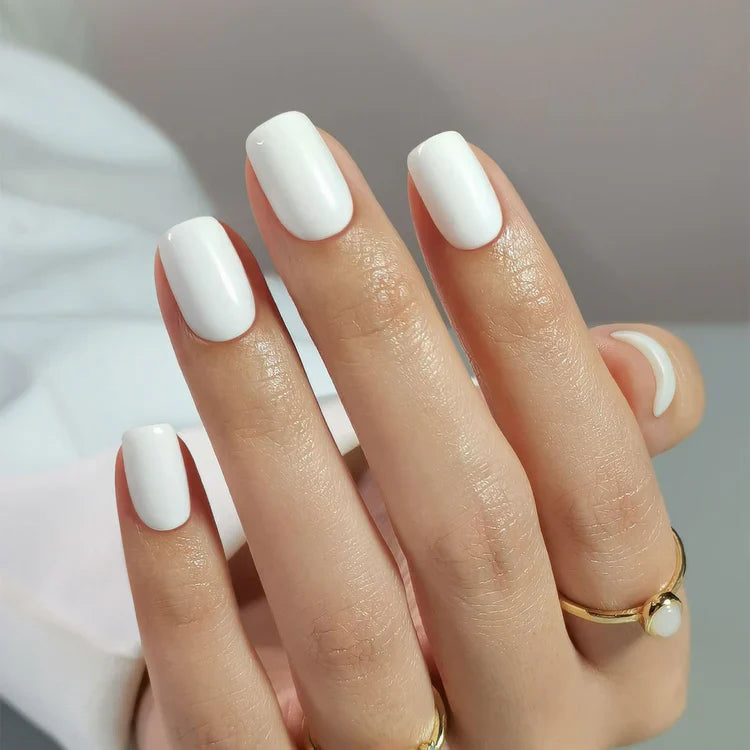
Tinte unite nude e blush. La cosa più vicina al colore naturale delle tue unghie, che è esattamente il punto. Un nude ben scelto si legge come "unghie sane" piuttosto che come "manicure". Per un look quotidiano più delicato, vedi natural almond nails.
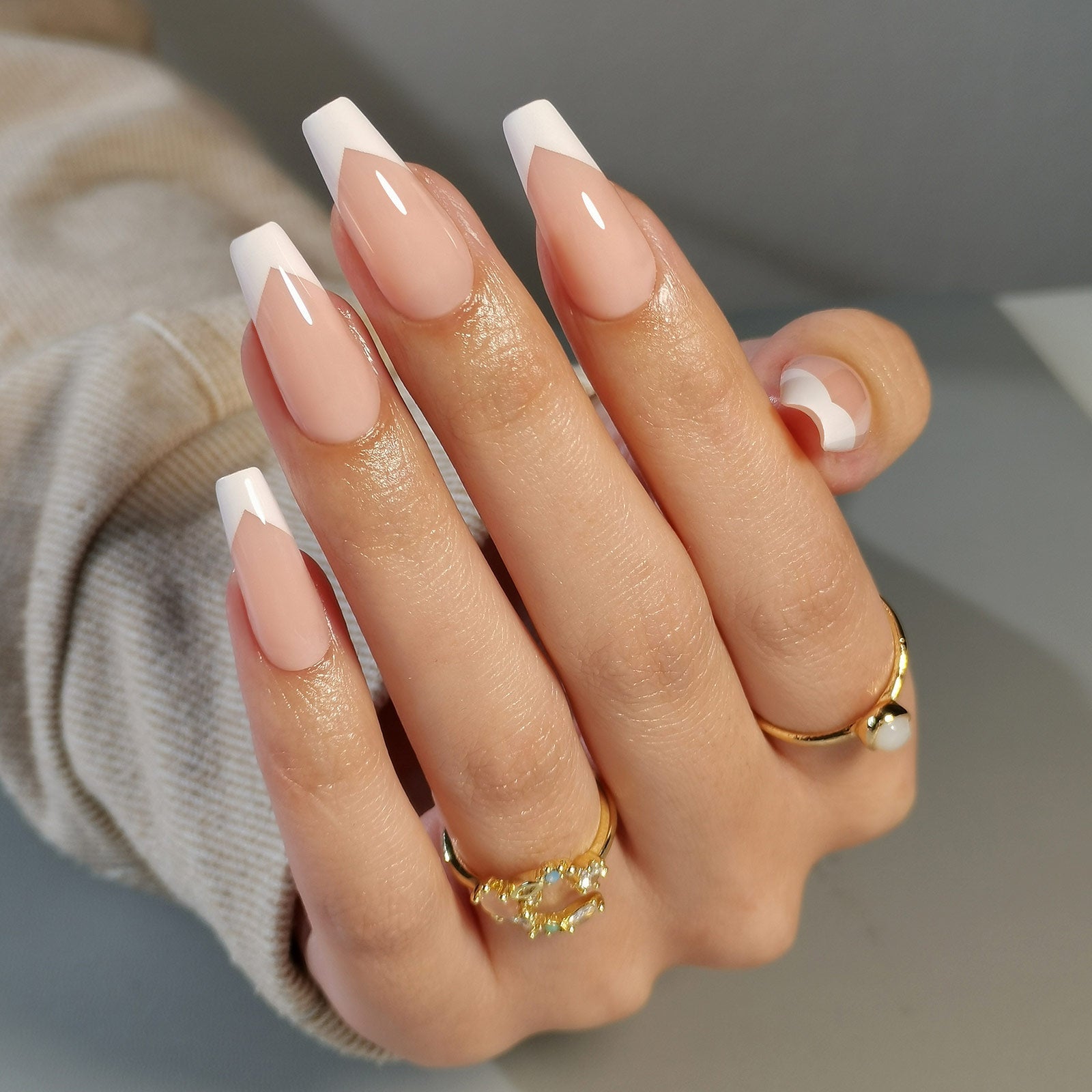
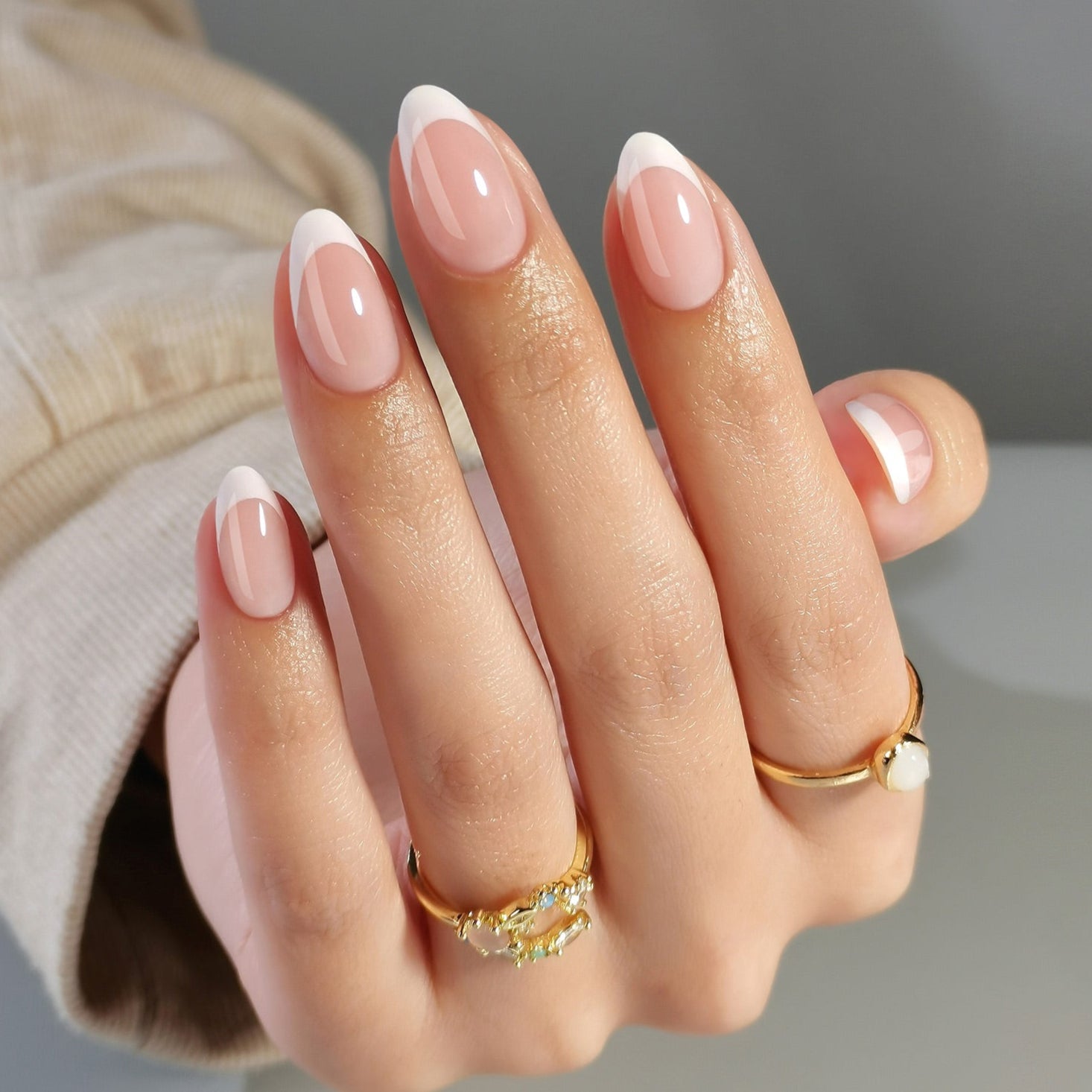
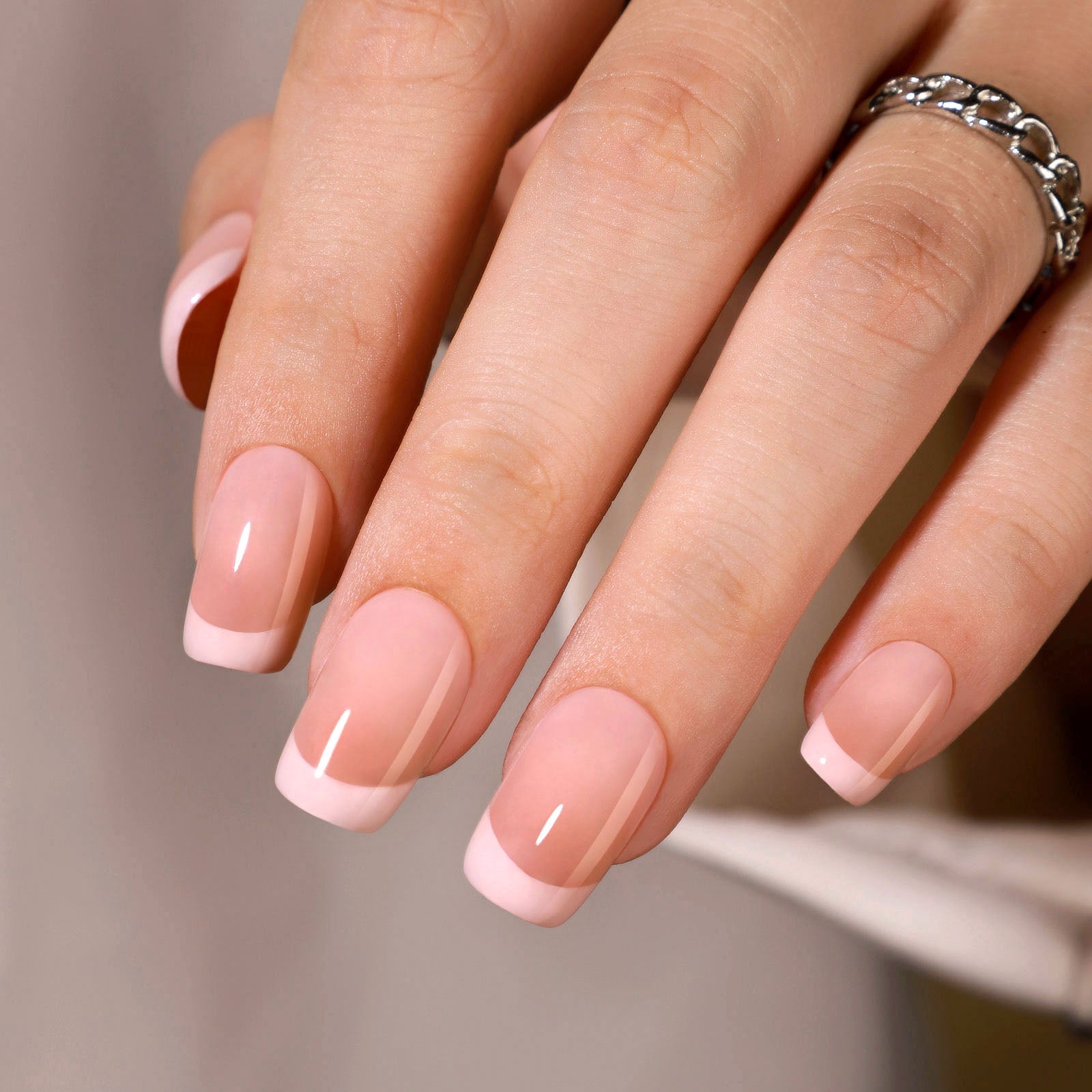
Classica French tip. La French manicure è così associata alle "unghie da salone" che una press-on French ben applicata sembra esattamente questo. La chiave: scegli una French in cui la linea bianca della punta abbia un bordo morbido e leggermente curvo piuttosto che un blocco netto — è così che appaiono le vere French manicure. Sfoglia le SALON-LIKE PRESS ONS per stili in soft gel con un profilo più naturale.
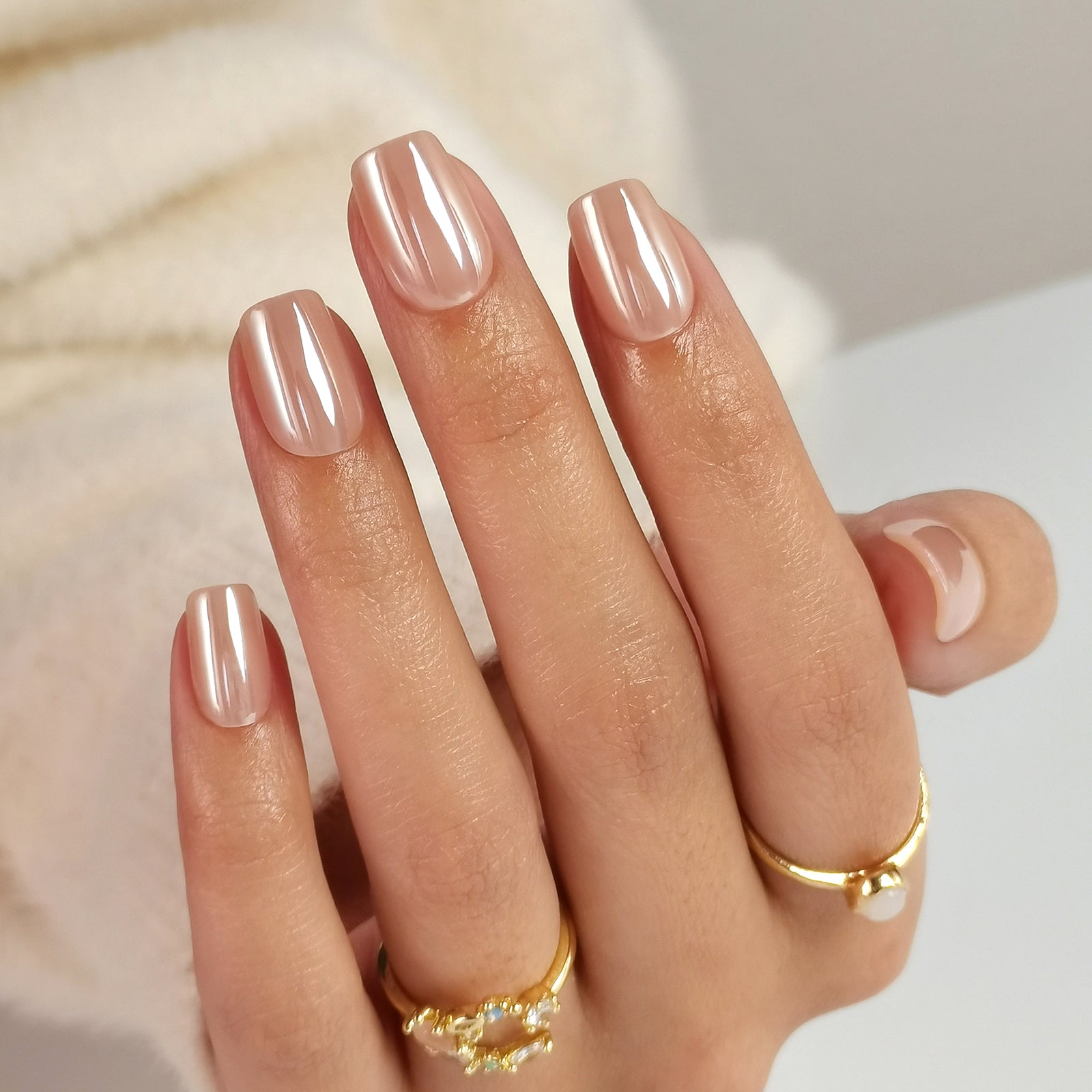
Stili lattiginosi e velati. Le tonalità traslucide o bianco lattiginoso con una leggera sfumatura rosa o lavanda mimano l'aspetto di unghie naturali ben idratate. Questi sono tra gli stili di unghie press-on più convincenti perché non attirano l'attenzione sull'unghia stessa.
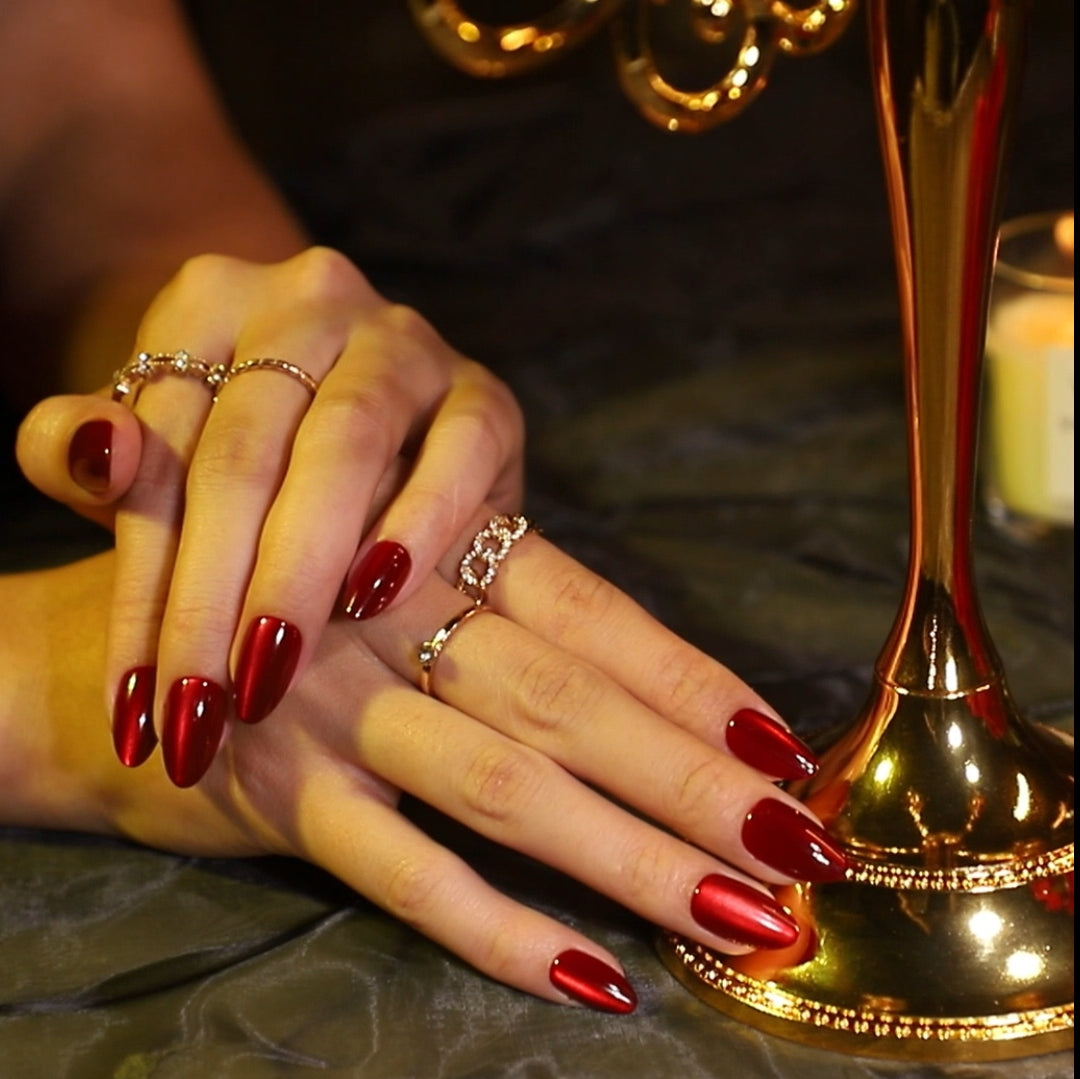
Glazed chrome (delicato). Una finitura cromata delicata in tonalità blush o oro cattura la luce come fanno le vere unghie laccate — con variazioni e movimento piuttosto che con un riflesso uniforme. Questo viene percepito come un "trattamento professionale da salone" piuttosto che come una press-on.
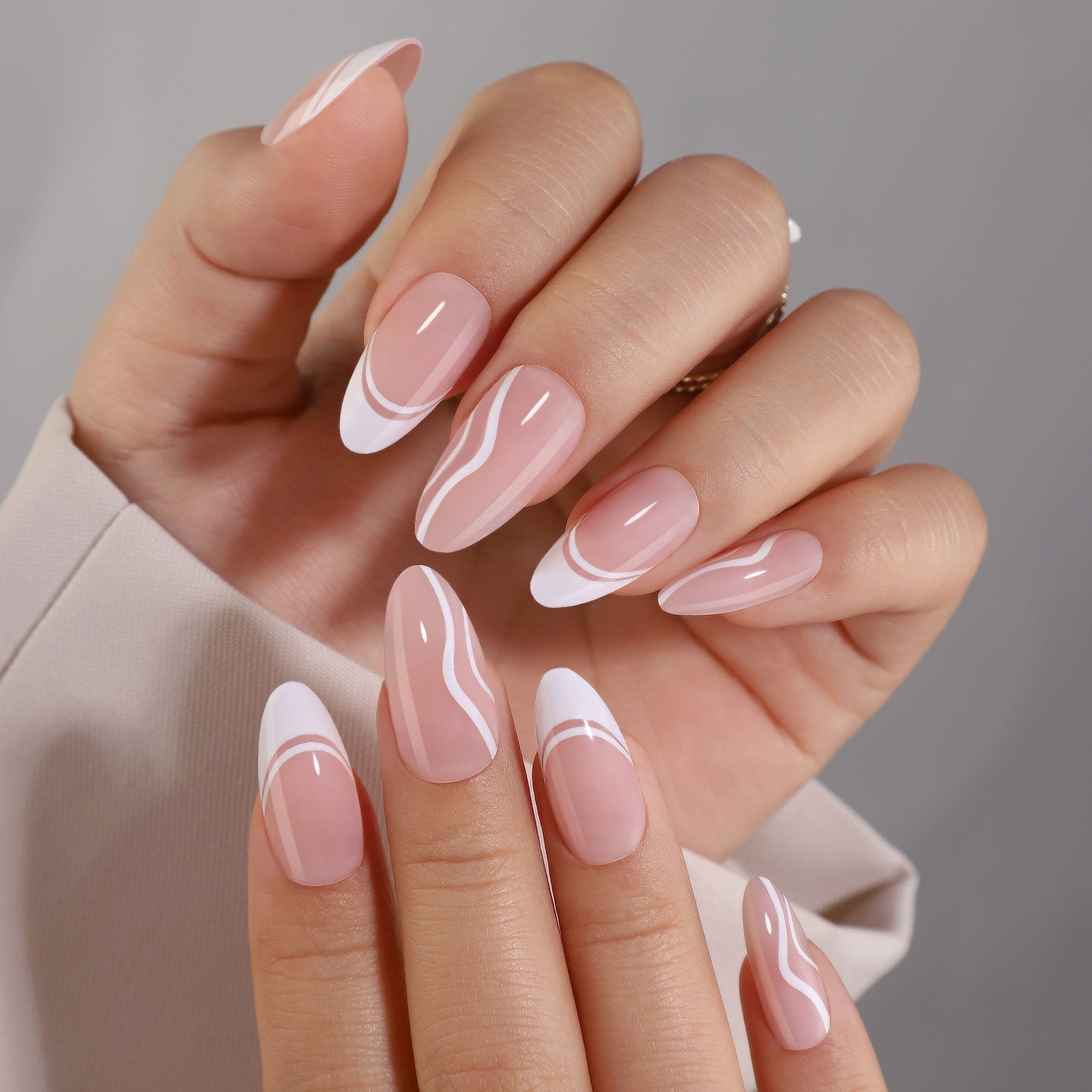
Mandorla corta e squadrata arrotondata. La forma conta tanto quanto la finitura. La mandorla da corta a media è la forma che la maggior parte delle persone associa a unghie naturali sane. Si presenta come un'unghia naturale che è stata curata con attenzione piuttosto che come una ricostruzione da salone.
Per chi ha letti ungueali più larghi o piatti — dove la vestibilità è più difficile da ottenere — vedi press-on nails for wide nail beds per indicazioni specifiche su misure e forme.
Cosa fa notare davvero la differenza (I "segnali rivelatori")
Questa sezione esiste perché l'onestà crea più fiducia rispetto alle rassicurazioni. Ecco i veri segnali che tradiscono le unghie press-on, così saprai specificamente cosa evitare.

Il vuoto cuticolare. Un'unghia applicata senza preparazione delle cuticole presenterà un vuoto visibile — uno spazio scuro tra il bordo inferiore della press-on e la pelle. Questo è il singolo segnale rivelatore più affidabile. La soluzione: spingi indietro le cuticole prima dell'applicazione e lima il bordo cuticolare dopo.
Spazio laterale / unghia troppo larga. Una press-on che si estende oltre i lati del tuo letto ungueale naturale si appoggia sulla pelle anziché sull'unghia. La transizione crea una leggera linea d'ombra che si nota immediatamente. La soluzione: riduci la misura e scegli l'unghia che rimane all'interno del tuo letto ungueale effettivo.
Svasatura ai lati. Questo è il commento in una community di Reddit che ha ricevuto 97 upvote: "Sembrano palesemente delle press-on. Sembrano anche un po' troppo larghe per la tua unghia, quasi tendenti a svasarsi verso l'esterno." L'osservazione è accurata. La svasatura si verifica quando un'unghia è di una misura troppo larga E il materiale è rigido — non riesce a conformarsi alla curva del tuo letto ungueale e spinge verso l'esterno. Il soft gel riduce la svasatura perché il materiale è semi-flessibile; una corretta scelta della misura la elimina del tutto.
Spessore uniforme. Come descritto sopra, la plastica ABS sembra plastica perché è plastica. Se usi il soft gel e noti ancora un problema di spessore, prova una lunghezza leggermente inferiore — la punta diventa più sottile rispetto alla base man mano che l'unghia si accorcia.
Lucentezza innaturale. La finitura di fabbrica ultra-lucida appare sintetica sotto certe luci. Un top coat opaco o una leggera passata con un buffer morbido per unghie elimina il problema dell'effetto plastica.
Linea delle cuticole non corrispondente. Se la curva inferiore della tua press-on non corrisponde alla forma della tua linea cuticolare naturale, sembrerà applicata anziché cresciuta. Questo è un problema di misura e forma: scegliere un'unghia la cui curva inferiore rispecchi la tua linea cuticolare fa parte della corretta scelta della misura, non solo della larghezza.
Per quanto riguarda la salute delle unghie, la guida ai danni da unghie artificiali dell'American Academy of Dermatology raccomanda di scegliere sistemi di unghie più flessibili ed evitare una rimozione aggressiva, e la guida per la cura delle unghie sane della Mayo Clinic sottolinea l'importanza di un'igiene delicata delle unghie e di limitare l'uso di prodotti aggressivi. Entrambe supportano la stessa regola pratica: più un'unghia si flette e si adatta naturalmente, meno artificiale tenderà a sembrare nell'uso quotidiano.
Esperienze reali degli utenti: cosa succede davvero

I dati più utili per capire se le unghie press-on sembrino finte provengono da chi le indossa davvero.
Nelle community dedicate alla manicure fai-da-te, il dibattito sul fatto che "sembrino finte" segue un pattern prevedibile. Quando qualcuno pubblica foto di unghie press-on in soft gel ben applicate e dallo stile naturale, le risposte sono costantemente simili a questa, che ha ottenuto oltre 800 upvote: "Io non me ne accorgerei mai! Si adattano perfettamente al tuo letto ungueale!" — in risposta a un utente che chiedeva se le sue unghie sembrassero palesemente artificiali.
Un'altra esperienza citata di frequente: "All'atto pratico, quasi nessuno lo saprà mai. Uso le unghie press-on da un po' di tempo e ogni volta che qualcuno mi fa i complimenti per le unghie, dico che sono press-on e rimangono sempre a bocca aperta." Questo è il copione che si ripete tra chi usa regolarmente le press-on: non "la gente non le nota", ma "la gente nota le unghie e dà per scontato che siano state fatte in salone".
Anche l'esperienza contraria — ovvero le unghie press-on che sembrano effettivamente finte — segue un pattern costante. I commenti negativi descrivono quasi sempre problemi di misura: unghie troppo larghe, che si allargano ai lati o che presentano spazi visibili all'altezza delle cuticole. Il materiale e i problemi di applicazione passano in secondo piano; un'unghia della misura sbagliata sembrerà finta a prescindere dal materiale di cui è fatta.
In sintesi: azzecca la misura, usa il soft gel ed esegui il passaggio della limatura dei bordi. Fatto questo, l'esperienza più comune sarà sentirti chiedere in quale salone vai.
"Sono ossessionata dal colore di queste unghie! Ho ricevuto tantissimi complimenti per questa tonalità e nessuno ha mai messo in dubbio che fossero state applicate in un salone."
— Patricia D, Acquirente verificata
454 Recensioni. 4.94/5.0. Nessuno ha indovinato.
Unghie press-on in soft gel SHANGMENG: profilo sottile, 16 misure e materiale in soft gel che asseconda i movimenti delle dita. Trova la tua misura senza tirare a indovinare — l'alternativa più vicina a una manicure gel che puoi realizzare da sola in 15 minuti.
FAQ
Le unghie press-on sembrano davvero naturali o è solo marketing?
Possono sembrare completamente naturali, ma solo se della misura corretta e realizzate in gel morbido (soft gel). L'affermazione di marketing secondo cui "tutte le unghie press-on sembrano naturali" è esagerata. Le unghie economiche in plastica ABS con una misura errata sembrano artificiali perché sono: spesse, rigide e non si adattano correttamente. Le unghie press-on in soft gel della misura giusta, con una corretta preparazione per l'applicazione e la limatura dei bordi, vengono costantemente scambiate per manicure in gel da chiunque le guardi direttamente. La parola chiave è "misura corretta": la vestibilità è il fattore principale, non il marchio. Secondo gli esperti di cura delle unghie di Allure, la misura è l'errore numero uno commesso da chi indossa le unghie press-on per la prima volta.
Qual è il modo più semplice per far sembrare vere le unghie press-on?
Limare il bordo cuticolare dopo l'applicazione. Questo singolo passaggio — da 20 a 30 secondi per unghia con una lima a grana fine — rimuove la linea netta in cui l'unghia press-on incontra la pelle. Senza questo passaggio, anche le unghie press-on in soft gel della misura corretta presentano un bordo visibile. Con questo accorgimento, l'unghia sembrerà crescere direttamente dal tuo dito. Il secondo passaggio più efficace è scegliere la misura inferiore quando ti trovi tra due taglie. Un'unghia anche solo 0,5 mm troppo larga crea uno spazio laterale che rivela immediatamente l'effetto finto.
Le unghie press-on sembrano finte al lavoro?
Non se scegli uno stile adatto a un ambiente professionale e azzecchi la misura. Le lunghezze da corte a medie nei toni nude, French, rosa tenue o con finish glazed rappresentano l'estetica standard di una "manicure" — nessuno in un contesto professionale le identificherà come unghie press-on, a meno che non esamini le tue dita molto da vicino. Gli stili che attirano l'attenzione nei contesti professionali sono gli stessi che la attirerebbero se realizzati in salone: lunghezze estreme, decorazioni 3D vistose o nail art molto audaci. Vedi natural almond nails per spunti su forme e colori adatti al luogo di lavoro.
Perché le mie unghie press-on sembrano finte anche se ho seguito tutti i passaggi?
La causa più comune è la misura: o le unghie sono troppo larghe (creando una svasatura o uno spazio laterale) o la curva inferiore dell'unghia press-on non corrisponde alla forma naturale della tua linea cuticolare. Prova a scegliere una taglia in meno e a selezionare un'unghia la cui curva cuticolare sia più vicina a quella della tua unghia naturale. La seconda causa più comune è saltare il passaggio della limatura del bordo cuticolare dopo l'applicazione. Se sia la misura che la limatura del bordo sono corrette e le unghie sembrano ancora artificiali, il problema è probabilmente il materiale — la plastica ABS ha proprietà visive che richiamano subito la plastica. Passare al soft gel risolve completamente questo problema.
Le persone davvero non si accorgono che sono unghie press-on?
Molto spesso. Tra chi usa regolarmente le unghie press-on, l'esperienza sociale più comune è ricevere complimenti per la manicure e poi rivelare che si tratta di press-on, suscitando grande sorpresa. Una testimonianza molto condivisa descriveva: "Sembrano così naturali che stavo per scriverti che avevi sbagliato sezione del forum" — una risposta da parte di qualcuno che aveva dato per scontato si trattasse di unghie in gel fatte in salone. Il risultato "nessuno se ne accorge" è assolutamente raggiungibile e comune, ma richiede materiale in soft gel, la misura corretta e il passaggio di limatura del bordo. Senza questi tre elementi, il risultato non sarà costante.
Ci sono stili di unghie press-on che sembrano sempre finti a prescindere dalla qualità?
Le lunghezze molto importanti (oltre i 15 mm oltre la punta), le forme molto squadrate con angoli netti o gli stili con grandi decorazioni 3D uniformi sono visivamente difficili da far passare per unghie naturali — non perché sembrino economici, ma perché le unghie naturali con quegli stili sono rare. Questi stili vengono percepiti come "nail art" piuttosto che come "unghie naturali", il che rappresenta un obiettivo estetico diverso. Se la tua priorità è un aspetto naturale, le forme a mandorla da corte a medie, lo squadrato arrotondato o l'ovale in tonalità nude, French o colori pastello pieni sono le scelte più sicure. Per la nail art e i look d'impatto, gli stili estremi sono invece perfetti.
Le unghie press-on hanno un aspetto diverso su letti ungueali larghi o piatti?
I letti ungueali più larghi hanno una gamma minore di unghie che si adattano correttamente nella maggior parte dei set standard, motivo per cui trovare la misura giusta è ancora più importante. Sui letti ungueali più larghi, è particolarmente critico evitare di scegliere una taglia in più — un'unghia che supera il letto ungueale su una base larga crea una svasatura visibile su entrambi i lati. La gamma di 16 misure dei set SHANGMENG offre più opzioni di misure intermedie rispetto ai set standard da 12 misure, il che è di grande aiuto. Per indicazioni specifiche, vedi press-on nails for wide nail beds.
In conclusione
Le unghie press-on sembrano finte? La risposta onesta è: quelle economiche, applicate senza cura, spesso sì. Quelle di qualità, della misura corretta, realizzate in soft gel e rifinite limando i bordi — quasi mai.
I quattro elementi che fanno la differenza sono: il materiale in soft gel (non plastica ABS), un'unghia che si adatti perfettamente al tuo letto ungueale naturale, la limatura del bordo cuticolare dopo l'applicazione e la scelta di forme e lunghezze dall'aspetto naturale. Se farai attenzione a questi dettagli, la reazione più comune sarà: "Adoro la tua manicure — da chi vai?".
I commenti su Reddit che descrivono meglio questo scenario non provengono da persone ingenue che non sanno cosa stanno guardando. Provengono da persone che hanno osservato attentamente e, nonostante ciò, non sono riuscite a capire la differenza. Questo è il risultato che si può ottenere. Richiede solo di sapere quali sono le quattro variabili da gestire al meglio.
Fonti: Guide ai prodotti per unghie Byrdie (2024–2026); Editoriali sulla cura delle unghie Allure (2024–2026); Linee guida sulle unghie artificiali dell'American Academy of Dermatology; Community Reddit r/pressonnails (opinioni degli utenti aggregate, 2025–2026).
Condividere