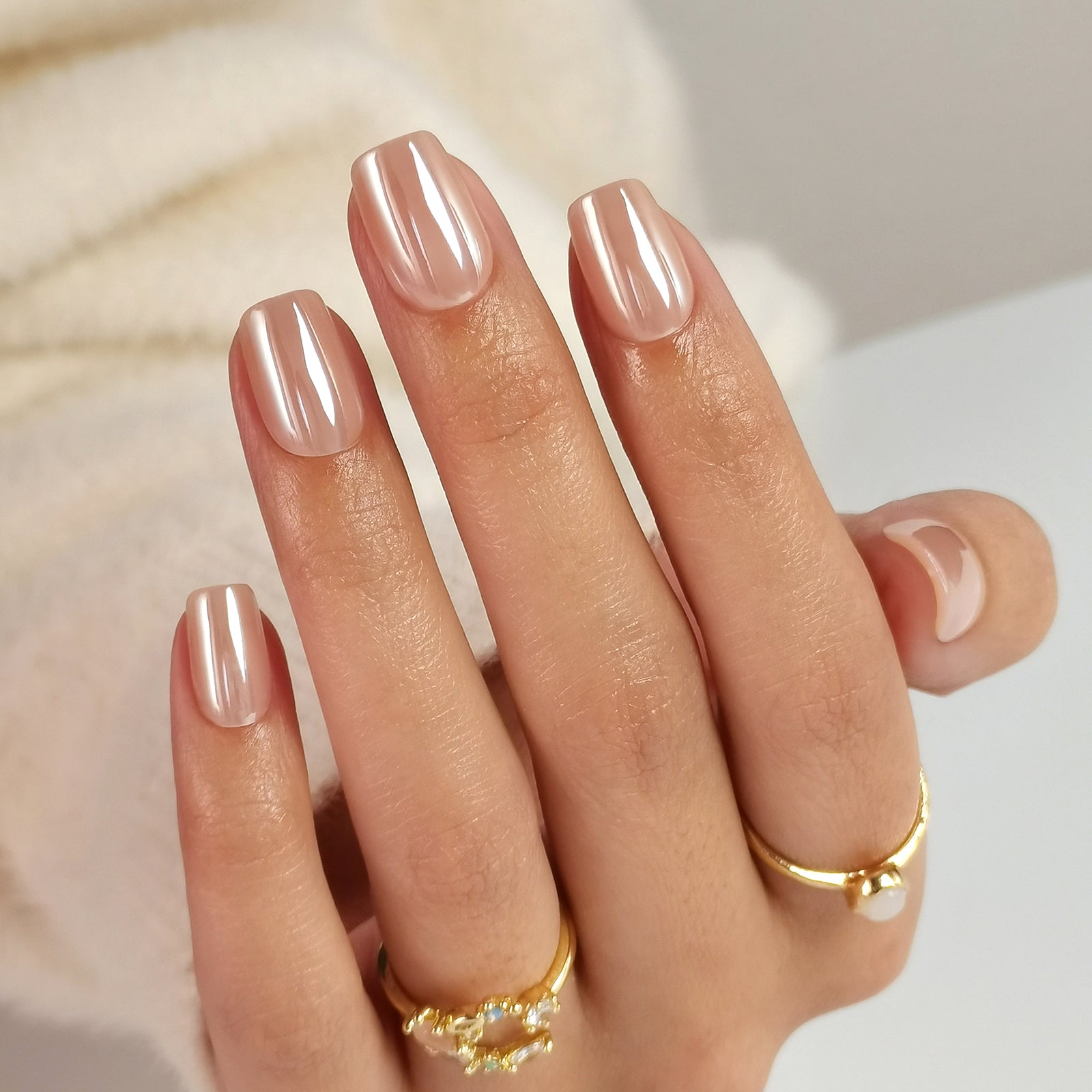
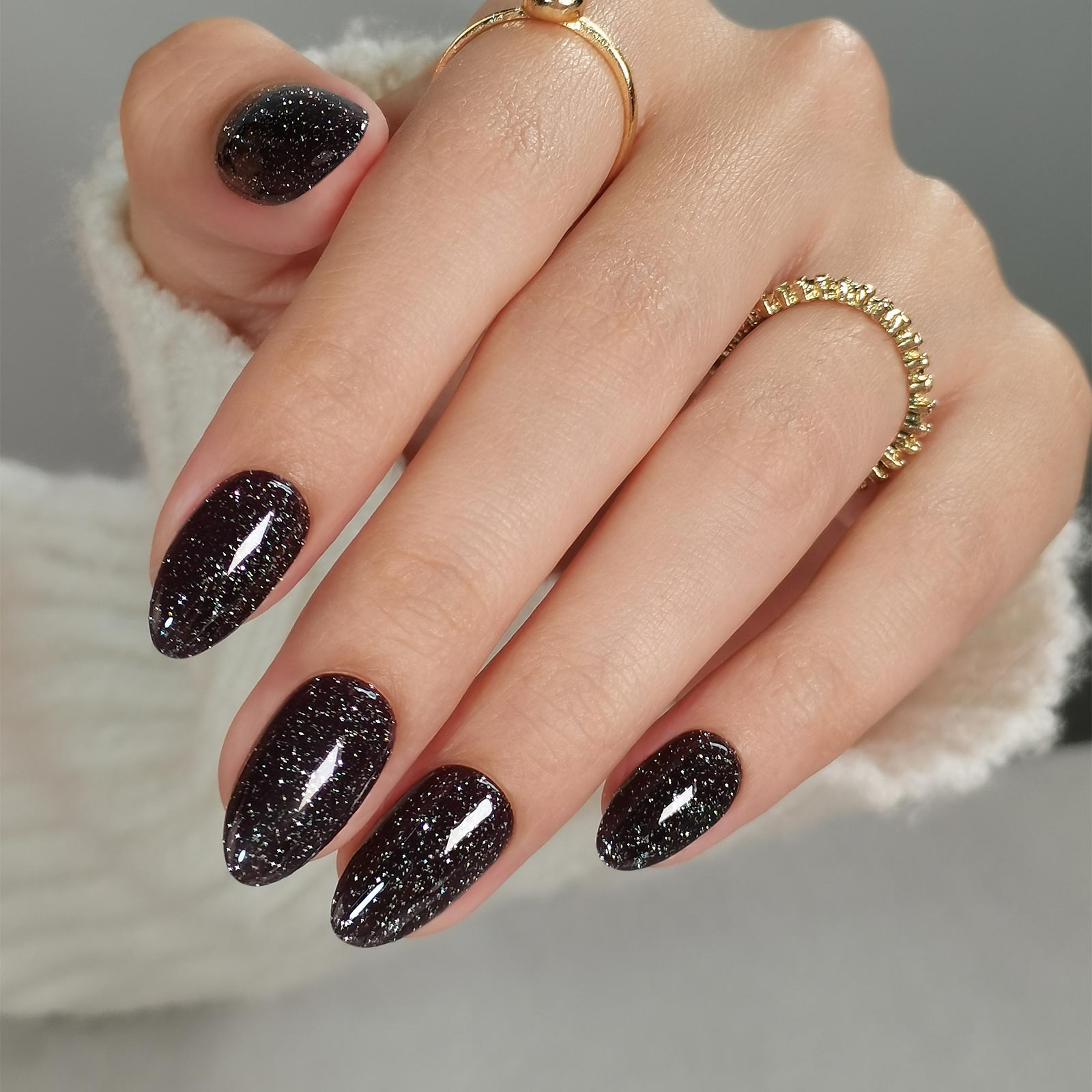
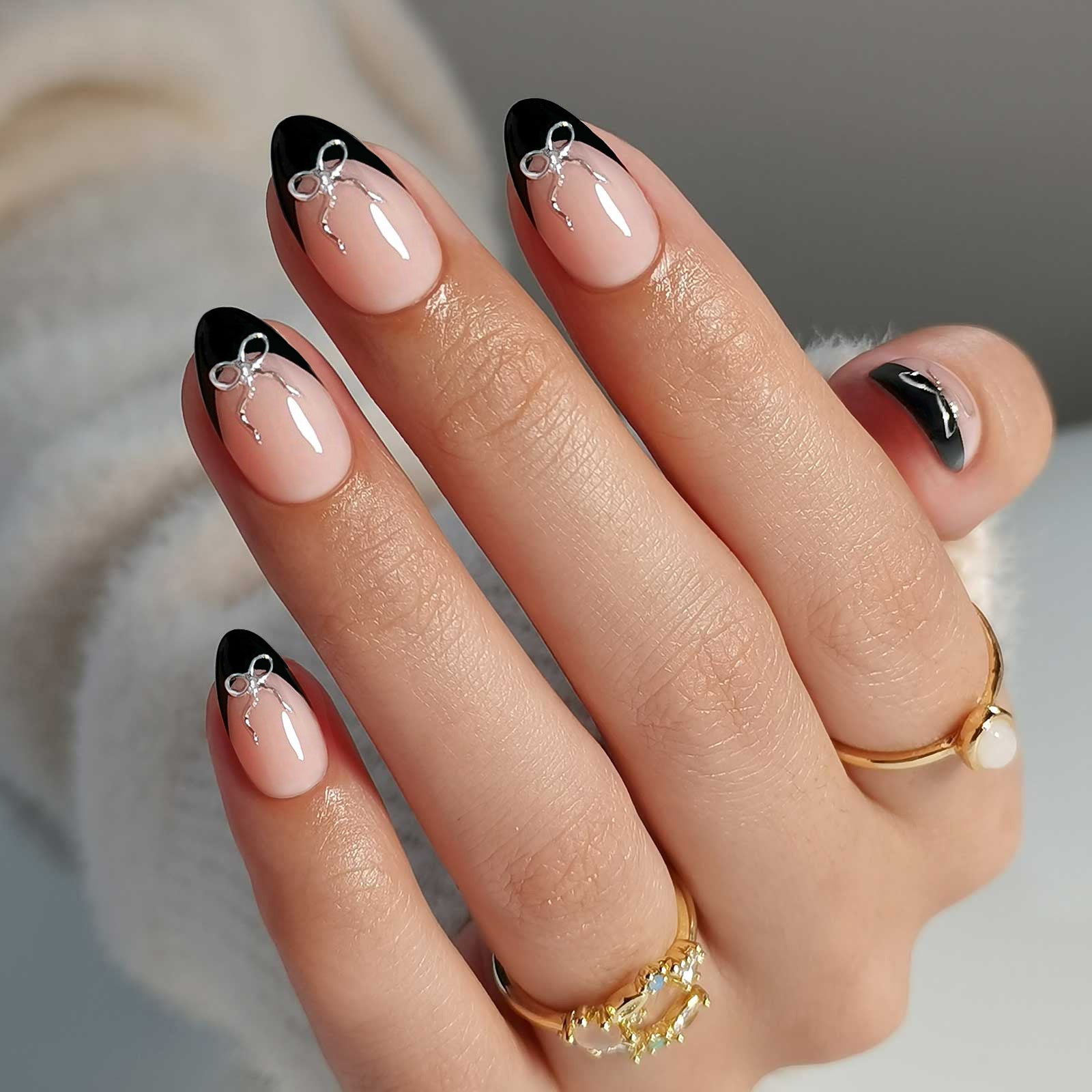
Stardust Nails: The Glitter Trend Taking Over 2026
Written by Elia, SHANGMENG Nail Trend Curator
Key Takeaways: Stardust nails are the refined, grown-up evolution of glitter — not chunky craft-glitter coverage, but an ultra-fine holographic shimmer that reads like powdered starlight on the nail surface. The finish shifts color from silver to violet to blue depending on the light angle, and the particle size is small enough that the texture reads as luminous rather than sparkly. Stardust is 2026's most-requested glitter aesthetic precisely because it sits at the intersection of maximalist impact and everyday wearability. SHANGMENG soft gel press-on nails deliver the finish in 32 tips across 16 sizes, with 454 verified reviews averaging 4.94 stars — and none of the mess of loose glitter application.
There is a reason "stardust nails" is trending separately from "glitter nails" in 2026. The two searches don't describe the same thing. Glitter is a broad category. Stardust is a specific aesthetic register: ultra-fine holographic particles, so small they behave more like shimmer dust than traditional glitter, layered over a base that allows the particles to shift color as the light source changes. The result is a nail that looks different from every angle — silver in direct light, catching blue and violet at oblique angles, and releasing a soft rainbow scatter in anything that backlit.
Allure's 2026 trend editors tracked "galaxy-inspired" and "holographic dust" finishes as separate trend drivers from standard glitter, noting that the micro-shimmer aesthetic was particularly prominent in editorial and festival contexts. Byrdie named light-shifting metallics — stardust finishes chief among them — as one of the ten defining nail trends of the year, driven by a generation of nail content creators who specifically sought out finishes that look different in video than in stills.
That light-reactive quality is the core of the stardust trend. It isn't just a nail that sparkles; it's a nail that moves. At a concert, the stardust finish interacts with stage lighting in ways that read as electric on camera. In natural light, the same nail settles into a softer, almost iridescent shimmer. The versatility is what makes the aesthetic so compelling across such a wide range of occasions — from daytime wearability to full evening glam.
A traditional stardust manicure at a salon — using pigment powder over a gel base — runs $50–80 and requires a UV lamp, professional application, and careful removal that can strip the nail surface if done incorrectly. Press-on stardust nails replicate the same finish in a 15-minute at-home process, with no UV equipment, no damage to natural nails, and a peel-off removal that leaves the nail intact.
Not sure which shape, length, or size fits your natural nails?
What Are Stardust Nails?

Stardust nails are defined by a single technical characteristic: ultra-fine holographic pigment particles applied over a base coat in a uniform layer. The particle size is the critical variable. Standard glitter uses particles measured in millimeters — visible individually, with sharp edges that catch light as distinct points. Stardust pigment uses particles measured in microns — invisible individually, blending into a continuous layer that interacts with light as a unified surface rather than as separate reflection points.
The practical difference is significant:
| Property | Stardust Finish | Regular Chunky Glitter |
|---|---|---|
| Particle size | Micro (< 100 microns) | Standard (1–3mm) |
| Texture on nail | Smooth, powder-like | Raised, textured |
| Light interaction | Color-shifting (holographic) | Point-sparkle |
| Wearability window | Day to evening without changing | Evening/event focused |
| Look at distance | Luminous shimmer | Visible glitter coverage |
| Most common base | Black, dark blue, nude, clear | Any |
The holographic element is what separates stardust from plain fine shimmer. Holographic pigment contains a diffraction grating structure — microscopic ridges that split white light into its component spectrum, similar to how a prism works. The result is that the nail shows different colors as the viewing angle changes. A true stardust nail in silver reads silver head-on, but shows blue, violet, and green overtones as the hand moves — which is why nail video content using stardust finishes consistently performs better than static imagery. The finish is designed for motion.
Stardust vs. Regular Glitter vs. Chrome: The Finish Comparison
Three finishes compete for the "attention-commanding nail" space in 2026, and each has a distinct use case.
Stardust wins on versatility. The micro-particle texture is smooth enough for professional settings, the color shift is compelling enough for evening wear, and the luminous quality reads as sophisticated rather than festive. It's the only high-impact finish that works without a context shift.
Regular chunky glitter wins on raw impact. If the goal is maximum sparkle visibility — festival, NYE, a dress that demands the nails match its energy — chunky glitter delivers a presence that stardust doesn't. The particles are individually visible and they catch light aggressively. Our full glitter nails guide covers the complete spectrum from micro-shimmer to full coverage glitter techniques.
Chrome wins on precision. A well-executed mirror chrome nail shows a clean reflection rather than sparkle — it reads as architectural and fashion-forward, not festive. Chrome is the choice when you want your nails to signal precision and editorial sensibility. For the complete chrome breakdown including silver, gold, and color-chrome hybrids, our chrome press-on nails trend guide covers every major chrome finish in the market.
The clearest differentiator: stardust looks different depending on whether it's lit by sunlight, tungsten, or LED. Chrome looks the same in every light. That dynamic quality is why stardust has its own trend moment — it's a finish designed for the world where people experience nails in motion, on camera, under variable light sources.
20 Stardust Nail Designs
Silver Stardust (1–5)
Silver is stardust's home base. The classic stardust nail has always been a silver-toned holographic shimmer — influenced by both chrome and galaxy aesthetics, landing in the precise space between the two. Silver stardust reads differently from silver chrome: where chrome is a mirror, stardust is a nebula. Both are silver, but the character is entirely different.

1. Full-Coverage Silver Stardust
Every nail coated in ultra-fine silver holographic pigment over a deep navy or black base. The dark base amplifies the color-shift effect — the contrast between the dark background and the holographic particles makes the shift from silver to violet to blue read more dramatically. This is the design that photographs best in low-light conditions.
Best shape: Oval or almond — the curved shape helps the holographic shift flow naturally across the nail
Vibe: Galaxy editorial, maximalist-refined
Occasion: Evening events, concerts, any occasion that involves dramatic lighting
2. Silver Stardust on Nude
Fine silver stardust particles dispersed over a translucent nude base rather than a dark one. The effect is softer and more diffuse — the shimmer reads as a glow embedded in the nail rather than a dramatic color-shift effect. This is the stardust look for natural-light settings.
Best shape: Round or squoval — the subtler finish pairs best with natural shapes
Vibe: Understated luminosity, effortlessly put-together
Occasion: Daytime events, office-adjacent settings, occasions where you want presence without maximalism
"The shimmer is so beautiful — catches every light perfectly." — Maya, Verified Buyer
3. Silver Stardust Accent Nail
One nail in full stardust coverage; the remaining nails in a complementary muted finish — flat silver, pale grey, or translucent white. The accent structure directs the eye to the stardust nail while letting the rest of the hand serve as a frame. For people new to stardust, the accent approach is the lowest-commitment entry point.
Best shape: Any — the accent structure works on every nail shape
Vibe: Curated, deliberately minimal
Occasion: Workplaces where full stardust would read as too much, social events where you want to test the finish
4. Silver Stardust with Dark Base Gradient
Full stardust that fades — from heavy coverage at the free edge to a lighter dusting at the base — over a dark charcoal or navy background. The gradient concentrates the holographic shift at the tips while allowing the darker base to show at the cuticle, creating a night-sky-fade effect.
Best shape: Coffin or stiletto — the longer free edge gives the gradient room to work
Vibe: Space editorial, high concept
Occasion: Events, editorial photography, occasions where fashion is the primary currency
5. Holographic Silver Stardust (Maximum Color Shift)
Not silver with a hint of color shift — silver that visibly rotates through blue, violet, and green depending on viewing angle. A true holographic stardust finish shows different dominant hues at different light incidence angles. This is the most technically complex version of the silver stardust look and the one that reads most dramatically in video.
Best shape: Square or coffin — flat surfaces show the holographic diffraction most clearly
Vibe: Futuristic, dynamic, editorial
Occasion: Content creation, photography, evening events with mixed lighting
For a deep dive into silver finishes including chrome and holographic options, our silver nails designs guide covers 20 silver looks across the full finish spectrum.
Gold Stardust (6–10)
Gold stardust is stardust's warmer register — the same micro-holographic particle technology applied to a warm-toned base. Where silver stardust shifts to violet and blue, gold stardust shifts between amber, copper, and champagne. The effect is warmer, more celebratory, and more naturally suited to skin tones with warm or olive undertones.

6. Classic Gold Stardust
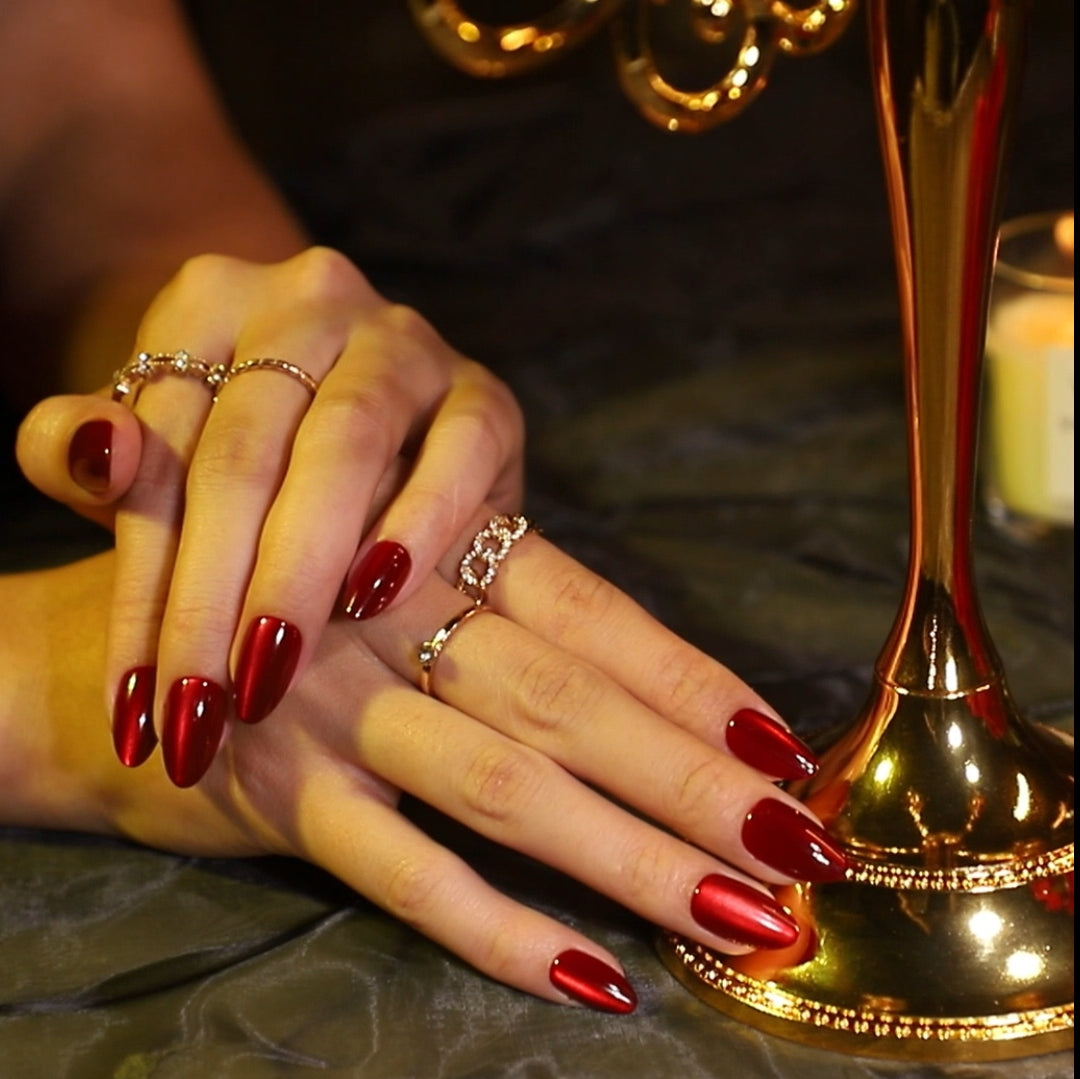
Fine gold holographic particles over a warm amber or champagne base. The finish reads as liquid gold at direct viewing angles and shifts toward copper and rose gold at oblique angles. This is the gold stardust analog to Design 1 — the foundation look that all other gold stardust variations reference.
Best shape: Almond or oval — warm finishes pair best with softer nail shapes
Vibe: Luxe, celebratory, festive-but-refined
Occasion: Holiday events, weddings as a guest, occasions that call for warm-toned glam
7. Champagne Stardust
A paler, cooler version of gold stardust — more prosecco than whisky. Fine particles in a pale champagne-gold tone over a near-nude base. This is the gold stardust look that works in professional settings: warm enough to read as intentional, restrained enough to not dominate.
Best shape: Round or squoval
Vibe: Elevated everyday, quietly festive
Occasion: Work contexts, daytime events, any occasion where gold feels right but bright gold feels too much
8. Bronze Stardust
Deeper than gold stardust, with a richer copper-bronze base tone and a color shift that runs toward rust and warm brown at certain angles. Bronze stardust reads as more grounded and editorial than bright gold — it pairs naturally with earth-tone fashion and autumn aesthetics.
Best shape: Coffin or almond
Vibe: Editorial warm, autumnal glam
Occasion: Fall events, brunches, occasions where warm-toned maximalism fits the context
9. Gold Stardust with Black Base
The warm-tone counterpart to Design 1's dark-base approach. Fine gold holographic particles over a deep black or dark espresso base. The contrast between the dark base and the gold shimmer makes the warm color shift read more dramatically — champagne and copper flickers against near-darkness.
Best shape: Coffin or stiletto
Vibe: Old Hollywood maximalism
Occasion: Evening events, holiday parties, occasions that benefit from high-contrast glamour
"Absolutely gorgeous — everyone asked where I got them." — Sofia, Verified Buyer
10. Gold-to-Rose Gold Stardust Shift
A duochrome-adjacent gold stardust that shifts more strongly toward rose gold and warm pink at certain angles. The shift range — from warm gold head-on to rose-tinted at oblique angles — is one of the most flattering warm-toned stardust variations across most skin tones.
Best shape: Oval or almond
Vibe: Romantic, feminine, warm-maximalist
Occasion: Date nights, weddings, fashion-forward evening events
For gold nail designs beyond the stardust finish — including chrome gold, foil, and gold French tips — our gold nail designs guide covers 14 looks across the full gold spectrum.
Still worried the look will feel too bold in real life? Start with a wearable shape and finish, then switch up the color when you want more drama.
Colored Stardust (11–15)
Colored stardust expands the palette beyond silver and gold into the full spectrum. The technical principle is the same — holographic micro-particles — but the base tone shifts to create pink, blue, purple, and green stardust effects. Colored stardust is the most playful section of the trend and the one most associated with festival and maximalist aesthetic communities.

11. Pink Stardust
Fine pink holographic particles over a rosy or mauve base. The holographic shift in pink stardust typically runs toward lavender and peach — the color shifts are softer and more pastel-adjacent than the metallic shifts in silver and gold stardust. Pink stardust is the entry point for colored stardust and consistently one of the most-searched variations.
Best shape: Oval, almond, or round
Vibe: Feminine, romantic, soft maximalism
Occasion: Valentine's Day events, spring occasions, any context that calls for pink with a fashion-forward twist
12. Lavender Stardust
A cooler pink-adjacent stardust with a lilac or soft purple base. The holographic shift in lavender stardust runs toward silver and pale blue — giving the finish a dreamy, ethereal quality that reads differently from both pink and blue stardust. Lavender stardust is the most editorial-adjacent of the soft-toned colored stardust options.
Best shape: Short oval or squoval
Vibe: Dreamlike, editorial, softly maximalist
Occasion: Spring and summer events, gallery openings, occasions where the fashion palette is soft and muted
13. Blue Stardust — Galaxy Mode
Deep blue or midnight base with fine holographic particles that shift toward silver, violet, and teal. Blue stardust is the most literal interpretation of the "galaxy" aesthetic that underpins the entire stardust trend — it looks, at its best, like a photograph of the Milky Way rendered in miniature across the nail surface.
Best shape: Coffin or stiletto — longer nails give the galaxy pattern more canvas
Vibe: Space editorial, maximalist, dramatic
Occasion: Night events, concerts, festival contexts, occasions that reward going all the way
14. Purple Stardust
Rich purple or amethyst base with holographic particles that shift through violet, magenta, and deep blue. Purple stardust occupies the boundary between the warm and cool ends of the stardust spectrum — it pairs with both warm and cool fashion palettes, and the shift range is one of the most visually complex of any colored stardust option.
Best shape: Almond or coffin
Vibe: Mystical, dramatic, rich-toned
Occasion: Evening events, autumn fashion contexts, occasions where violet and jewel tones dominate the dress code
15. Green Stardust — The Unexpected Statement
Emerald or forest green base with holographic particles that shift toward gold and blue-green. Green stardust is the least expected colored stardust option and, because of that unexpectedness, one of the most conversation-starting. Against skin tones with warm undertones, green stardust reads as striking and highly editorial.
Best shape: Square or coffin
Vibe: Unexpected editorial, confidence-forward
Occasion: Events where you want to be distinctive, fashion contexts that value unconventional color choices
Stardust French & Ombré (16–20)
The final section of the stardust design spectrum applies the holographic particle finish to French tip and ombré structures — designs that add dimensional sparkle to established nail silhouettes rather than creating a new one. These are the most wearable stardust variations for contexts where full-coverage stardust would feel like too strong a commitment.
16. Silver Stardust French Tip
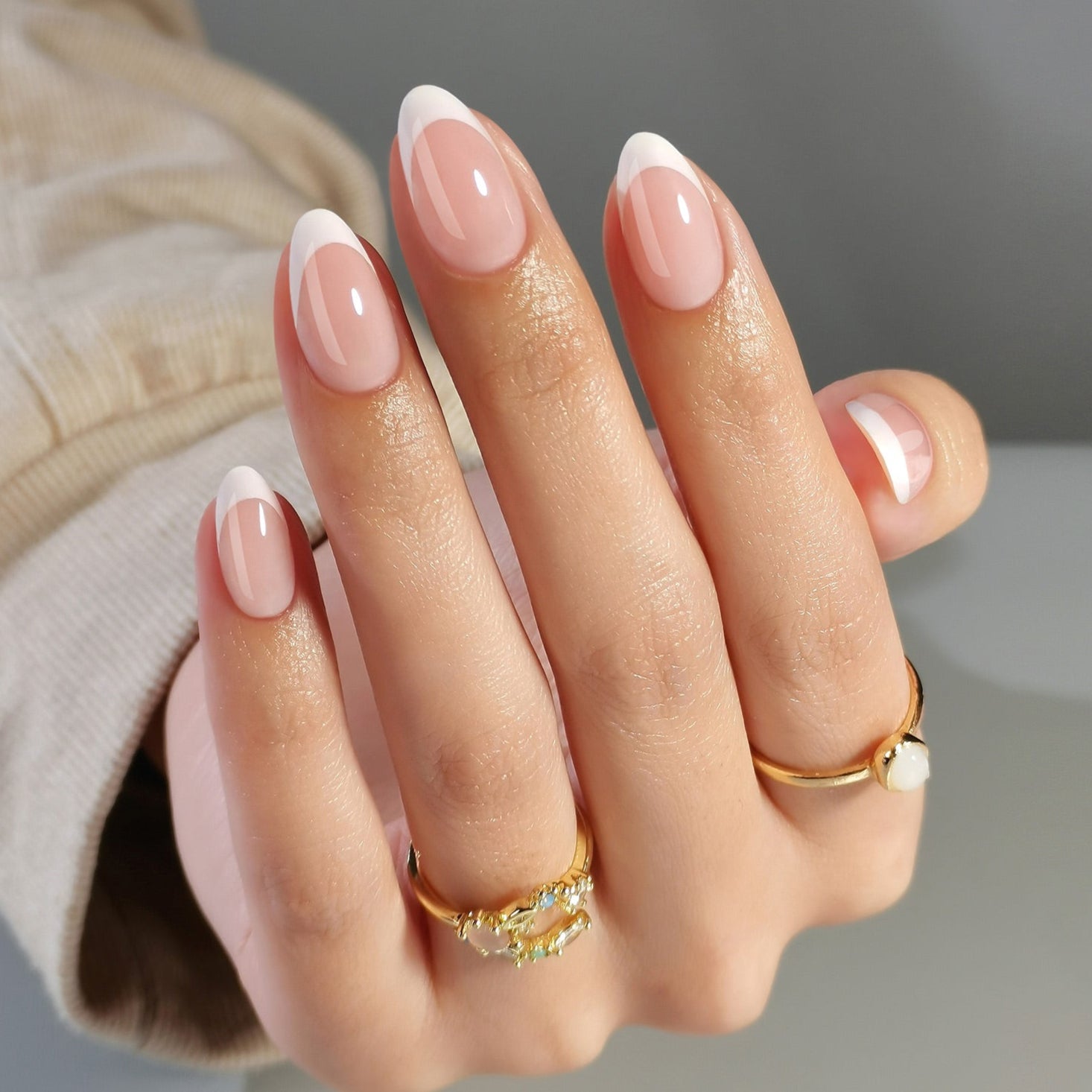
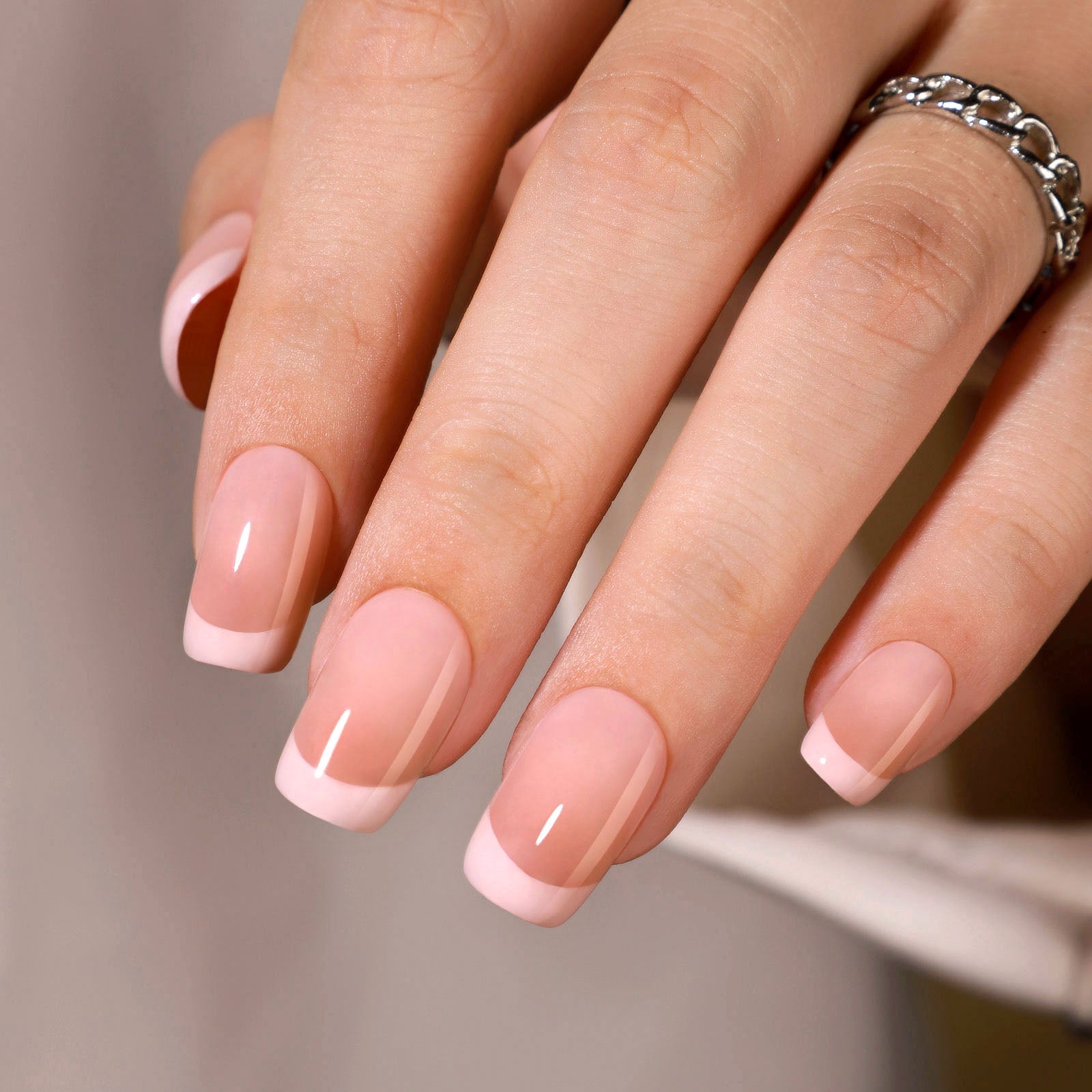
A classic French silhouette — translucent or pale pink base — with the white tip replaced by a fine silver stardust band. The stardust tip catches light while the base remains quiet, creating a graduated impact: restrained from afar, luminous up close. This is the stardust entry point for people who prefer minimal nail aesthetics.
Best shape: Oval or almond — the French structure pairs best with softer tip shapes
Vibe: Elevated classic, quietly festive
Occasion: Workplaces, weddings as a guest, occasions where full stardust feels too maximalist
17. Gold Stardust French Tip
The same French structure with a fine gold stardust band instead of silver. The warm-toned tip reads as more celebratory than classic white and more festive than silver stardust — it's the French tip upgrade that works particularly well for holiday and event contexts.
Best shape: Oval or coffin
Vibe: Festive-classic, warm-toned elegance
Occasion: Holiday parties, weddings, occasions that call for formal elegance with a fashion-forward detail
18. Colored Stardust French — Pink or Lavender Tips
The French structure with a colored stardust tip — either pink or lavender stardust replacing the classic white. The colored tip creates a fashion-forward reading of the traditional French silhouette without committing to full-coverage color. Pink or lavender stardust French tips are the most social-media-friendly stardust French variation.
Best shape: Almond or oval
Vibe: Modern-romantic, fashion-forward classic
Occasion: Spring events, bridal occasions, social media content
19. Stardust Ombré — Dark to Holographic
A dark, deeply pigmented base — navy, black, or deep purple — that fades into full stardust coverage at the free edge. The gradient runs from opaque base color at the cuticle to holographic stardust at the tip, creating a literal night-sky fade: dark at the horizon, glittering at the top. This is the stardust design with the strongest visual metaphor and the most editorial reading.
Best shape: Coffin or stiletto — longer free edges give the gradient more range
Vibe: Dramatic, editorial, maximalist-beautiful
Occasion: Evening events, concerts, occasions where you want the nails to be the conversation
For the complete ombré nail design spectrum — including color-to-color gradients, chrome ombré, and glitter fade techniques — our ombré nails guide covers every major gradient approach.
20. Stardust Reverse French — Base Sparkle, Clear Tips
The inverse of a French tip: stardust coverage at the nail base and cuticle area, fading to a clear or translucent tip. The reverse structure directs sparkle toward the finger rather than the nail edge, creating a different optical effect — the stardust appears to emerge from the skin rather than from the nail tip. This is the architectural version of the stardust French and the one most associated with editorial fashion contexts.
Best shape: Short square or squoval — the clean tip reads best on shorter nails
Vibe: Architectural, avant-garde, distinctly editorial
Occasion: Fashion events, photography shoots, occasions where you want a nail design that people ask about
Best Nail Shapes for Stardust Nails
Shape determines how the holographic color shift reads on the nail. Because stardust's defining quality is the way the finish changes with the viewing angle, nail geometry has a direct impact on how dramatic or subtle the effect appears.
Almond is the stardust shape. The curved, tapered silhouette creates a continuous surface that transitions the holographic shift as the eye moves across the nail — the angle changes gradually rather than sharply, which means the color shift plays out as a flow rather than a jump. Almond stardust photographs particularly well because the curve creates natural shadow gradients that show the holographic effect at multiple angles simultaneously.
Coffin maximizes drama. The flat center surface shows the stardust at a single, consistent viewing angle — full silver or full gold — while the beveled sides catch the color shift, creating a visible transition from the center to the edge. The effect is more structured and graphic than almond, with a harder boundary between the base color and the shift zones.
Oval is the everyday stardust shape. Similar principle to almond but with a shorter, more manageable length — the curved surface still allows the holographic shift to play out, but the overall impression is softer and more wearable. Oval is the right choice if you want the stardust effect in a shape that doesn't require lifestyle adjustment.
Square concentrates the holographic shift at the corners. The flat center reads as a clean, single-tone stardust at direct angles, while the sharp corners catch the color shift at oblique angles. Square stardust reads as more graphic and modern than curved shapes — it's the right choice if you want the stardust finish to feel architectural rather than ethereal.
How Press-Ons Deliver the Stardust Look
Traditional stardust and holographic manicures at salons require a multi-step gel process: a base gel, cure under UV, application of the holographic pigment powder with a silicone brush, top coat, second cure. The process takes 45–60 minutes and costs $50–80. The pigment powder phase is particularly finicky — over-application muddies the reflection, and uneven distribution creates patchy areas where the holographic shift doesn't occur.
Press-on stardust nails eliminate the process entirely. The holographic finish is applied during manufacturing — the UV gel surface receives the pigment powder under controlled factory conditions and is then sealed with a UV-cured top coat. The result is a uniform stardust finish across the entire nail surface, with consistent particle distribution that would be difficult to replicate by hand.
SHANGMENG soft gel press-on nails in stardust and holographic finishes apply in four steps:
- Clean and buff natural nails (no polish or oils on the surface)
- Select the matching size from the 32 tips across 16 sizes
- Apply adhesive tab or nail glue to the natural nail and the press-on
- Press and hold for 30 seconds
The soft gel material conforms to the natural nail surface rather than sitting on top of it, which improves adhesion and prevents the lifting at the edges that affects rigid plastic press-ons. With adhesive tabs, the set lasts 1–2 weeks; with nail glue, 2–3 weeks. Removal requires warm water — the adhesive releases without damage to the nail plate.
From 454 verified reviews averaging 4.94 stars: "The holographic finish is gorgeous — exactly what I wanted without the salon price tag." — Jasmine, Verified Buyer
FAQ
What exactly are stardust nails?
Stardust nails are nail designs using ultra-fine holographic pigment particles — particles small enough (typically under 100 microns) that they blend into a continuous layer on the nail surface rather than appearing as individual glitter pieces. The holographic component means the finish changes color as the viewing angle changes, shifting between silver, blue, violet, and other hues depending on the light source and position. The effect resembles fine cosmic dust — which is where the name comes from. Stardust nails are distinct from chunky glitter (larger particles, festive rather than luminous) and from chrome (a mirror reflection effect rather than a color-shifting sparkle). The American Academy of Dermatology notes that UV-cured gel manicures preserve nail integrity better than repeated polish removal — press-on stardust nails offer the same look without any UV exposure.
How are stardust nails different from regular glitter nails?
The defining difference is particle size and what it does to light. Regular glitter nails use particles visible to the naked eye — each particle catches light as a distinct point, creating the recognizable "sparkle" texture. Stardust nails use particles so fine that they're individually invisible, blending into a uniform layer that interacts with light as a continuous holographic surface rather than as a collection of reflection points. The result is luminosity rather than sparkle — stardust reads as the nail itself glowing rather than as glitter sitting on the nail surface. For the full glitter nail design spectrum from micro-shimmer to chunky coverage, our glitter nails guide covers every major glitter finish type.
How long do stardust press-on nails last?
With proper application on clean, dry, oil-free nails, stardust press-on nails last 1–2 weeks with adhesive tabs and 2–3 weeks with nail glue. The key maintenance factor is avoiding prolonged water exposure in the first two hours after application, which allows the adhesive to fully cure. The stardust finish itself — being UV-sealed during manufacturing — does not fade, dull, or scratch under normal wear. The longevity limit is adhesion rather than finish quality.
What nail shapes work best with stardust?
Almond and oval shapes tend to show the stardust color-shift effect most flatteringly — the curved surface allows the holographic shift to play out gradually as the viewing angle changes. Coffin maximizes the graphic contrast between the center and edge of the nail. Square concentrates the shift at the corners for a more modern, architectural reading. Short nails work equally well with stardust; the finish reads as luminous at any length. The one shape exception: very short, flat nails (extremely short square) reduce the surface area available for the holographic shift, which makes the stardust effect less visible. Squoval or short oval are better choices for very short nails.
Can stardust nails work for everyday wear?
Stardust nails are more wearable than standard chunky glitter for everyday contexts. The micro-particle texture reads as shimmer rather than sparkle at a distance, which makes it less conspicuous in professional settings. Designs 2 (Silver Stardust on Nude) and 7 (Champagne Stardust) are specifically engineered for daytime wearability — the holographic effect is present but subtle. The French tip variations (Designs 16–18) are the most universally office-appropriate stardust options, incorporating the holographic finish into a traditional nail structure. Pink and lavender stardust finishes (Designs 11 and 12) are also considered everyday-appropriate in most non-formal professional environments. For context on where chrome and holographic finishes sit in the broader 2026 nail trend landscape, our pink chrome nails guide covers the mainstream trajectory of light-shifting nail finishes.
How do stardust press-on nails compare to salon stardust manicures?
The finish is equivalent. Both use holographic pigment powder over a UV-gel base, sealed with a top coat. The manufacturing process for press-on stardust nails replicates the salon application in a controlled factory environment, achieving more consistent particle distribution than hand-applied salon versions (where uneven brushwork can create patchy sections). The practical advantages of press-on stardust over salon: approximately 70–80% lower cost ($14–20 vs. $50–80), 15-minute application versus 60-minute salon visit, no UV exposure, and peel-off removal that doesn't damage natural nails. The practical advantage of salon stardust over press-ons: a skilled technician can apply custom designs that standard press-on sets don't offer, such as multi-finish accent arrangements or free-form nail art layered over the stardust base.
Related Guides
- Glitter Nails: Sparkle Without the Mess — Full glitter nail guide from micro-shimmer to chunky coverage
- Chrome Press-On Nails: 2026 Trend Guide — How stardust compares to mirror chrome and glazed chrome
- Silver Nails: 20 Metallic Designs for 2026 — Silver finishes beyond stardust: chrome, holographic, glitter, and French
- Gold Nail Designs: 14 Looks From Subtle Trim to Full Glam — Warm-toned counterpart to silver stardust across the full gold nail spectrum
- Ombré Nails: The Gradient Trend That Never Fades — Gradient nail designs including holographic fade and glitter ombré
- Pink Chrome Nails: The 2026 Trend That's Taking Over — Where pink chrome and pink stardust converge in 2026
Elia is SHANGMENG's Nail Trend Curator, covering emerging nail aesthetics across editorial content, social platforms, and global runway trends. Sources: Allure Nails, American Academy of Dermatology.
Share


