





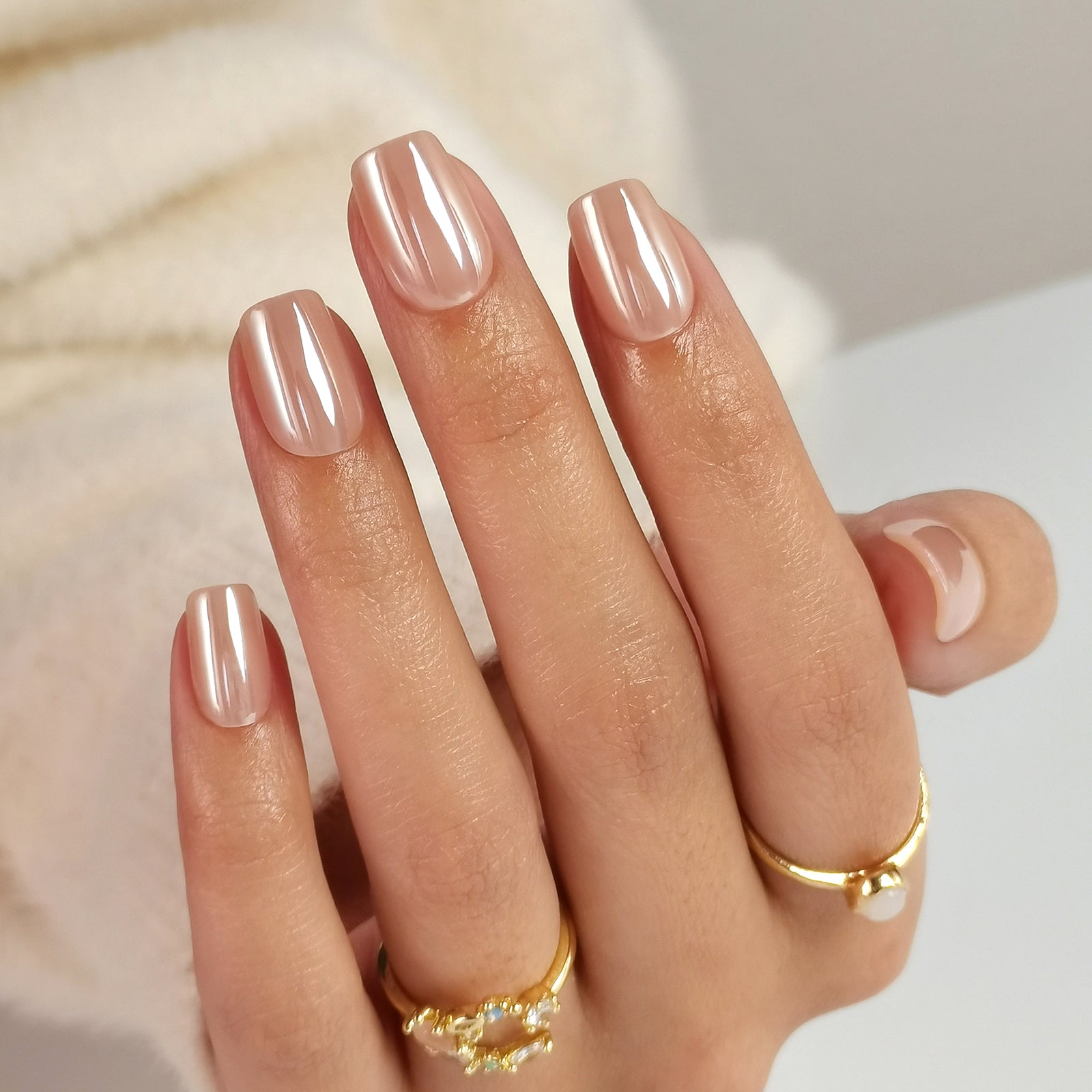

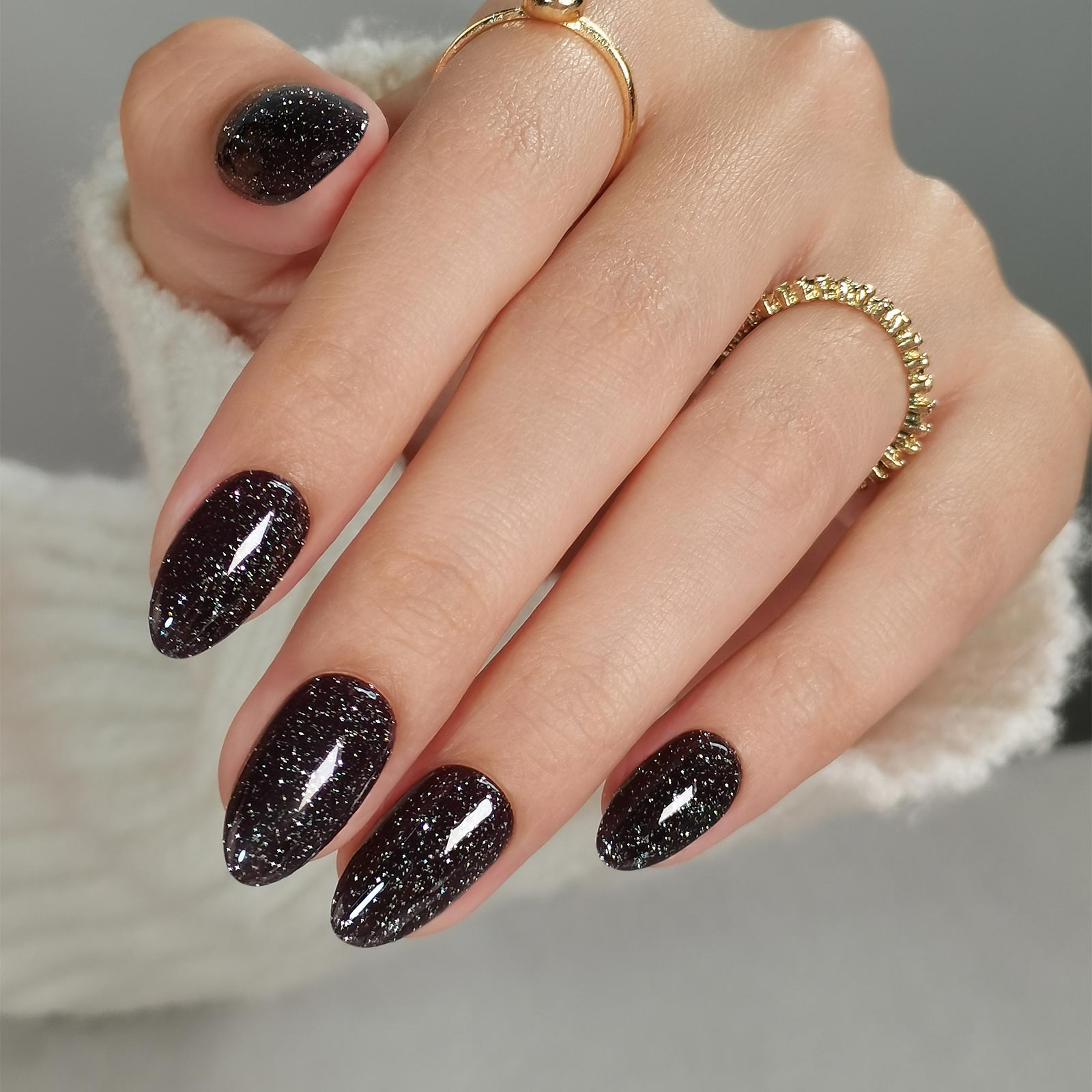
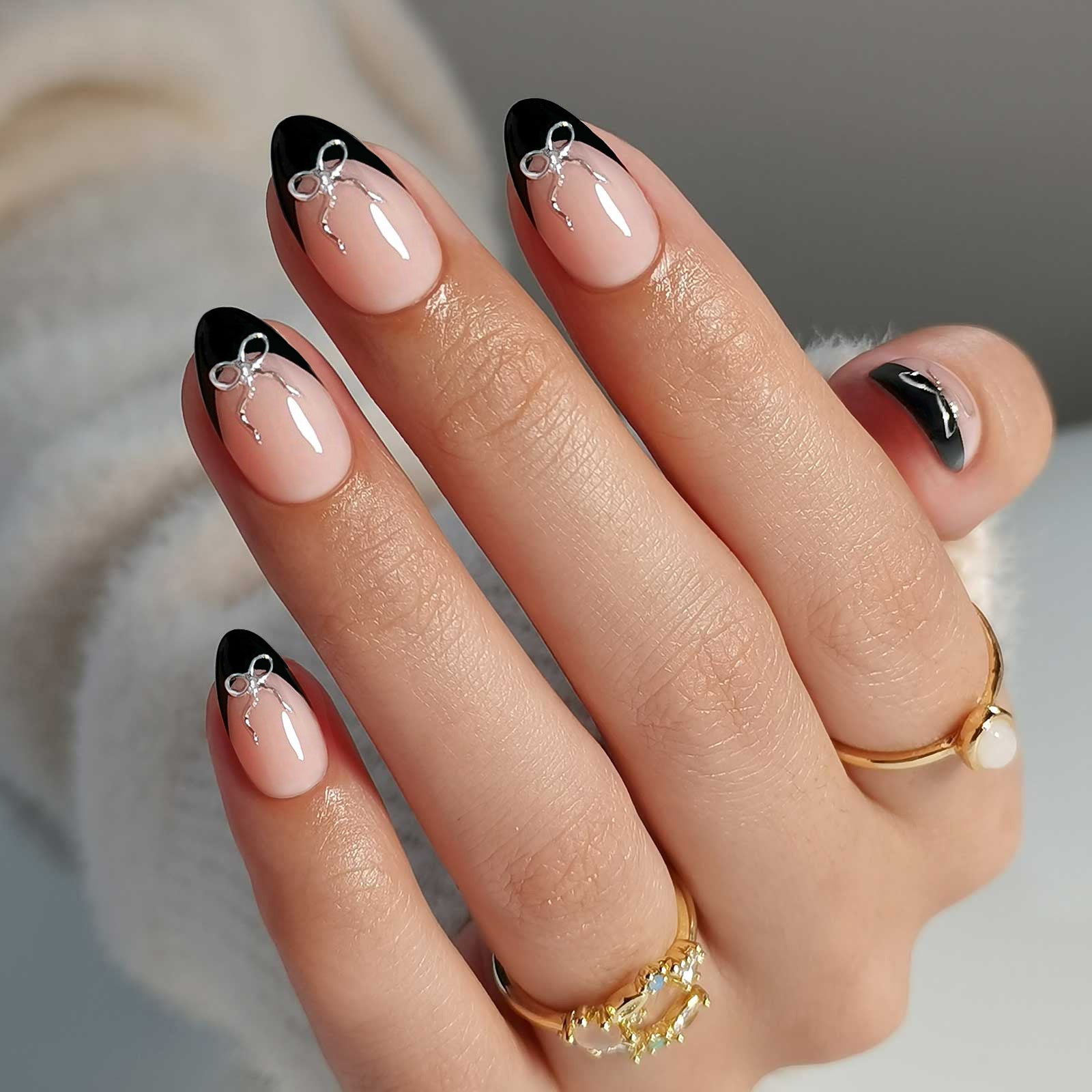


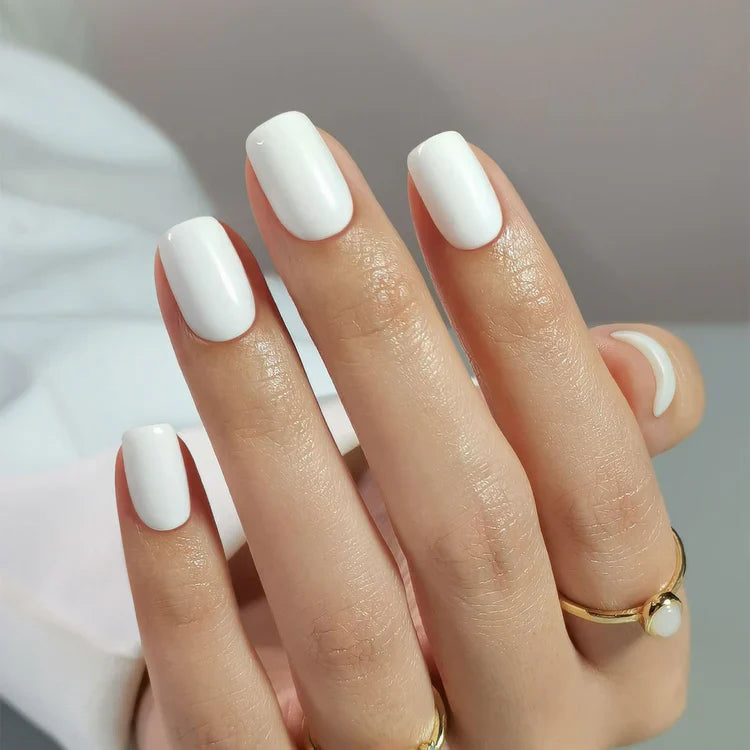





Press-On Nails with Designs: 2026's Top 30 Art Styles
By Elia, SHANGMENG Nail Trend Curator.
Key Takeaways: The best press-on nails with designs in 2026 span six distinct art families — French variations, chrome and metallic, cat eye, floral, abstract geometric, and 3D texture. Every style on this list is available as a ready-to-wear set. No nail art skill, no brush, no UV lamp required.
Nail art used to mean an appointment, a wait, a skill set you either had or didn't, and a price tag that reflected all three. The press-on nail market has quietly dismantled every one of those barriers. Today you can wear hand-painted floral nail art, multi-dimensional cat eye effects, sculptural 3D chrome, or precisely layered ombre gradients — all manufactured to a standard that would take a salon technician 90 minutes to recreate — and apply them yourself in under 20 minutes.
Press-on nails with designs have become the default way millions of people access nail art. The 2026 market reflects this maturity: designs have moved from simple solid colors and basic French tips into a full spectrum of art techniques, finishes, and textures that match or exceed what salons produce. This guide maps that spectrum — 30 specific designs organized by style family, plus an explainer on how these designs are actually made, what's trending by season, and how to pick your first designed set.
Not sure which shape, length, or size fits your natural nails?
Why Pre-Designed Press-Ons Changed Nail Art

The traditional path to nail art has three friction points: access, skill, and time. You need a skilled technician (access), or you need to develop the skill yourself (time investment), or you need both and the budget to pay for the appointment. For most people, elaborate nail art stayed aspirational — something seen on social feeds, not worn on their hands.
Pre-designed press-ons eliminated all three friction points simultaneously.
Access is solved because the design is applied during manufacturing, not at the point of wear. The chrome powder, the hand-painted florals, the magnetic cat eye pigment — all are applied in factory conditions with professional equipment, then cured and sealed before the nail ever reaches you. You are not learning to apply chrome; you are purchasing a nail that is already chrome.
Skill is no longer a variable. The technique gap between a novice and a professional technician is irrelevant when the nail art is already finished. Application skill — pressing a shaped gel nail onto your nail bed — is something most people achieve confidently within two attempts.
Time compresses from 90 minutes at a salon to 20 minutes at home, with no scheduling, no commute, no drying time, and no commitment to a design you chose three weeks before your event.
The hundreds of customers who have reviewed SHANGMENG sets (4.94/5.0 average) consistently name this compression as the deciding factor. The designs look salon-quality because they are produced to salon material standards — soft UV-cured gel, CNC-milled molds for consistent shape, precision pigment application — delivered in a format that requires no professional skill to wear.
For a broader look at what the nail art market looks like when all technique barriers are removed, our guide to unique nail art designs as press-ons covers twenty specific looks with full style analysis.
30 Press-On Nail Designs by Style
French Variations (Designs 1–5)

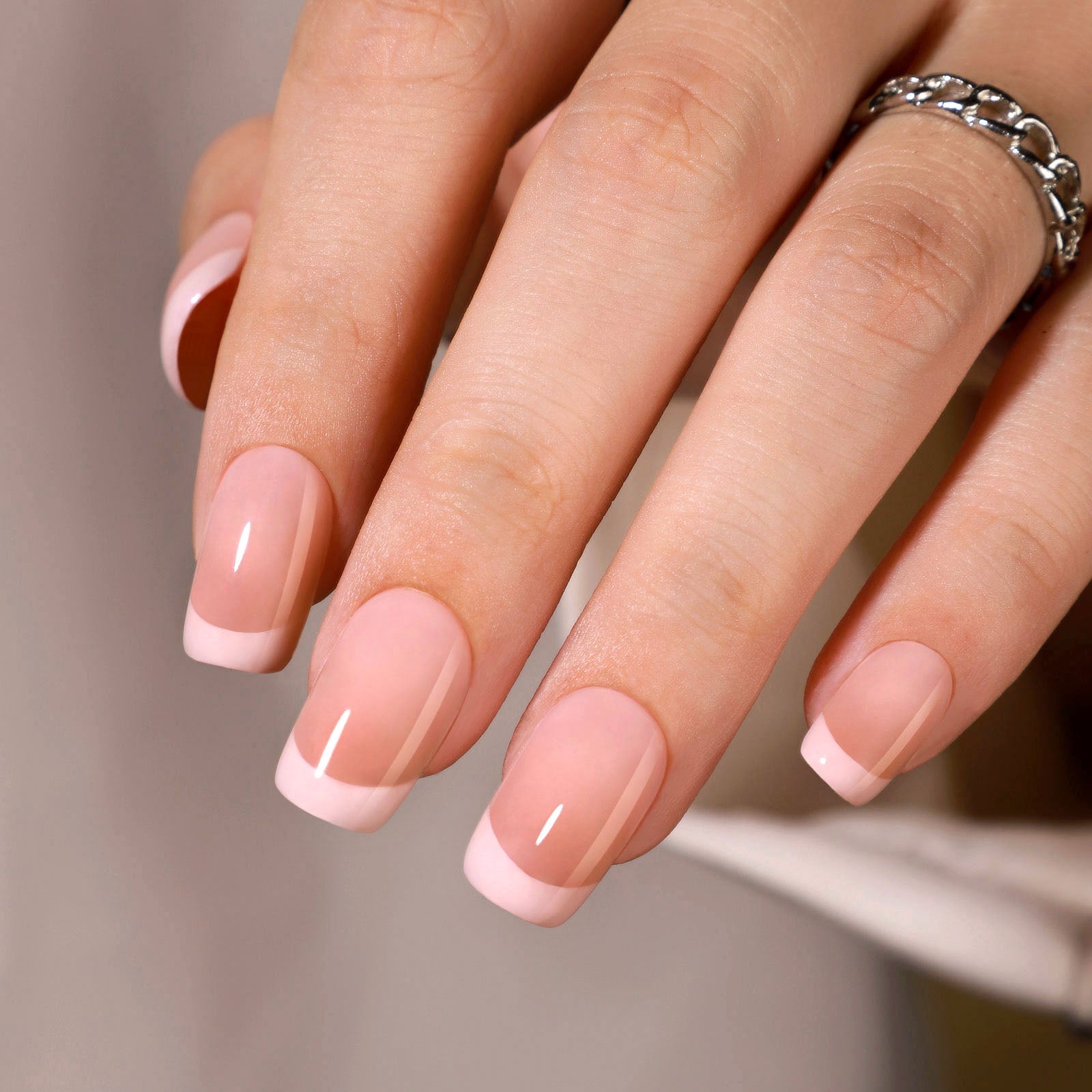
French tip nails have been the baseline of polished nail art for forty years because the contrast between a colored tip and a bare nail bed is architecturally simple and universally flattering. What 2026 has done is expand the design language while keeping the underlying logic intact. These five variations each take the French tip structure in a distinct direction.
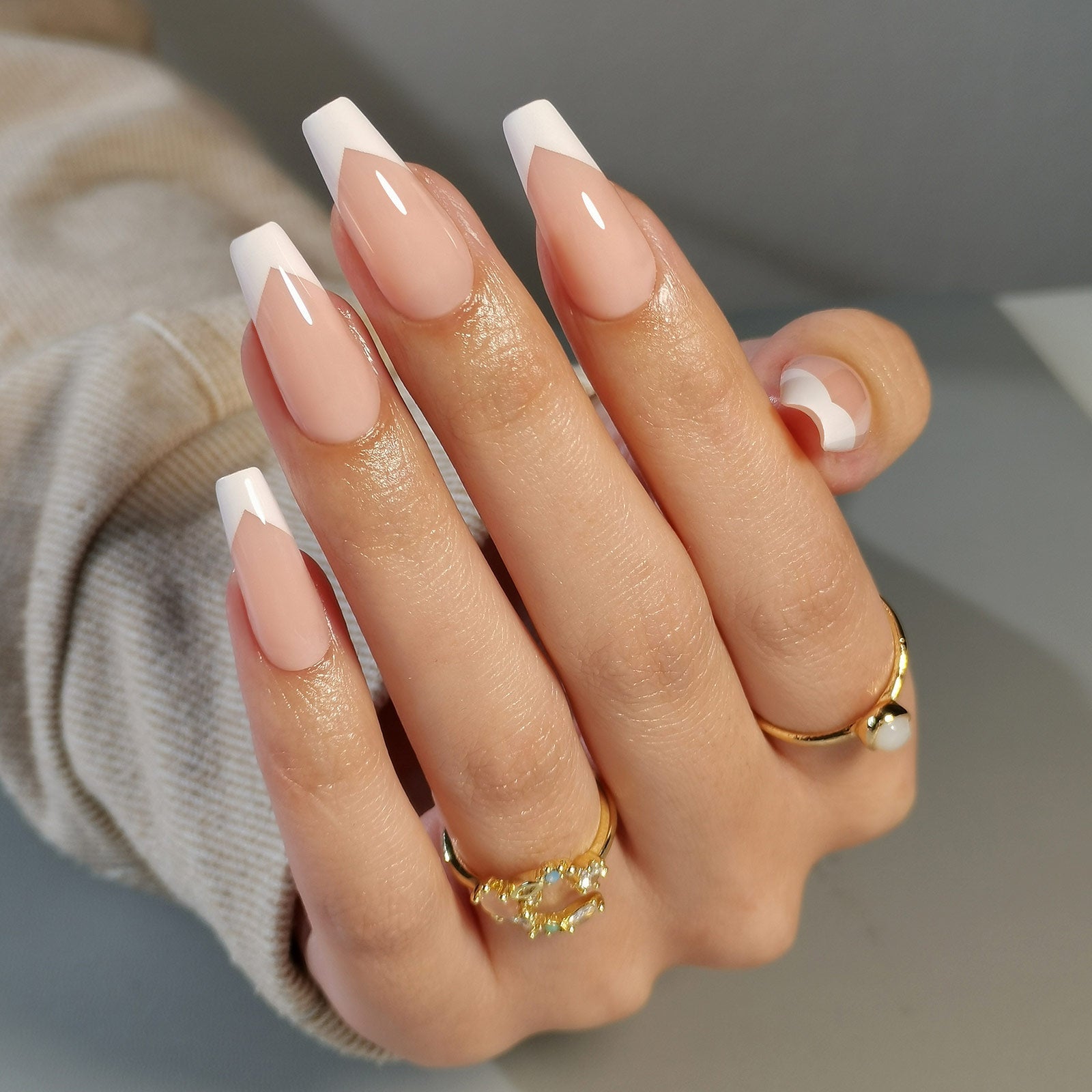
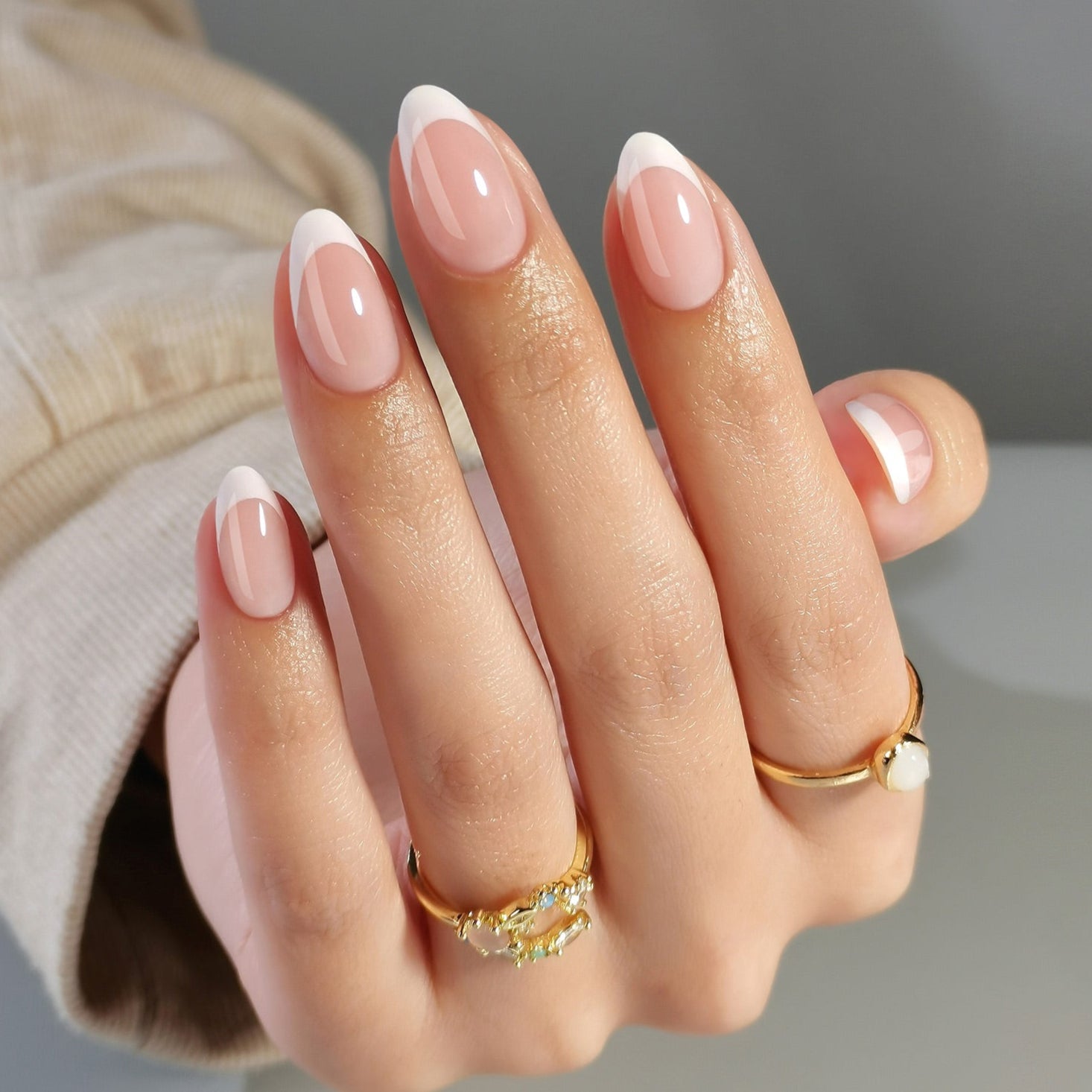
1. Classic White French Oval. The original, executed with more precision than a salon can reliably deliver. The tip line on a manufactured press-on is machine-clean — no uneven edges, no variation in tip width between fingers. On an oval shape, the French tip reads as contemporary rather than dated. This is the foundation design for professional environments, formal events, and anyone building a nail wardrobe from scratch.
2. Colored Tip French. The same tip structure with the white replaced by a statement color — dusty lavender, sage green, terracotta, cobalt, or any of a dozen seasonal hues. Colored tip French nails read as trend-aware without requiring explanation. The underlying French architecture signals polish; the color signals personality. This is the easiest way to wear a trend color without committing a full nail to it.
3. Ombre French Gradient. Instead of a clean tip line, the transition from bare nail to tip color is feathered into a gradient. The effect is softer and more blended than a classic French — less corporate, more editorial. Pink-to-white is the signature version; champagne-to-gold works for evening. Gradients of this precision are genuinely difficult to execute freehand. As a press-on, the gradient is cured during manufacture and perfectly consistent across all ten nails. See more gradient techniques in our ombre nails guide.
4. Glitter Tip French. Fine holographic or metallic glitter replaces the solid tip color. The glitter concentration is highest at the tip edge and feathers toward the center, creating a sparkle zone rather than a flat shimmer. This design occupies the space between daytime polish and evening glam — appropriate for casual settings while also working for parties, events, and anything where the light catches it interestingly.
5. Reverse French (Moon Manicure). The design logic is inverted: instead of color at the tip, color fills the lunula — the half-moon at the base of the nail — while the body of the nail stays natural or sheer. The result reads as architectural and editorial. Dark colors (black, navy, deep plum) against a bare nail create a strong graphic contrast. The reverse French is the most visually unusual of the French variants and the one most likely to generate specific compliments.
Chrome and Metallic (Designs 6–10)

Chrome nail art is the design category most dependent on manufacturing technique. The mirror effect comes from extremely fine metalite or aluminum powder applied to a tacky gel surface before curing — a process that requires specific equipment, specific powder ratios, and precise timing. The result, when done correctly, is a nail surface that behaves like polished metal: it reflects the room around it, picks up color temperature shifts in different lighting, and creates a constantly changing surface as the hand moves.
6. Mirror Chrome Silver. The maximally reflective version — polished stainless steel on your nails. The effect is most dramatic in direct light and in photographs. Silver chrome nails are the rare design that photographs better than they look in person, because the camera captures the full reflective intensity at the moment the light hits precisely. This is the design for anyone who has seen chrome nails on social media and wants to know if it actually looks like that. It does. See the full range of chrome effects in our chrome press-on nails guide.
7. Rose Gold Chrome. Warm metallic chrome in the rose-gold frequency — the tone sits between copper and pink gold, neither purely cool nor purely warm. Rose gold chrome nails pair with warm skin tones particularly well and complement neutral, earth-tone, and blush outfits in a way that silver chrome does not. The design works equally in minimal and maximalist contexts.
8. Holographic Rainbow Chrome. The surface of the nail shifts through the full color spectrum — blue to purple to green to gold to pink — as the viewing angle changes. Unlike single-color chrome, holographic chrome is never the same color twice. It is the nail equivalent of the aurora borealis, and it registers dramatically on video as well as in photographs. The effect is engineered through diffraction grating patterns in the powder layer. For dedicated coverage of this category, our pink chrome nails guide covers several related finishes.
9. Antique Gold Leaf. Not mirror chrome but textured gold — the nail surface is finished with a gold leaf effect that has visible texture variation, gaps, and natural irregularities that make it read as artisanal rather than synthetic. The result looks like wearable art object rather than metallic polish. Almond and coffin shapes amplify the editorial quality of this design.
10. Two-Tone Split Chrome. The nail is divided — vertically or diagonally — into two chrome finishes, typically silver and gold or chrome and matte black. The division is sharp and geometric, making the design read as minimalist art rather than decorative. This is the most design-forward of the chrome variants and appeals to the same aesthetic as monochrome fashion.
Cat Eye and Magnetic (Designs 11–15)

Cat eye nail art is created through a specific interaction between magnetic pigment particles suspended in gel and a magnet passed over the wet surface before curing. The magnet pulls the metallic particles into alignment, creating a band of concentrated light — the "eye" — that shifts position as the hand moves. The effect is inherently dimensional: the nail appears to have depth that flat color does not. For full background on the technique and style options, our cat eye nails guide covers the complete spectrum.
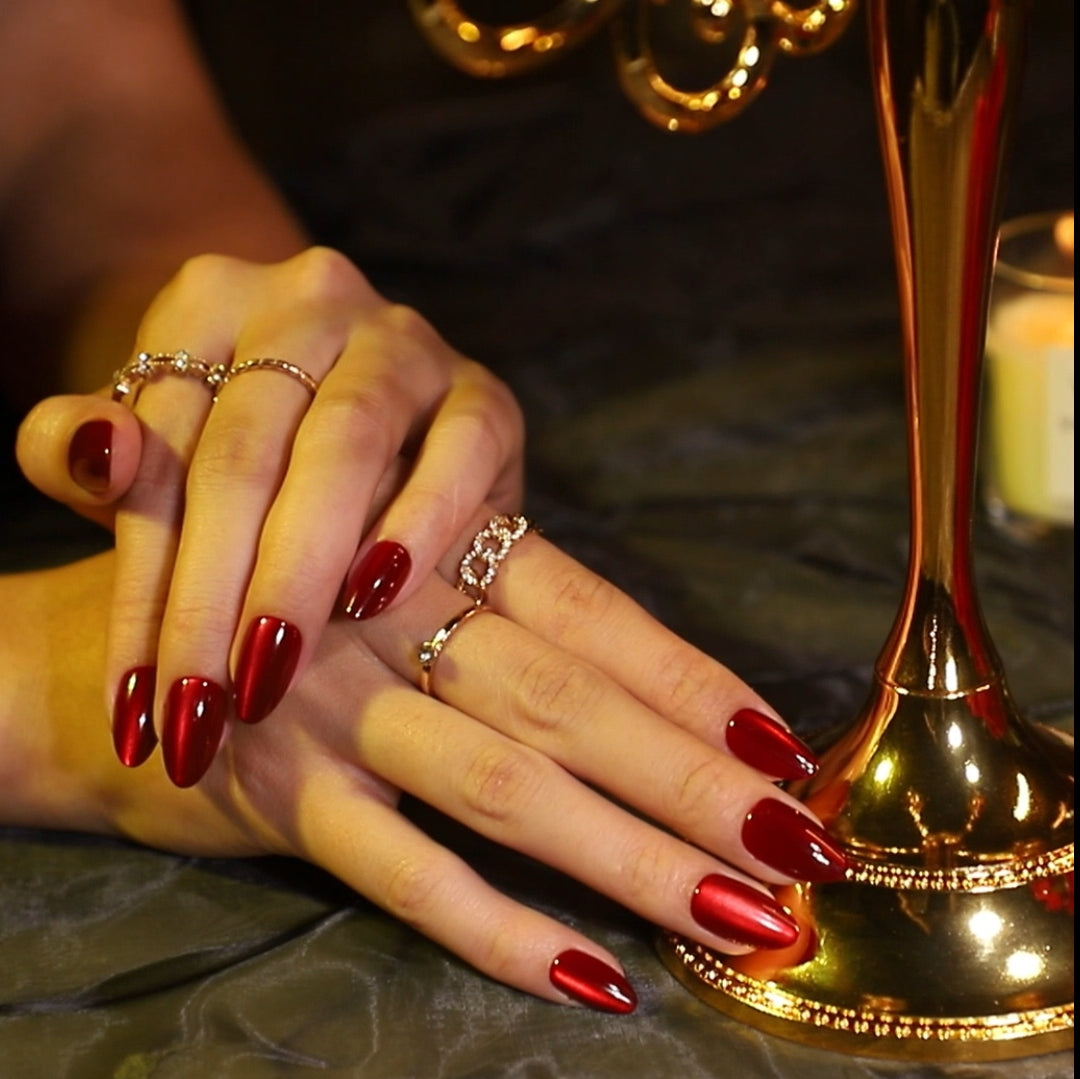
11. Classic Single Cat Eye (Burgundy). The original cat eye effect in a deep burgundy base — a single light band running diagonally across the nail. Burgundy is the canonical cat eye color because the warm red undertone amplifies the magnetic shimmer more dramatically than cool colors. This is the entry-point cat eye design and the best starting point for anyone new to the effect.
12. Blue Aurora Cat Eye. A blue-to-teal base with the cat eye shimmer enhanced by an aurora powder layer that adds iridescent color play alongside the magnetic band. The combination of magnetic alignment and aurora pigment creates an effect that reads as ice or deep water — cool, luminous, and highly dimensional. Blue cat eye nails photograph exceptionally well in outdoor light.
13. Double Cat Eye. Two separate magnet passes create two light bands running parallel across the nail. The doubled effect is more complex and more dramatic than the single band — it reads as intentional graphic design rather than a single shimmer. Double cat eye is most effective on longer nail shapes (almond, stiletto, coffin) where there is surface area for both bands to register clearly.
14. Black Aurora Multi-Cat-Eye. A black gel base with three or more magnetic lines plus an aurora powder overlay that adds green, purple, and gold iridescent play over the black. At rest the nail appears deep black; in movement or direct light, the cat eye bands and aurora colors activate simultaneously. This is the most complex cat eye effect and the one most frequently described as "hypnotic" by wearers.
15. Dual-Tone Cat Eye (Purple-Gold). The base transitions from deep purple to warm gold — a warm-cool gradient — with the cat eye shimmer playing over both tones. As the hand moves, the shimmer alternates between reading as purple or gold depending on the angle. Dual-tone cat eye is the most technically advanced of the magnetic designs and creates the most varied visual output.
Floral and Nature (Designs 16–20)

Floral nail art covers a wide spectrum — from the barely-there impressionism of a watercolor petal to the full botanical illustration of a hand-painted rose. In press-on form, floral designs range from printed surface art (the most photorealistic) to hand-applied 3D elements (the most dimensional). The defining characteristic of good floral nail art is that it reads as intentional rather than decorative — a considered aesthetic, not a random pattern.
16. Cherry Blossom on Nude. Pale pink and white sakura petals painted or printed against a warm nude base. The design is inherently Japanese-influenced and aligned with the minimalist-organic aesthetic that has dominated both fashion and interior design through the mid-2020s. The nude base disappears against the hand while the blossoms float at the surface. This is the most frequently searched floral nail design in spring and one that carries year-round because of its restraint.
17. Pressed Botanical Illustration. An herbarium-style design — botanical line art with a scientific illustration quality, typically in muted sage, dusty rose, or sepia against a white or cream base. Botanicals at this level of detail require UV printing or fine hand-application. The effect is more editorial than decorative and pairs with linen, neutral, and earthy wardrobes.
Still worried they will look fake? Find your shape and finish by matching your natural nail width; the right set reads polished, not pasted on.


18. Tropical Leaf (Monstera). Bold dark green monstera leaves against a warm nude or dusty sage base. The monstera design benefits from the graphic contrast between the large simplified leaf shape and the open negative space. This is the nature-themed design for people who find florals too soft — it reads as strong and modern rather than delicate.
19. Abstract Watercolor Rose. A rose suggested rather than depicted — loose, painterly, with visible brushstroke texture and color bleeds. The watercolor treatment softens the floral into pure impressionism: you understand it is floral, but the specific plant is secondary to the color play. Blush, mauve, and dusty rose are the standard palette for this design.
20. 3D Lavender Sprig. A dimensional design where actual textured elements — tiny molded gel lavender sprigs — project from the surface of the nail. True 3D botanical nail art is the technical peak of floral design: the elements have shadow, depth, and texture that shifts in real light. On press-ons, 3D elements are applied and cured during manufacturing, so they are structurally stable without specialized tools at home.
Abstract and Geometric (Designs 21–25)

Abstract nail art occupies the intersection of fashion and fine art — designs that reference visual art movements (minimalism, expressionism, color field) rather than representational subjects. These designs trend fastest among fashion-forward consumers and have the longest lead time before mainstream adoption, making them the style choice that reads as most current.
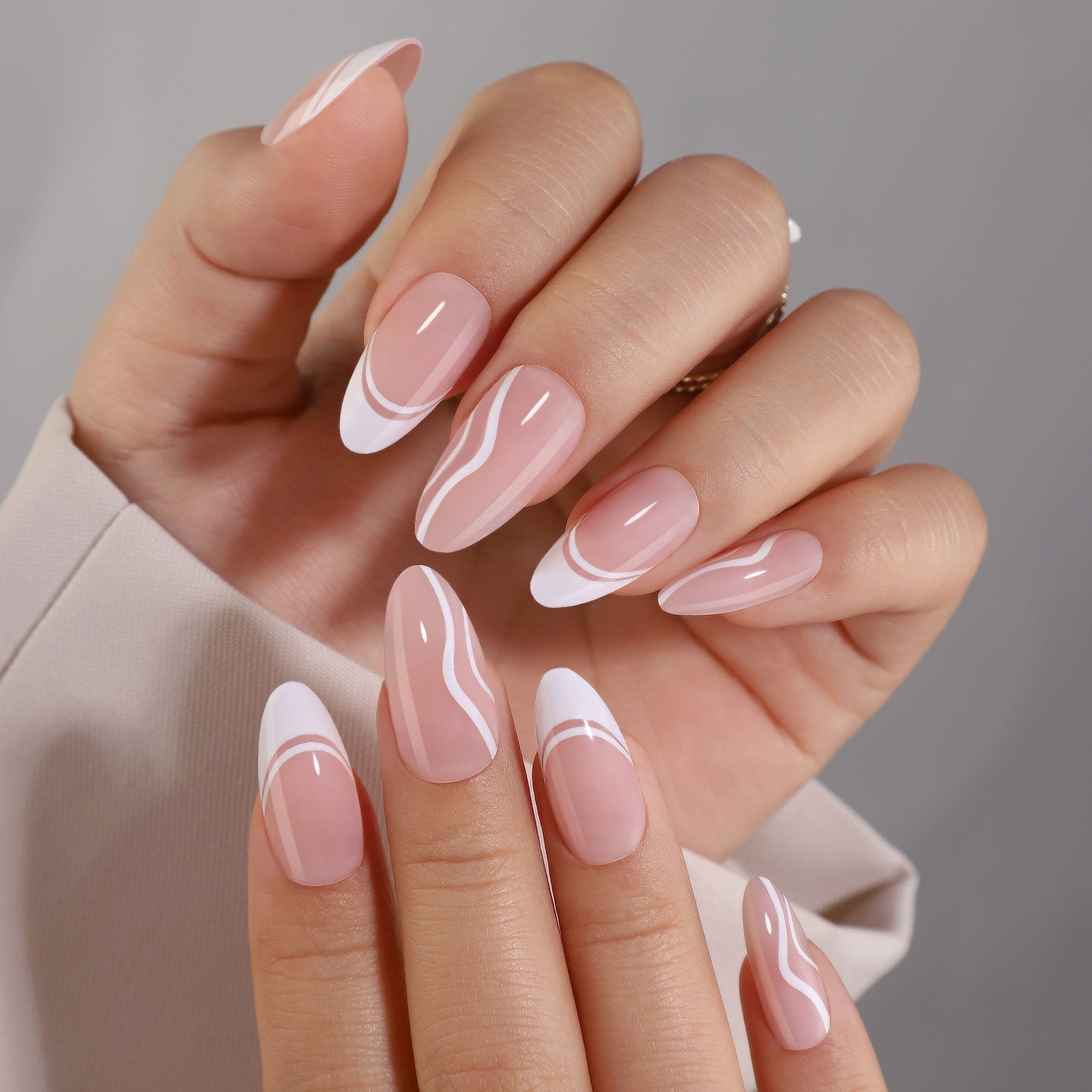
21. Negative Space Geometric. The nail is left partially bare, with thin lines or geometric shapes painted over the natural nail to create a graphic pattern that incorporates the nail bed itself as a design element. The minimal intervention maximizes visual impact: a single gold diagonal line against a bare nail is more striking than a fully covered surface. This is the most pared-down design on this list and the one most frequently described as "clean" in the fashion press.
22. Black and White Marble Swirl. Marble nail art in high-contrast monochrome — black and white only, no warm tones. The marbling technique creates unique patterns on every nail, but the press-on manufacturing process replicates a curated marble pattern that has been selected for visual balance. This design reads as luxurious and works equally in minimalist and maximalist wardrobes.
23. Color Block Diagonal. The nail is divided diagonally into two or three solid color blocks with hard, clean edges. Color blocking is a direct reference to 1960s op-art and contemporary minimalist fashion. The execution in press-on form requires the edge between colors to be precisely aligned — something that is significantly easier in a manufacturing setting than when applied freehand at a salon.
24. Swirled Aura Nails. Aura nails are defined by soft, concentric swirls of color that blend from the nail edge inward, creating a glow or halo effect. The color palette is typically pastel — pale lilac, mint, baby blue, soft peach — in combinations that read as dreamlike or celestial. This is the design category that has driven the most social sharing in 2024–2026, and it continues to evolve through new color combinations.
25. Fine Art Brushstroke Abstract. Bold, gestural brushstrokes in two or three colors against a contrasting base — an expressionist design inspired by abstract painting. The brushwork is applied or printed during manufacturing to capture the energy of a physical brushstroke while maintaining consistency across all ten nails. This design reads as intentionally artistic and pairs naturally with monochrome outfits that give the nails space to function as an accessory.
3D and Texture (Designs 26–30)

Three-dimensional nail art is the category where press-on technology most directly surpasses what is practical at home. DIY 3D nail art requires acrylic powder, sculpting skill, and significant drying time — and even skilled technicians need practice to achieve consistent results. Manufactured 3D press-on nails begin with the 3D element already applied, cured, and structurally integrated. The result is dimensional nail art that is stable, consistent across all ten nails, and ready to wear without any additional work.
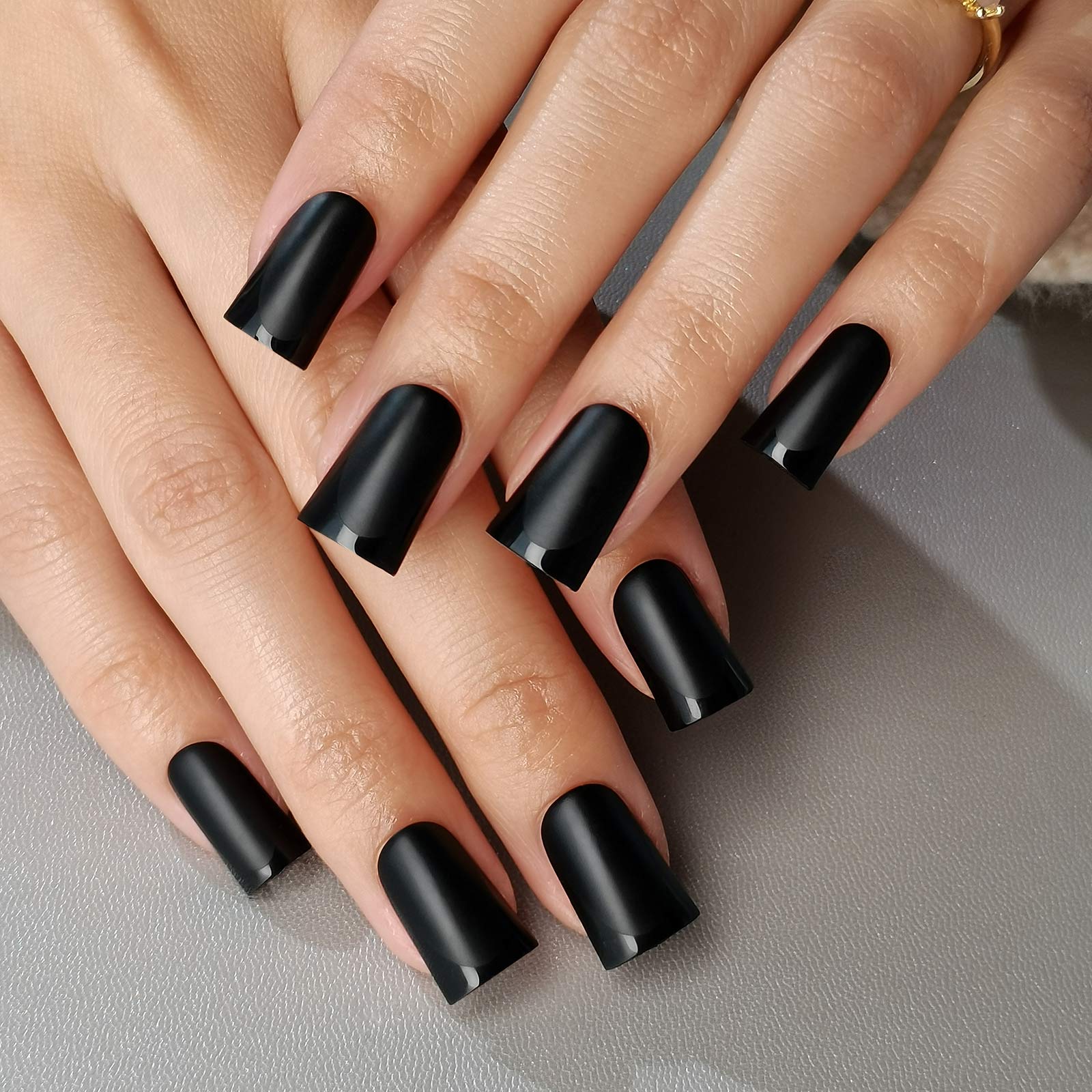
26. Velvet Matte Texture. A velvet nail is coated with ultra-fine flocked particles that create a matte, fabric-like surface texture. The nail does not reflect light the way a gel nail typically does — it absorbs it, creating a depth that is felt as much as seen. Velvet texture nails are the tactile counterpoint to chrome; where chrome is maximally reflective, velvet is maximally matte.
27. Chrome Pearl Bubble. Dimensional nail art where raised bubble or sphere shapes are applied over the surface in a chrome or pearl finish. The bubbles create actual three-dimensional shadows as the hand moves under light. This design is maximally editorial — it reads as avant-garde sculpture — and is the type of nail art most frequently photographed at fashion events.
28. Sugar Glass Sheer. A clear or translucent gel base with chunky holographic glitter particles embedded at varying depths, creating the illusion that the nail is filled with ice or sugar crystal. The variation in glitter depth creates a three-dimensional sparkle field rather than a flat shimmer layer. Sugar glass nails are one of the few designs that look dramatically different in natural vs. artificial light.
29. Embossed Lace Texture. A delicate lace pattern is embossed directly into the gel surface — visible as a raised texture pattern that catches directional light. The lace design is most effective on square or coffin shapes where the surface area allows the full pattern to register. This is the most formal and bridal-adjacent of the 3D designs.
30. Chrome Spike with Geometric Studs. A chrome or metallic base with dimensional metal-look spike or geometric stud elements applied at the nail tip or center. This is the most maximalist design on this list — it references hard-edge fashion and punk-adjacent aesthetics while still reading as considered design rather than costume. The spikes and studs are applied during manufacturing and cured into the gel structure, so they do not catch or snag the way adhesive-applied embellishments sometimes can.
How Designs Are Made: The Four Core Techniques
Understanding how designed press-on nails are manufactured changes how you evaluate them. There are four primary techniques, each suited to different design types:
UV Inkjet Printing. High-resolution nail art patterns — botanicals, marble swirls, geometric patterns, watercolor effects — are printed directly onto the gel surface using UV-cured inkjet technology. The same technology used for commercial packaging. The result is photorealistic detail at a resolution the human eye cannot distinguish from painting at conversational distance. Printing is most suited to complex multi-color designs that would be time-prohibitive to hand-apply.
Hand-Painting with UV Gel Polish. Individual nail art strokes applied by nail technicians under magnification, then cured in UV lamp stations. Hand-painting is used for designs that require organic variation — brushstroke abstracts, impressionist florals, aura swirls — where the human hand produces a quality that printing cannot replicate. High-quality hand-painted sets involve multiple technicians and multiple cure cycles.
Chrome Powder Application. Ultra-fine metalite or aluminum pigment is applied to a tacky gel surface and buffed in using specialized tools before final curing. The buffing technique determines the reflectivity and coverage uniformity. Chrome powder application is not printable — it must be applied physically, which means it is a fundamentally different process than UV printing. Magnetic cat eye pigments work on the same principle: applied to wet gel, then aligned with a magnet before curing.
3D Element Application and Sculpting. Dimensional elements — flowers, spheres, spikes, studs — are either hand-sculpted from acrylic or gel powder and applied wet, or manufactured separately and adhesively bonded before final curing. Factory-applied 3D elements are structurally superior to adhesive embellishments applied post-curing because they are integrated into the nail structure during manufacture.
Design Trends by Season

Designed press-on nails follow seasonal trend cycles, but the lead time on manufacturing means the most current designs arrive 2–3 months before a trend peaks on social media. Knowing the seasonal patterns lets you get ahead of the cycle:
Spring (March–May). Cherry blossom, pressed botanicals, pastel aura, and soft watercolor florals. The chromatic palette shifts warm and light. Nail shapes tend toward almond and oval. This is the most competitive season for floral designs — demand peaks in April.
Summer (June–August). Chrome, holographic, neon abstract, and bright geometric color blocks. Reflective and high-intensity designs perform at their best in direct summer light. Tropical botanicals and abstract color fields trend strongest in June. This is peak season for designed press-on nails broadly — more designs release in Q2 than any other quarter.
Autumn (September–November). Deep cat eye in burgundy and forest green, antique gold leaf, velvet matte texture, and abstract brushstroke in warm earth tones. The palette goes dark and complex. 3D sculptural designs trend upward as autumn fashion shows favor more dimensional accessories. Leopard print nail designs — which overlap with animal print as an autumn perennial — consistently peak in October and November.
Winter (December–February). Velvet black, silver mirror chrome, sugar glass, embossed lace, and double cat eye in deep jewel tones. The most dramatic and formal designs of the year coincide with the holidays. This is the season where 3D chrome and dimensional sculptural designs have their highest visibility because they photograph well at indoor events.
How to Choose Your First Designed Press-On
If you have not worn designed press-on nails before, the range of options can obscure where to start. Three questions clarify the choice:
What is the design's context? The designs on this list span from office-appropriate (classic French, negative space geometric, pressed botanical) to editorial and event-specific (chrome spike, 3D bubble, multi-cat-eye). Start by identifying where the nails will be worn and whether there are any professional or dress code constraints. A holographic rainbow chrome and a classic white French oval are both on this list, and they communicate differently.
How long do you want to wear them? Simpler designs — solid chrome, single cat eye, classic French — are easier to re-apply if one nail lifts or you want to switch sets. Complex 3D designs are more of a commitment: you will be less tempted to remove them early and less likely to have a replacement set immediately. If you are new to press-ons, start with a design you would be comfortable wearing for 10–14 days.
What is your nail shape preference? Certain designs read differently depending on shape. Chrome and reflective designs are more dramatic on longer shapes (almond, coffin, stiletto) where the surface area maximizes the reflection. Geometric and negative-space designs work best on square or squoval shapes where the lines have clear edges to work against. 3D elements look best on longer nails where they have vertical space to project from. If you are uncertain about shape, oval is the most universally flattering starting point.
The SHANGMENG set format — 32 nails in 16 sizes — is designed specifically for this uncertainty: with two of every size, you have full coverage even when sizing between sizes on different fingers. Our hundreds of reviewers' 4.94/5.0 average reflects consistent fit satisfaction across a full spectrum of nail sizes and shapes.
For a complete breakdown of the full design spectrum from experimental to wearable everyday, our unique nail art designs guide is the companion read.
FAQ
What are press-on nails with designs? Press-on nails with designs are pre-manufactured gel or acrylic nails where the nail art — whether chrome powder, printed florals, cat eye magnetic pigment, or 3D sculptural elements — is applied and cured during the manufacturing process. You receive a finished nail with the design already completed, ready to apply directly to your nail bed using adhesive tabs or nail glue. No nail art skill is required at the point of wear.
How are designs applied to press-on nails? The four main techniques are UV inkjet printing (for photorealistic patterns), hand-painting with UV gel (for organic brushwork designs), chrome powder buffing (for metallic and cat eye effects), and 3D element application (for sculptural and dimensional designs). High-quality press-on sets use the same materials — UV-cured gel, professional chrome powders, magnetic pigments — that salon technicians use for the equivalent in-person service.
Do designed press-on nails look fake? Quality soft gel press-ons are manufactured from the same UV-cured gel used in nail salons, with the same thickness profile as a professional enhancement. The design layer is protected by a top coat seal. In photographs and in direct comparison with salon nails, high-quality designed press-ons are indistinguishable from salon work. The designs covered in this guide — chrome, cat eye, 3D — require manufacturing equipment that produces a result salons cannot easily replicate by hand.
How long do designed press-on nails last? With proper application — nail prep, light filing of the nail bed, full adhesive coverage, and firm 30-second pressure hold on each nail — designed press-on nails last 10–14 days for most wearers. 3D element designs require additional care around edges and snag points. Chrome and flat designs tend to be the most durable because the surface has fewer protrusions.
Can I customize designed press-ons at home? The designs on manufactured press-ons are cured and sealed, so the base design cannot be modified. However, you can add elements on top: apply nail stickers over a plain chrome base, add rhinestones to a French tip, or use nail art stamping over a solid-color surface. Adding over a finished design is generally easier than creating the design from scratch.
Which designed press-on nail is best for beginners? Classic white French (Design 1), single cat eye in a dark color (Design 11), or mirror chrome silver (Design 6) are the most reliably satisfying first designed press-ons. All three have strong visual payoff, forgiving application requirements, and consistent results regardless of nail shape. Avoid 3D element designs (26–30) as your first purchase — the dimensional elements require additional care during application and daily wear.
Sources: AAD Nail Care Guidelines; Allure: Chrome Nail Trend Report, 2025; NIH: UV Nail Lamp Safety
Share