













Press-On Nails for Kids: Are They Safe? A Parent's Guide
By Sophie, SHANGMENG Nail Health Writer.
Key Takeaways: - The American Academy of Dermatology (AAD) does not recommend nail polish or artificial nails for young children as a routine practice; however, press-ons used occasionally with proper precautions are lower-risk than many salon services. - Adhesive tab press-ons — no glue required — are significantly safer for children than glue-on applications. - Age matters: press-ons are most appropriate for children aged 10 and up; occasional use with supervision can work for ages 8–9; younger than 8 is generally not recommended. - Non-toxic formulas, correct sizing, and no small parts are the three non-negotiable criteria for any press-on product near children.
Your child has been asking for press-on nails. Maybe they saw a tutorial, or a school friend showed up with rainbow tips. Maybe you have press-on nails yourself and they want to be involved. Now you are trying to figure out whether this is a safe yes or a firm no.
The answer depends on age, the specific product, and how they are applied. Press-on nails used appropriately — the right formula, right size, adhesive tabs instead of glue, and with an adult supervising — sit in a very different safety category from professional acrylic or gel nail services at a salon. They are closer to nail polish than to a salon chemical treatment, particularly when glue is not involved.
This guide covers what the dermatology and pediatric community says about children and artificial nails, how to choose products that minimize risk, what designs work for kids, and the situations where press-ons should not be used regardless of age.
Not sure which shape, length, or size fits your natural nails?
Are Press-On Nails Safe for Children?
What the AAD Says
The American Academy of Dermatology recommends keeping children's nail care simple. Their published guidance focuses primarily on keeping nails clean and trimmed, and avoiding aggressive manipulation of the nail or nail bed. The AAD notes that children's nails are thinner and more flexible than adult nails, making them more susceptible to damage from harsh chemicals and mechanical pressure.

The AAD does not specifically endorse or prohibit press-on nail use for children in its public guidance. What it does emphasize is that any product near a child's nails should avoid formaldehyde, toluene, and dibutyl phthalate — the "toxic trio" in traditional nail products. It also emphasizes that the nail plate and cuticle should not be aggressively prepped or filed in children.
Pediatric Dermatology Perspective
Pediatric dermatologists raise a few specific concerns about artificial nails on children:
Nail bed trauma: Children's nails are still developing. Pressure from an ill-fitting artificial nail, or forceful removal, can damage the nail matrix — the area at the base of the nail where growth originates. Matrix damage can cause ridging, discoloration, or abnormal nail growth.
Allergic contact dermatitis: Some adhesive formulas and artificial nail materials contain acrylates, which are a known sensitizer. Repeated exposure can lead to contact allergy — and once someone is sensitized to acrylates, even minor future exposures can trigger reactions.
Choking and ingestion hazard: Small press-on nails — particularly designs with added embellishments, rhinestones, or 3D elements — present a genuine choking risk for young children.
Bacterial and fungal growth under the nail: A press-on nail that lifts slightly at the edge but stays on creates a warm, moist pocket. This is a risk for both adults and children, but children are less likely to notice or report early lifting.
Age Guidelines
| Age | Recommendation |
|---|---|
| Under 8 | Not recommended. Choking risk, developmental nail fragility, inability to recognize discomfort signals. |
| 8–9 years | Occasional supervised use only. Adult must apply, monitor, and remove. No small embellishments. |
| 10–12 years | Supervised use appropriate. Child can participate in application with adult guidance. Non-toxic formulas mandatory. |
| 13 and older | Generally adult guidelines apply. Adhesive tabs preferred over glue for developing nails. |
These age ranges are practical guidelines, not clinical rules — maturity, nail health, and individual circumstances all matter. A child with eczema, nail fragility, or skin sensitivities should consult a dermatologist before any artificial nail use regardless of age.
Adhesive Tabs vs. Glue for Kids
This is the most important practical decision for parents. The choice between adhesive tabs and nail glue is not just about convenience — it is a meaningful safety distinction when children are involved.

Why Adhesive Tabs Are Safer for Kids
No-glue press-on nails with adhesive tabs are the correct format for children for several reasons:
No chemical exposure. Nail glue (cyanoacrylate) is a strong adhesive that bonds rapidly and is difficult to remove without acetone. Acetone is not appropriate for routine use near a child's skin and nails. Adhesive tabs peel off without chemical removal.
No bonding accidents. Nail glue can bond skin to skin or skin to other surfaces instantly. Children's fingers can stick together. Adhesive tabs do not create this risk.
Easy removal. Tabs release with gentle pressure and warm water or peeling from the edge. A child who is uncomfortable can have press-ons removed in under a minute with no tools. Glue removal without acetone typically requires soaking — a process children find uncomfortable and may resist.
Shorter wear time (protective). Because tabs have lower adhesion than glue, press-ons applied with tabs tend to lift within a few days. For children, this is actually a safety feature — shorter exposure time reduces the risk of any reaction and decreases the chance of nail bed problems from extended wear.
If Glue Is Used
If older children (10+) or pre-teens use nail glue, parents should: - Choose a non-toxic formula specifically. - Apply the glue themselves — never let a young child handle nail glue. - Use the minimum amount needed. - Have acetone-free nail glue remover or oil on hand. - Remove the press-ons before they begin to lift significantly.
For more information on glue safety, see Is Nail Glue Bad for Your Nails?
What to Look For: The 3 Non-Negotiables
1. Non-Toxic Formula
Any press-on nail product for children should be explicitly non-toxic and free from the following:
- Formaldehyde — hardening agent; classified as a carcinogen by the IARC, associated with respiratory irritation.
- Toluene — solvent; linked to central nervous system effects with chronic exposure.
- Dibutyl phthalate (DBP) — plasticizer; endocrine concern, particularly relevant for developing children.
- Camphor — at high concentrations, camphor is toxic if ingested; lower concentrations are generally considered safe.
- MMA (methyl methacrylate) — banned for use in nail products in several states; causes permanent nail damage.
Look for "5-free," "7-free," or "10-free" labeling on any accompanying adhesive products. Soft gel press-on nails that are fully cured before you receive them have already completed the polymerization process — the active acrylate chemistry happened at the manufacturing stage. This means the nail itself (as opposed to uncured gel applied in a salon) presents lower sensitization risk than salon gel application.
2. Correct Sizing
Fit is a safety issue, not just a cosmetic one. Press-on nails that are too wide overlap the skin at the nail edges, creating pressure points and reducing adherence. Nails that are too narrow leave gaps at the edges — the most common cause of early lifting that creates the bacterial-growth pocket described above.
Children's nails are proportionally narrower than adult nails and vary considerably by age and individual. Look for press-on sets with a wide size range — 16 sizes is the appropriate minimum for confident fitting across both hands. A set with only 6–8 sizes will likely not have options that fit a child's narrower nail proportions well.
Measure width across the widest point of the natural nail and match to the press-on size chart. If the match is between sizes, choose the narrower option and gently file the press-on sides rather than forcing a wide press-on to cover too much surface.
3. No Small Embellishments
3D elements, rhinestones, loose glitter, beading, and other applied decorations on press-on nails present choking hazards for children and young adolescents, and increase the chance of snagging fabric or hair. For children aged 8–12, look for:
- Flat designs only — printed, painted, or embedded patterns rather than applied 3D elements.
- No loose rhinestones or gems.
- Designs that are part of the nail structure rather than applied to the surface.
For children 13 and older, standard embellishment awareness applies — treat gems and 3D elements as you would for any adult nail, avoiding contact with eyes and being careful near young siblings.
10 Fun Kid-Friendly Press-On Designs

The best designs for children balance visual appeal with simplicity — bright, pattern-forward, and flat (no raised embellishments).
Design 1: Rainbow Ombré Each nail transitions through a different color of the rainbow — red on the thumb, orange on the index, yellow on the middle, green on the ring, blue or violet on the pinky. A classic crowd-pleaser that is immediately recognizable and universally appealing for the 8–12 age group.
Design 2: Pastel Polka Dots A white or light base with small pastel dots in multiple colors. The dots are printed into the gel rather than applied as raised decoration. This is a design that reads as playful and young without looking toddler-coded — appropriate for the full 8–13 range.
Design 3: Simple Daisy Accent A solid pastel base with one small flat daisy design on the accent nail. Florals are universally age-appropriate and the daisy is the most recognizable. Single accent floral keeps the design contained.
Design 4: Pink Glitter (Embedded) Sparkle achieved through glitter particles embedded within the gel layer during manufacturing — not loose or applied to the surface. Embedded glitter has no shedding risk and no choking hazard, unlike loose glitter overlays.
Design 5: Holographic Silver or Pink A plain holographic finish that shifts color in different lighting. Holographic press-ons appeal strongly to the 10–13 group — the color-shifting effect is genuinely impressive and does not require any additional decoration.
Design 6: Mint Green Solid A simple, saturated mint green. Solid-color press-ons for kids serve the child who wants the experience of colored nails without overwhelming pattern. Mint is consistently popular with younger wearers.
Design 7: Watermelon Pattern A watermelon slice pattern — pink base with small black seed details and green at the tip. A printed design that is flat, fun, and overtly playful without being infantile.
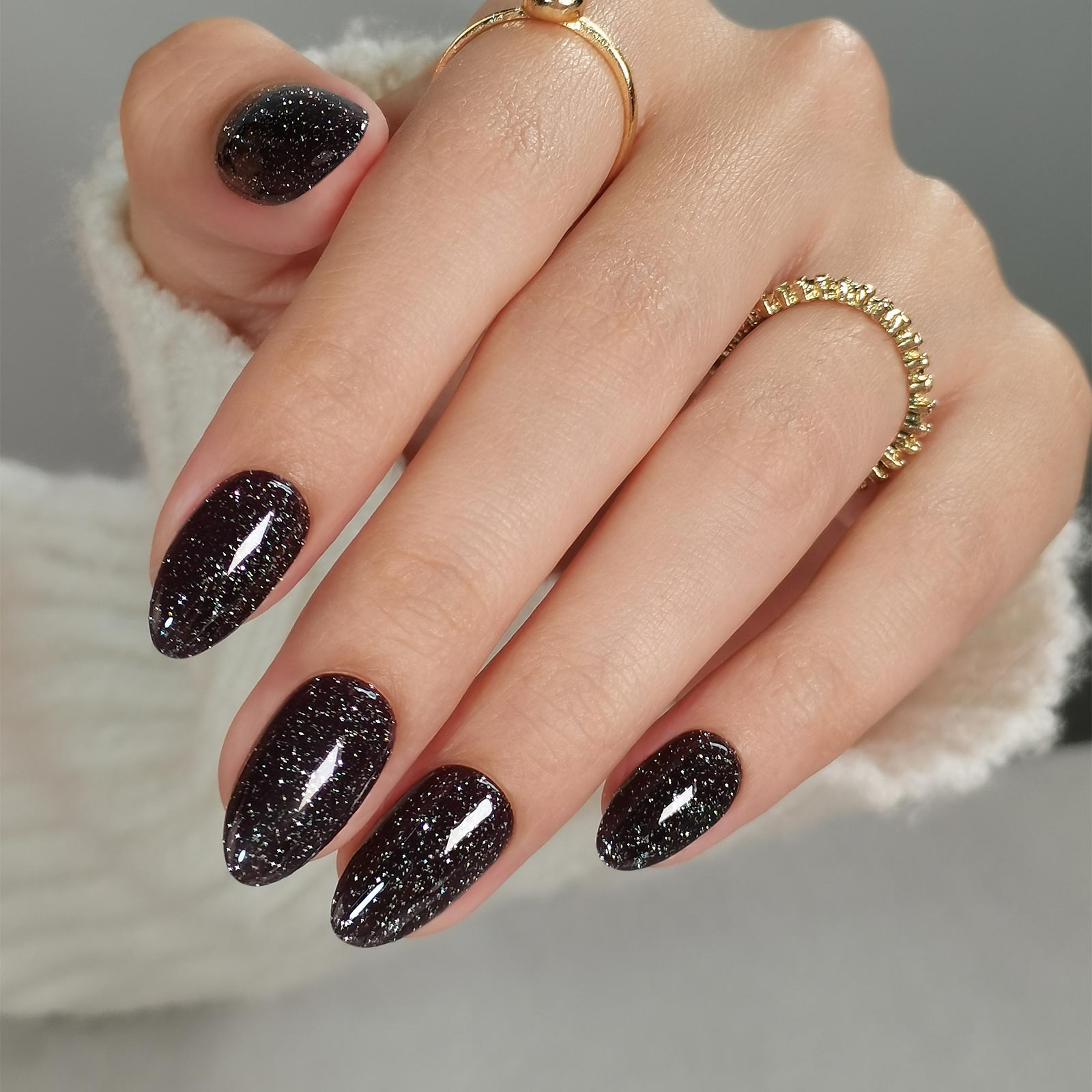
Design 8: Space and Galaxy A dark blue or purple base with gold and silver star or galaxy effects. Appeals to children with science, space, or fantasy interests. Dark bases with embedded shimmer are as safe as any other embedded design.
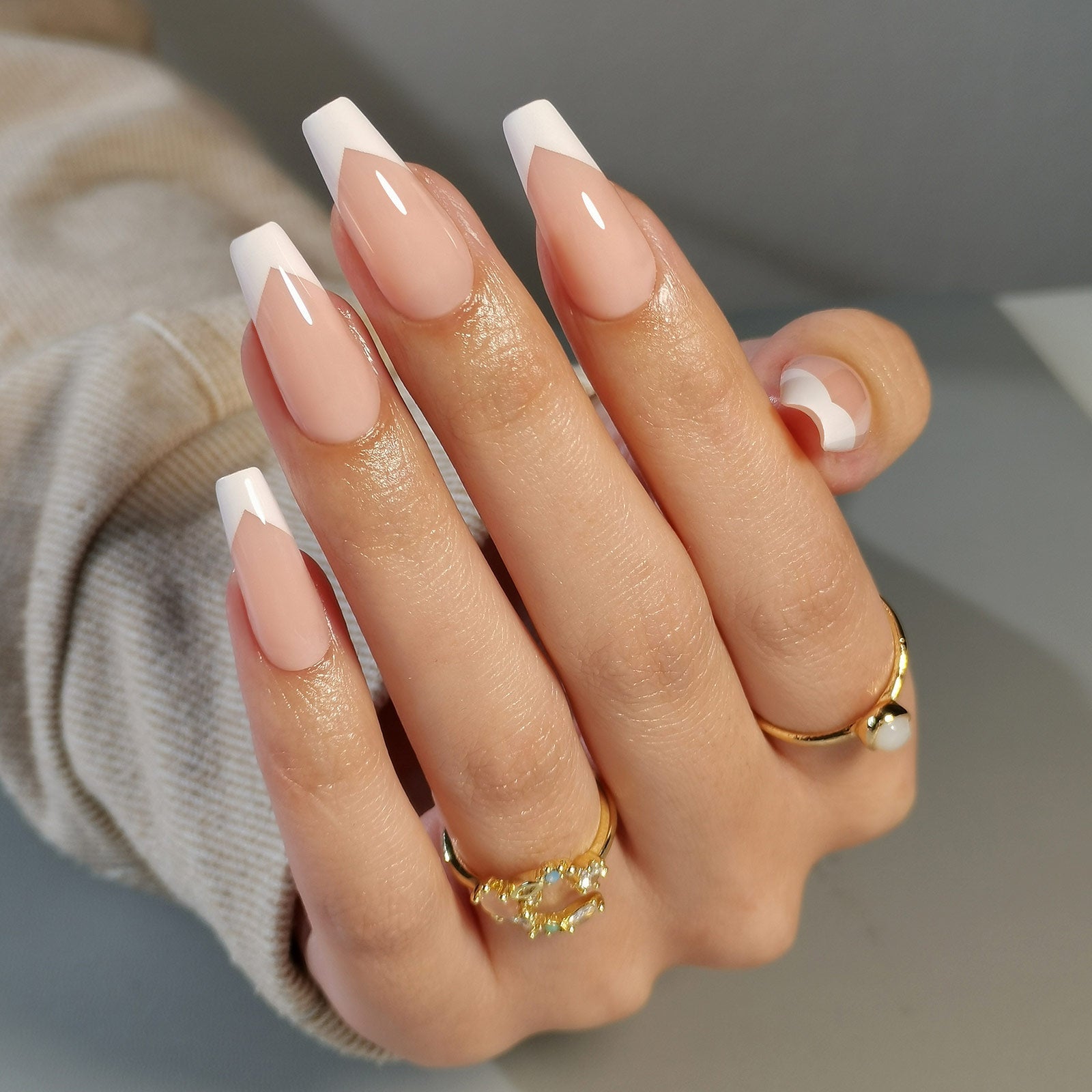
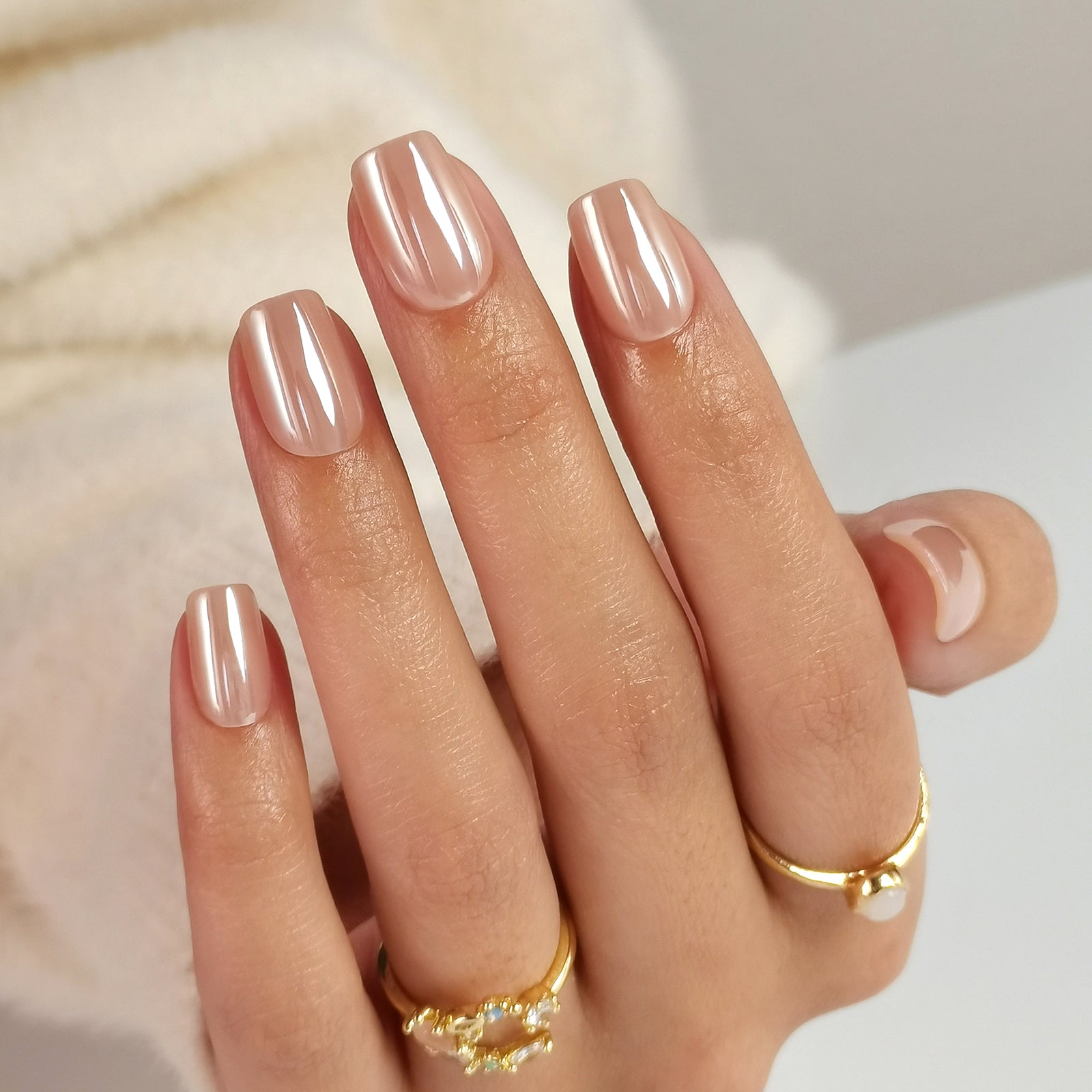
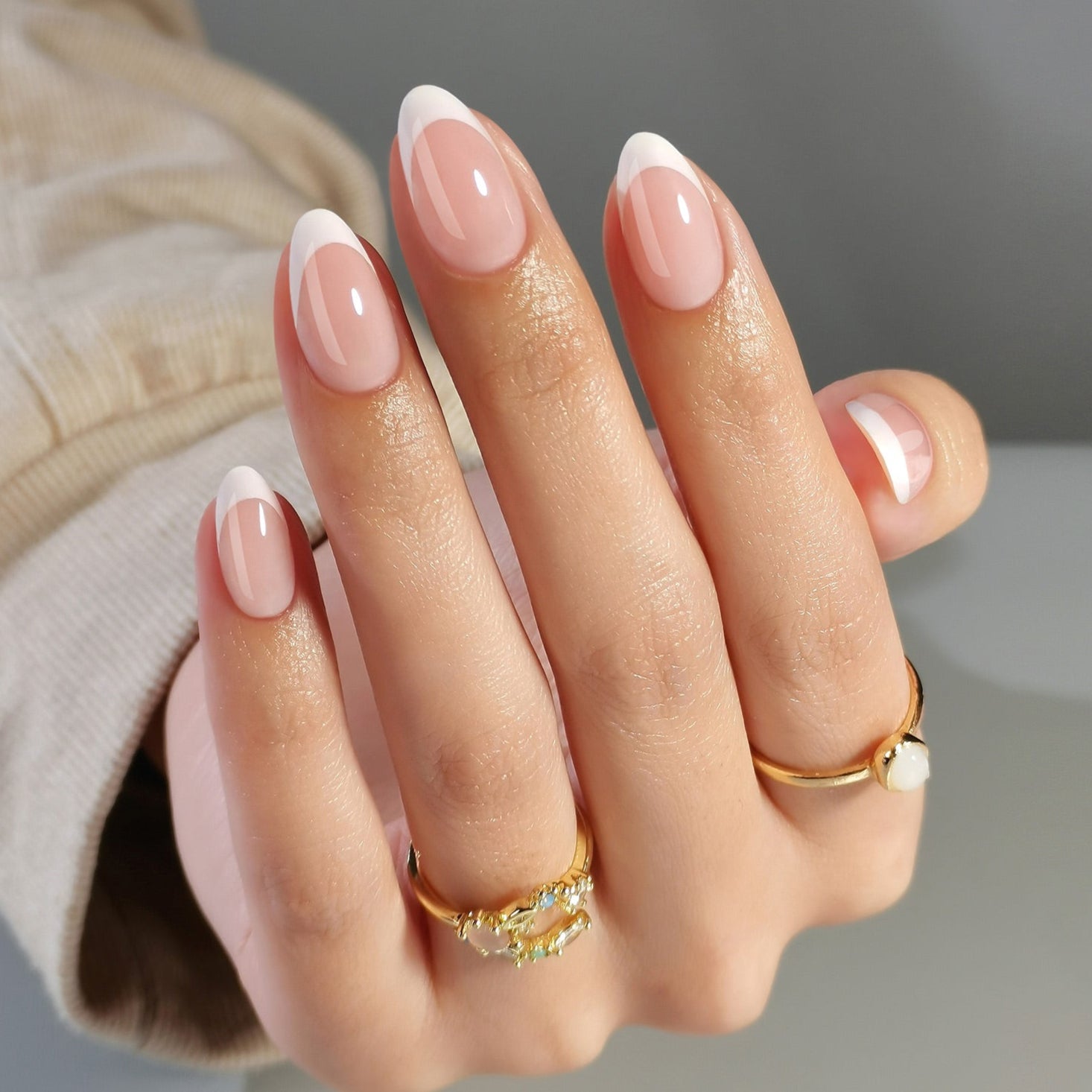
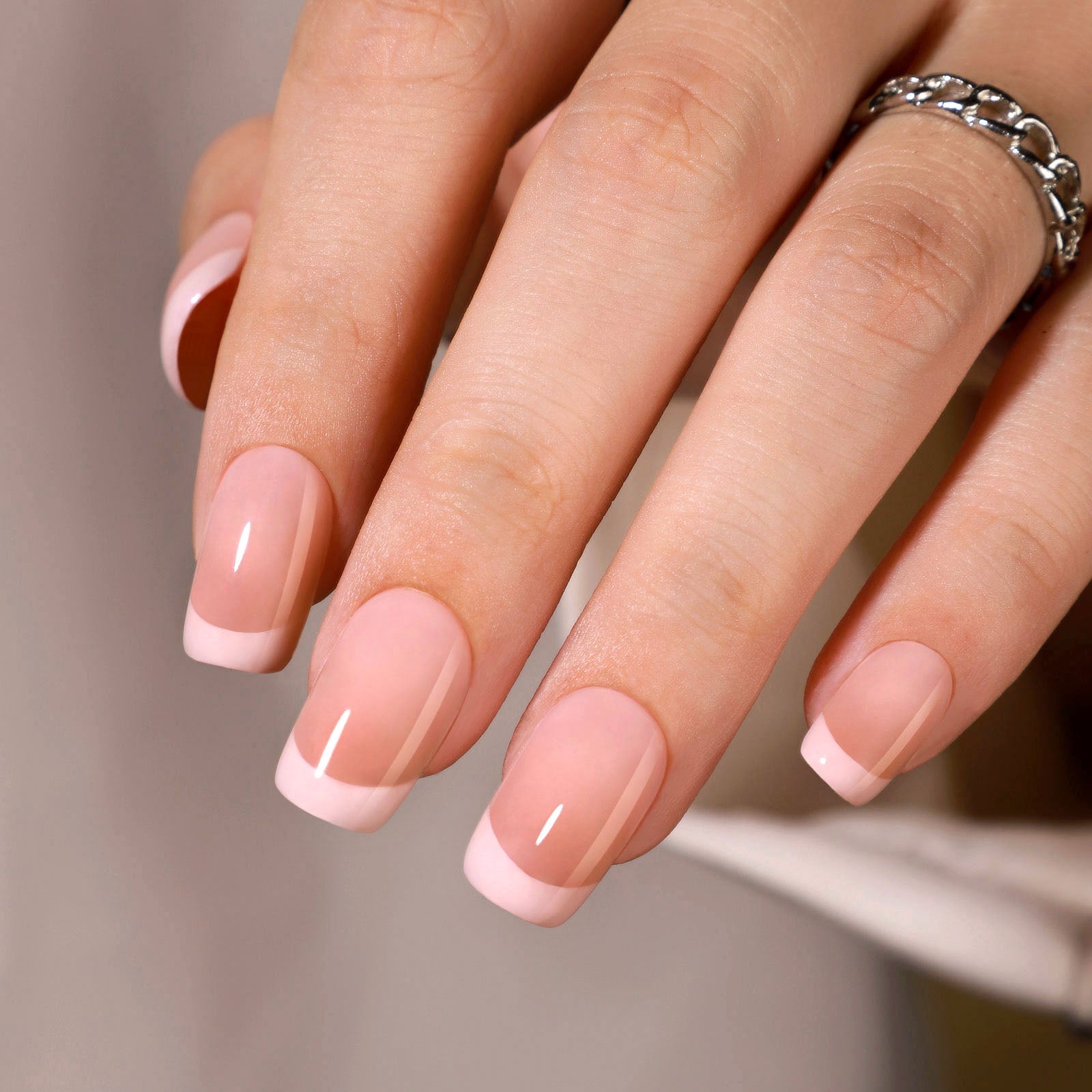
Design 9: Classic French Tip (for Tweens 11–13) A sheer or nude base with a clean white tip. For tweens entering early adolescence who want a more grown-up-looking nail, the classic French tip is the most appropriate option — elegant, versatile, and not age-inappropriate.
Design 10: Gold Star Accents A nude, pink, or white base with small gold star prints at the tip or scattered across the nail. Stars are universally beloved in the 8–12 age group and the flat printed format has no small part risk.
Application Tips for Parents

Getting a good fit and a safe application on a child requires adjustments from adult application technique.
Before you start: - Choose a quiet moment when your child is calm and cooperative — not rushed before school or an event.
Still worried press-ons will make the problem worse? Find your gentle set after the safety checks above, then remove it without picking.


- Lay out all the nails sized to your child's fingers before opening any adhesive. Sizing takes time and children lose patience quickly.
- Push back the cuticle very gently with a soft wooden stick — do not apply pressure or file the nail surface.
- Use a dry cotton ball to clean the nail plate. Alcohol wipes can irritate young children's skin. Dry cleaning is adequate for the lower adhesion of tab applications.
Sizing: Children's nails often run narrower than the smallest sizes in standard adult press-on sets. Measure the natural nail width carefully. When in doubt, go narrower and file the press-on sides if needed. Filing is safer than forcing an oversized press-on to flatten across the nail plate.
Application: - For tabs: Peel the tab backing and press it onto the underside of the press-on nail, centered. Remove the tab's second backing. Align the press-on at the cuticle edge — do not cover the cuticle. Press down from the cuticle toward the tip and hold for 20–30 seconds per nail. Tabs do not need the full 60-second press time that glue requires. - For glue (supervised, 10+): Apply a thin dot of glue to the underside of the press-on, not to the natural nail. Align, press, hold for 30 seconds. Less is more — excess glue is the primary cause of skin bonding accidents.
Duration: For children, plan to remove press-ons the same day or within 2–3 days at most. This is not a situation for maximum-longevity application.
Removal: - Tabs: Gently lift from the side edge, peeling slowly toward the center. Soaking in warm water for a minute first makes lifting easier on more sensitive nails. - Glue (if used): Soak in warm water with a few drops of olive or cuticle oil. Do not force or pull. Never use acetone on children's nails without explicit medical guidance.
When NOT to Use Press-Ons on Kids

There are specific circumstances where press-on nails should not be used on children regardless of age or product quality.
Any open cuts or broken skin around the nail. Press-on adhesives in contact with open skin can cause irritation, sensitization, or infection. Wait until skin is fully healed.
Active eczema or dermatitis on the hands. Compromised skin barrier significantly increases the risk of sensitization to adhesive components. Consult a dermatologist before use.
Signs of nail infection. Discolored nails, nail separation from the nail bed, white or yellow patches, or an unusual smell around the nail area are all signs of possible fungal or bacterial infection. Press-on nails will trap and worsen any underlying infection.
Very short or bitten nails. Nails that have been bitten down to the quick have insufficient nail plate for press-on adhesion and often have damaged cuticle skin that increases sensitization risk. Work on growing the nails before attempting press-on application.
Children under 8 years old. Even with the best product and supervised application, the combination of choking risk, developmental nail fragility, and inability to communicate discomfort makes press-on nails inappropriate for this age group.
During a sport season with contact sports. Press-on nails can catch and tear during physical contact, which can cause nail bed trauma. Most athletic organizations also prohibit artificial nails for safety reasons.
For a broader look at nail safety concerns, Are Press-On Nails Bad for Your Nails? covers the general adult risk picture — most of the considerations apply equally or more so to children.
Frequently Asked Questions
What age is appropriate for press-on nails?
Most pediatric dermatologists and the AAD's general guidance on children's nail care suggests keeping artificial nail products away from children under 8 years old due to choking risk from small parts, nail plate fragility during development, and inability to communicate discomfort. For ages 8–9, occasional supervised use with adhesive tabs (no glue), no small embellishments, and adult application is a reasonable approach. Children 10 and older can use press-ons with adult supervision following the same precautions — non-toxic formula, correct sizing, adhesive tabs preferred. By adolescence (13+), the primary concerns shift to the same considerations that apply to adults, with an emphasis on avoiding unnecessary nail surface preparation.
Is nail glue safe for kids?
Standard nail glue (cyanoacrylate) is not recommended for use on children under 10. It bonds rapidly, requires acetone for proper removal, and can cause skin bonding if misapplied — a significant risk when a child is involved in application. For children 10 and older where a parent is applying the glue directly, a non-toxic, low-fume cyanoacrylate formula is acceptable for occasional use with the understanding that removal must be done carefully with soak and oil rather than forced peeling. For more detail, Is Nail Glue Bad for Your Nails? covers the chemistry and risks in full. The safest and recommended format for all children is adhesive tabs — see No-Glue Press-On Nails with Adhesive Tabs.
Can press-on nails damage a child's nails?
Yes, if applied or removed incorrectly. The main damage risks for children's nails are: (1) fitting too-large press-ons that press down on the nail plate and cause microtrauma over time; (2) forceful or premature removal that separates layers of the thin, flexible nail plate in children; (3) prolonged wear that traps moisture and promotes bacterial or fungal growth under a lifting edge. These risks are manageable with proper sizing, adhesive tabs for easy removal, keeping wear time short (1–3 days for children rather than the adult standard of 1–2 weeks), and removing at the first sign of lifting rather than trying to preserve the manicure.
What should I look for in press-on nails for a child?
The three non-negotiable criteria: (1) non-toxic formula — confirm it is free from formaldehyde, toluene, DBP, and MMA; (2) correct sizing — a set with 16 or more sizes gives you the best chance of finding the right fit for narrower children's nails; (3) no small embellishments — rhinestones, loose glitter, and 3D elements present choking hazards and snagging risks. Beyond these, look for a soft gel or press-on format rather than acrylic, and adhesive tab compatibility so glue is not required.
How do you remove press-on nails from a child's hands?
For tab-applied press-ons: soak the fingers in warm water for 1–2 minutes, then gently work a soft wooden cuticle stick under the edge of the press-on at the side and peel slowly toward the center. Do not rush. If the nail is resistant, soak for another minute. For glue-applied press-ons: soak in warm water with a few drops of cuticle or olive oil for 5–10 minutes, then work the edge gently. Avoid acetone on children's nails; if acetone must be used in a specific situation, consult a dermatologist first. Never forcefully pull a press-on nail off a child's finger — this is the primary cause of nail plate delamination and nail bed trauma.
Are press-on nails allowed in schools?
School policies on nail polish and artificial nails vary widely. Many elementary schools prohibit nail polish or artificial nails as part of dress code policies. Some schools ban them during specific activities (food preparation, sports, science lab). Before applying press-on nails for a school day, check the school's student handbook or dress code. Even in schools without explicit policies, teachers may ask children to remove nail items during certain activities. For special occasions — recitals, picture day, parties — applying press-ons after school hours or on weekends avoids any school-day complications entirely.
Share