








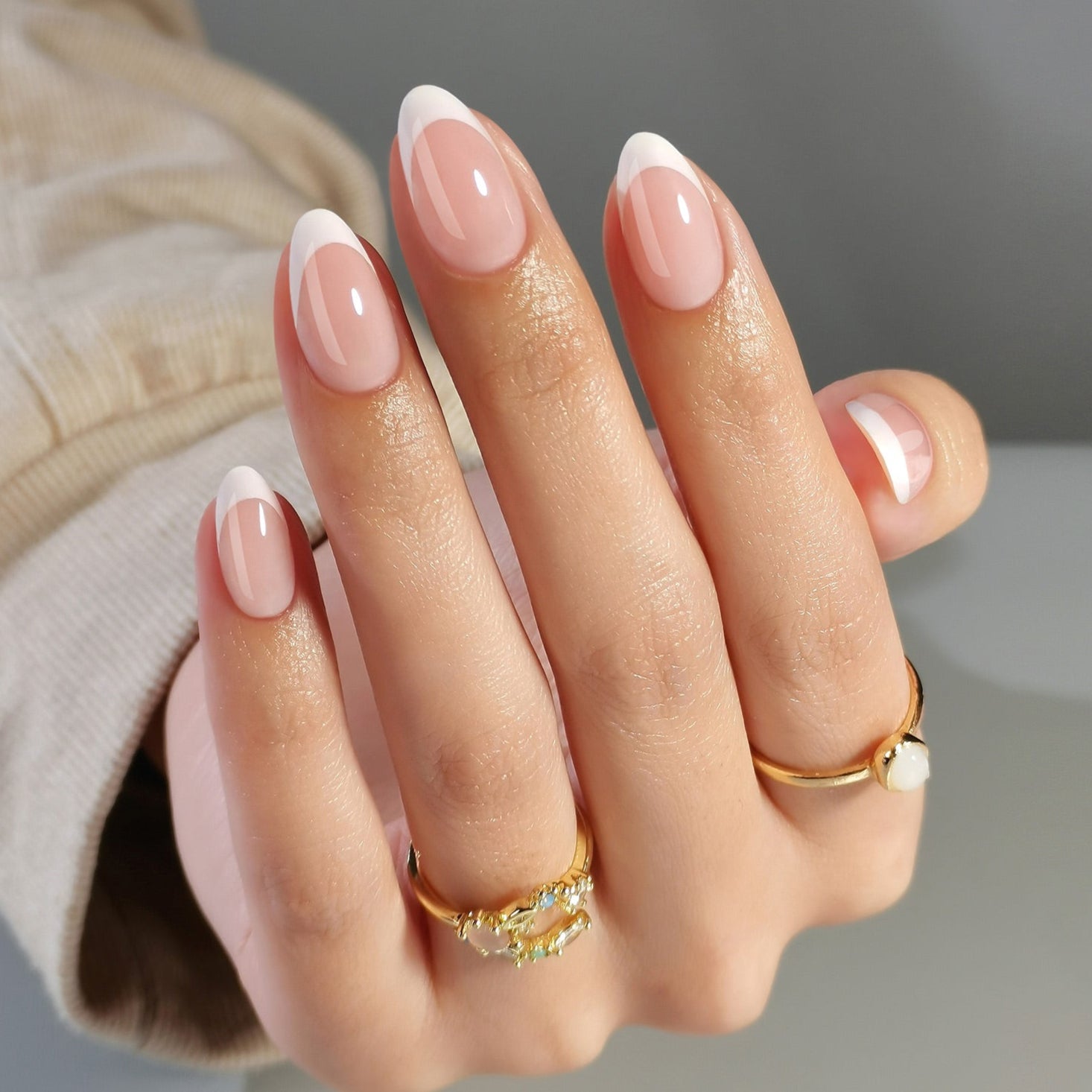


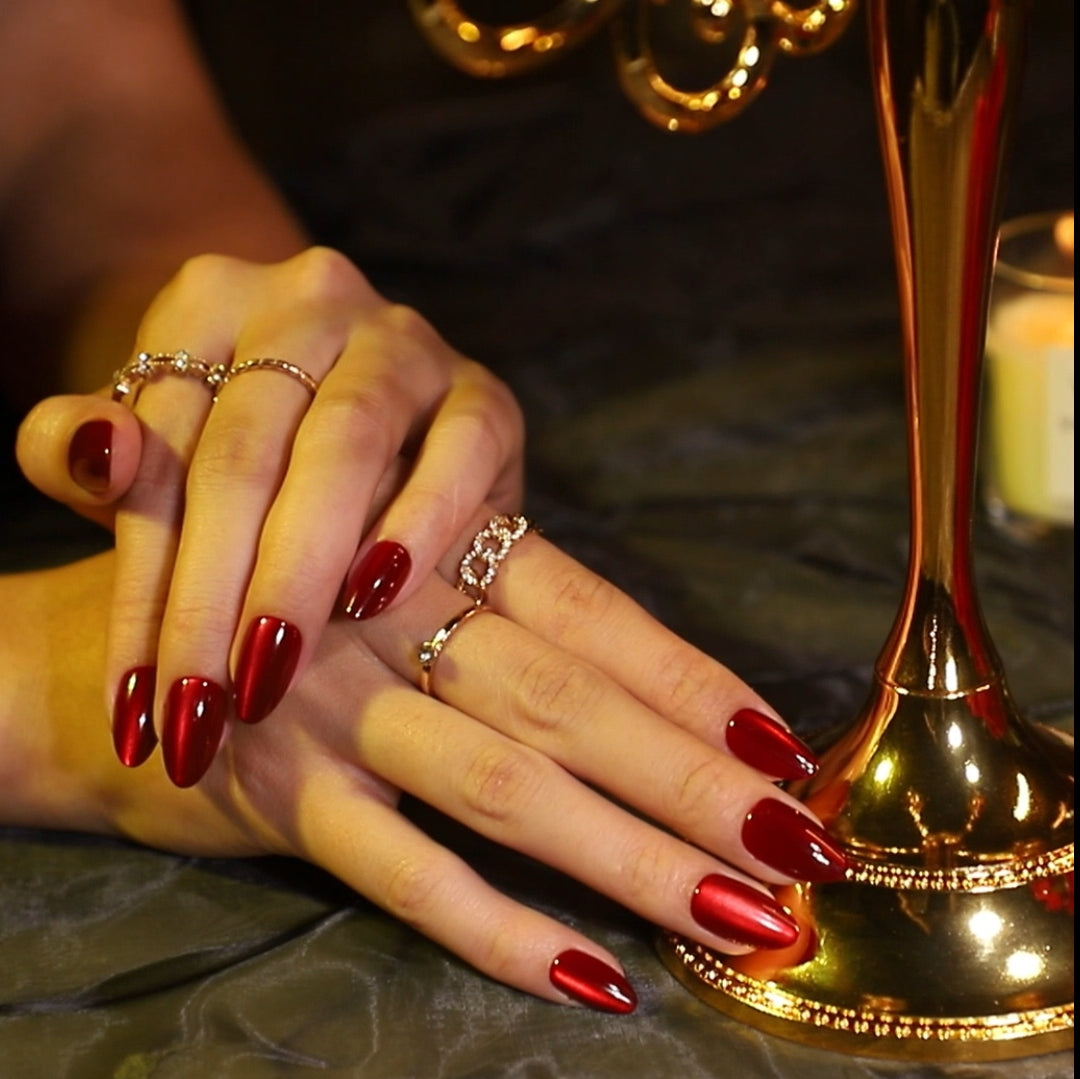

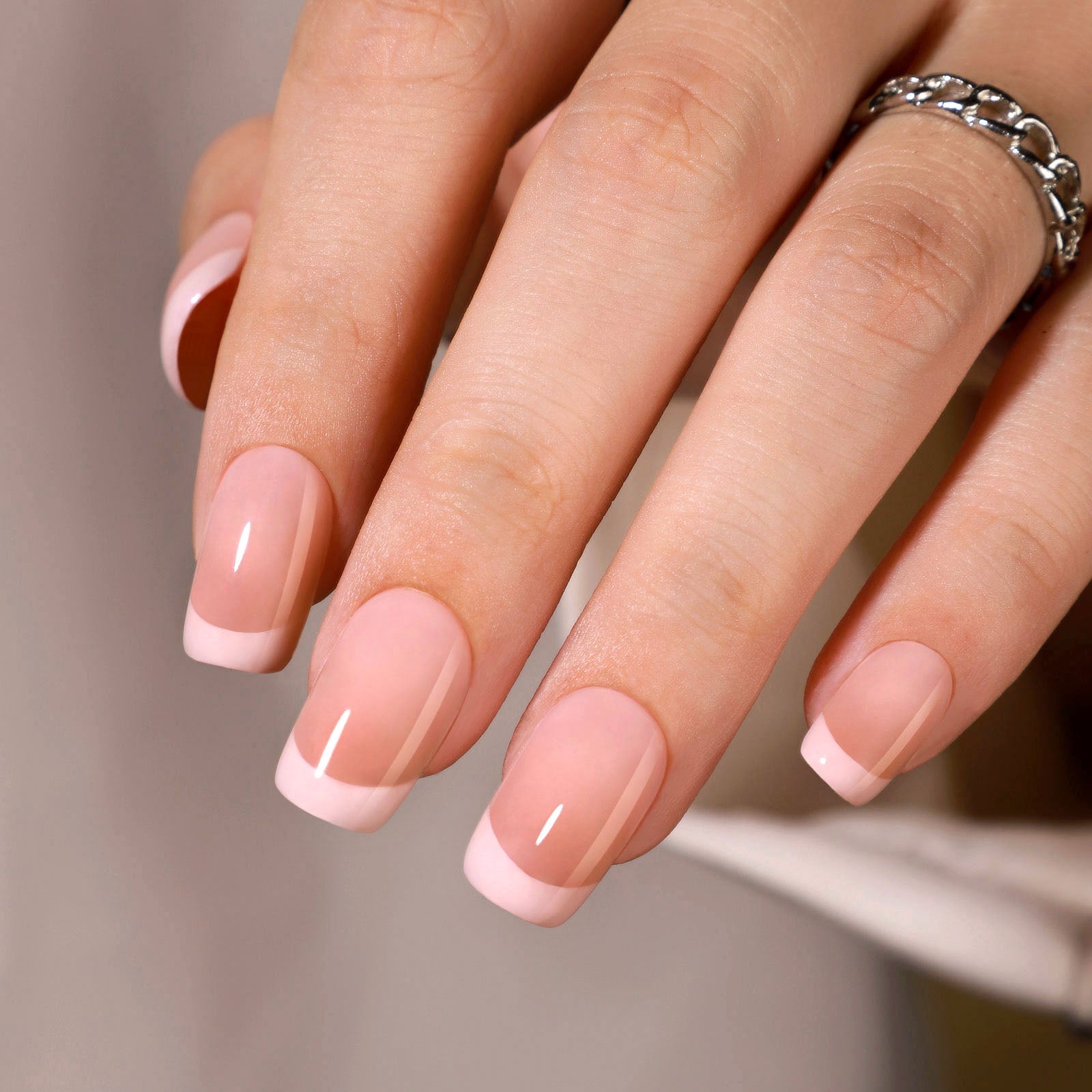

Home
›
Guides — Press-On Nails Tutorials
›
Types of Nail Tips Explained: Full Tip vs Half Tip vs Soft Gel

Types of Nail Tips Explained: Full Tip vs Half Tip vs Soft Gel
By Paul, SHANGMENG Application Specialist — 20+ years in press-on nail manufacturing.
Walk into any nail supply store and you'll find an entire wall of nail tip options — full cover, half-well, stiletto, soft gel, builder tips — with no explanation of what separates them. Online isn't much better: most guides either treat "nail tips" as synonymous with "press-on nails" or collapse everything into a single paragraph. For beauty-trend vocabulary, Allure's nails coverage shows how loosely nail terms get used in consumer-facing content; for nail health guardrails, the American Academy of Dermatology's artificial nail guidance is the safer reference point.
They're not the same. Not even close.
After 20+ years in press-on nail manufacturing, I've applied, tested, and built every format on this list. This guide breaks down all six major types of nail tips, explains exactly how each one works, and gives you a clear decision framework so you stop guessing and start choosing correctly.
Not sure which shape, length, or size fits your natural nails?
What Are Nail Tips?
Nail tips are pre-shaped extensions applied to the end (or full surface) of your natural nail to add length, shape, or a finished base for nail enhancement products. They're the foundational structure that builders and nail artists use before applying gel, acrylic, dip powder, or nail art.
The term "nail tips nails" gets searched over 12,000 times a month because it's genuinely confusing — "nail tips" can mean anything from a simple plastic tip glued under acrylic to a full soft-gel press-on nail with built-in shape and finish.
Here's the key distinction that most guides miss:
- Traditional nail tips (full cover, half-well, clear builder) are building blocks — they get applied and then covered with another product (acrylic, hard gel, overlay)
- Pre-shaped nail tips (stiletto, coffin-specific) are shape-specific extensions for nail techs
- Soft gel and press-on tips are finished products — they can go on directly, no overlay required
Understanding this difference determines which type belongs in your kit — and which one is a complete waste of money for your specific use case.
6 Types of Nail Tips Explained

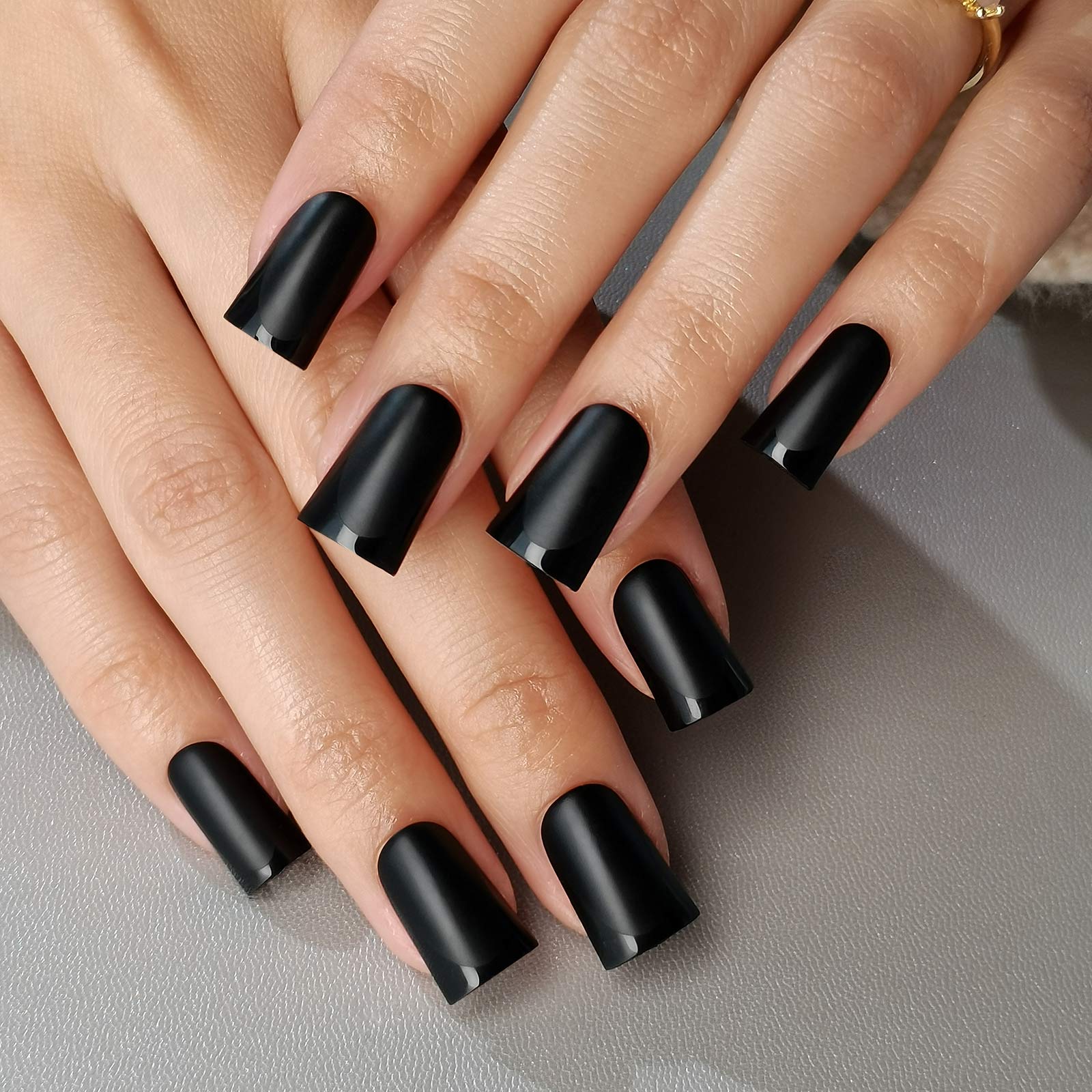
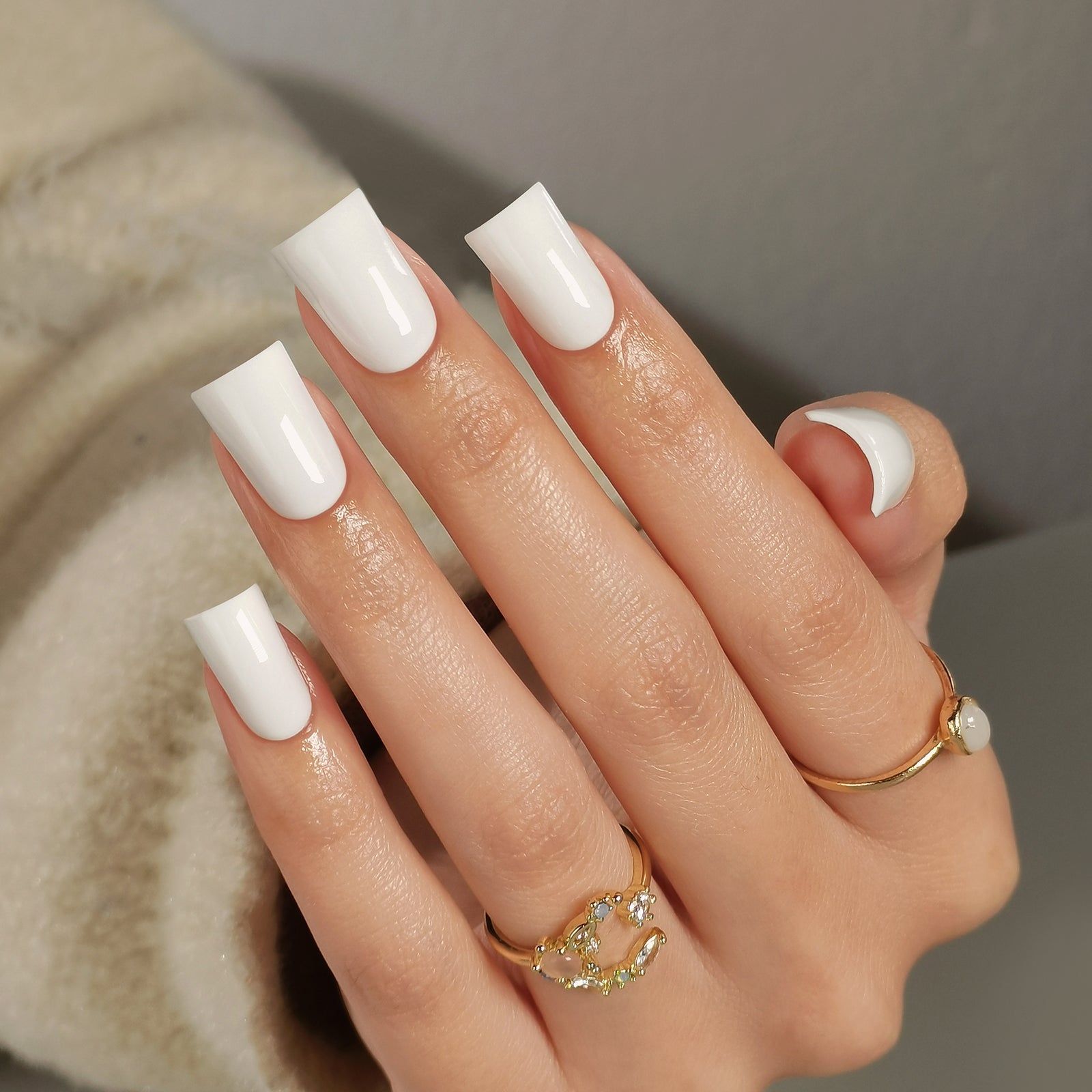
1. Full Cover Nail Tips
How they work: Full cover tips extend across the entire nail plate from cuticle to free edge — not just the free edge like traditional tips. They create a complete coverage surface with pre-built shape. The tip gets sized to your nail, buffed lightly for adhesion, and adhered with nail glue or adhesive tabs.
Construction: Most are made from ABS plastic (a rigid thermoplastic), with thicknesses typically ranging from 0.3mm to 0.8mm. Better-quality versions taper at the cuticle edge to reduce lifting and avoid the noticeable "ridge" that cheap full cover tips develop after a few days.
Pros: - Fastest application of all tip types — no gel overlay needed - No nail preparation skill required beyond sizing and cleaning - Available in hundreds of pre-painted designs - Removable without drilling or soaking (glue tabs)
Cons: - ABS plastic feels noticeably harder and more rigid than real nails - Prone to popping off at the cuticle edge if the sizing is even slightly off - Limited customization once applied - Lower-quality versions have visible seams at the sidewalls
Best for: Anyone who wants quick, temporary length and doesn't plan to apply gel or acrylic over the tip. This is the category that includes most consumer press-on nail sets.
Paul's note: The single biggest application mistake with full cover tips is skipping sizing. A tip that's even 0.5mm too wide will catch on fabric and pop within 48 hours. Always compare the tip width to your nail plate width — not just the length.

2. Half-Well (Half Tip) Nail Tips
How they work: Unlike full cover tips, half-well tips only cover the free edge portion of your nail — the natural nail remains exposed from the cuticle to the contact point. They're attached using nail glue applied to the "well" (the curved indentation that grips the free edge), then filed and blended before an acrylic or gel overlay is applied on top.
Half-well tips are what professional nail technicians have used in salons since the 1980s. They're the original nail extension format.
The well: The curved indentation at the base of a half-well tip is designed to cup the free edge of the natural nail. Getting this contact zone right is critical — if the well doesn't make full contact with the free edge, you get air pockets, and air pockets mean lifting and potential bacterial or fungal growth underneath.
Pros: - Stronger adhesion than full cover tips when applied correctly (well-to-free-edge contact) - Easier to blend seamlessly into the natural nail when covered with acrylic - Professional standard — every nail tech certification includes half-well tip application - Available in every shape: square, oval, almond, stiletto, coffin
Cons: - Requires acrylic or gel overlay — not a finished product on its own - Needs proper blending at the seam (using a 180-grit file) before overlay - Application is more skill-dependent than full cover tips - Not suitable for DIY unless you're also applying an overlay product
Best for: Salon professionals, students learning nail technology, and experienced DIYers who do their own acrylic or hard gel sets. Not a standalone product.

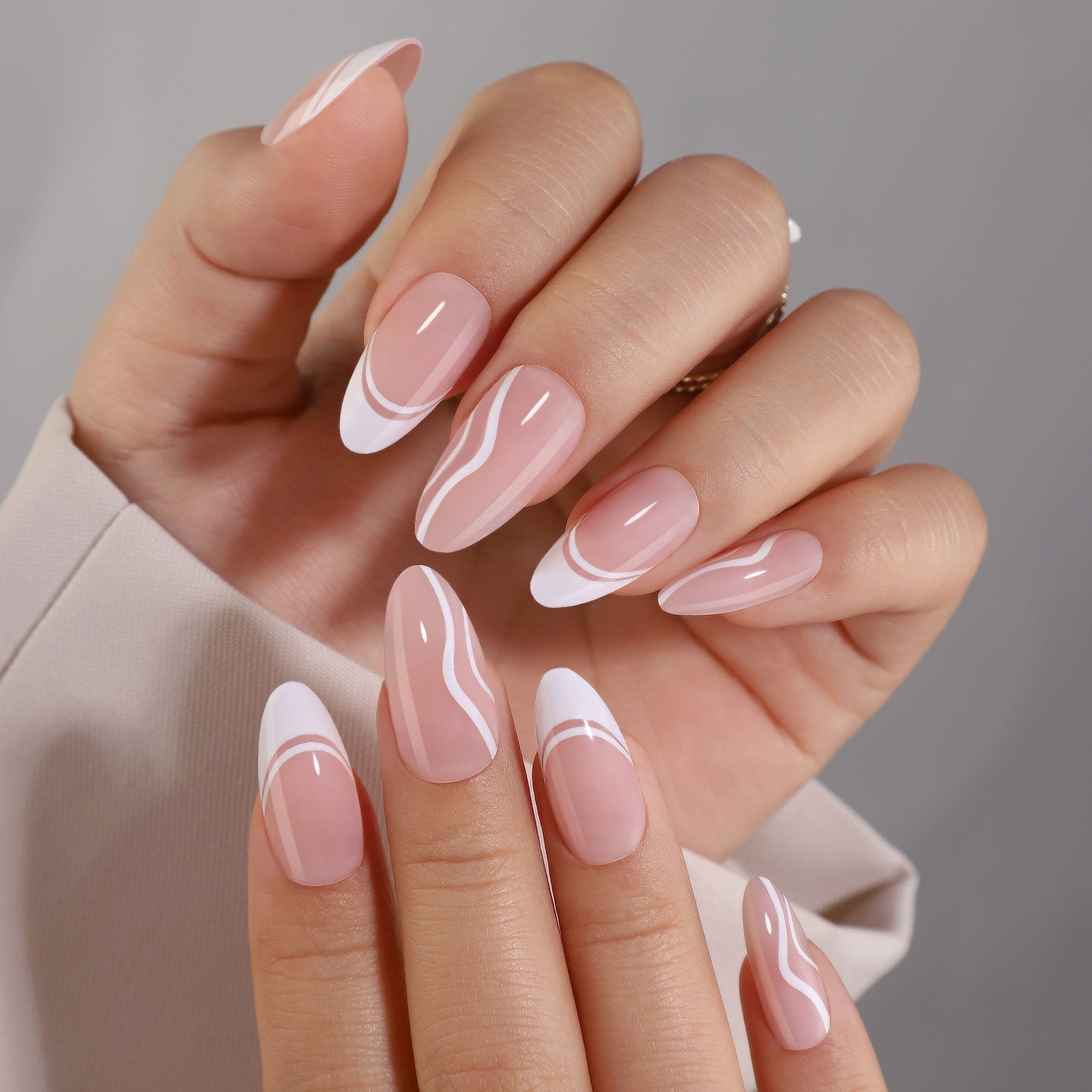
3. Shape-Specific Tips (Stiletto, Coffin, Almond, Duck)
How they work: Shape-specific tips are pre-formed to a particular nail shape — the geometry is built into the tip rather than filed in afterward. They come in both full-cover and half-well formats, but the defining feature is the shape: stiletto tips have a sharp tapered point, coffin tips have a flat squared-off end, duck tips (also called "flare" tips) splay outward at the free edge.
For nail shapes and their full visual guide, see our Nail Shape Chart: Every Shape Explained With Photos.
Why they exist: Filing a square tip into a stiletto by hand wastes material and requires significant skill to achieve symmetry on both hands. Shape-specific tips give nail techs a consistent starting point.
Pros: - Consistent shape geometry across all 10 nails without filing - Saves significant prep time on complex shapes (stiletto, coffin) - Reduces the risk of asymmetry between hands - Available in various lengths (short, medium, long, extra long)
Cons: - Shape is fixed — if you want to change the style partway through, you need a new set - Limited availability in some shapes outside of nail supply stores - Coffin and stiletto shapes increase breakage risk at stress points if overlay is too thin
Best for: Nail technicians building custom sets; experienced at-home users who have a consistent shape preference and apply their own overlays.

4. Clear Builder Tips
How they work: Clear builder tips are thin, transparent nail extensions designed to serve as a structural scaffold for gel or acrylic overlay. Unlike standard plastic tips, builder tips are made from materials (typically clear ABS or PET plastic) specifically chosen to bond well with UV gel systems and not create stress fractures at the seam.
The tip attaches at the free edge (similar to half-well), gets shaped to the desired length and contour, and then receives a gel or acrylic overlay across the entire nail plate and tip for structural integrity.
The material difference: Standard white or natural-colored tips can sometimes show through a sheer gel overlay. Clear tips eliminate this problem — the overlay product is the only visible layer.
Pros: - Invisible under gel overlay (no color bleed-through) - Better gel adhesion than pigmented plastic tips - Allows for true "naked nail" sheer looks under overlay - Compatible with all UV/LED gel systems
Cons: - Require overlay — not a standalone product - Need blending at the seam just like half-well tips - Slightly more expensive than standard tips - Can be harder to see during application (the transparency makes sizing harder)
Best for: Nail technicians doing sheer or natural gel extensions; anyone doing gel overlays who wants a seamless, invisible tip.

5. Soft Gel Pre-Shaped Tips (The Modern Standard)
How they work: Soft gel tips are made from a cured, flexible gel polymer — not plastic. They have genuine flex and give that mimics the movement of a natural nail. Pre-shaped soft gel tips come already contoured to nail anatomy (C-curve, lateral sidewalls, cuticle taper) so they sit flush against the nail plate without the ridge you get from rigid plastic.
For a full comparison of soft gel versus traditional methods, see our Soft Gel Manicure vs Press-On Nails guide.
The C-curve: Natural nails have a slight lateral arch from one sidewall to the other — this is the C-curve. Rigid plastic tips don't have it; properly manufactured soft gel tips do. When a tip has a matching C-curve to your natural nail, it sits flush without requiring excessive glue to bridge the gap, which means stronger adhesion and less lifting.
Application options: - Direct glue adhesion: Apply sizing tabs or nail glue — no UV lamp needed - Gel-curing method: Apply under a thin layer of UV builder gel, cure, and wear as an extension base - Press-on style: Many soft gel tips are fully finished and ready to wear as-is
Pros: - Flexible and natural-feeling — won't snap on impact like rigid plastic - Anatomically contoured for flush fit (C-curve + tapered cuticle edge) - Can be worn alone or as a base for gel overlay - Available as fully finished, pre-painted sets - Removable with acetone soak (cured gel) or warm water (adhesive tab)
Cons: - Higher cost per set than standard plastic tips - Require correct sizing — soft gel conforms to the nail plate but won't compensate for a wrong size - Gel removal requires acetone, unlike tab-adhesive plastic tips
Best for: Anyone who wants the feel of a professional soft gel extension without the salon visit.

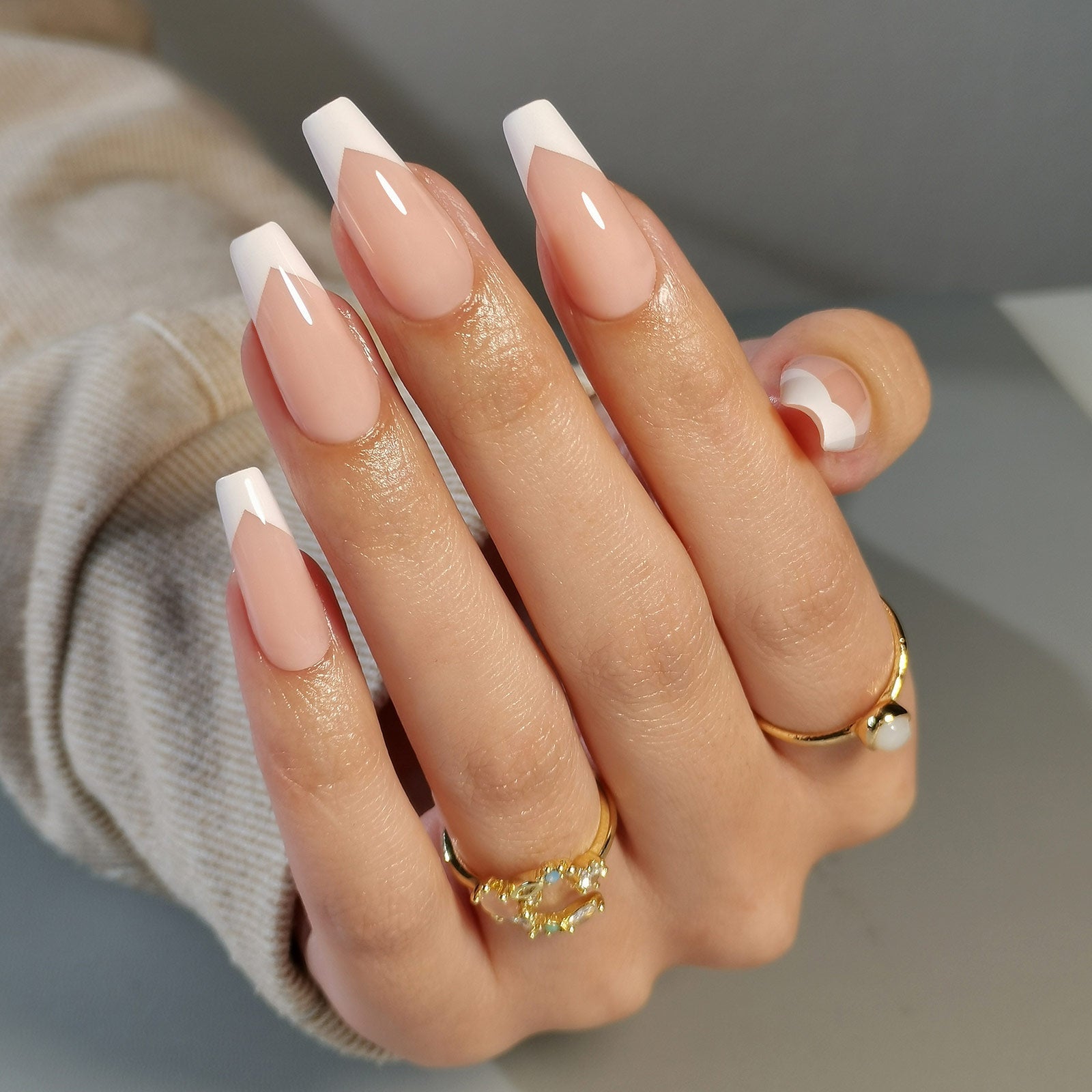
6. Pre-Designed Press-On Tips
How they work: Pre-designed press-ons are the consumer-ready version of full-cover nail tips — they arrive with the nail art already applied (painted, stamped, foiled, or 3D-embellished) under a protective topcoat. No polish, no gel lamp, no skill required. Size them, clean your nails, apply adhesive, press and hold.
These are what most people picture when they hear "press-on nails." The quality range is enormous — from thin drugstore sets that last one day to salon-grade soft gel sets that last two to three weeks with proper prep.
For a complete guide to what separates soft-gel quality tiers, see What Are Soft Gel Nails?
Pros: - Zero skill required for application - Designs that would take a professional nail tech 90 minutes are ready in under 15 - Completely removable without damage using warm water or acetone depending on adhesive type - Wide price range — accessible at every budget - No UV lamp, no drill, no salon appointment
Cons: - Design is fixed — you can't change the color without removing the set - Quality varies dramatically by manufacturer — thin plastic sets often pop within 24 hours - Requires proper nail prep (clean, dry, buffed) for full wear time
Best for: Anyone who wants salon aesthetics without salon time or cost. This category includes SHANGMENG's core product line — full-cover soft gel tips with pre-applied nail art in 200+ designs.
Still not sure which option is worth trying first? Find your best set by solving the concern you just compared: fit, finish, wear time, or price.


For a comparison of how pre-designed sets differ from other fake-nail terminology, see Fake Nails vs False Nails vs Press-Ons
Nail Tip Types Comparison Table
| Type | Material | Overlay Needed? | Removable DIY? | Skill Level | Cost Per Set | Wear Time |
|---|---|---|---|---|---|---|
| Full Cover (Plastic) | ABS Plastic | No | Yes | Beginner | $5–20 | 3–7 days |
| Half-Well | ABS Plastic | Yes (acrylic/gel) | Salon remove | Intermediate | $8–15 (tips only) | 2–3 weeks (with overlay) |
| Shape-Specific | ABS Plastic | Usually | Salon remove | Intermediate–Advanced | $10–20 | 2–3 weeks (with overlay) |
| Clear Builder | Clear ABS/PET | Yes (gel overlay) | Salon remove | Intermediate | $8–18 (tips only) | 2–3 weeks |
| Soft Gel Pre-Shaped | Flexible Gel Polymer | No | Yes (acetone/warm water) | Beginner–Intermediate | $15–40 | 1–3 weeks |
| Pre-Designed Press-On | ABS Plastic or Soft Gel | No | Yes | Beginner | $10–35 | 3 days–3 weeks |
Which Type of Nail Tip Is Right for You?

Use this decision tree to cut through the options:
You want a finished look with zero additional products → Full Cover Press-On or Pre-Designed Set The tip arrives ready to wear. No gel lamp, no overlay, no additional products required. Size them correctly, clean your nails, apply adhesive tabs or nail glue, press for 30–60 seconds. Done.
You want the most natural feel and longest wear without a salon → Soft Gel Pre-Shaped Tips Soft gel flexes with your natural nail movement, sits flush due to the C-curve, and wears significantly longer than rigid plastic with the same application. Pay more upfront, get noticeably better results.
You're learning to apply acrylic or hard gel at home → Half-Well Tips Half-well tips give you the professional-standard base that acrylic and hard gel were designed to work with. Buy quality tips (avoid the thin drugstore versions), practice the blend, and your overlays will sit and wear far better.
You do your own gel overlays and want a seamless finish → Clear Builder Tips No color bleed-through, better gel adhesion than standard tips, invisible under sheer overlay products.
You're a nail tech or advanced DIYer who always uses one shape → Shape-Specific Tips Pre-formed geometry saves time and reduces filing errors. Invest in quality shape-specific tips and your application time drops considerably.
You want to understand all your options first → Start with our Types of Fake Nails guide Nail tips are one category — our complete guide covers every nail enhancement format from acrylics to gel-X to wraps.
How to Apply Each Type of Nail Tip

Full Cover and Pre-Designed Press-On Tips
- Clean — Remove all polish, oils, and moisture with 91%+ isopropyl alcohol
- Buff — Light buff of the nail plate to break the shine (100–180 grit)
- Size — Match each tip to your nail plate width; the tip should fit ear-to-ear without overlap
- Apply adhesive — Nail glue to the tip's inner surface OR adhesive tabs pressed to the nail plate
- Press and hold — Align the cuticle edge first, then press down firmly for 30–60 seconds
- Shape — File the free edge if length adjustment needed
Common application mistakes: Skipping the buff step, applying too much nail glue (excess glue creates pressure points), and not pressing for a full 60 seconds. See the full Beginner's Guide to Press-On Nails for troubleshooting common adhesion issues.
Half-Well Tips (Professional Method)
- Dehydrate — Remove oils with nail dehydrator; apply primer if using acrylic
- Size — The well must match your free edge width exactly
- Apply glue to the well — Thin, even layer in the concave well only
- Attach — Angle the tip at 45°, make contact at the free edge, then roll down to the nail plate
- Blend — File the seam smooth with a 180-grit file until no visible ridge remains
- Apply overlay — Acrylic or hard gel covers the entire nail surface, blending the seam completely
Soft Gel Tips (Tab or Gel Method)
- Tab method: Follow the same steps as full cover press-ons above
- Gel method: Apply a thin layer of UV builder gel to the nail plate, place the soft gel tip, cure under LED/UV lamp per the product's timing instructions, then shape and finish
Nail Tips vs Press-On Nails: Which Should You Choose?
The confusion between "nail tips" and "press-on nails" is legitimate — they overlap significantly. Here's how to think about it:
Traditional nail tips (half-well, clear builder) are raw materials for nail professionals. They're building blocks — you buy them in bulk, apply them to the free edge, and build an overlay on top. They're not consumer products.
Full cover and soft gel tips occupy the middle ground. They can be worn as-is or used as a base for gel overlay, giving you flexibility.
Pre-designed press-on nails are the finished consumer product. The nail art is already done. Everything is measured, colored, and coated. You apply them in 15 minutes and remove them without salon help.
The real question isn't "tips vs press-ons" — it's what outcome do you want?
- Salon-quality custom extensions with maximum wear time → Use half-well or clear builder tips with overlay
- Professional aesthetics at home without salon tools → Soft gel press-on tips like SHANGMENG's sets
- Speed and accessibility → Pre-designed full cover press-ons
Common Mistakes When Using Nail Tips

1. Wrong sizing — the single most expensive mistake A tip that's 0.5mm too wide creates edge gaps at the sidewalls; a tip too narrow lifts at the center. Measure your nail plate width at its widest point. Standard drugstore kits often stop at 10–12 sizes, which forces compromises; SHANGMENG sets include 32 nails across 16 sizes so you can match width instead of forcing a fit.
2. Skipping the dehydration step Natural nail oils are the enemy of adhesion. A full 30 seconds of isopropyl alcohol (91%+) wipe-down, followed by letting the nail air dry completely, removes surface oils and gives adhesive the clean contact surface it needs.
3. Using too much nail glue More glue doesn't mean stronger hold — it means longer cure time, air bubble risk, and potential skin contact (which causes both dermatitis and weakened adhesion at the edges). A thin, even layer covering the inner surface of the tip is correct. Nails Magazine notes that excess adhesive is among the top three causes of premature tip loss in both professional and DIY application.
4. Applying tips to damaged or peeling nails Nail tips need a stable plate to adhere to. If your natural nail is peeling, lifting, or has damage, the adhesive will follow the damaged layer, not bond to healthy nail tissue. Address nail health first. The American Academy of Dermatology recommends treating nail damage before any enhancements to prevent worsening the condition.
5. Not pressing long enough Most adhesive systems need 45–60 seconds of firm, even pressure to fully cure the contact zone. Releasing pressure at 10 seconds because it "feels set" is the cause of approximately half of premature pops in the first 24 hours of wear.
6. Ignoring the C-curve mismatch If you're using soft gel tips and the C-curve of the tip doesn't match your natural nail's lateral arch, you'll get a gap at the sidewalls that fills with air rather than adhesive. The solution is correct sizing — not more glue. Allure notes this as a key reason why professional application sizing protocols exist.
Frequently Asked Questions
What is the difference between full cover nail tips and half-well nail tips? Full cover nail tips cover the entire nail plate from cuticle to free edge and can be worn as-is without any overlay product. Half-well tips attach only to the free edge of the natural nail and require an acrylic or gel overlay to become a wearable extension. Full cover tips are consumer products; half-well tips are professional nail tech supplies.
Are soft gel nail tips better than plastic nail tips? For most home users, yes. Soft gel tips are made from a flexible gel polymer that mimics the natural flex of real nails, while standard ABS plastic tips are rigid and more prone to snapping. Soft gel tips also have a built-in C-curve that creates a flush fit against the nail plate, resulting in better adhesion and fewer lifting issues. The trade-off is higher cost per set.
How long do different types of nail tips last? Wear time depends on tip type and preparation: pre-designed full cover plastic tips last 3–7 days with nail glue; soft gel press-on tips with proper prep can last 1–3 weeks; half-well or clear builder tips with professional acrylic or hard gel overlay last 2–3 weeks before a fill. Every extra minute spent on nail prep adds measurable wear time regardless of tip type.
Can I apply nail tips at home without a UV lamp? Yes. Full cover plastic tips and most pre-designed press-on sets use nail glue or adhesive tabs — no UV lamp needed. Soft gel tips can also be applied with adhesive tabs without a lamp. You only need a UV/LED lamp if you're applying a gel overlay on top of the tip, or using a gel-cure bonding method for soft gel extensions.
What nail tip type is best for short natural nails? Full cover soft gel tips or pre-designed press-on sets work best for short natural nails. They cover the entire nail plate, so the length of your natural nail doesn't limit the final look. Half-well tips require a visible free edge to attach to — very short nails may not have enough free edge for secure well contact.
Do nail tips damage natural nails? The tips themselves don't damage nails — improper removal and preparation do. Peeling or prying off nail tips pulls layers of the natural nail plate with them. Always use the correct removal method: warm water soak for adhesive tabs, acetone soak for nail glue, or acetone soak for gel-cured soft gel tips. The American Academy of Dermatology advises against forcible removal of any nail enhancement to prevent thinning and splitting.
Sources
- Nails Magazine — Professional Nail Technology Education. Nail Tip Application Standards and Common Failure Points. nailsmag.com
- American Academy of Dermatology (AAD). Nail Care: Tips for Healthy Nails. aad.org
- Allure. The Difference Between Every Type of Nail Enhancement, Explained. allure.com
Paul is SHANGMENG's Application Specialist with 20+ years in press-on nail manufacturing. He covers nail extension techniques, application methods, and product construction for the SHANGMENG guides blog.
Ready to try soft gel tips at home? SHANGMENG's full-cover soft gel press-ons are manufactured to salon-grade flex and C-curve spec — the same quality standard referenced throughout this guide. Shop Soft Gel Press-On Nails →
Not sure which shape to choose? Once you've picked your tip type, the next step is shape. See Nail Shape Chart: Every Shape Explained With Photos for a visual breakdown of every shape matched to hand type.
The fastest way to test the difference between rigid plastic and soft gel tips: Order a single SHANGMENG soft gel set. Apply it with proper prep. You'll know within the first wear day whether the flex and fit difference is worth it to you. No guesswork required. Browse SHANGMENG Sets →
Share