













Press-On Toenails: Best Picks + How to Apply 2026
By Paul, SHANGMENG Application Specialist — 20+ years in press-on nail manufacturing.
Key Takeaways: - Press-on toenails give you a salon-quality pedicure in under 10 minutes — no drying time, no chipped polish 3 days later. - A full-service salon pedicure costs $60–$80 and takes 90 minutes. A set of press-on toenails costs $10–$15 and takes 10 minutes. - Toenail press-ons differ from fingernail press-ons in sizing, curvature, and adhesive requirements — getting the big toe size right is the critical step. - With proper prep and glue application, press-on toenails last 1–2 weeks through sandals, poolside, and light beach days. - SHANGMENG press-on toenails include a full pedicure set — toe-specific sizes for all ten toes plus spares, glue, adhesive tabs, and prep tools.
Press-on toenails are pre-shaped, pre-polished artificial nail covers designed specifically for toes. They bond to your natural toenails with nail glue or adhesive tabs, come in sets sized to cover all ten toes plus spare sizes, and are shaped wider and flatter than fingernail press-ons to match toe anatomy. Worn correctly, they last 1–2 weeks with glue and 3–5 days with tabs.
That definition covers the basics. The rest of this guide covers the 2026 picks that actually hold up through sandal season, the application differences that fingernail tutorials skip entirely, and the durability tips that separate 3-day wear from 2-week wear.
Not sure which shape, length, or size fits your natural nails?
Why Press-On Toenails Are Replacing Salon Pedicures

The math against a traditional salon pedicure is stark.
| Salon Pedicure | Press-On Toenails | |
|---|---|---|
| Cost per session | $60–$80 | $10–$15 |
| Time (door to sandals) | 90–120 minutes | 10 minutes |
| Drying wait | 30–45 minutes | Zero |
| UV exposure | Yes (UV drying lamp) | None |
| Risk of smudging | High — first 45 minutes | Zero |
| Annual cost (monthly) | $720–$960 | $120–$180 |
The time cost alone justifies the switch. A standard salon pedicure requires driving to the appointment, waiting for an open chair, sitting for 45 minutes while the work is done, then holding still while the polish dries — a ritual that burns 90 minutes of your day. Miss the drying window leaving the salon and you smudge a toe in the car door.
Beyond cost and time, there is the UV exposure question. Many salons use UV drying lamps to set gel top coats. The American Academy of Dermatology notes that cumulative UV nail lamp exposure may contribute to premature skin aging on the hands and feet with frequent use. Press-on toenails require zero UV exposure — the bond is mechanical and adhesive, not light-cured.
For our press-on toenails pedicure guide covering the broader context, read the full intro breakdown.
10 Best Press-On Toenail Styles for 2026
Toenail trends in 2026 are moving toward cleaner, more graphic aesthetics — less glitter overload, more architectural finish. These ten styles represent the highest-demand categories based on search volume and customer order patterns.
1. Classic French Tip
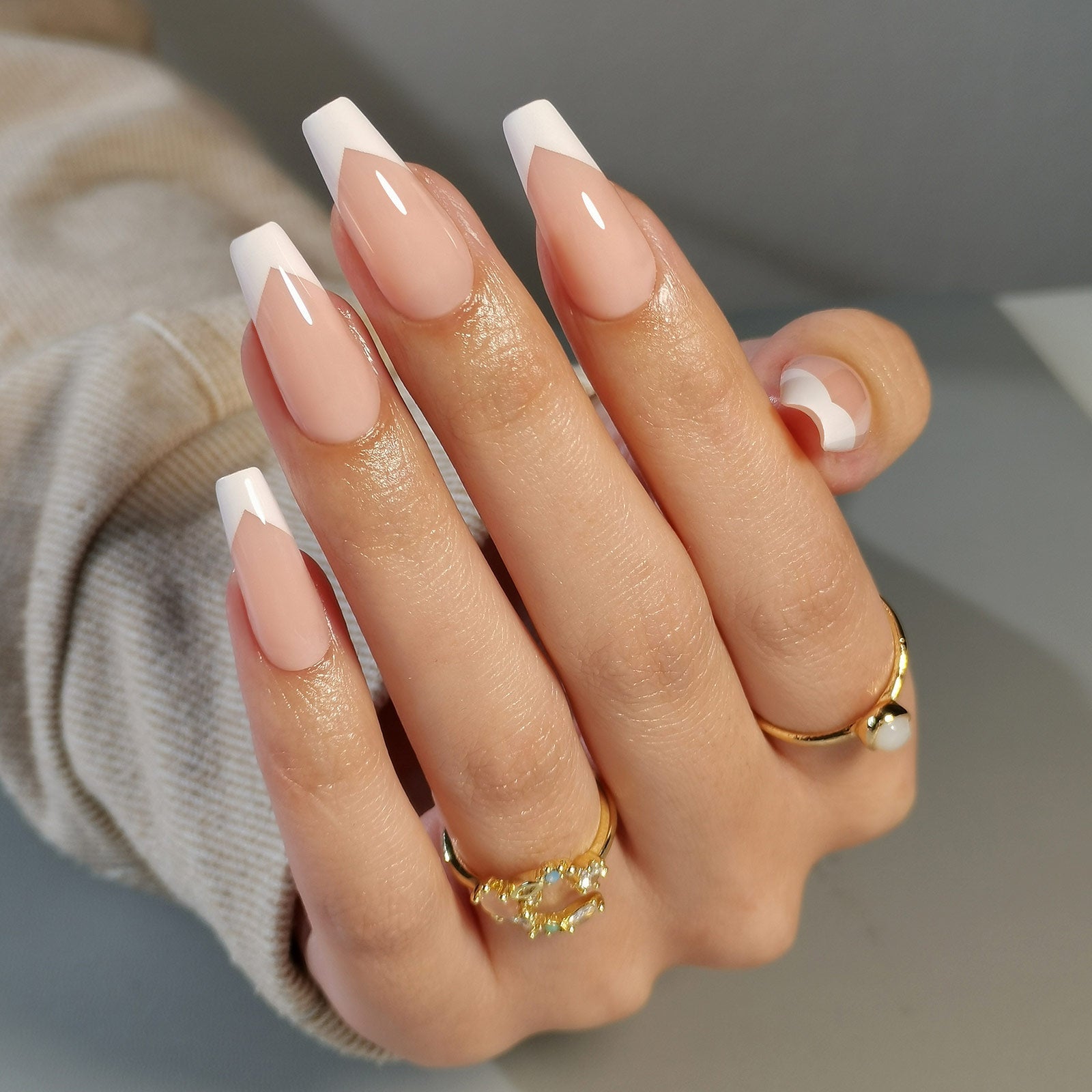
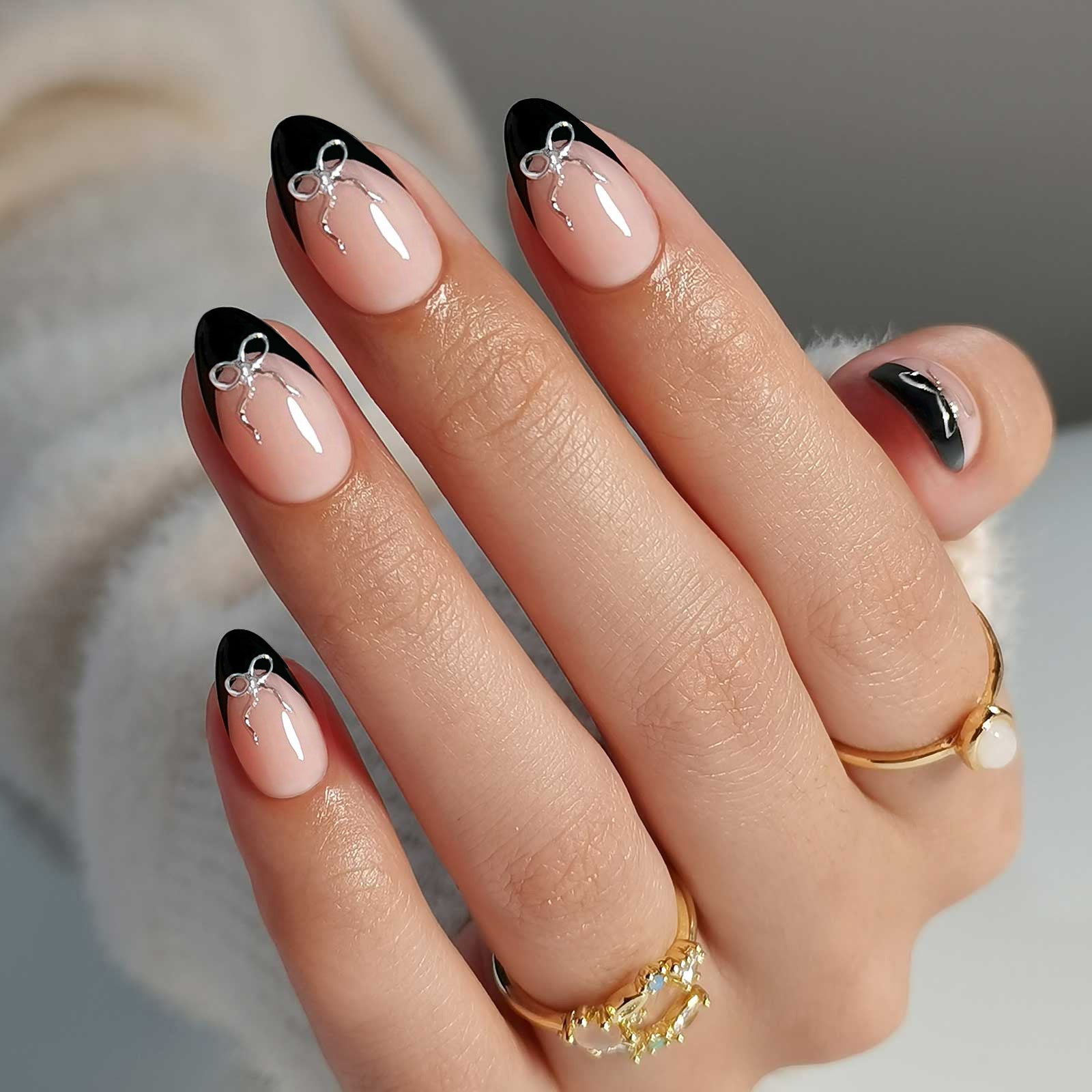
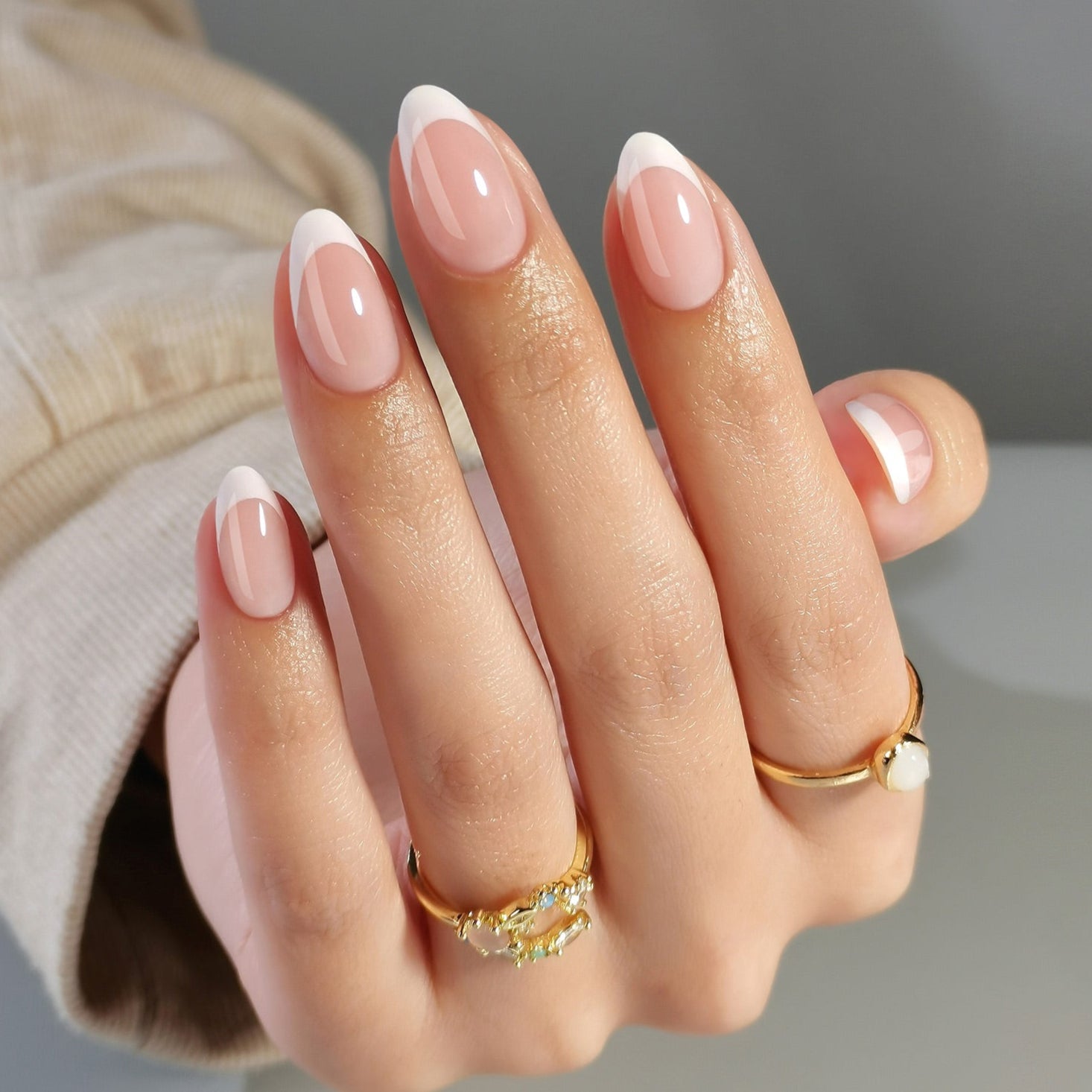
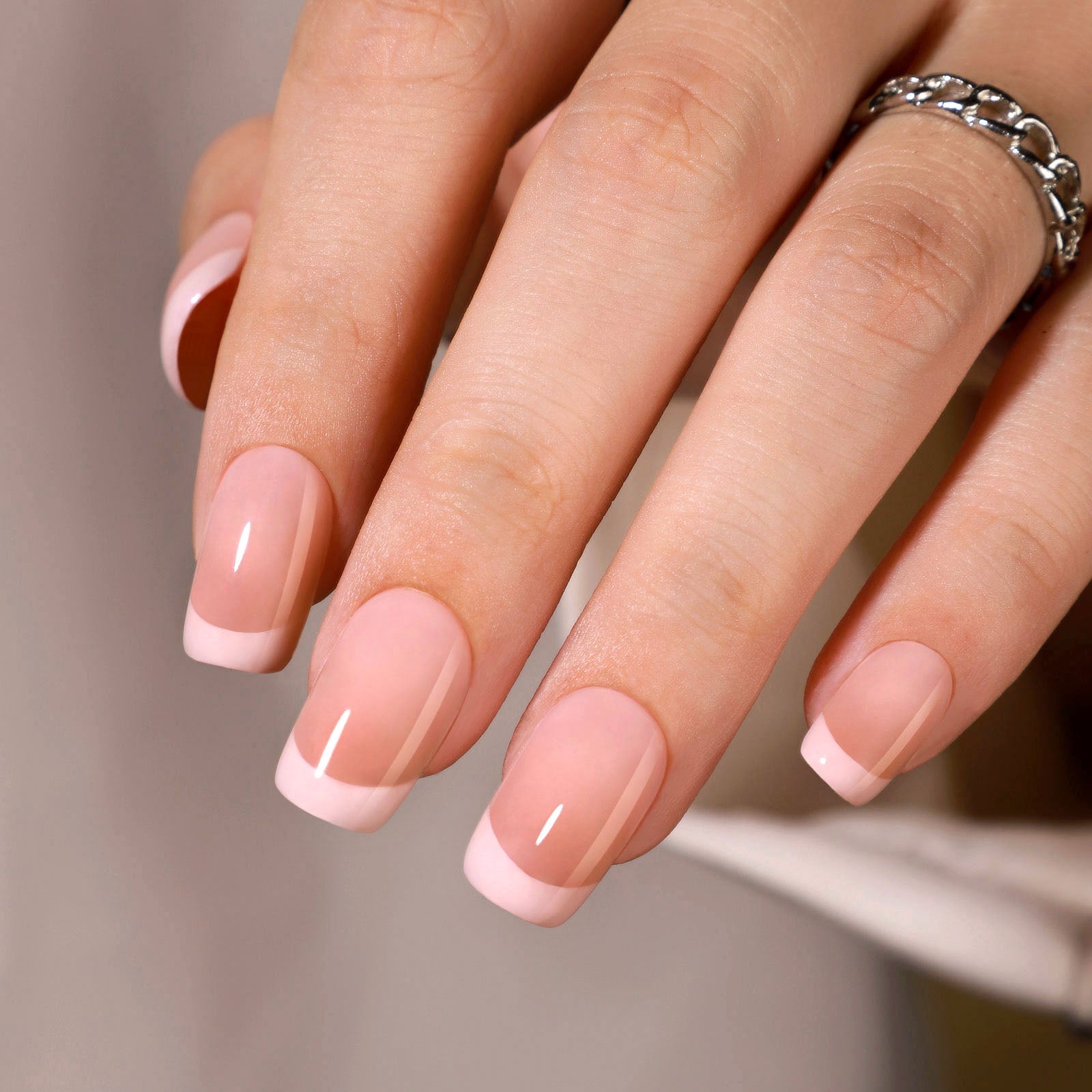
The perennial summer choice. White tip on a nude base reads as clean and finished from flip-flops to open-toe heels. French tip press-on toenails consistently rank as the highest-volume style in the pedicure category. The white tip should cover roughly the top third of the nail for proportional balance at toe scale — toenail French looks best with a slightly thicker tip than on fingers.
2. Sheer Nude
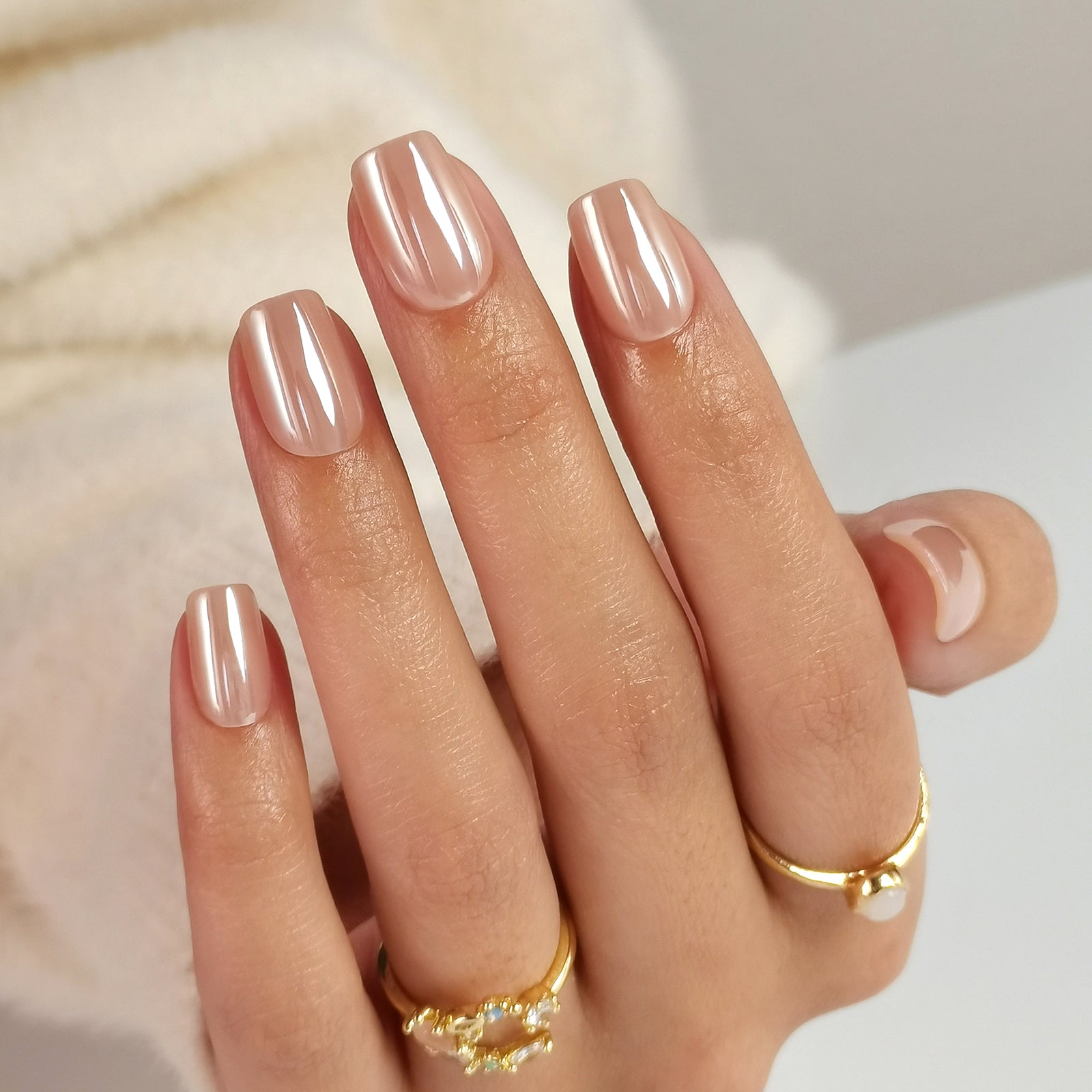
Barely-there coverage that enhances the natural nail without reading as "done." Ideal for professional settings where visible nail art is unwanted but bare feet feel unfinished. Choose a nude one shade lighter than your skin tone for the most flattering effect.
3. Classic Red
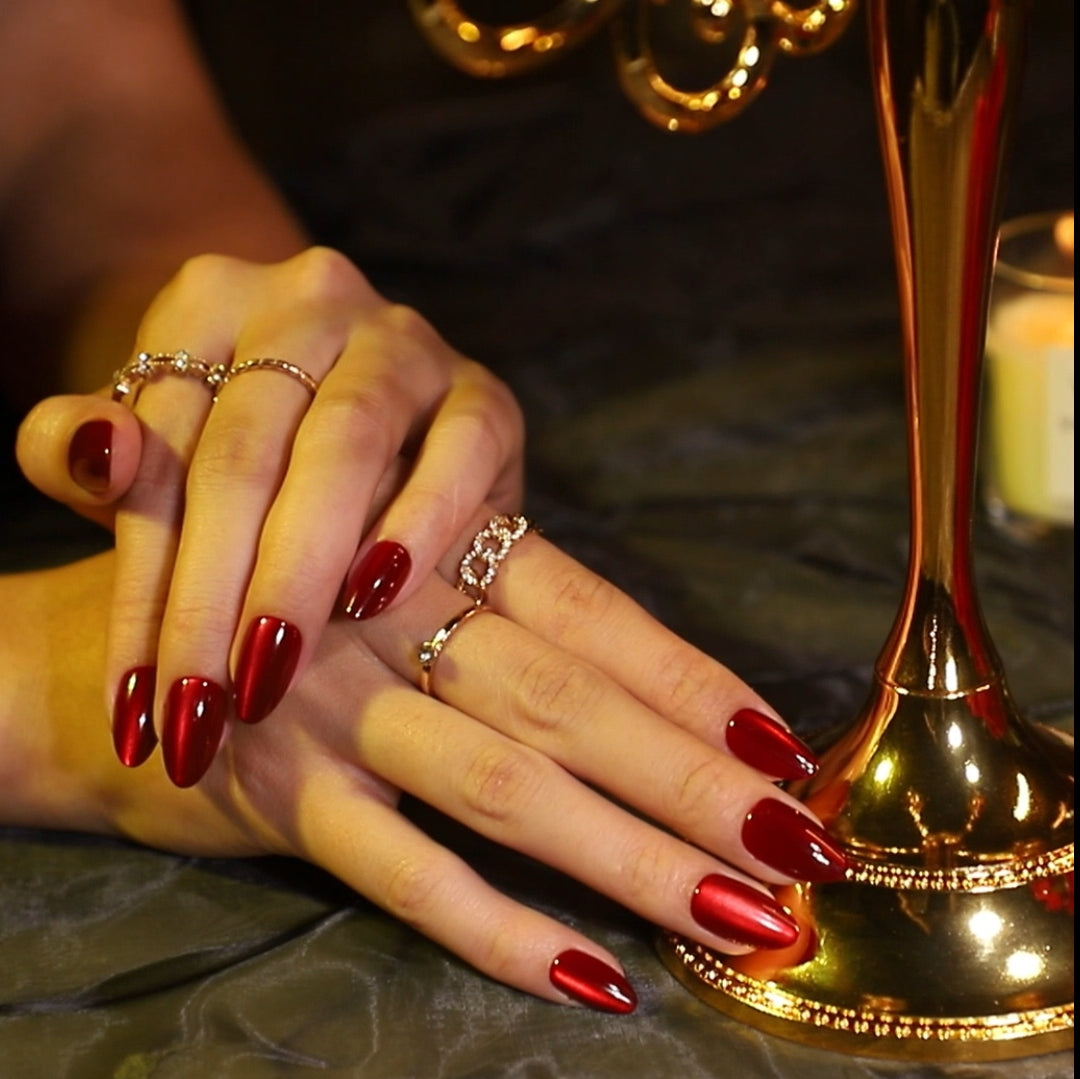
The most searched single-color toenail style. A saturated red on toes carries through summer — in sandals, at the pool, with tan lines. On toes, a slightly warmer red (brick-adjacent) wears better than cool cherry reds, which can read as purple in natural light.
4. Coral and Melon
2026's breakout toenail color. Coral sits at the intersection of orange and pink without committing to either — it flatters a wide range of skin tones and reads as current rather than classic. Melon tones (slightly more yellow, slightly more muted) are the subtler alternative for the same effect.
5. Chrome and Mirror Finish
Chrome press-on toenails catch light dramatically in sandals and poolside settings. The finish is achieved at manufacturing rather than requiring a separate chrome powder application — meaning the mirror effect is built in and will not rub off. Silver chrome dominates the category; gold chrome is the premium alternative.
6. Milky White
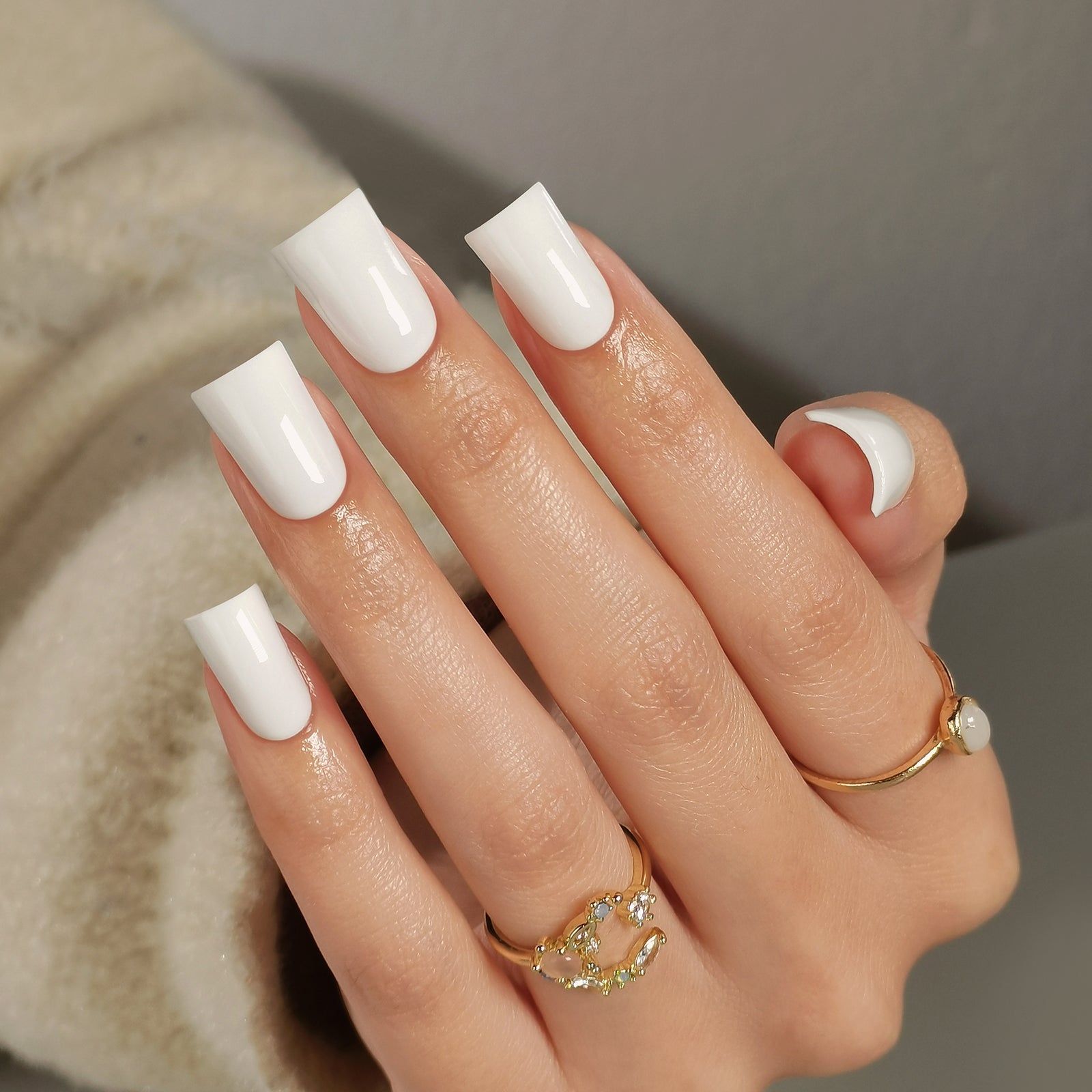
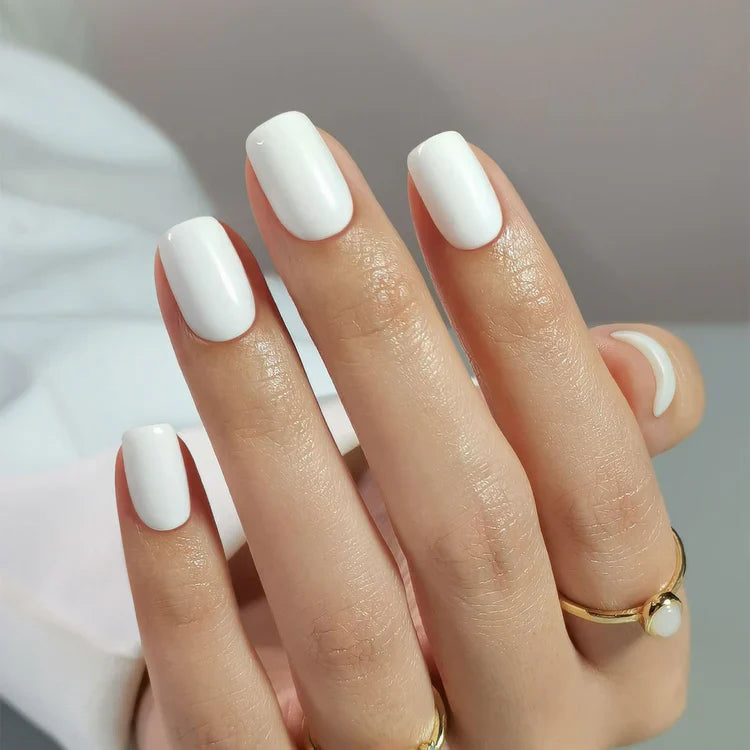
A softer alternative to stark French or sheer nude. Milky white is a slightly opaque, slightly warm white that reads as clean and polished without the graphic contrast of a true French tip. Pairs with everything from denim to formal.
7. Navy and Deep Cobalt
The refined summer alternative to red. Dark blue on toes looks unexpectedly chic in natural light and reads as sophisticated rather than casual. Works particularly well on shorter, rounded toe shapes.
8. Pastel Rainbow (Individual Toes)
Assigning a different pastel — baby blue, mint, lavender, soft yellow, pale peach — to each toe is having a significant moment in 2026. The look requires a set with multiple color options, or buying multiple single-color sets and mixing. Best executed with a consistent finish (all matte, all shimmer) rather than mixing finish types across toes.
9. Sunset Ombre
Orange fading to yellow or hot pink fading to coral. Ombre on toes is more visible and legible than on fingers because each individual toe nail is read as a unit rather than one continuous canvas. Simpler gradients read better at toe scale.
10. Solid Black
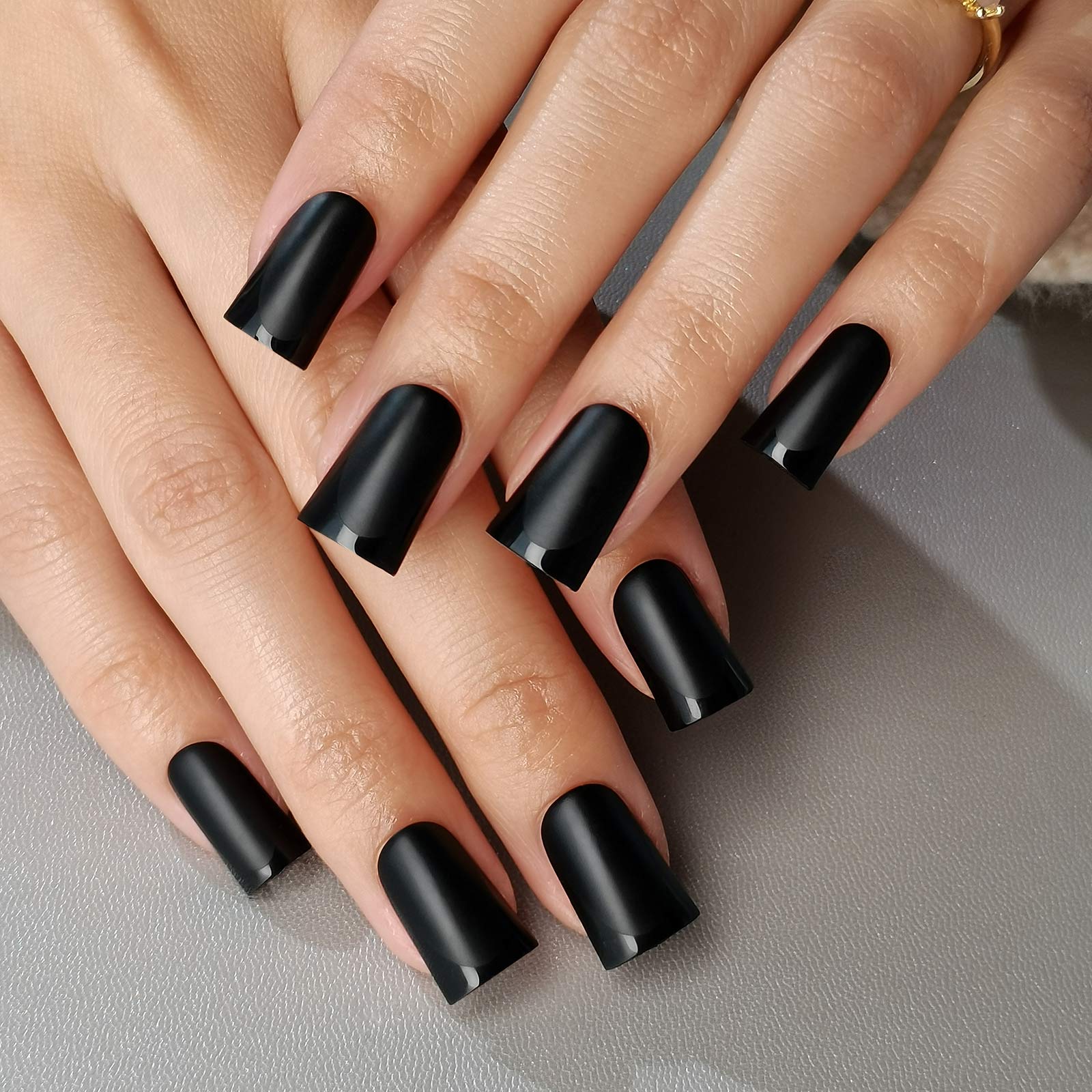
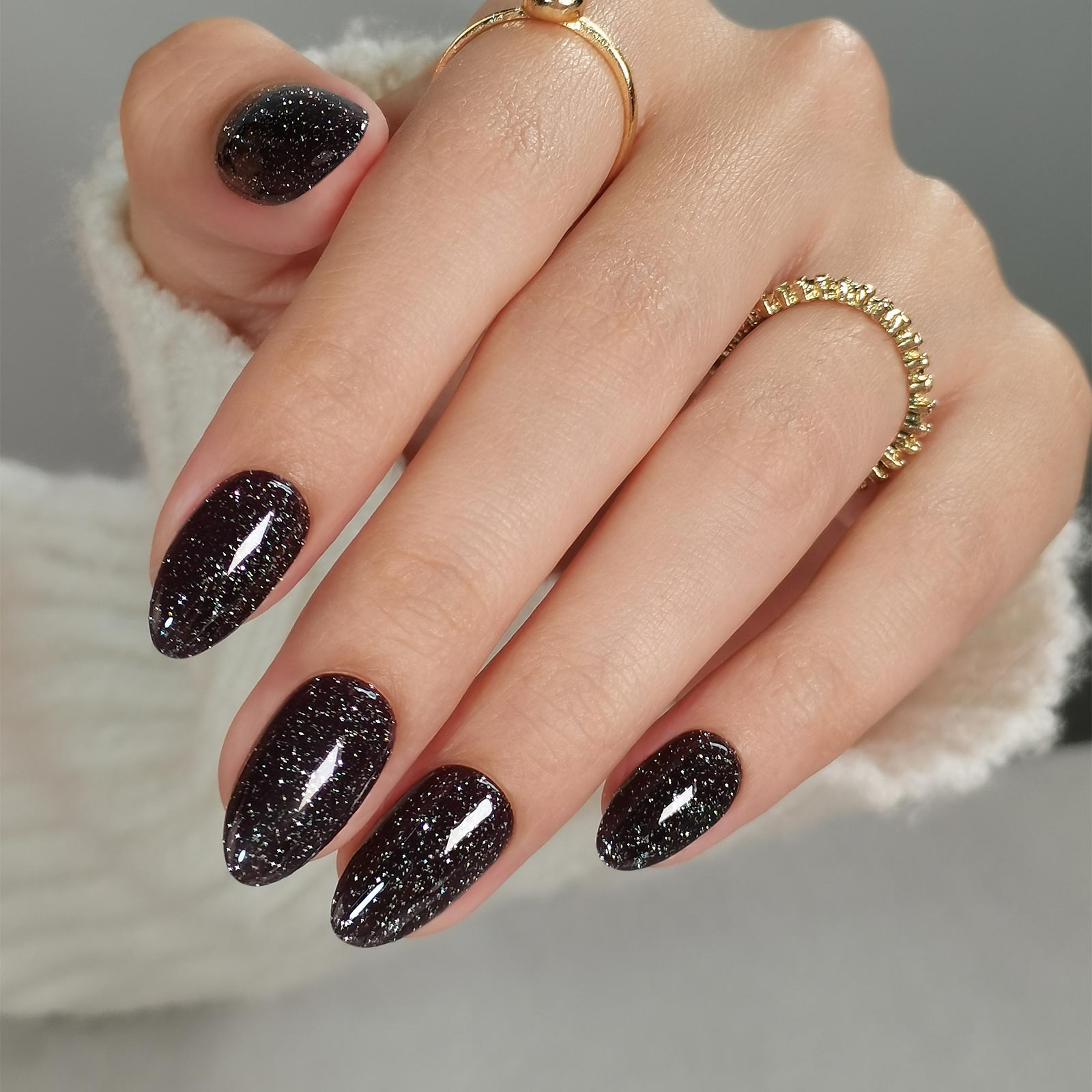
The highest-contrast, most graphic option in the pedicure category. Black toenails in summer sandals is a style counterpoint that has maintained search volume consistently. Works as a contrast to light summer clothing and neutral footwear.
For the full press-on toenail collection including available shapes and sizes, see the collection page.
How Toenail Press-Ons Differ from Fingernail Press-Ons
Most press-on nail application tutorials are written for fingernails. The techniques are similar but the differences matter — applying fingernail logic to toes is the most common source of toenail press-on failures.
Sizing
Toenail press-ons come in wider, flatter sizes than fingernail sets. The big toenail is typically 5–8mm wider than the widest fingernail, and the smaller toes require very small, compact sizes. A standard toenail set includes a graduated size range from large (big toe) through extra-small (pinky toe), usually with spare sizes for the most common widths.
The key sizing rule for toes: the press-on should cover the entire nail plate from edge to edge without overlapping onto the skin. On the big toe, this means the press-on width needs to span the full visible nail. A nail that is too narrow on the big toe will lift at the sides within days — there is not enough adhesive surface area to counter the torque from shoes and walking.
Curvature
Toenails, particularly the big toenail, tend to be flatter and wider with a shallower C-curve than fingernails. Press-on toenails are manufactured with this in mind — they are designed with a flatter underside curvature compared to fingernail press-ons. Using fingernail press-ons on toes creates a mismatch in curvature that leaves gaps at the nail edges, reducing adhesive contact and accelerating lifting.
Adhesive Requirements
Toenails face mechanical stresses that fingers do not: the weight-bearing pressure of walking, the friction against shoe uppers, the moisture from sweat inside closed shoes. These forces require more adhesive coverage than a typical fingernail application. For toenails with glue, applying a thin layer to both the press-on underside and the natural toenail surface (double-coat method) increases bond area and hold duration by 20–40% compared to a single-side application.
Big Toe Priority
The big toe is the anchor of any pedicure. It is the most visible nail, the one that sees the most friction from footwear, and the nail most likely to catch on fabric and clothing. Getting the big toe size perfectly flush and the adhesive application complete determines whether a pedicure looks polished or jury-rigged. Treat the big toe as the critical path and the remaining nine toes as straightforward.
For a deeper look at how toenail application connects to duration and removal, see our beginners' guide to press-on nails.
Step-by-Step: How to Apply Press-On Toenails

The application process for toenails takes 10 minutes once you have done it once. The first time takes 15–20 minutes while you learn the sizing. The steps below are sequenced for durability — taking shortcuts at the prep stage and you will be reapplying by day three.
You will need: The press-on toenail set, nail glue (included with SHANGMENG sets), a cuticle pusher, a nail buffer, rubbing alcohol or prep pads.
Step 1: Remove Old Polish and Clean the Toenails
If you have existing nail polish or gel on your toenails, remove it completely before starting. Any residue under a press-on toenail creates an uneven surface that reduces adhesion. After removal, wash your feet with soap and water, then dry completely — including between the toes and under the nail edges.
Step 2: Push Back Cuticles and Buff the Surface
Use a rubber or wooden cuticle pusher to gently push back the cuticle on each toenail. Dead cuticle tissue overlapping the nail plate reduces the adhesive contact area directly. After pushing cuticles, lightly buff each nail with a 180-grit buffer — three to four strokes across the surface. You are removing shine, not material. A matte surface gives adhesive more to grip.
Step 3: Dehydrate Every Nail
Wipe each toenail with a rubbing alcohol prep pad. Use a separate swipe per nail if possible, not one pad for all ten. Alcohol removes the natural oil layer that is the primary cause of early lift. Let each nail air-dry for 20–30 seconds after wiping. Do not skip this step — it is the highest-impact single action in press-on nail longevity.
For a complete breakdown of prep steps and why each one matters, see How to Make Press-On Nails Last 2+ Weeks.
Step 4: Size and Lay Out All Ten Nails
Before opening the glue, lay all ten press-on toenails across the top of your foot in position order — big toe to pinky toe. The press-on should cover the entire nail plate without touching the skin on either side. If you are between sizes, choose the larger. A slightly larger press-on that fully covers the nail holds better than a slightly smaller one that leaves exposed edges.
Big toe sizing is where most people take the most time. Try two or three candidate sizes before committing. Hold the press-on against the toenail — it should span edge to edge with minimal or no gap, and it should not overlap onto the skin at the sides.
Step 5: Apply Glue and Press (Big Toe First)
Apply a thin layer of nail glue to the underside of the press-on. For toenails, also apply a thin layer directly to the natural toenail surface — this double-coat technique significantly increases bond surface area.
Place the press-on at the cuticle line first, angling it slightly (about 30–45 degrees) and rolling it down toward the tip. This rolling technique reduces air bubble formation compared to pressing straight down. Once positioned, apply firm downward pressure for 30 seconds. For the big toe, hold the pressure for a full 45 seconds — the larger surface area takes longer to achieve full adhesive contact.
Still worried press-ons will make the problem worse? Find your gentle set after the safety checks above, then remove it without picking.


Work from big toe to pinky on one foot, then repeat on the other.
Step 6: Post-Application — Do Not Get Feet Wet for 2 Hours
Adhesive requires time to reach full cure strength after application. During the first 2 hours, avoid water contact, showering, and sweaty activity. After that window, the bond is at full strength. If you can, apply press-on toenails at night before bed — the resting period while you sleep is an ideal curing window.
How to Make Press-On Toenails Last in Sandals and at the Beach

Toenail press-ons face summer conditions that fingernail press-ons do not. Heat, water immersion, sand, sandal straps, and shoe friction are all accelerants of adhesive breakdown. These are the conditions that separate a 3-day pedicure from a 2-week one.
Water exposure: Brief water contact — showering, walking through shallow water, poolside splashing — does not significantly degrade a properly applied press-on toenail. Extended water immersion does. If you are swimming laps or spending extended time in a pool or ocean, apply a drop of clear top-coat nail polish around the edges of each press-on the morning before water exposure. The polish seals the edge against water infiltration.
Sandal straps: Open-toe sandals with straps that cross over the toes create lateral friction on the press-on edges. Ensure press-on edges are fully flush with the natural nail — any lifted edge will catch on straps and begin peeling. A small amount of nail glue applied to any lifting edge immediately extends the wear by several days.
Closed-toe shoes: The toe box of closed shoes creates pressure on the front face of toenail press-ons. This is normal and will not cause premature lift if the application is correct. The error to avoid: press-on nails that are too long. Toenail press-ons should end at or just before the natural nail tip — any length that extends beyond the natural nail will hit the shoe front and lever off.
Sweat: Foot sweat is the hidden enemy of press-on toenail adhesion. In hot weather or during activity, apply a light coat of rubbing alcohol around the nail edges before shoes — it temporarily dehydrates the skin and nail junction. In sandals in hot weather, the evaporative effect of open air is usually sufficient.
Common Toenail Press-On Mistakes

Getting the Big Toe Size Wrong
Choosing a big toe press-on that is too narrow is the most common single mistake. The gap between the press-on edge and the natural nail edge becomes a moisture and dirt collection point, and the adhesive is asked to hold without coverage at the highest-stress edges. The result is a pedicure that lifts at the sides of the big toe within 2–3 days. If in doubt about size, go larger.
Skipping the Dehydration Step
The second most common mistake. Natural nail plates are coated in sebum — the skin's own oil — that prevents adhesive from bonding directly to the nail surface. Wiping with alcohol removes this layer and is the single highest-impact prep step. Skipping it typically reduces wear time by 30–50%.
Not Enough Glue Coverage on Toenails
The single-side (press-on underside only) glue application that works adequately for fingernails is insufficient for toenails. The mechanical loads on toes from walking and footwear require full-surface double-coat application. Apply a thin layer to the press-on underside, then a thin layer directly to the toenail, then press together.
Press-Ons That Extend Past the Natural Nail Tip
Toenail press-ons that extend beyond the natural nail tip will contact the inside of shoe toes. Every step generates a small levering force at the tip that compounds over time. Keep toenail press-on length at or slightly within the natural nail tip.
Applying Right Before Activity
The 2-hour post-application curing window exists for a reason. Applying press-on toenails immediately before a workout, swimming, or any activity that generates foot heat and sweat bypasses the cure window entirely. Plan applications for the evening before or at least 2 hours before any activity.
FAQ
How long do press-on toenails last?
With nail glue and correct application, press-on toenails last 1–2 weeks. With adhesive tabs only, expect 3–5 days. Duration depends primarily on three variables: adhesive type (glue vs. tabs), prep quality (dehydrated nail surface vs. oily), and post-application water exposure in the first 2 hours. Toenail press-ons typically hold slightly shorter than fingernail press-ons of equivalent quality because of the higher mechanical loads from walking and footwear. For detailed techniques on maximizing wear time, see How to Make Press-On Nails Last 2+ Weeks.
Can you wear press-on toenails with closed-toe shoes?
Yes — with one condition: the press-on should not extend beyond the natural nail tip. A press-on that ends flush with or slightly inside the natural nail tip will fit inside closed-toe shoes without contact pressure. A press-on that extends past the tip will hit the shoe front with each step, creating a levering force that peels the nail from the tip inward. Toenail press-ons are designed for natural nail lengths — they are not the format for adding dramatic length to toes.
Do press-on toenails come in different sizes?
Yes. A standard toenail press-on set includes toe-specific sizes scaled for the big toe through the smallest toe, with spare sizes for common widths. The size range spans from large (big toe — typically 20–25mm wide) through extra-small (pinky toe — typically 8–10mm wide). Unlike fingernail press-on sets, toenail sets include proportionally wider and flatter nails to match toe anatomy. SHANGMENG toenail sets include size guides in the packaging to match press-on widths to natural nail widths before applying glue.
Are press-on toenails better than nail polish for pedicures?
For most people doing pedicures for sandal season or events: yes, in the key practical dimensions. Polish requires 30–45 minutes of drying time with high smudge risk during that window, chips within 3–5 days on toenails due to shoe friction, and requires complete removal and reapplication when a chip occurs. Press-on toenails have zero drying time, last 1–2 weeks when applied with glue, and can be removed and replaced in a single session without polish remover. The trade-off: removal requires acetone soak or an oil-based soak, which takes 5–10 minutes. For anyone who gets regular pedicures ($60–$80 per session), the annual cost difference alone justifies the switch.
Can you swim with press-on toenails?
Brief water exposure — showering, wading, pool splashing — is fine for properly applied press-on toenails with glue. Extended immersion (lap swimming, extended ocean or pool time) will eventually soften the adhesive bond. To protect press-ons through swimming, apply a thin layer of clear nail polish or nail glue around each nail edge before water exposure. This seals the edge against water infiltration at the most vulnerable point. Adhesive-tab-only applications should not be exposed to water immersion at all — tabs will release under extended moisture. For more context on durability in water, see our pedicure timing guide.
How do you remove press-on toenails?
The safest removal method: soak your feet in warm water with a small amount of cuticle oil or olive oil added for 5–10 minutes, then gently lever each press-on from the side using an orange stick or wooden cuticle pusher. The oil penetrates under the adhesive bond and releases it without damage to the natural nail. Acetone-based nail polish remover also works and is faster — soak a cotton pad in acetone, hold against each nail for 30–60 seconds, then gently slide the press-on off. Never pull or force a press-on toenail off dry — the force transfers to the natural nail plate and can cause surface damage or peeling. For detailed removal instructions, see How to Remove Press-On Nails.
Ready for Sandal Season?
A salon pedicure costs $60–$80 and takes up to 2 hours. The results chip within a week. SHANGMENG press-on toenails give you a complete pedicure in 10 minutes — no drying wait, no UV lamp, no $80 invoice.
Our French tip collection includes toenail-compatible French designs for the most searched pedicure style of the year.
Every set includes nail glue, prep tools, and a size guide.
Sources: American Academy of Dermatology UV nail lamp guidance; Allure nail trend coverage; r/PressOnNails community data (most frequent application questions, 2025–2026); Internal SHANGMENG application testing protocols, 20+ years of manufacturing data.
Share