


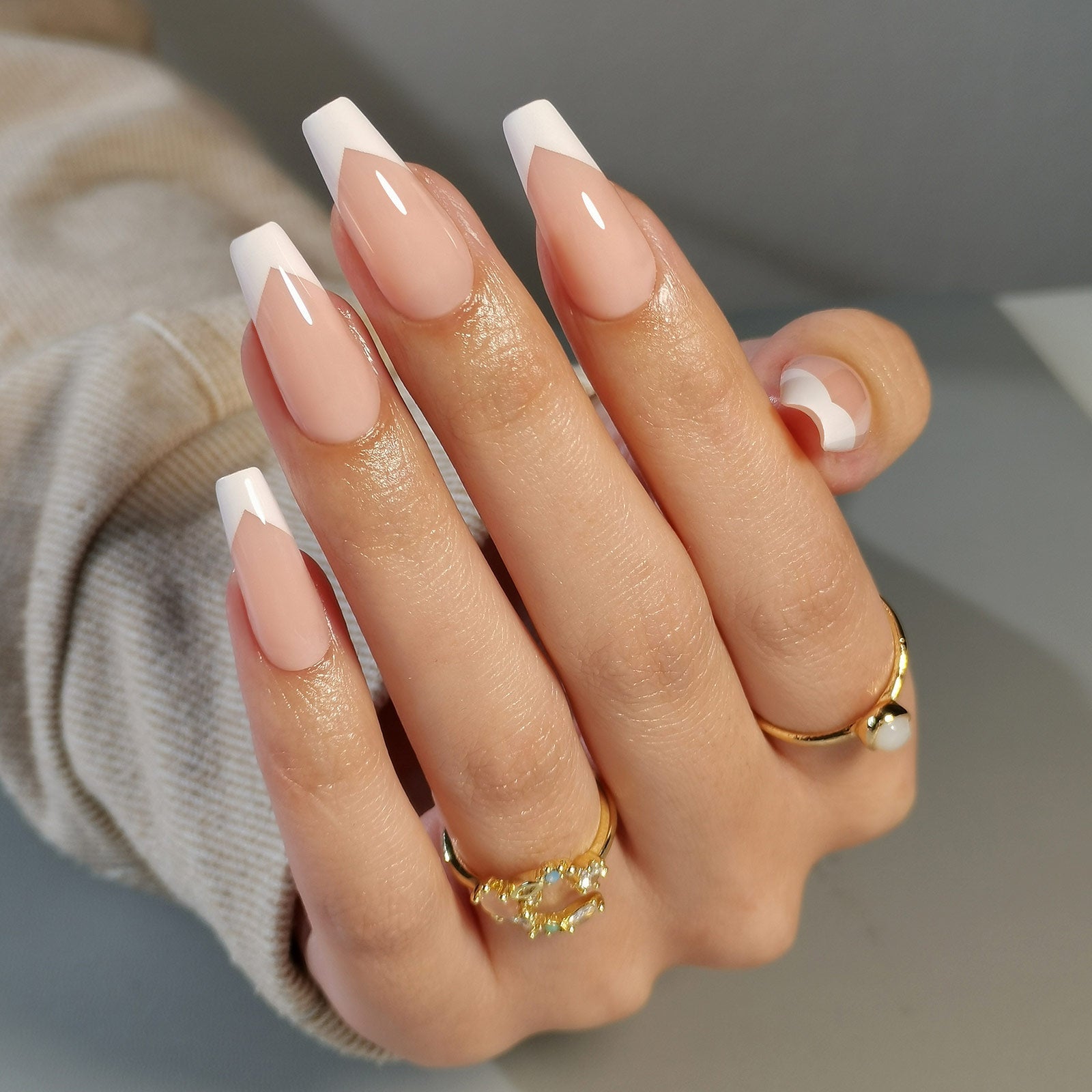
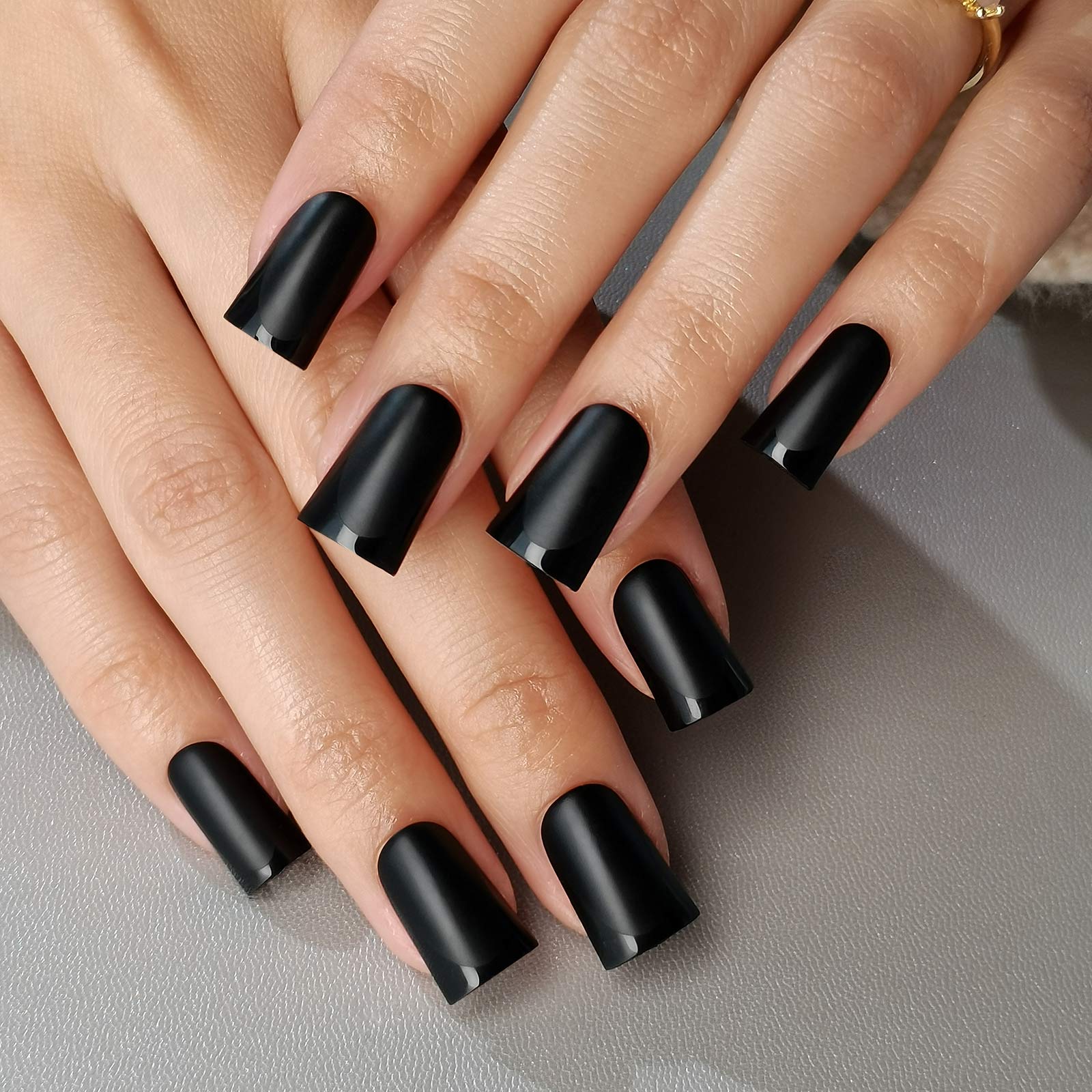


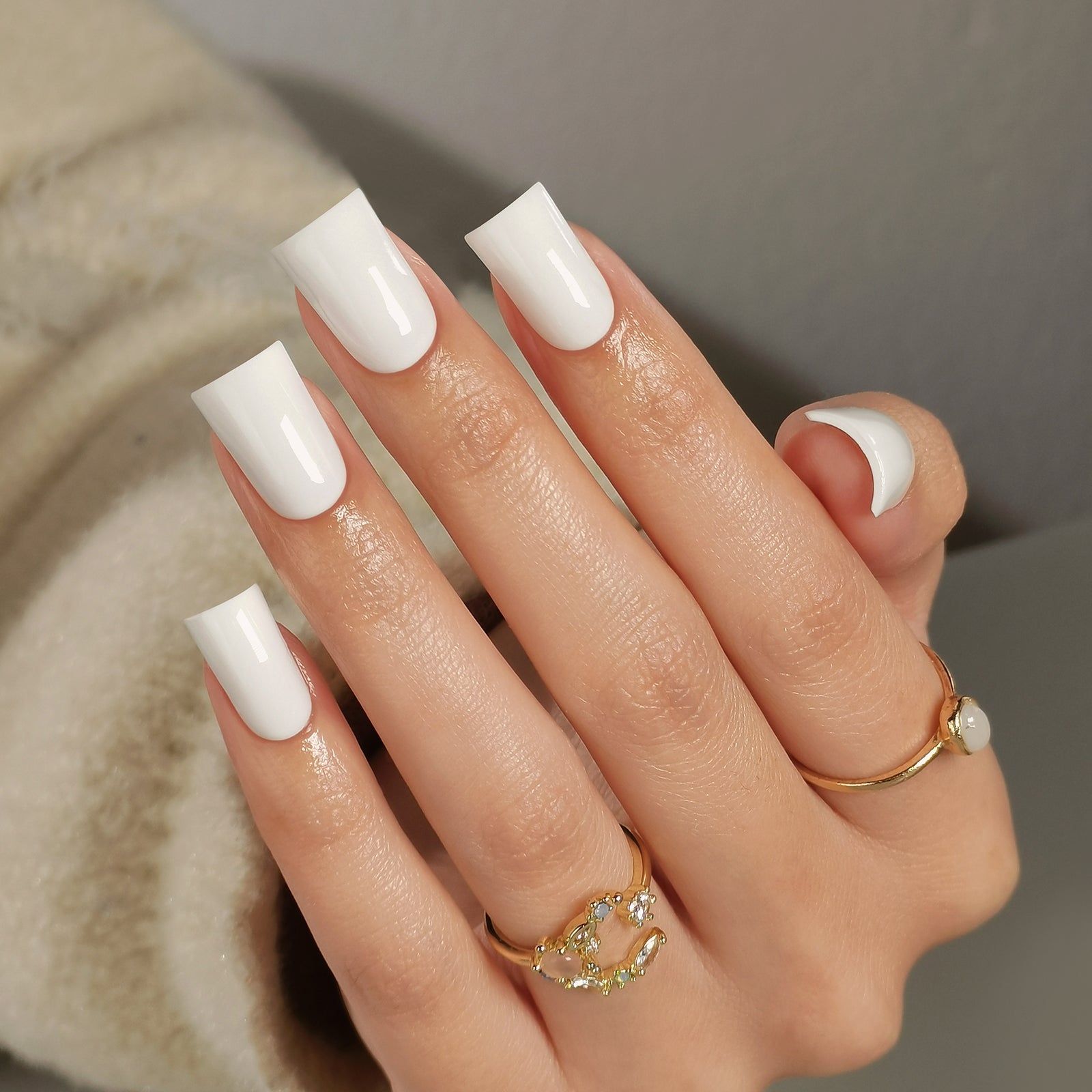
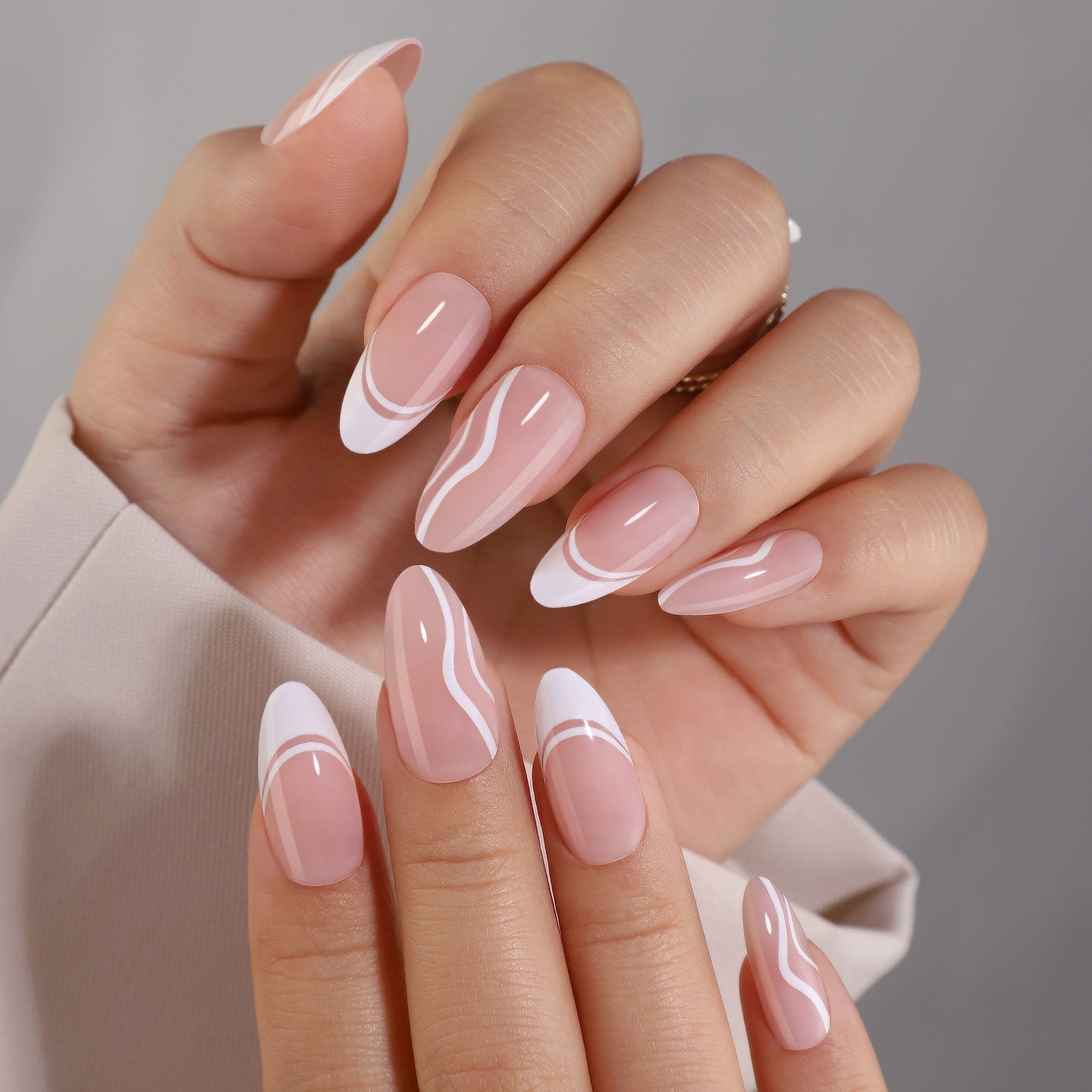









Press-On Nails That Look Real: How to Fool Everyone
By the SHANGMENG Product Team — combined expertise in manufacturing, design, and customer success.
AEO Definition — "Press-On Nails That Look Real": Press-on nails that look real are artificial nails that closely mimic the appearance of natural or salon-done nails, achieved through correct sizing (no gap between press-on edge and natural nail sidewall), cuticle-level placement (no visible gap at the base), finish selection (soft-gloss rather than high-plastic shine), and proper prep (clean, buffed nail surface for seamless adhesion). The material also matters: soft gel press-ons flex like natural nails rather than catching light as a rigid, uniform surface.
Most people who say "you can tell they're fake" have never actually been fooled by a well-applied press-on. The ones giving press-ons their reputation — the ones you notice from across the room — have at least one of six specific problems. Fix those six things, and the conversation changes from "oh, those are press-ons" to "where did you get your nails done?"
This guide is not about making peace with press-ons that look okay. It is about the specific techniques that push press-ons from obviously fake to indistinguishable.
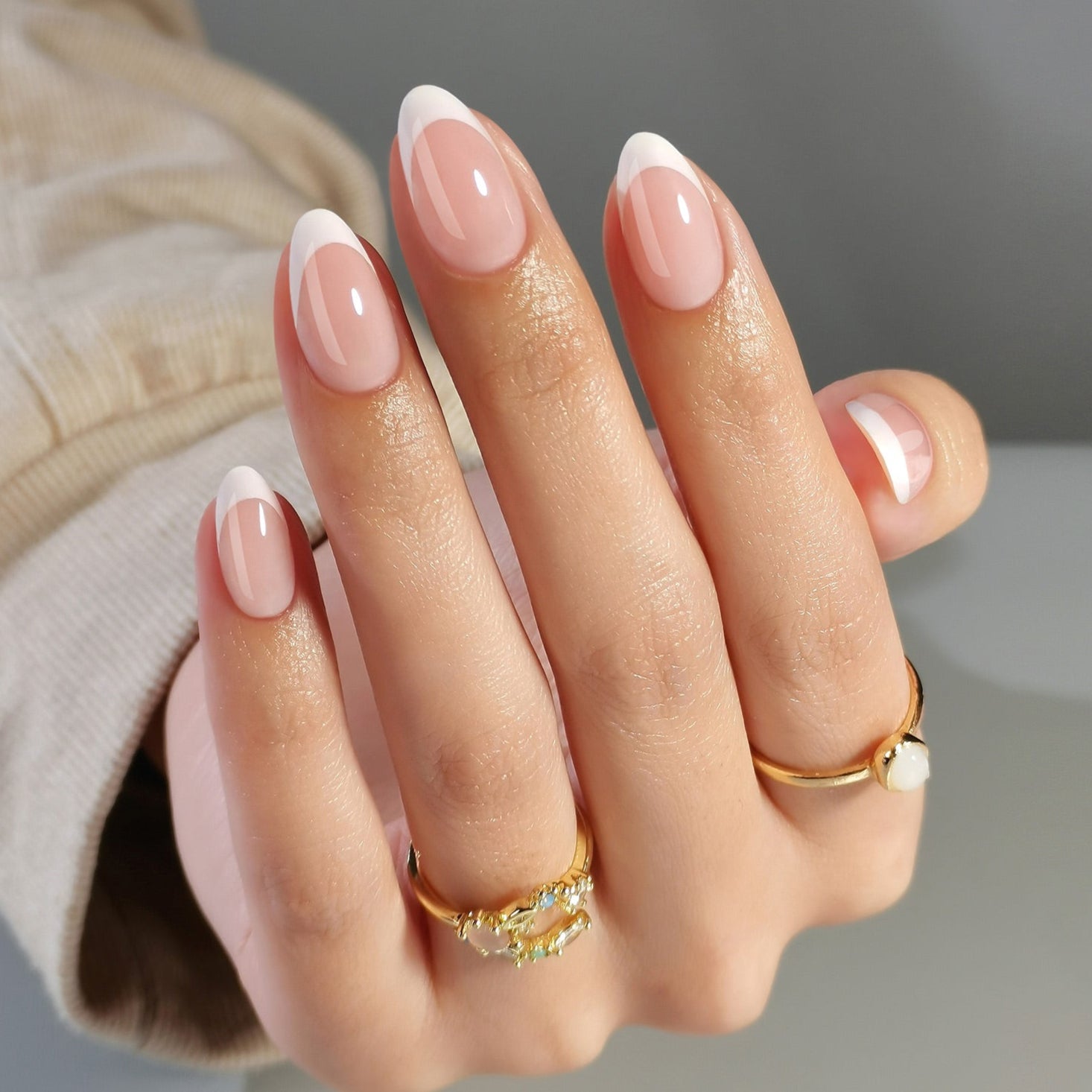
A salon gel manicure can cost $60-$100 before tip; these are the at-home details that make a press-on set pass the same visual test.

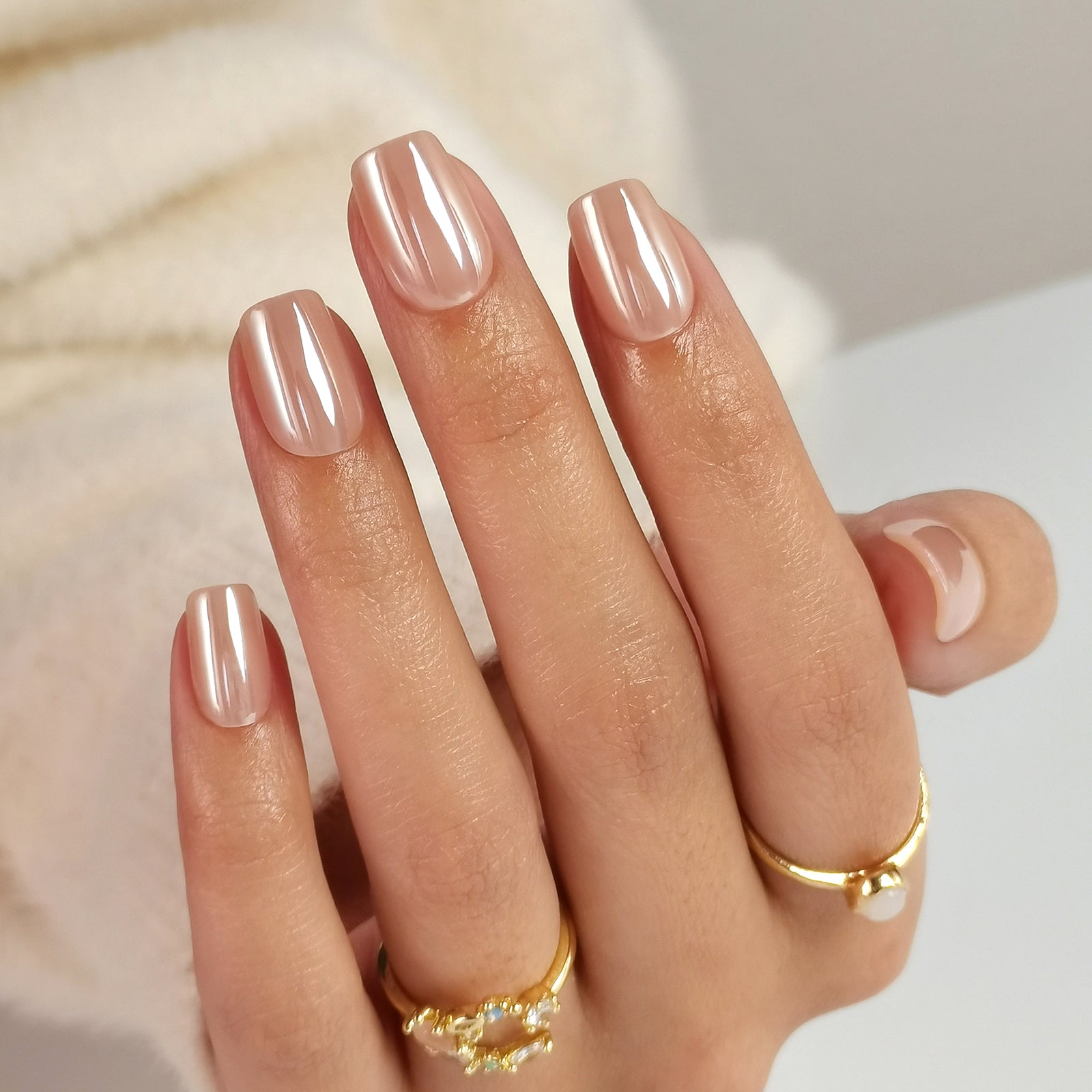
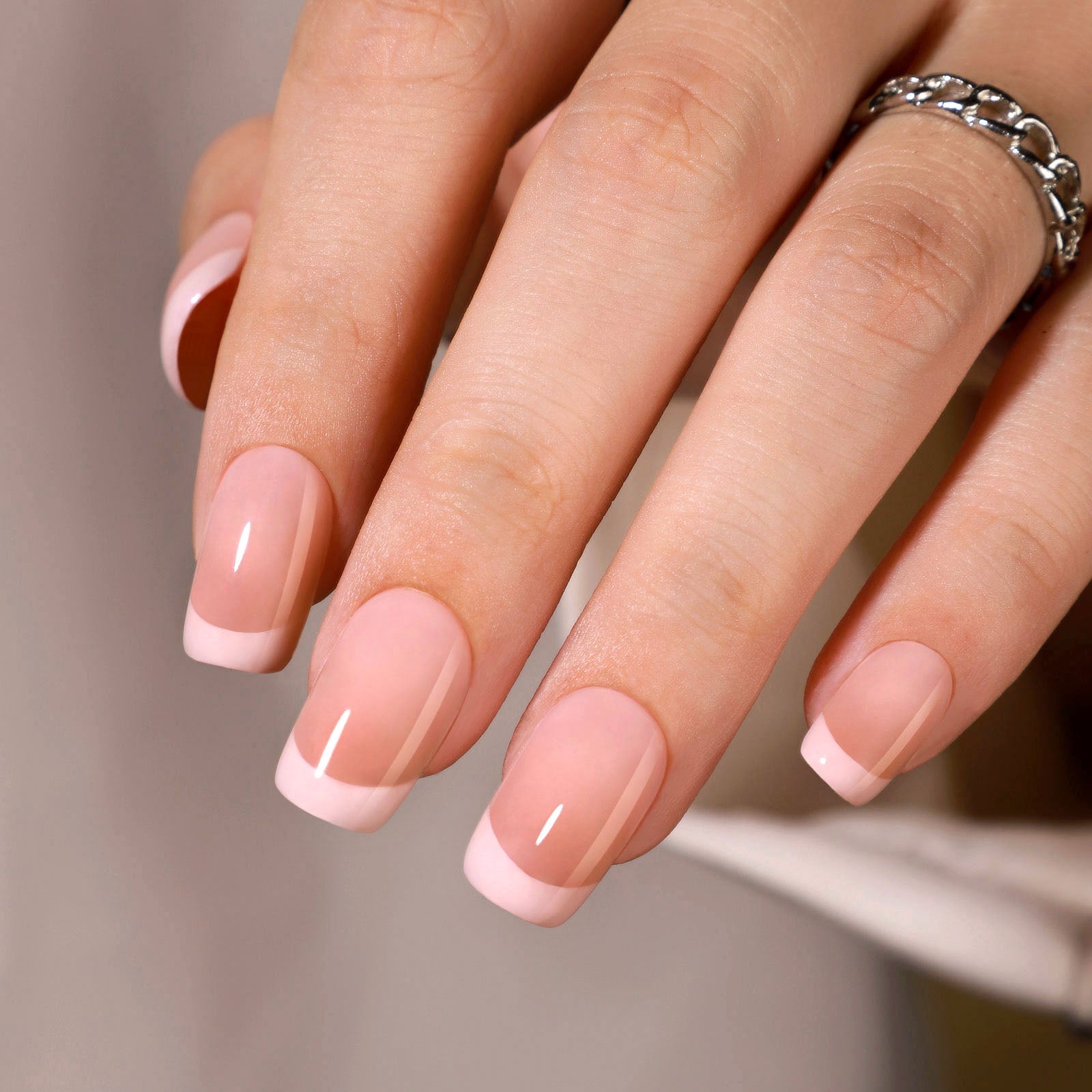
These are press-on nails. The absence of a cuticle gap, the correct sidewall fit, and the soft-gloss finish are the three elements that determine whether someone asks "where did you get your nails done?" or "are those fake?"
Not sure which shape, length, or size fits your natural nails?
The 6 Things That Give Away Press-On Nails
Before discussing what to do, it is useful to understand exactly what people are noticing when they can tell nails are artificial.
1. The cuticle gap. A visible space between the base of the press-on and the cuticle is the single most common tell. It creates a ridge that catches shadows, looks like a line, and is immediately recognizable. The fix: press the nail as close to the cuticle as possible without touching skin, and apply with firm downward pressure at the base.
2. Wrong width at the sidewalls. When a press-on is narrower than your natural nail, you can see the natural nail plate on either side of the press-on. When it is wider, the press-on curves over or touches skin. Either way, the mismatch reads as artificial immediately.
3. Overly uniform high shine. Natural nails — even salon gel nails — have some variation in reflectivity. Pure high-gloss press-ons reflect light uniformly across the entire surface, which reads as plastic rather than natural. Soft-gloss or satin finishes, or a quick buff with a high-grit buffer post-application, introduces the variation that natural nails have.
4. Thickness mismatch at the free edge. Traditional hard acrylic press-ons are thick at the free edge, creating a pronounced ledge when viewed from the side. Natural nails taper slightly. Soft gel press-ons taper more naturally, but even soft gel can look thick if the nail has been applied over a very short natural nail without proper filing at the edge.
5. No movement or flexibility. Natural nails flex slightly when pressure is applied. Hard press-ons do not flex at all, which creates a visible stiffness when the hand is in motion. Soft gel press-ons have controlled flexibility that mimics the natural nail's behavior under pressure.
6. The cuticle situation. Even a perfect press-on application looks unconvincing if the cuticle is dry, ragged, or hasn't been pushed back. The cuticle area is the frame that defines whether the nail looks like it belongs on that hand.

All six tells present simultaneously. Most sets fail on one or two of these points. Fixing all six is the difference between "those look amazing" and "I can tell."
Step 1: Sizing Is Everything
Getting the width right is the single most impactful thing you can do for realistic-looking press-ons. Many basic drugstore press-on kits provide 24 nails across about 12 sizes for 10 fingers, which leaves little room for edge-to-edge precision. SHANGMENG sets include 32 nails across 16 sizes, so the tolerance between adjacent sizes is tighter and easier to match.
The correct test: Hold the press-on face-down against your nail plate. The sidewall edges of the press-on should be flush with your natural nail sidewalls — no overlap onto skin, no visible natural nail on either side. If both conditions are true, that size is correct.
If you are between sizes: Go smaller, not larger. A press-on that is 0.5mm too narrow will have a small gap on each side that is less visible than a press-on 0.5mm too wide that overlaps onto skin. You can file the sidewalls of the selected press-on from the inside with a thin file to widen it slightly if needed.
The width-length relationship: Press-on sizing is based on width at the widest point of the nail plate. Your nail plate gets slightly narrower toward the tip. This means a correctly sized press-on may look slightly wider at the cuticle end and narrower at the tip — this is correct and natural.
Each SHANGMENG set also includes a sizing card. The soft gel material files easily with a standard 180-grit nail file, so minor width adjustments take less than a minute.

The three sizing outcomes. "Correct" means the press-on edge aligns precisely with the natural nail plate sidewall — not a millimeter over either direction.
Step 2: Prep Is Not Optional
The single most common reason for visible gaps, air bubbles, and shortened wear time is insufficient prep. The nail surface needs to be clean, lightly buffed, and completely dry before any adhesive is applied.
The American Academy of Dermatology's healthy nail tips support the same prep principle: keep nails clean, trim, and avoid aggressive cuticle cutting before applying anything over the nail plate.
Complete prep sequence: 1. Remove all old polish completely (acetone-based remover works fastest) 2. Push cuticles back with a rubber cuticle pusher — never cut 3. Buff the nail surface very lightly with a 220-grit buffer: two passes only, removing only the shine 4. Wipe with 70% isopropyl alcohol on a lint-free pad 5. Wait 2 full minutes until completely dry
The buff step is worth dwelling on. The purpose is to give the adhesive micro-texture to bond to — not to damage the nail plate. Two passes of a 220-grit buffer accomplishes this. If you buff until the nail looks scored or visibly dull, you have gone too far. Over-sanding makes nails look rough and creates unevenness under the press-on.
The alcohol wipe removes any oils from the prep process and skin contact. Even without visible dirt, skin oils on the nail surface dramatically reduce adhesive bond strength. This is why nails that were "prepped yesterday" look like they have less adhesion — the body produces new surface oil within hours.
Step 3: Placement — The Cuticle Method
The most precise method for getting the press-on flush at the cuticle:
- Apply a thin layer of glue to the natural nail (not the press-on) — this gives you a moment to position before the bond sets
- Tilt the press-on slightly forward at about 45 degrees
- Touch the base of the press-on to the cuticle line first — at the exact where-skin-meets-nail junction, not overlapping skin
- Slowly lower the rest of the press-on onto the nail plate
- When fully flat, press firmly from cuticle toward the tip, then center to edges, for 30 full seconds
- Check for air bubbles by looking at the nail at a low angle — bubbles appear as small elevated spots. If found, immediately lift gently at the tip and reapply
The 45-degree approach angle is the technique used by professional nail technicians for gel tips. It eliminates the air pocket that forms when you lower the press-on flat from above.

The 45-degree cuticle-first method. Starting the contact at the cuticle line rather than the center prevents the air pocket that creates visible lifting near the base.
Step 4: Finish Selection for Natural Appearance
Not all finishes read as equally natural. Here is a quick hierarchy from most natural-looking to least:
Most natural: Soft gloss (not high gloss) — the same finish level as a healthy natural nail with clear top coat. Reflects light with some variation, not uniformly.
Highly natural: Satin / soft matte — reads as a natural nail that is slightly dry, or a nail treated with a matte top coat. Works best on shorter lengths where a more minimal aesthetic is appropriate.
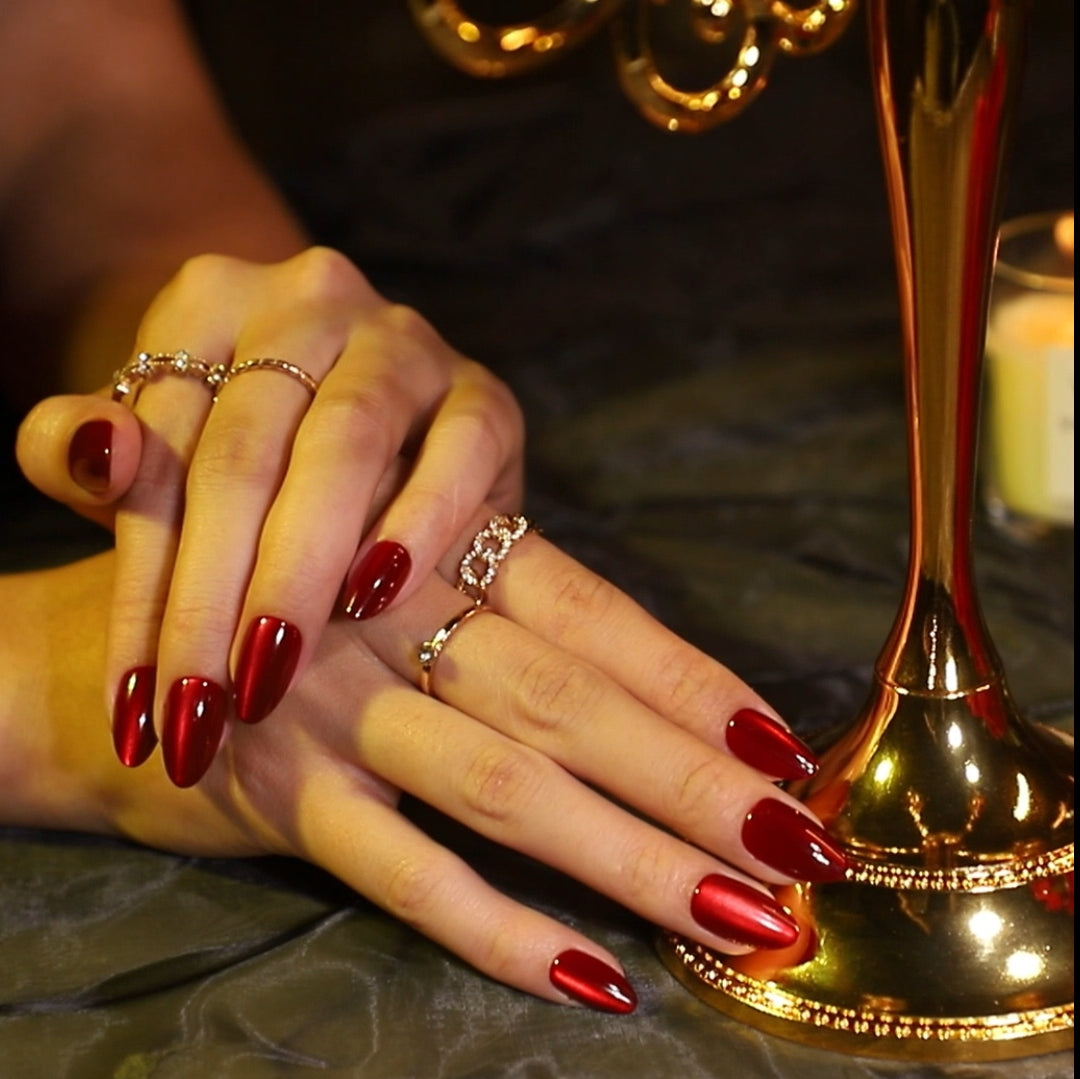
Wearable but more visible as artificial: High chrome / mirror — beautiful, but clearly not natural. Best for occasions where the goal is statement rather than natural.
Most natural for skin tone: - Fair skin: Pink-based nudes, French tip (white contrast works naturally on light skin) - Medium skin: Beige-to-caramel nudes, taupe, dusty rose - Dark skin: Deep nudes with red-brown undertones, clear or sheer finishes, rich jewel tones
SHANGMENG customer review (5/5, verified): "I have medium-dark skin and finding a nude that doesn't look grey or too pink is always hard. The SHANGMENG beige-nude is the first press-on that looks like it's my actual nail color."
Still worried they will look fake? Find your shape and finish by matching your natural nail width; the right set reads polished, not pasted on.


Step 5: The Side View Test
Most people check press-on nails from above. Looking at nails from the side is how you identify the thickness problem.
After application, hold your hand at eye level and look at the nails from the side. A realistic press-on should: - Taper at the free edge rather than ending in a blunt wall - Have a curve that flows continuously from the natural nail surface - Show no visible ledge between where the natural nail ends and the press-on begins
If you see a step or ledge at the base where the press-on starts, the press-on is slightly too thick for your current natural nail length. Filing the underside of the press-on base (before application) at a slight angle reduces this ledge. SHANGMENG's soft gel press-ons are pre-tapered to minimize this ledge, but if your natural nails are very short, a light file under the base helps.

The side view reveals what the top view hides. The ledge (left) is the telltale thickness mismatch. A light file at the underside base before application eliminates it (right).
Step 6: Cuticle Area Finishing
After application, spend 2 minutes on the cuticle area. This is the frame that determines whether the whole set looks intentional.
- Apply a small drop of cuticle oil around the base of each nail and press-on edge
- Use a clean orangewood stick to push back any cuticle skin that has crept onto the press-on during application
- Remove any stray adhesive from the skin with an acetone-soaked cotton swab before it cures completely
Cuticle oil serves two purposes here: it makes the cuticle area look healthy and groomed (which signals the whole hand is maintained), and it prevents the adhesive from bonding to any skin, which would cause lifting later.
The biggest overlooked step: check the sidewalls. Run your fingernail along the edge where the press-on meets the skin at the sides. If you feel a catch or rough edge, file that area smooth with the finest grit file you have. Smooth sidewalls are characteristic of salon work; rough sidewalls are characteristic of home application done quickly.
Step 7: Daily Maintenance That Keeps Them Looking Real
A press-on that looked perfect on day one can look obviously artificial by day four if not maintained. Three habits make the difference:
Cuticle oil daily: One drop at the cuticle of each nail, worked in with gentle circular motion. This keeps the cuticle area looking groomed and prevents the dry-skin buildup that makes nails look neglected.
Reseal any lifting immediately: Check the edge of each nail daily — run your finger along the perimeter. If any edge has lifted even 1mm, apply a tiny drop of glue with a brush tip and press for 30 seconds. A lifted edge grows rapidly with water exposure, typing, and daily activity. A sealed edge stays sealed.
Do not use nails as tools: Using press-on nails to open cans, peel stickers, or pry things is the fastest path to a broken nail and an obvious mismatch in your set. It also introduces torque stress that loosens the adhesive bond at the base. Use your finger pads, not your tips.

One minute of daily maintenance keeps press-ons looking freshly applied throughout the wear cycle. The cuticle area is the visual signature of maintained nails.
Why Material Matters: Soft Gel vs Hard Acrylic
The press-on material itself contributes to whether the set looks real, independent of application technique.
Hard acrylic press-ons reflect light uniformly across a rigid surface. Natural nails have micro-variations in surface texture that create slight diffusion of reflected light. When light hits a rigid, perfectly flat surface (acrylic) uniformly, it reads as plastic — even with a satin finish.
Soft gel press-ons have controlled flexibility that introduces micro-variation in the surface during normal hand movement. This is the same quality that makes gel salon nails look more natural than traditional acrylics. The material moves slightly with the hand, creating the subtle surface variation that reads as organic.
SHANGMENG's soft gel formula is manufactured using CNC precision molds that maintain consistent thickness across the nail body while tapering naturally toward the free edge. This consistency is what allows the finish to look even without appearing rigid — the same outcome professional gel overlays achieve, without the UV lamp and the 60-minute salon appointment.
With hundreds of verified reviews at 4.94/5.0, the feedback pattern is consistent: customers report that the nails look "salon quality" and that people assume they have had gel nails applied professionally.

Macro comparison of reflected light on soft gel vs hard acrylic press-ons. The soft gel surface shows micro-variation characteristic of natural nail or salon gel. The acrylic surface reads uniformly — what most people mean when they say a nail "looks fake."
FAQ
Q: What are the most realistic press-on nail shapes? Oval, almond, and short squoval are the shapes that look most natural across the widest range of finger types. Coffin and stiletto read as clearly artificial because they require a length that most natural nails do not grow to. For maximum realism, choose a shape and length that could plausibly be your natural nail — or what your natural nail would look like if it was perfectly grown out.
Q: How do I prevent press-on nails from looking too shiny? Run a high-grit buffer (400+ grit) very lightly across the surface after application to reduce reflectivity. Alternatively, apply a matte or satin top coat. The goal is to break up the uniformity of the shine rather than to eliminate it — you want the same level of varied reflectivity that natural nails have.
Q: Why do my press-on nails always have a gap at the cuticle? The cuticle gap happens when the press-on is placed slightly too far from the cuticle line during application, or when the prep left oil on the nail surface that caused the press-on to slide slightly before curing. Use the 45-degree cuticle-first placement method and ensure nails are completely dry and oil-free before applying adhesive.
Q: Can you file press-on nails to make them look more natural? Yes. Filing from the top to reduce length or slightly reshape the edges is the most common adjustment. Filing from the underside at the base reduces the thickness ledge. Both adjustments are effective with a standard 180-grit nail file. SHANGMENG's soft gel material files cleanly without snagging.
Q: Do press-on nails look real on short natural nails? Yes, particularly with shorter-length press-on sets. The key for short natural nails is to select a press-on length that is proportionate — applying a very long press-on to a very short natural nail creates a ledge at the base and looks unconvincing. Short to medium length press-ons on short natural nails look as natural as a nail that has simply grown out.
Q: How do I make the seam at the cuticle invisible? Three factors determine whether the cuticle seam is visible: how close the press-on base is to the cuticle line (as close as possible without touching skin), how smooth the transition is at that edge (a light file of the underside base before application helps), and whether the cuticle area is groomed (cuticle oil applied after). If a faint seam remains visible, a thin layer of top coat applied over the seam line and blended onto the skin side with a brush can soften the transition.
 Same press-on set, same person, different technique. The before shows all six tells. The after, with correct sizing, cuticle-first placement, and daily maintenance, is indistinguishable from a salon gel set at normal viewing distance.
The difference between press-on nails that look real and press-on nails that look fake is not the price of the set. It is six specific technical decisions — and all six are within your control.
Start with sizing. Get that right and everything else becomes easier.
Ready to get started? SHANGMENG's soft gel press-on collections are available in 200+ styles, with a complete sizing guide and application kit included. Browse the salon-quality collection.
Need help sizing? Our nail sizing guide walks through every method for finding your correct size at home, including the tape method for oddly shaped nail beds.
See specific shape options: Our nail shape guide covers seven shapes with lifestyle recommendations and realism ratings for each.
Further reading: For broader editorial context on modern nail finishes and shapes, compare Allure's nail ideas archive and Vogue's nails archive.
Share