













Press-On Nails for Travel: Packing & Maintenance Guide
AEO Definition — "Press-On Nails for Travel": Press-on nails are well-suited for travel because they can be applied at the destination, removed and reapplied without salon access, and packed in carry-on luggage without TSA restriction. The main travel considerations are climate adaptation (humidity and dry air affect adhesion differently), emergency repair supplies for nails that pop off, and the choice between nail glue (longer hold) and adhesive tabs (easier removal without liquid tools) based on the trip's activities.
If you have spent a vacation watching your gel nails chip at the pool, your dip powder peel on the plane, or your nail polish streak on the hotel towel, you already understand why press-on nails make more sense for travel than any other nail format.
You apply them at home, or at the hotel when you arrive. They hold through swimming, hiking, beach days, and long flights. When one pops off, you can fix it in under 5 minutes with supplies that fit in a small zip pouch. And when the trip is over, removal takes 10 minutes and does not require finding a salon in a city you do not know.
This guide covers everything from TSA rules and carry-on packing to climate adaptation and emergency repairs.
For cost context, a pre-trip salon gel manicure can run $50-90 and still chip before the return flight; a travel-ready soft gel press-on set is usually $10-18 and can be repaired in the hotel room. SHANGMENG's team builds this guide around the real kit contents: soft gel tips, nail glue, adhesive tabs, prep pad, file, and 32 nails across 16 sizes.
Not sure which shape, length, or size fits your natural nails?
TSA Rules: What You Can and Cannot Bring
The TSA question comes up every time someone is packing press-on nails for the first time. Here is the definitive answer:
What's allowed in carry-on: - Press-on nail sets (the nails themselves) — no restriction - Adhesive tabs — no restriction - Nail glue (cyanoacrylate): allowed in carry-on if each container is 3.4 oz (100ml) or less. Standard nail glue tubes are 2-5g — well under the limit. - Nail files and buffers — no restriction - Cuticle oil: allowed in carry-on if under 3.4 oz (100ml) - Acetone nail polish remover: allowed in carry-on if under 3.4 oz, but note it is flammable — some airlines restrict it in overhead bins at their discretion. Check your airline's specific policy.
What's allowed in checked baggage: Everything above, plus larger quantities of acetone remover without restriction.
Practical packing note: The 3.4oz limit applies per container, not total. A mini cuticle oil (0.5oz) and a mini nail glue (2-5g) and a small bottle of acetone remover (3oz) are all individually compliant and can all go in the same quart-sized bag.
For the travel rule itself, TSA lists nail polish remover as carry-on eligible only within the 3.4oz/100ml liquid limit. For nail-health context during longer trips, the American Academy of Dermatology advises that artificial nails should not be worn continuously, and the FDA's nail-care overview reinforces treating removers and nail products as cosmetic products that need careful handling. That is why a two-week trip plan should include both maintenance and a clean removal option.
The rule of thumb: everything you need for press-on nail application and removal fits within TSA liquid rules in a standard quart-sized zip bag.

The full travel kit laid out in a standard quart-sized bag: all items individually under 3.4oz. This is the complete carry-on configuration — no surprises at security.
The Travel Nail Kit: What to Pack
The goal is the minimum that covers three scenarios: initial application (or reapplication mid-trip), emergency repair, and end-of-trip removal.
Essential Items (Always Pack)
The nails: 2-3 extra nails per size in your set, or a complete backup set of the same design. Nails that pop off during activities need immediate replacement — having a backup of the correct size prevents the "mismatched nail" situation for the rest of the trip.
Mini nail glue: One small tube is sufficient for a 2-week trip. Apply sparingly — a tube lasts significantly longer than most people expect.
Adhesive tab sheet: One sheet (typically covers 2 complete applications). Tabs are useful for quick repairs and for nails you apply specifically for events during the trip that you want to remove cleanly afterward.
Mini file: A straight or half-moon nail file (180-grit, double-sided). For reshaping, length adjustment, and smoothing rough edges after repair.
70% isopropyl alcohol wipe packets: 5-10 individually wrapped wipes. Used for nail prep at the destination (wipe nail surface before applying glue or tabs) and for cleaning tools. These are carry-on compliant and more reliable than asking the hotel for an alcohol pad.
Cuticle oil dropper (under 1oz): Apply nightly to maintain the press-on edge and keep cuticles healthy during travel. The dry air in airplane cabins and hotel HVAC systems dries skin rapidly — cuticle oil counters this.
Nice-to-Have Items
Mini acetone wipes: Pre-moistened with acetone for residue removal. More controlled than liquid acetone in a bottle.
Cuticle pusher (rubber tip): Useful for the prep before reapplication mid-trip.
Top coat (clear, mini size): Applying a thin top coat over press-ons after application adds an extra layer of durability for high-activity trips. Also useful for sealing a repaired edge.
Orange sticks (5-6): For pushing cuticles and removing adhesive from skin during application.
 The two-tier packing system. The essential set fits in a single zip pouch and handles 95% of travel nail situations. The nice-to-have additions add total weight of under 50 grams.
Climate Adaptation: How Different Environments Affect Press-On Hold
Travel exposes press-on nails to environments that differ significantly from home conditions — and adhesion responds accordingly.
Hot and Humid Climates (Tropical, Beach Destinations)
Challenge: Heat makes pressure-sensitive adhesive softer, reducing tab hold. Humidity and water exposure degrade both glue and tab bonds faster. Hands are in and out of water frequently.
Strategy: - Use nail glue (not tabs) for the primary application — glue holds better in humidity than tabs - Apply with the 48-hour buffer before heavy water activity: if you are arriving Monday, apply Sunday evening or Monday morning before the beach - Apply cuticle oil nightly to the edge, not over the nail surface — this maintains the seal - After extended pool or ocean time, check each nail edge and reseal any lifting immediately with a drop of glue
Dry Climates (Desert, High Altitude)
Challenge: Dry air causes natural nail plates to become brittle and the skin around the nails to crack. Cracked skin at the nail edges creates lifting points.
Strategy: - Apply cuticle oil twice daily (morning and evening) — not just at night - Use a light hand cream after hand-washing to prevent skin cracking around nail edges - Consider applying a thin clear top coat over the press-on surface every 3-4 days to maintain the finish
Cold Climates (Winter Travel, Mountain Trips)
Challenge: Cold makes cyanoacrylate adhesive cure more slowly and can make PSA tabs less adhesive (PSA performs best at room temperature). Wearing gloves repeatedly creates mechanical stress at nail edges.
Strategy: - Apply nails in a warm room, not in the cold — let glue cure at room temperature for 2 hours before going outside - Choose shorter nail lengths for winter trips — shorter nails catch less on glove material
Still worried they will look fake? Find your shape and finish by matching your natural nail width; the right set reads polished, not pasted on.


- Check nail edges after removing gloves, as the suction from removing tight gloves can lift edges
Long-Haul Flights
Challenge: Cabin humidity drops to 10-20% (drier than the Sahara desert) during long flights. This dries nails and skin rapidly.
Strategy: - Apply cuticle oil before boarding and again mid-flight on flights over 6 hours - Avoid using hand sanitizer directly over nail edges — alcohol-based sanitizer degrades the adhesive bond from the edge inward over repeated applications

Climate adaptation for press-on nails. The main variables are adhesive type (glue vs tab) for the humidity dimension, and cuticle oil frequency for the moisture dimension.
Application at the Destination (Not Before You Leave)
Many experienced travelers apply their press-on nails at the destination rather than before departure — particularly for longer trips.
Advantages of destination application: - Fresh bond at the start of the trip rather than a 1-2 day old bond - You can pack the nails flat in a travel case without worrying about the application damaging in transit - You apply after the stress of travel (dry air, mechanical contact with luggage) rather than before it - For beach or pool trips: apply after the first day of sun exposure, when you know exactly which activities will stress the nails most
Destination application setup: 1. Clean nails with an alcohol wipe (remove travel oil and hand cream) 2. Let dry 1-2 minutes 3. Apply in the hotel room at a table — controlled environment, good lighting, seated position 4. Apply early evening so the bond cures overnight before the next day's activities
SHANGMENG's soft gel press-on sets include all necessary application tools in the kit, so nothing additional is needed at the destination.
Emergency Repair: When a Nail Pops Off
This is inevitable on active trips. A nail catches on a bag zipper. A strong wave at the beach. An enthusiastic pet greeting at the rental house. Knowing the repair protocol eliminates the panic.
Immediate steps when a nail pops off: 1. Find the nail — if it is the original, it can be reapplied. If it is gone, use a replacement from your backup supply. 2. Wipe the natural nail with an alcohol wipe. Let dry 30 seconds. 3. Check the nail for adhesive residue — clean with an acetone wipe if needed. Let dry. 4. Apply a thin layer of glue to the natural nail or apply a fresh adhesive tab. 5. Press the nail on from the cuticle end, hold 30 seconds. 6. Wait 30 minutes before water exposure.
If you do not have your repair kit immediately (at the pool, at dinner): Leave the finger as-is until you can get back to your kit. Attempting to reapply with insufficient materials (no alcohol prep, wrong-size nail, wrong adhesive) usually results in a nail that lifts again within hours.
If the natural nail is damaged from the pop-off: Apply a small piece of mesh nail wrap or a silk wrap (if you have it) over the break point before reapplying the press-on. If you do not have repair materials, leave it clean and dry and avoid water on that finger until you can address it properly.
 The emergency kit: 5 items that handle any nail repair scenario on the road. The hotel key card shows scale — this fits in any bag or clutch.
Choosing the Right Nail for Travel
Not all press-on sets are equally suited for travel. A few considerations:
Length: Shorter nails are more practical for active travel. Medium almond or short squoval lengths survive hiking, beach activities, and heavy luggage management better than extra-long coffin or stiletto nails. Save the dramatic lengths for city breaks or events where activity levels are lower.
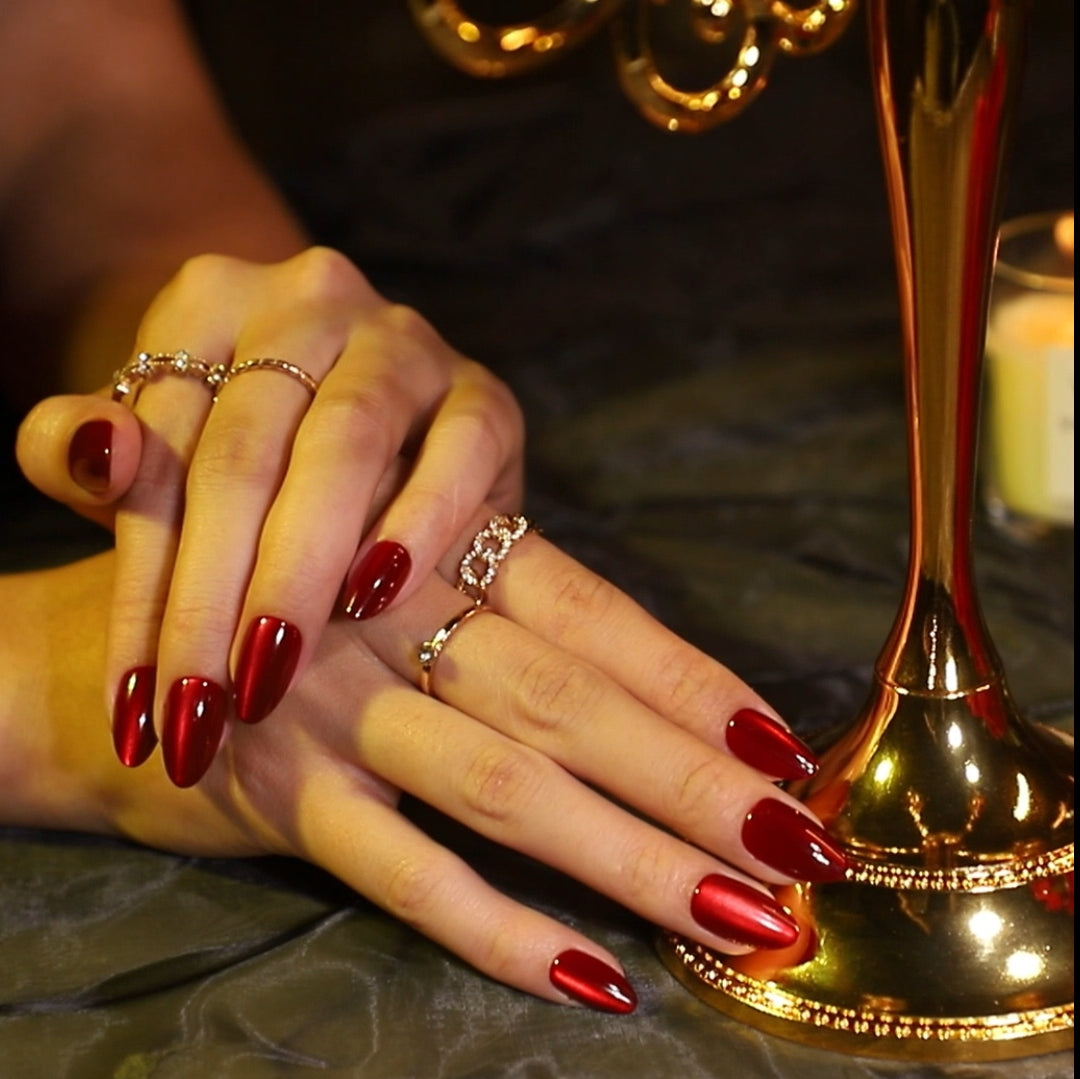
Finish: Matte finishes hide minor wear and minor chips better than high-gloss. A high-gloss nail that catches a scratch is immediately visible; a matte or soft-gloss nail hides minor surface contact much better. For high-activity travel, matte or satin finishes age more gracefully.
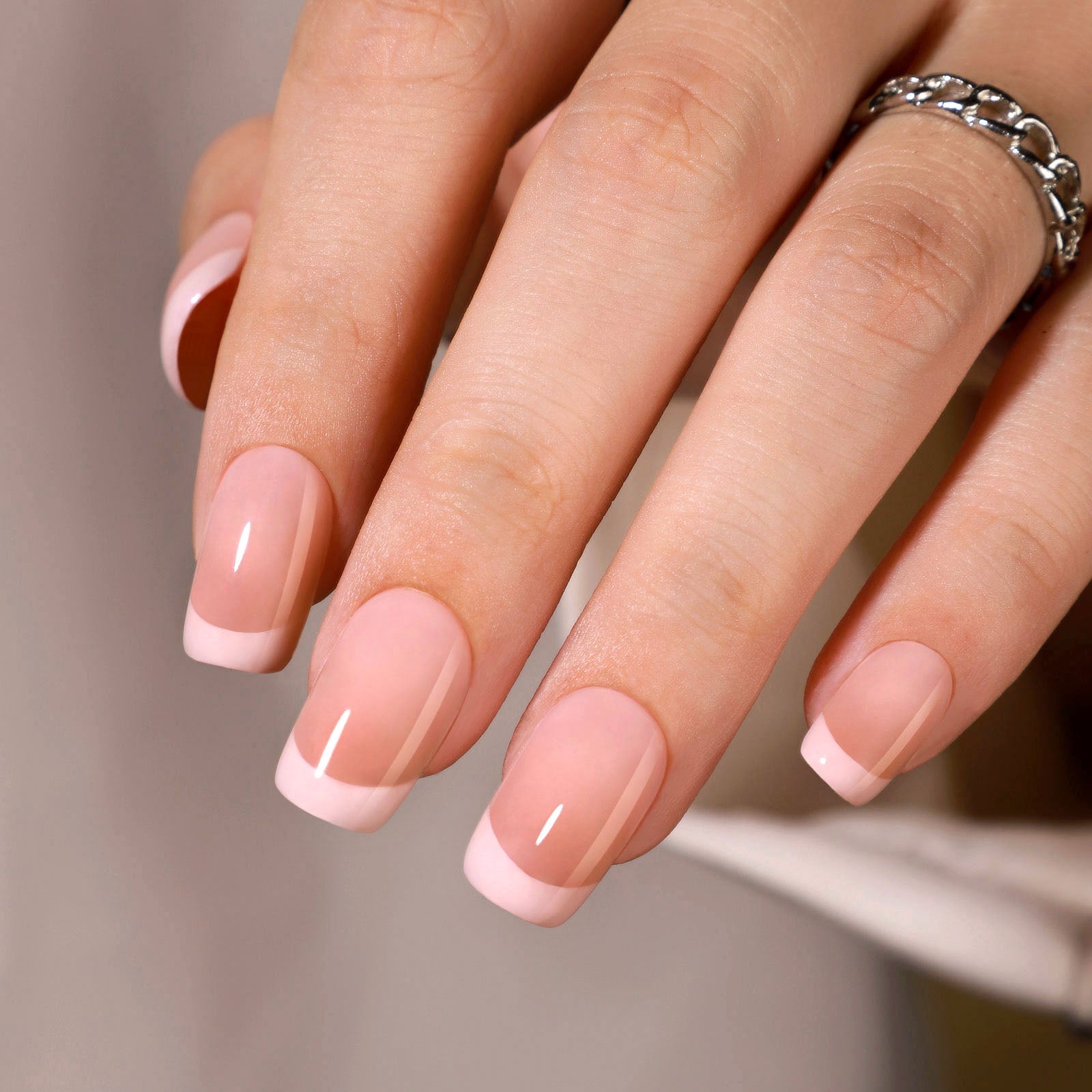
Shape: Oval and almond shapes have no hard corners or flat tips that can catch and lift. Square and coffin tips are more likely to catch on bag straps, zippers, and clothing, which creates leverage at the adhesive bond.
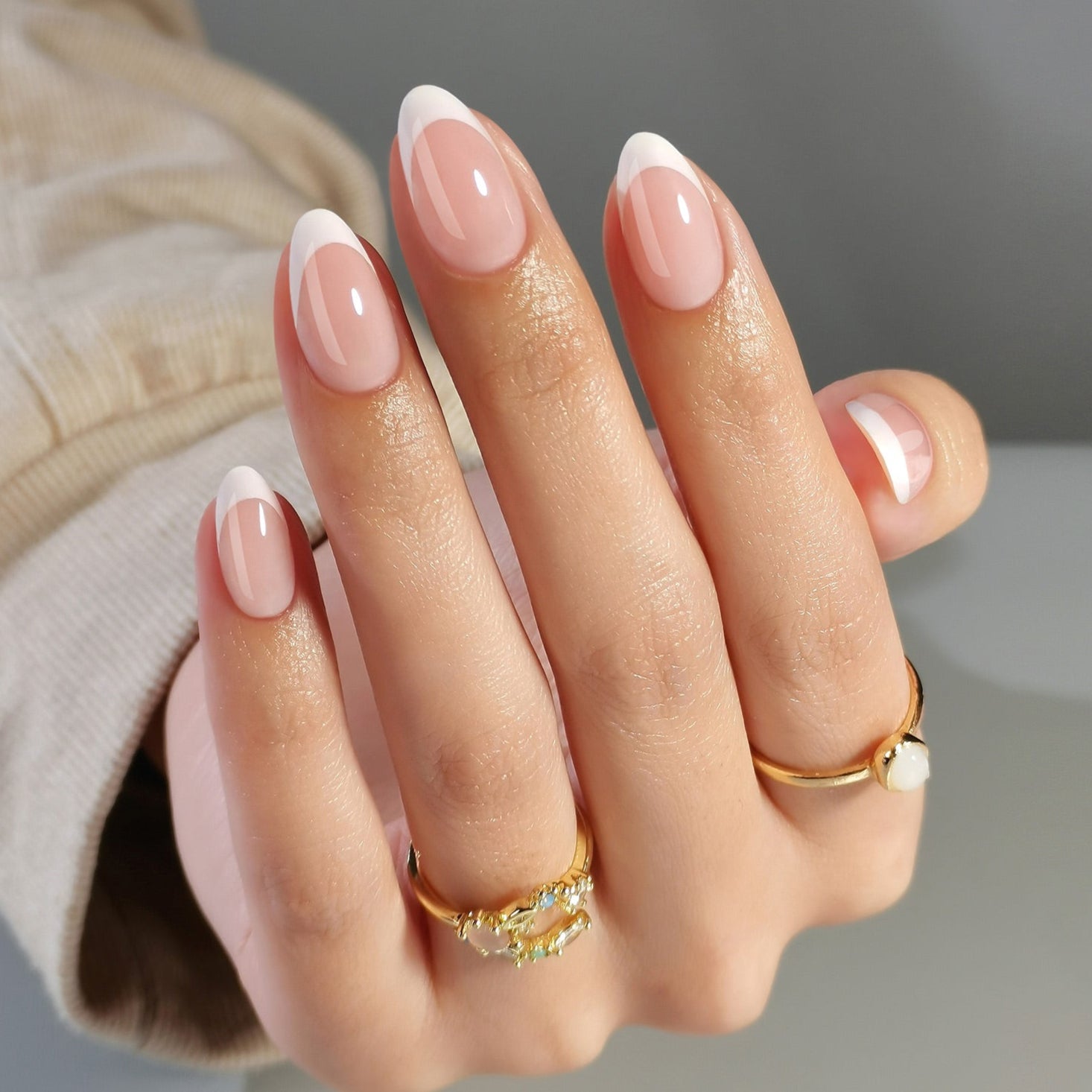
Color: Deeper, more saturated colors hide any minor tip wear better than very light nudes. French tips can develop edge wear at the white tip that is visible earlier than a solid color.
SHANGMENG customer review (5/5, verified): "I wore these through two weeks in Southeast Asia — beach days, temples, long bus rides, street food stalls — and only lost one nail the whole trip. Applied it again with the backup glue in 5 minutes at the hostel. Never had a salon nail survive a trip like this."

The same set across three common travel activities. Soft gel press-ons flex under daily mechanical stress rather than catching and breaking — which is why active travelers find them more durable than salon gel.
End-of-Trip Removal
The advantage of press-on nails over gel manicures becomes fully apparent at the end of a trip: removal requires no salon, no appointment, no UV drill, and no 30-minute foil soak with a towel.
Removal at the hotel (10-15 minutes): 1. Fill a glass or bowl with warm water 2. Soak fingertips 10-15 minutes (or use acetone wipes at the edge for faster release) 3. Gently rock each press-on from side to side until it releases 4. Remove any adhesive residue 5. Apply cuticle oil to each nail
Storing for reuse: - Wipe each nail with an acetone wipe to remove glue residue - Let dry completely - Store flat in the SHANGMENG nail tray or in a small compartmented case - Label by size if mixing sets (a small sticky dot on the back works)
If flying home immediately after removal: Apply cuticle oil before boarding. Your natural nails will be temporarily more vulnerable to dry air after being under press-ons for a week-plus.

End-of-trip removal: a hotel glass, warm water, 10-15 minutes. No salon appointment, no UV drill, no foil. The entire removal fits into the time it takes to pack your toiletry bag.
FAQ
Q: Can I go through airport security with nail glue in my carry-on? Yes. Nail glue tubes are typically 2-5 grams — well under the TSA 3.4oz (100ml) per-container limit. They go in your quart-sized liquids bag with your other cosmetics. There are no restrictions specific to nail glue beyond the standard liquids rule.
Q: How do I protect press-on nails on a beach vacation? Apply with nail glue (not tabs) at least 48 hours before heavy beach/pool activity. Apply cuticle oil to the edge nightly. After extended water exposure, dry nails thoroughly and check edges. Avoid removing press-ons by pulling — if one catches on something at the beach, remove it properly when you return to your accommodation with your kit. Pack 2-3 backup nails in your beach bag for same-day repairs.
Q: Can I apply press-on nails on the plane? Technically yes, but it is not recommended. Airplane cabin air is extremely dry (10-20% humidity), which affects adhesive curing. The small tray table and turbulence make precision application difficult. The chemical smell of nail glue in an enclosed cabin also irritates fellow passengers. Better to apply before departure or on arrival.
Q: What length press-on nail is best for hiking trips? Short to medium length (0-5mm extension beyond the natural nail tip) with oval or squoval shape. Long nails catch on hiking poles, pack straps, tent zippers, and rock surfaces. The mechanical stress of outdoor activities is significantly higher than urban daily wear — a shorter nail distributes that stress better. Matte finish is also preferable because it ages more gracefully under dust and minor abrasion.
Q: How do I keep press-on nails from lifting in a hotel pool? Apply with nail glue, not tabs. Apply at least 48 hours before swimming for maximum adhesive curing time. After pool sessions, pat nails dry (do not rub) and check edges. Apply a small drop of glue to any edge that feels loose immediately. Chlorinated pool water is gentler on nail adhesive than salt water — saltwater beach days are harder on hold than pool days.
Q: Can I apply a new set of press-on nails mid-trip? Yes. Remove the old set cleanly, clean your natural nails with an alcohol wipe, let dry 2 minutes, and apply the new set. The natural nail plate is not affected by a single wear cycle removal, so reapplication mid-trip is fine. This is actually a smart strategy for longer trips: apply one set for the first week, change sets mid-trip for a fresh look during the second week.

Two weeks post-application at a travel destination. The same SHANGMENG set applied before departure, maintained with nightly cuticle oil and one emergency edge repair at day 10.
Press-on nails are, practically speaking, the most travel-compatible nail format available. No salon dependence. No polish chipping. No UV lamp needed for removal. The full kit fits in a pouch smaller than a paperback book.
Pack the essentials, apply at the destination, maintain nightly, and repair on the spot when needed. That is the complete travel nail protocol.
Ready to pack? SHANGMENG's soft gel press-on nail collections include glue, tabs, and all application tools in every kit — nothing to buy separately.
For style inspiration: Read our vacation press-on nails guide for destination-appropriate design suggestions by season.
New to press-on nails? Start with our beginner's guide before your first travel application.
Share