


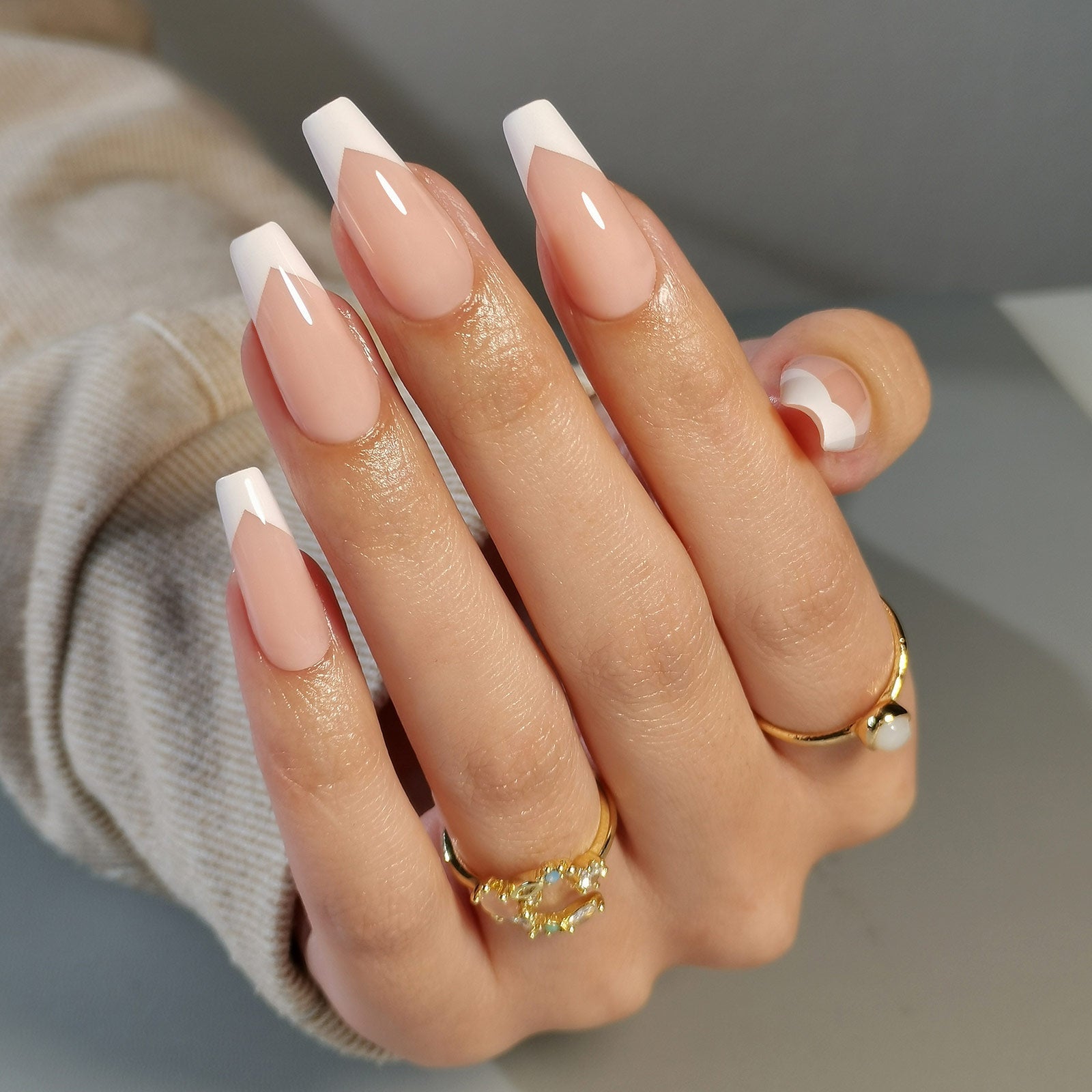
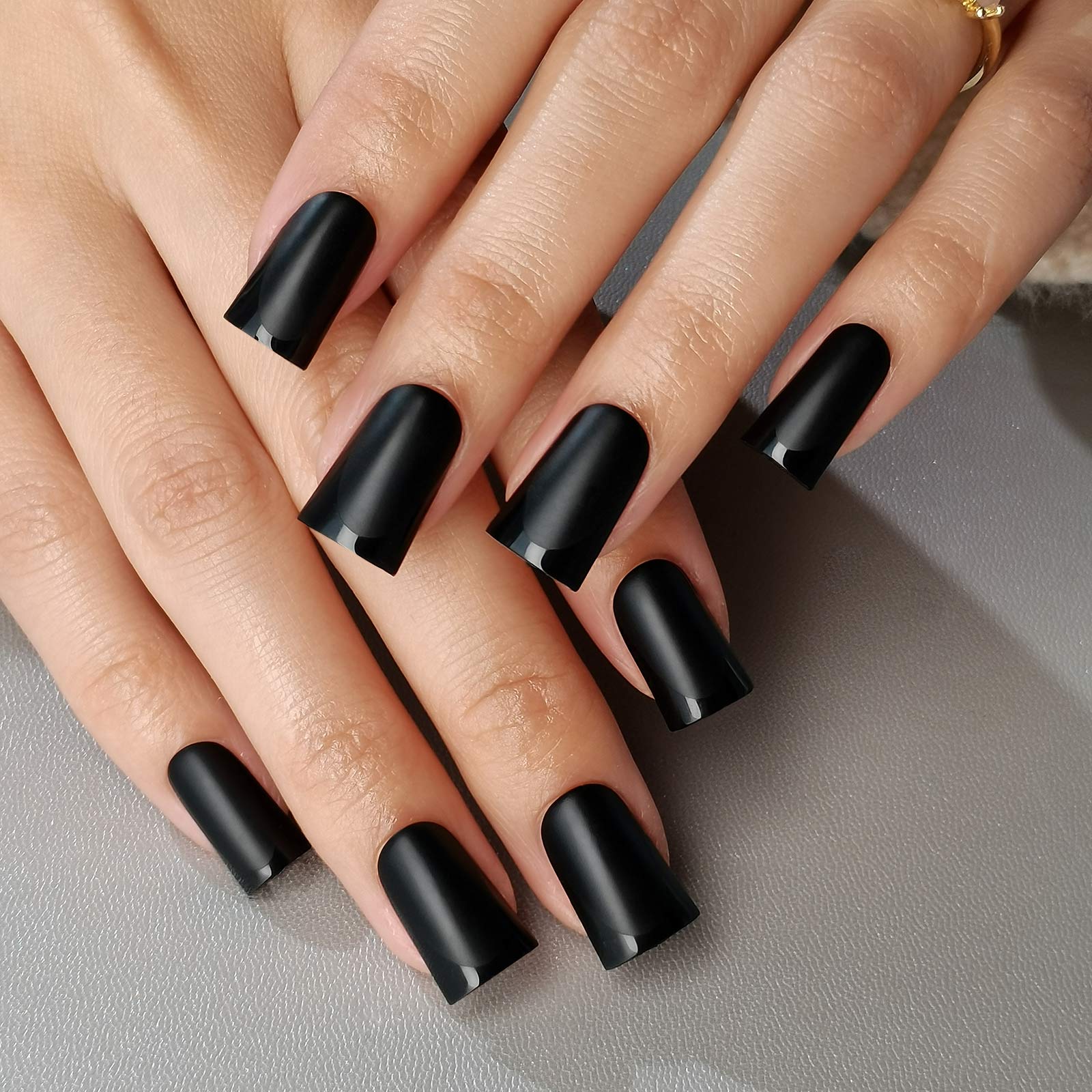


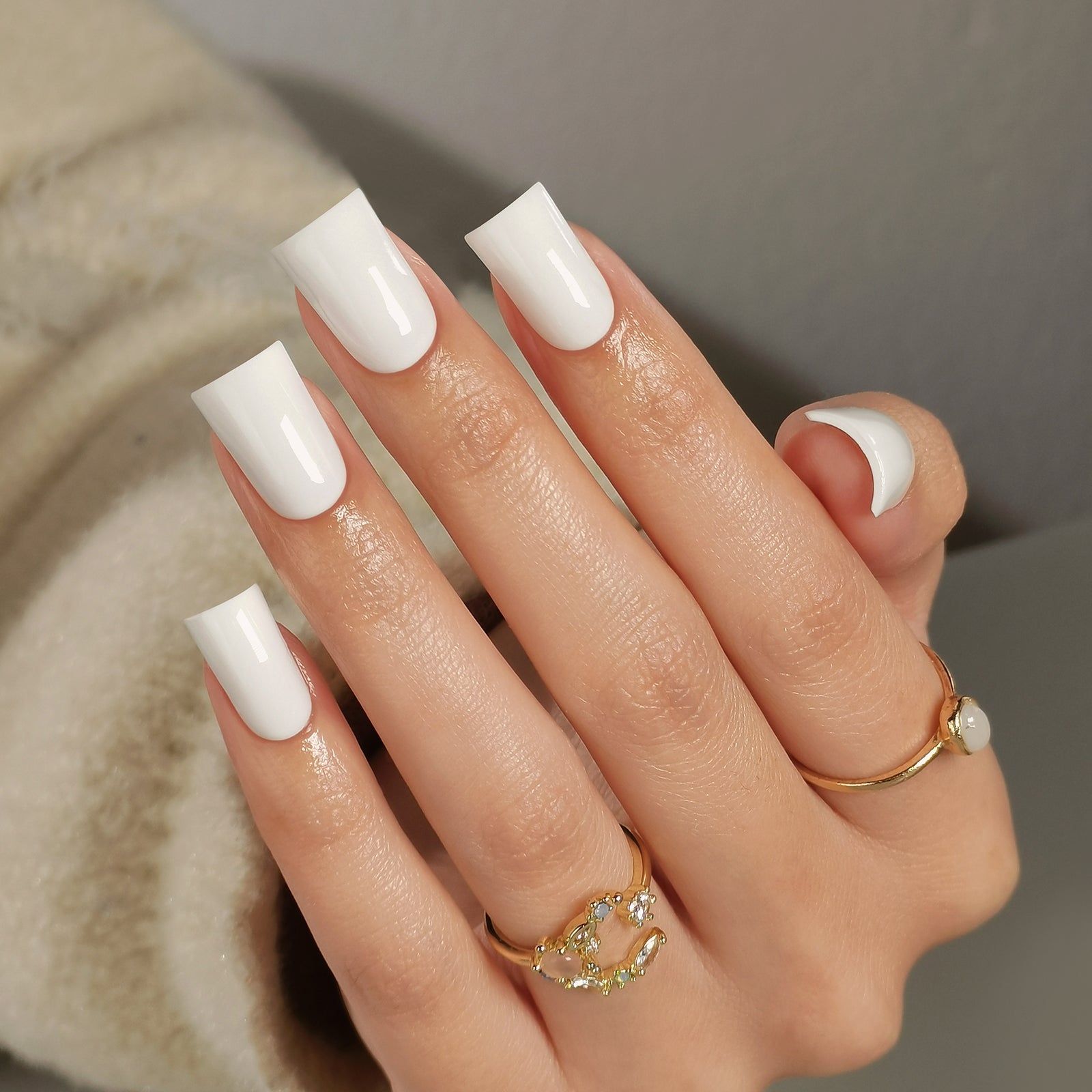
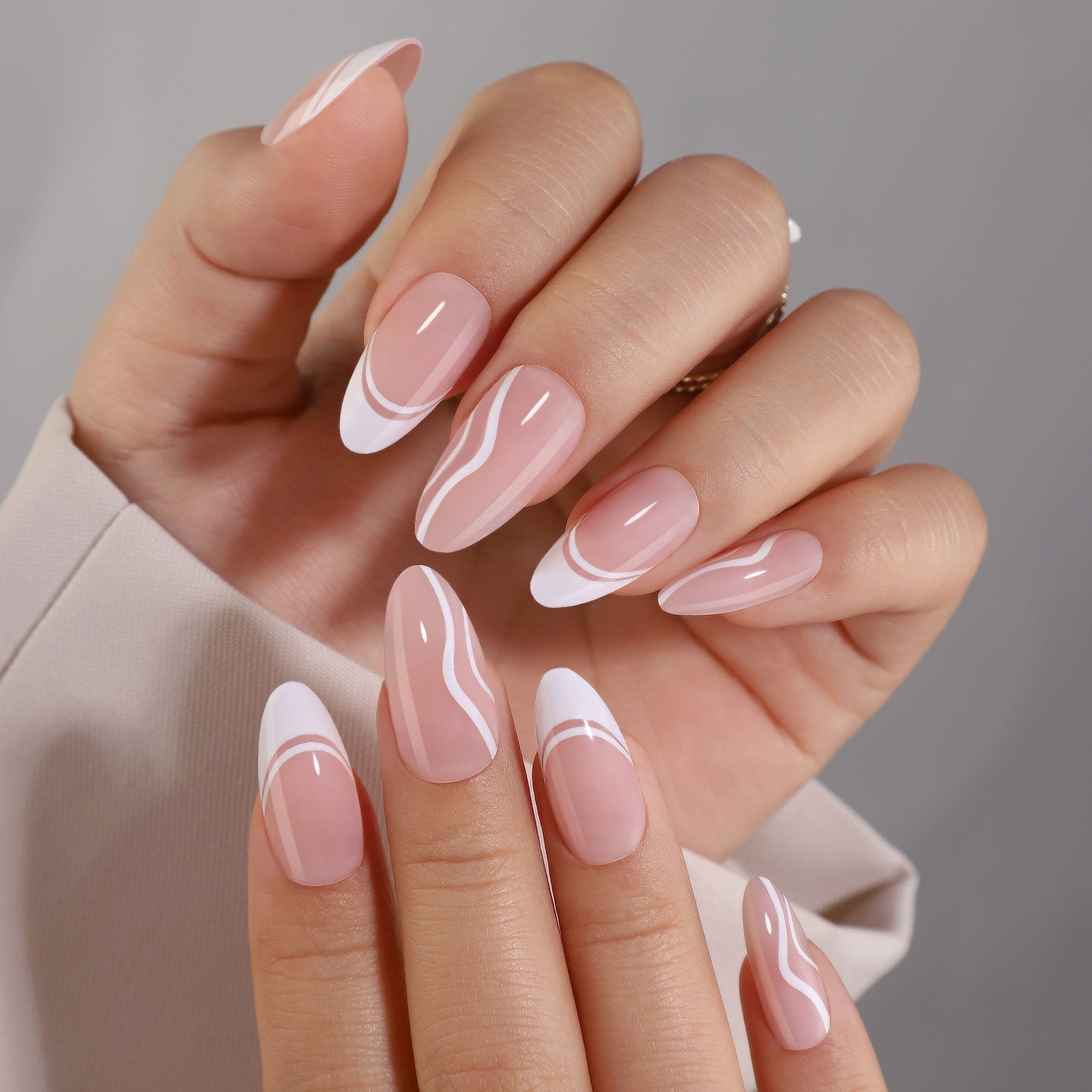








Home
›
Guides — Press-On Nails Tutorials
›
Press-On Nails for Beginners 2026: Updated Complete Guide

Press-On Nails for Beginners 2026: Updated Complete Guide
Written by Paul, SHANGMENG Nail Guide Author
Key Takeaways: Press-on nails in 2026 are a fundamentally different product from the plastic stick-ons of ten years ago. Soft UV gel construction gives them the flexibility, finish quality, and durability of salon extensions without the appointment, the UV lamp, or the acetone removal. This guide covers everything a beginner needs — what to buy, how to apply them correctly in 8 steps, how long to expect them to last, the most common mistakes and how to avoid them, and whether to use glue or adhesive tabs. We'll spend significant time on that.
Press-on nails have had a genuine technological upgrade in the past five years, and most people shopping for the first time don't know this. The product category has bifurcated: there are still inexpensive thin plastic press-ons with adhesive tabs that last a day or two, and there are soft UV gel press-ons that behave like professional extensions. The two products look similar in a thumbnail, cost within a few dollars of each other, and perform completely differently.
In 2026, the UV gel version is the standard for any press-on nail you'd actually want to wear — to an event, for a week of daily life, or as a regular part of your beauty routine. Cosmopolitan's beauty team has noted that the gap in finish quality between gel press-ons and salon gel nails has narrowed to the point where the difference is undetectable in normal social settings. That's the context for this guide: we're talking about real nails, not craft-store party nails.
If you've tried press-ons before and been disappointed, there's a good chance you used the wrong product, skipped nail prep, or both. This guide covers all of it.
Not sure which shape, length, or size fits your natural nails?
What Are Press-On Nails in 2026?
Press-on nails are pre-shaped nail extensions that attach to your natural nails with adhesive glue or tabs. The basic concept hasn't changed since they were introduced. What has changed is the material: where press-ons were historically made from ABS plastic (thin, rigid, prone to popping off), modern premium press-ons like SHANGMENG's are made from soft UV gel — the same base material used in gel manicures and acrylic extensions at a salon.
The practical differences between thin plastic and soft UV gel press-ons:
| Property | Thin Plastic Press-Ons | Soft UV Gel Press-Ons |
|---|---|---|
| Flexibility | Rigid — pops off at pressure points | Flexible — bends with natural nail movement |
| Surface finish | Glossy sheen, looks plastic | High-shine gel finish, salon-quality |
| Nail fit | Generic arch, may gap at sides | Curves to match natural nail curvature |
| Wear time | 1–3 days typically | 7–14 days with proper application |
| Design detail | Limited, tends to smear | Prints complex designs inside the gel layer |
| Removal | Peels or pops | Soak-off or peel with minimal damage |
SHANGMENG press-on nails are soft UV gel, available in 32 tips across 16 sizes. The 32-tip count per set (versus the 24 tips most brands include) is specifically to make sizing more accurate — a proper fit is one of the most important factors in how long your nails stay on.
For a deeper look at what separates products in this category, our guide to high-quality press-on nails covers the technical details.
Beginner's First Set Checklist
Before your nails arrive, make sure you have everything you need. A missing item on this list typically becomes the reason the first set doesn't go well.

From the press-on nail set: - [ ] Press-on nails (32 tips, 16 sizes) - [ ] Nail glue (included in most SHANGMENG kits, or purchase separately — see our nail glue guide)
From home or purchased separately: - [ ] 70% isopropyl alcohol (rubbing alcohol) or nail prep wipes - [ ] Cuticle pusher (plastic orange stick or metal cuticle tool) - [ ] Nail buffer (fine grit, 180–240) - [ ] Nail file (fine grit for shaping if needed) - [ ] Orange stick or cuticle stick (for cleanup)
Optional but helpful: - [ ] Nail dehydrator or primer (adds adhesion for longer wear) - [ ] Nail clips or tape (to hold nails in place while glue sets)
The only item that consistently gets skipped is the isopropyl alcohol. Don't skip it. Natural oil on the nail plate is the primary reason press-on nails fail early. The alcohol removes oil so completely and quickly that the difference in adhesion is dramatic. A $3 bottle of rubbing alcohol from a pharmacy is one of the most impactful purchases in this entire process.
Step-by-Step Application (8 Steps)
The standard instructions that come with most press-on nail kits are accurate but short. This expanded version explains what each step is actually doing and why the details matter.

Step 1: Remove all existing polish and oils If you have existing nail polish, remove it completely. Use an acetone-based remover for gel polish, and a standard acetone or non-acetone remover for regular polish. After removal, wash your hands with soap and let them dry fully — the soap strips oils, and drying ensures no water is trapped under the press-on.
Step 2: Push back cuticles Use a plastic orange stick or metal cuticle pusher to gently push the cuticle back from the nail plate. Don't cut cuticles. The goal is to expose the full nail surface — any cuticle left on the nail plate will prevent the press-on from making full contact, creating a gap that catches water and lifts the nail early.
Step 3: Lightly buff the nail surface Use a fine-grit buffer (180–240) to create a very slight texture on the shiny surface of your natural nail. You're not removing nail material — you're creating microscopic texture that gives the glue more surface area to grip. Buff in one direction, not in circles. The nail will look slightly matte when you're done. Don't over-buff.
Step 4: Clean with isopropyl alcohol Apply 70% isopropyl alcohol to a lint-free wipe and wipe each nail thoroughly. The alcohol removes any remaining oils (from skin, from the buffing process, from breathing on your nails). Let the alcohol evaporate fully before moving on — it should take about 10 seconds. Don't touch your nails after this step.
Step 5: Size and match each press-on Match each press-on to the nail it will go on before you open the glue. The correct size covers the nail from sidewall to sidewall without overlapping onto the skin. If you're between sizes, go smaller — a slight gap at the sidewall is better than a press-on that touches the skin, which creates a lever point for lifting. Our nail size guide explains the sizing system in detail with measurements. Lay out all ten matched press-ons in order.
Step 6: Apply nail glue Apply a thin layer of nail glue to the natural nail — not to the press-on. Thin is key. A thick layer of glue traps air bubbles, which become weak points. Use the brush in a short, controlled stroke to create a thin, even film. The glue doesn't need to cover every millimeter of the nail — a thin layer that spreads to the edges when you press the nail down is ideal. Work one nail at a time; don't glue multiple nails and then press.
Step 7: Apply the press-on nail Starting at the cuticle, lower the press-on onto the natural nail at a slight angle — cuticle end first — then press down toward the tip. This rolling motion expels air from under the nail rather than trapping it. Once the press-on is aligned, press firmly for 30–60 seconds. Apply consistent even pressure across the full surface, not just the tip.
Step 8: Clean up and let cure Use an orange stick to gently remove any glue that squeezed out along the cuticle or sidewalls while the glue is still slightly pliable. Don't pull or pry — just push. Allow the full set 30–60 minutes to cure fully before washing hands or any water contact. For the complete technique guide with video reference points, see our full application tutorial.
New to SHANGMENG? Our press-on nails come in 32 tips across 16 sizes — more size options than most brands — so your first set fits the way it should. Shop the beginner-friendly collection →
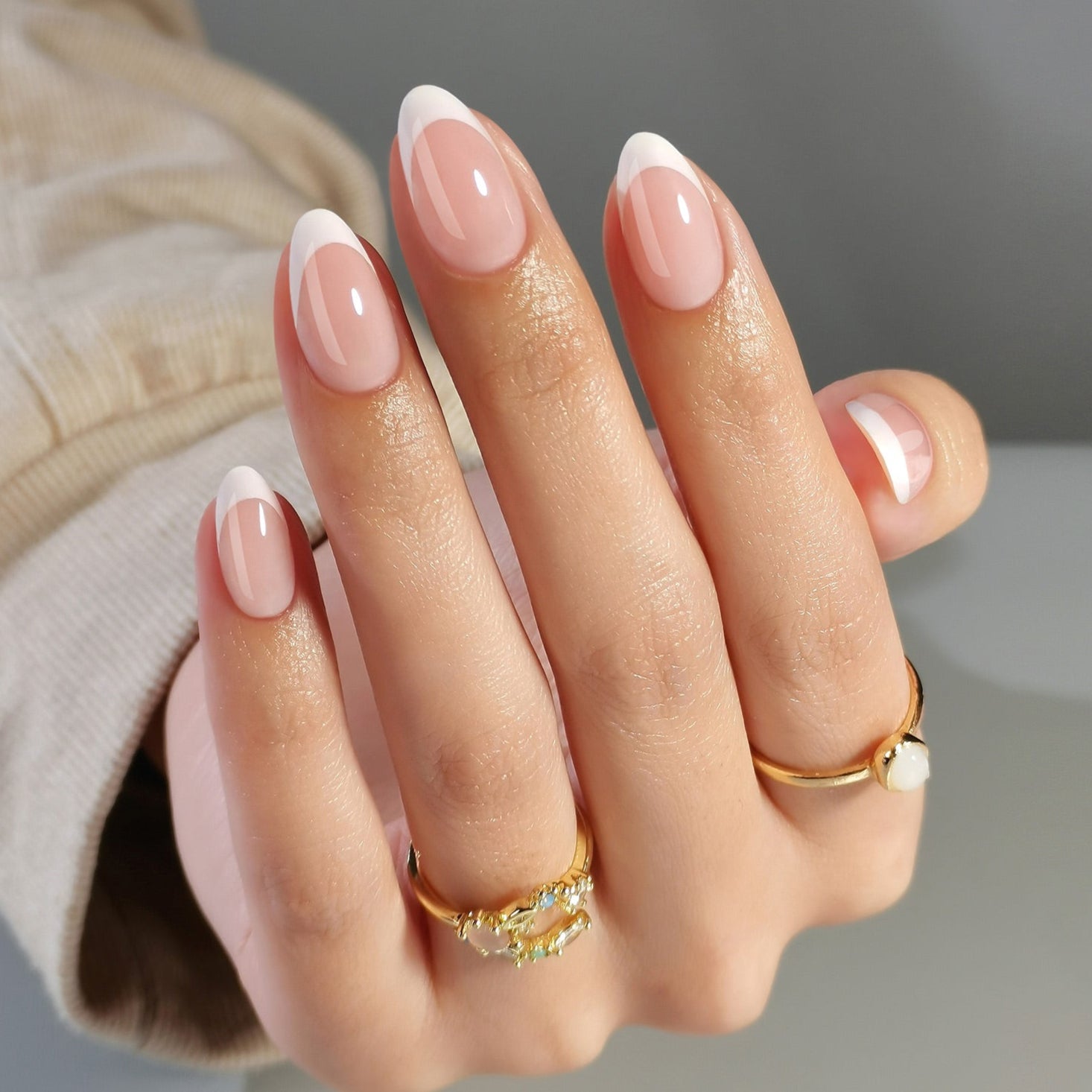
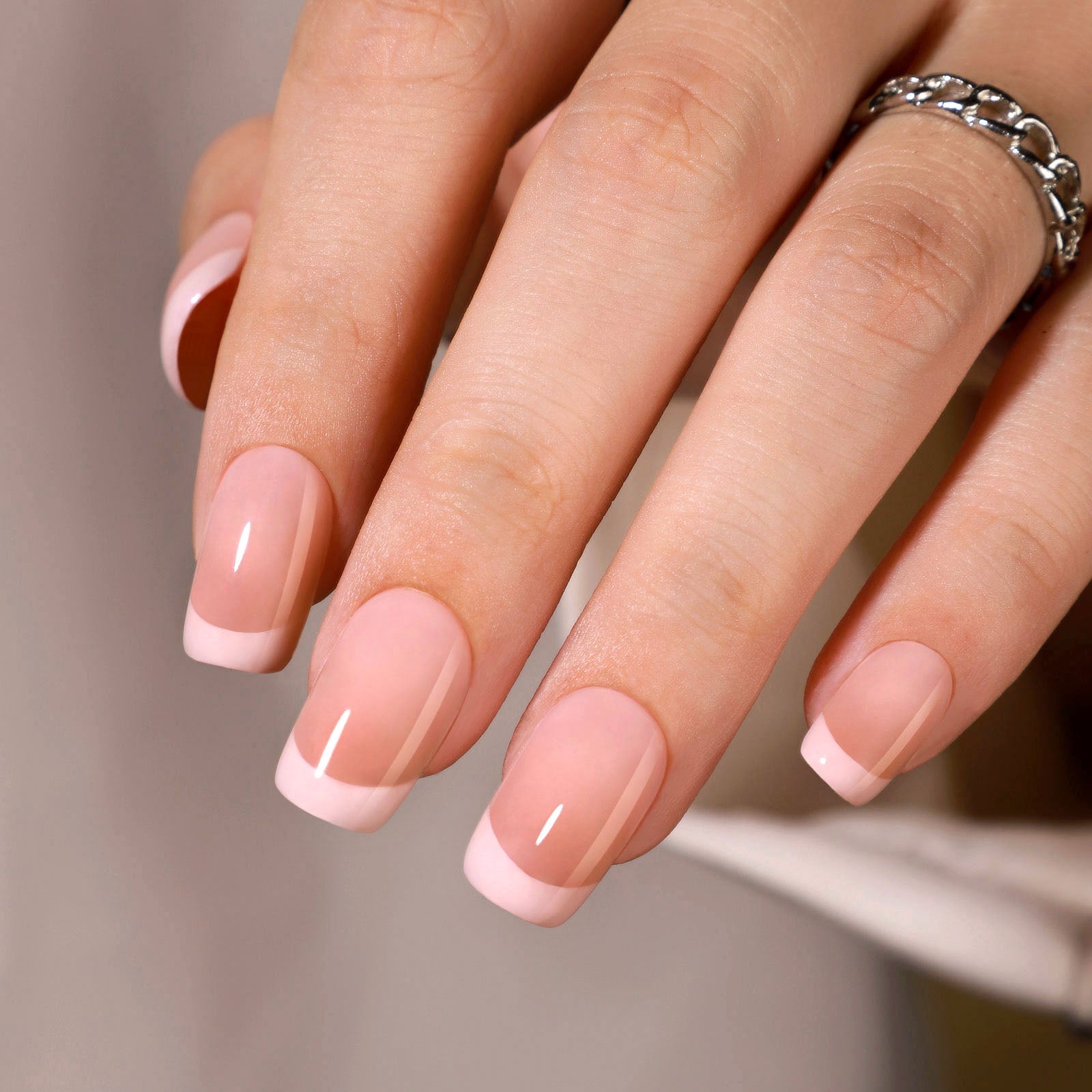
Still worried they will look fake? Find your shape and finish by matching your natural nail width; the right set reads polished, not pasted on.


How Long Do Press-On Nails Last?
This is the most common beginner question, and the honest answer has a range: 5–14 days, depending almost entirely on nail prep and post-application care.

What determines wear time:
| Factor | Short wear (5–7 days) | Long wear (10–14 days) |
|---|---|---|
| Nail prep | Skipped or minimal | Full 8-step process |
| Water exposure | Daily dishwashing, long showers | Gloves for dishes, quick showers |
| Glue type | Tabs or thin adhesive | Quality nail glue (dedicated bond) |
| Activities | Gym, gardening, heavy lifting | Moderate daily activity |
| Size fit | Too large (overlaps sidewall) | Correct fit, sidewall to sidewall |
The most important variable is nail prep — specifically the degreasing step with isopropyl alcohol. Customers who complete all 8 steps consistently report 10–14 day wear. Customers who skip buffing and alcohol typically see lifting start by day 3–4.
Post-application care matters significantly: - Avoid soaking hands for the first 24 hours (showers are fine, baths and dishes are not) - Wear gloves for cleaning with chemicals - Avoid picking at or prying the edges - If a corner lifts slightly, apply a small drop of glue under the lifted edge and press for 30 seconds
For detailed wear-time data and what factors matter most, see our how long do press-on nails last guide with customer experience breakdowns.
Common First-Timer Mistakes
Based on the patterns SHANGMENG sees across hundreds of customer reviews and questions, these are the mistakes that consistently account for first-set problems:

Mistake 1: Skipping isopropyl alcohol. The most common and most impactful mistake. Skin produces oil continuously, and even after washing your hands, oil residue is present on the nail plate. Any oil between the natural nail and the glue acts as a release agent — the same oil that makes nail polish peel. Nail glue adheres to the nail plate, not to the oil layer. Always use alcohol.
Mistake 2: Choosing press-ons that are too large. Bigger feels more secure, but it isn't. A press-on that extends onto the skin at the sidewall creates a mechanical lever: when the nail flexes, the point where press-on meets skin becomes a pry point. The nail starts lifting from the sides within a day or two. Size correctly: sidewall to sidewall across the natural nail, not across the finger.
Mistake 3: Using too much glue. A thick glue layer creates air bubbles. Air bubbles mean the press-on isn't fully bonded across its surface, and those unbonded zones are where lifting starts. Thin and even is correct — spread to the edges, no pooling.
Mistake 4: Not holding long enough. The 30-second hold is non-negotiable for the initial bond. Many beginners press for five seconds and move on. The glue hasn't set yet; pressure is what creates the bond. Time it.
Mistake 5: Getting water on the nails too soon. Water swells the natural nail plate slightly, which creates movement between the plate and the press-on during the critical first few hours while the glue is still achieving full cure. Wait at least an hour, ideally two, before hand-washing after application.
Mistake 6: Prying a lifting nail off. If a nail starts to lift, the beginner instinct is to peel it. Peeling takes the top layer of the natural nail with it, leaving the natural nail thin, white, and damaged. The correct response is to put a drop of glue under the lifted portion and press. If the nail needs removal, soak in warm water for 10 minutes first — then the nail slides off without damage. Our press-on nail removal guide covers this in detail.
Glue vs. Adhesive Tabs: Which Should You Use?
Both options are sold with press-on nails and both will hold the nail — but they perform differently enough that the choice matters.
Adhesive tabs: - Wear time: 1–3 days typically - Removal: Easy — peel, no soaking required - Damage to natural nail: Minimal - Best for: Events (one-day wear), testing a style before committing to glue, first-time users who aren't sure about sizing
Nail glue: - Wear time: 7–14 days with proper prep - Removal: Requires soaking in warm water 10–15 minutes - Damage to natural nail: None if removed correctly; some if pried - Best for: Regular wear, active lifestyle, situations where you need the nails to stay on reliably
The decision framework for beginners:
Start with adhesive tabs if you're trying press-ons for the first time and want to test sizing and the feel of wearing them before committing to glue. One day of tabs tells you which sizes fit, how they feel while typing, and whether you like the length.
Switch to glue once you've confirmed the sizing and are ready for real wear. For anything beyond a single event, glue is the correct choice — tabs are not designed for multi-day wear, and expecting them to last a week is the setup for disappointment.
Our detailed nail glue guide covers the specific properties of different glue formulas (viscosity, dry time, bond strength) and which scenarios each suits.
Your First Week: What to Expect
Day 1–2 (application + settling): Your nails feel slightly thicker and more rigid than natural nails, which is normal. Give yourself a day to adjust to typing, texting, and picking up small objects — the adjustment is real but fast. Avoid anything that would put pressure on the nail tip (opening cans with nails, pressing buttons hard). The glue is still reaching full cure for the first 24 hours.
Day 3–5 (full wear): By day three, the nails should feel completely normal. If you did nail prep correctly, there should be no lifting at all — the nail sits flush to the natural nail at every point. This is when you'll notice how the wear time correlates directly with water exposure; if you've been washing dishes without gloves, you may see small corners beginning to lift.
Day 5–7 (midpoint): If lifting occurs, it typically starts at the sidewall or cuticle edge. This is the point where you apply a drop of glue under any lifted section and press for 30 seconds — not where you peel the nail off. One small lift doesn't end the set.
Day 7–14 (extended wear): Customers who completed full nail prep and avoid excessive water exposure regularly wear SHANGMENG sets for 10–14 days. Your natural nail will have grown slightly, creating a small gap at the cuticle — this is normal and doesn't affect the hold. When you're ready to remove, our full removal guide covers the soak-off method that protects natural nail health.
Your first set matters. SHANGMENG includes full-size nail glue, 32 tips across 16 sizes, and instructions — everything in one kit. Start here →
Frequently Asked Questions
Are press-on nails safe for beginners?
Yes. Press-on nails are one of the safer nail enhancement options available — they don't require UV lamps, monomer liquids, or professional tools. The main risk is improper removal (pulling the press-on off without soaking first), which can thin the natural nail. Removal with a 10–15 minute warm water soak eliminates this risk. Adhesive tabs are even gentler if you're concerned about your natural nails — see our removal guide for the safest method.
How do I know which size press-on nail to get?
Measure your natural nail width at its widest point — this is typically just above the cuticle, not at the sidewall. Match that measurement to the size chart included with your press-on kit. When in doubt, go smaller: a press-on that covers the nail without overlapping skin will always hold better than one that's slightly too large. SHANGMENG provides 32 tips across 16 sizes specifically to enable accurate size matching. Our detailed nail sizing guide includes measurement instructions and a printable size chart.
Can I reuse press-on nails?
It depends on the removal method. If you remove with adhesive tabs, the press-on nails can typically be reused once or twice — the tab adhesive doesn't damage the press-on surface. If you use nail glue, the glue needs to be cleaned from the inside of the press-on before reuse, which requires acetone and careful work. The UV gel surface is generally durable enough for one reuse with glue if you clean carefully, but designs and shine may not be identical. Most customers use each set once for the cleanest result.
What if my press-on nail falls off?
Apply a drop of nail glue to the inside of the press-on and press it back onto your natural nail, holding for 30–60 seconds. Clean any excess glue at the edges with an orange stick before it fully sets. If the nail fell off because of a sizing issue (too large), size down for the replacement. If it fell off because of water exposure, ensure the natural nail is fully dry and degreased before reapplying.
Do press-on nails damage natural nails?
Not when applied and removed correctly. The application process (buffing slightly, applying glue) is much gentler than professional acrylic or hard gel extensions. The removal process — soaking in warm water for 10–15 minutes until the press-on slides off without force — leaves the natural nail plate intact. The American Academy of Dermatology also frames artificial-nail damage around harsh application, picking, filing, and removal habits, which is why the beginner rule is simple: never pry or peel a press-on that still resists. Damage occurs specifically when press-ons are pried or peeled off without soaking. The buffing step creates minor surface texture that grows out within two weeks. See the AAD's dermatologist tips for reducing artificial nail damage for the broader nail-health context.
How do I remove press-on nails without damaging my nails?
Soak your nails in warm water for 10–15 minutes. You can add a small amount of dish soap to speed the process. After soaking, the press-on should slide off with gentle side-to-side movement and almost no force. If it resists, soak for another 5 minutes rather than pulling. Never use dry force to remove press-on nails — that's when natural nail damage occurs. Our complete removal guide covers soak-off technique and what to do afterward to condition your natural nails.
How do I make press-on nails last longer?
Nail prep is the most impactful variable — specifically the isopropyl alcohol degreasing step. Beyond prep: use nail glue rather than tabs; avoid soaking hands for the first 24 hours; wear gloves for dishes and cleaning; address any edge lifting immediately with a small drop of glue rather than letting it progress. Correct sizing (sidewall to sidewall without overlapping skin) also significantly extends wear time. With all of these in place, 10–14 day wear is achievable for most wearers. Our wear time guide has a detailed breakdown of each variable and its relative impact.
Paul writes nail care guides, application tutorials, and how-to content for SHANGMENG.
Share