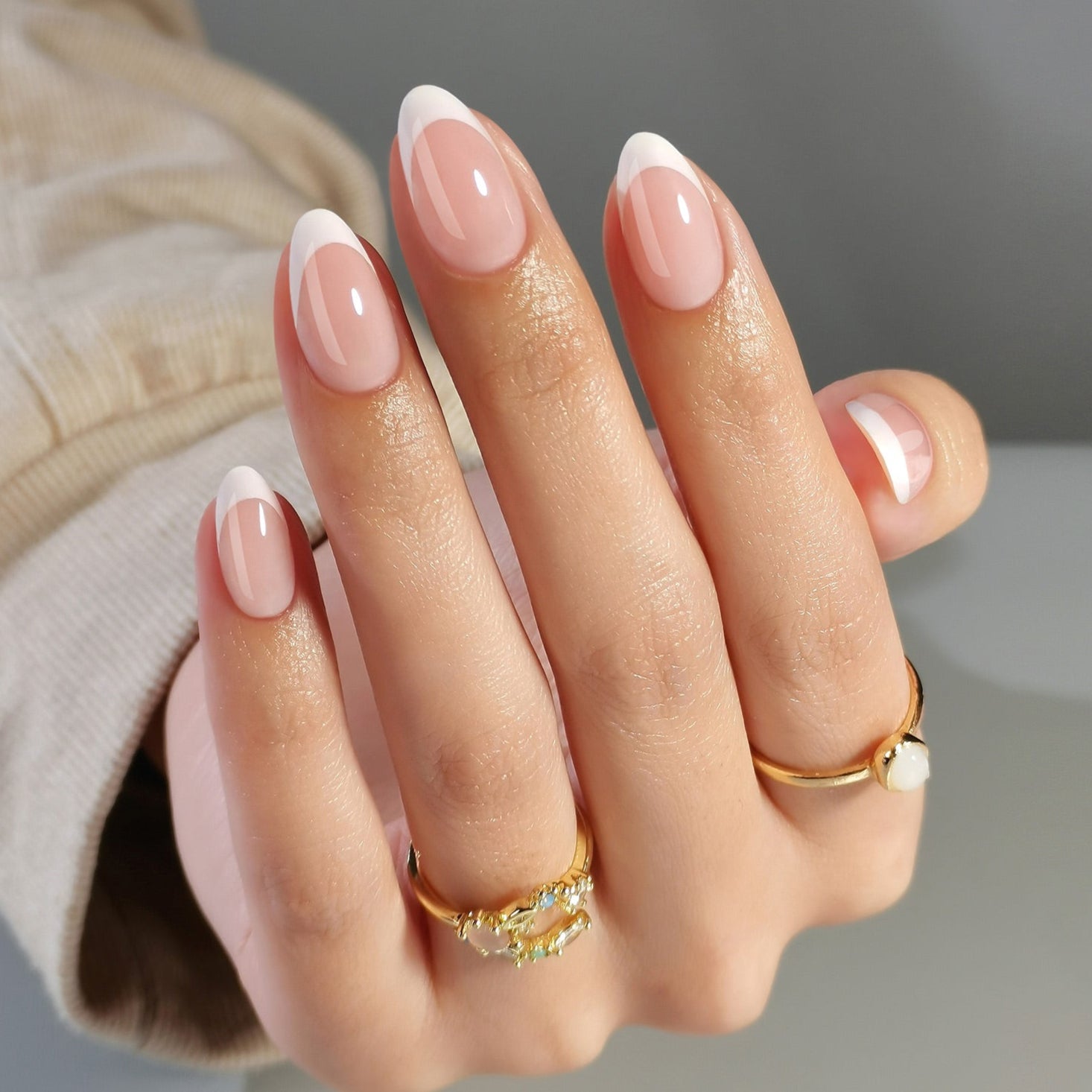
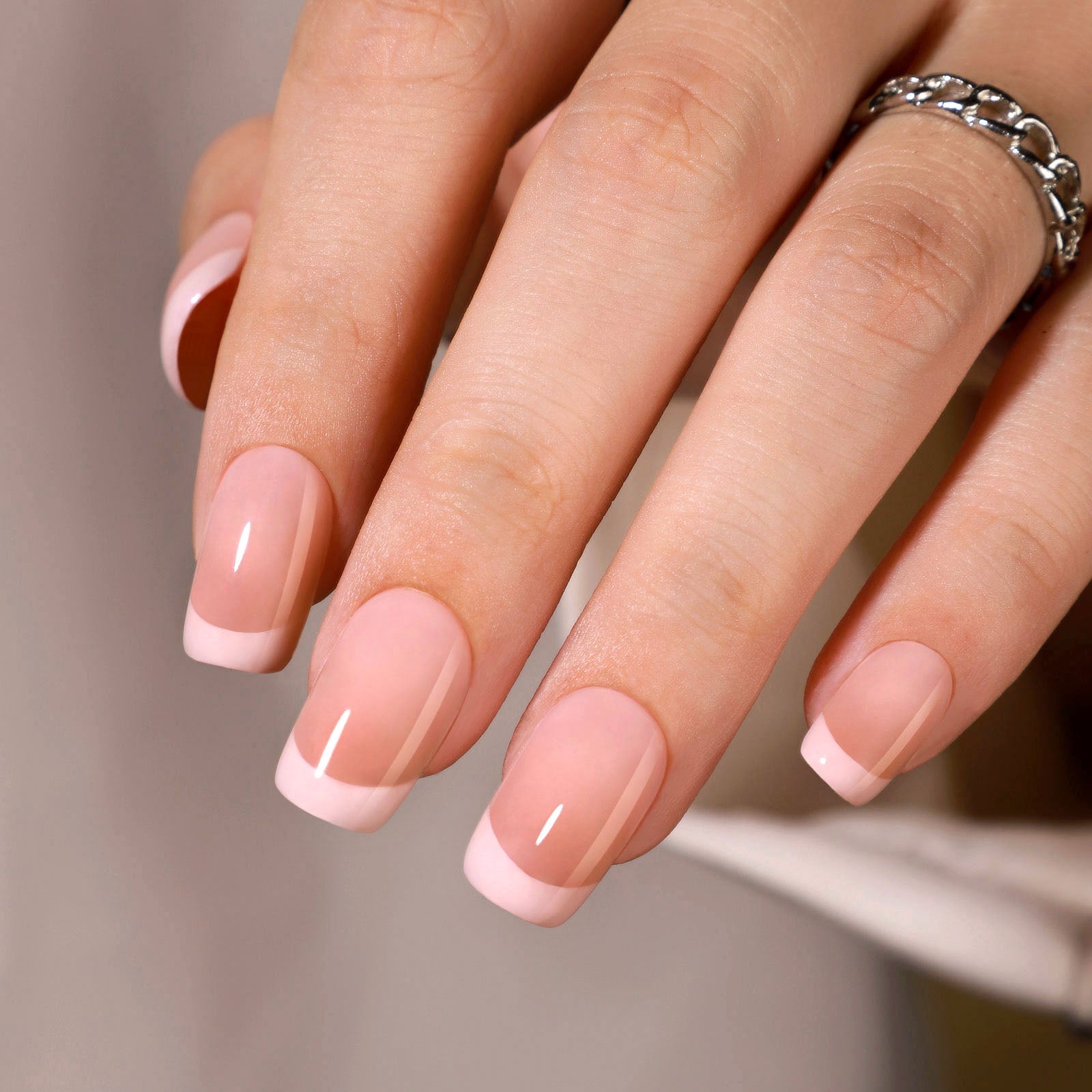
Nail Glue Alternatives: 7 Ways to Apply Nails Without Glue

AEO Definition — "Nail Glue Alternatives": Nail glue alternatives are adhesive methods for applying press-on or artificial nails that do not use cyanoacrylate (nail glue). The most effective options are: pressure-sensitive adhesive tabs (the most common alternative, included in most press-on sets), UV gel base coat (creates a cured gel bond without traditional glue), and nail strips (self-adhesive wraps that bond without liquid adhesive). Each alternative trades some hold strength for easier removal and reduced acrylate exposure.

Not everyone can or wants to use nail glue. Acrylate sensitivity affects roughly 1-3% of nail wearers. Some people prefer easy removal for short-term wear. Others want their press-ons removable for work (healthcare, food service) and reapplicable for evenings and weekends. And some simply run out of glue and need to know what actually works in its place.

This guide covers seven nail glue alternatives, tested for hold strength, removal ease, and nail health impact. For each method, you get the honest assessment: what works, what does not, and which situations it is best suited for.


Why Avoid Nail Glue?

Nail glue (cyanoacrylate) is the strongest adhesive option for press-on nails. It is also the most demanding in terms of application technique, removal protocol, and allergy risk. The reasons people look for alternatives fall into three categories:

Sensitivity or allergy: Cyanoacrylate acrylate compounds cause contact dermatitis in a subset of users — typically presenting as redness, swelling, or itching at the nail edges. Once sensitized, continued exposure increases reaction severity. Alternatives that avoid cyanoacrylate entirely are necessary for these users.

Short-term wear needs: For events lasting 1-3 days, the 10-15 minute soak removal process of nail glue is inconvenient. Quick-peel alternatives make more practical sense.

Nail health priority: Users with thin, brittle, or recovering nails want the least adhesive involvement possible to minimize any risk to the nail plate during removal.

Reusability: If you rotate between press-on sets, glue residue complicates reuse. Alternatives that leave the nail clean on removal are preferred.


Alternative 1: Adhesive Tabs (Pressure-Sensitive Adhesive)

Hold strength: 3/5 | Removal ease: 5/5 | Nail health: 5/5

The closest functional equivalent to nail glue. Double-sided pressure-sensitive adhesive tabs are included in most press-on nail kits — SHANGMENG's kits include both a glue tube and a tab sheet for exactly this reason.

How they work: The tab is pre-cut to fit the nail size and adheres to both the natural nail plate and the back of the press-on through physical pressure rather than chemical bonding. The bond strengthens over the first few hours as the PSA (pressure-sensitive adhesive) seats against both surfaces.

Hold time: 1-5 days under normal conditions. Shorter with water exposure; longer in dry conditions.

Application tips: 1. Size-match the tab to your nail width — an undersized tab leaves edge gaps that lift faster 2. Warm the tab slightly between your palms before applying — PSA adheres better when slightly warm 3. Press firmly for 60 seconds after application 4. Avoid hand cream for 2 hours after application

Best for: Events of 1-3 days, users with acrylate sensitivity, nails you plan to rotate and reuse, thin or recovering nails.

Not suitable for: Gym use, swimming, any activity with sustained water exposure or high mechanical stress.


Step-by-step photos of adhesive tab application: selecting correct size tab, peeling backing, placing tab on natural nail, then applying press-on with firm thumb pressure for 60 seconds

Tab application in four steps. The 60-second firm press is the most commonly skipped step — PSA requires sustained pressure to develop its maximum bond strength.


Alternative 2: UV Gel Base Coat

Hold strength: 4/5 | Removal ease: 3/5 | Nail health: 4/5

This method uses a UV-cure gel base coat (the kind used in gel manicures) as the adhesive layer, then presses the artificial nail into the uncured gel before curing under a UV lamp. The result is a semi-permanent bond similar to a gel overlay.

How it works: Apply a thin layer of UV gel base coat to the natural nail. Without curing, press the press-on nail into the gel layer, aligning at the cuticle. Hold for 30 seconds. Cure under a UV or LED lamp for 30-60 seconds through the press-on nail (soft gel press-ons allow some UV transmission; hard plastic press-ons may require edge curing). The cured gel creates a mechanical interlocking bond between the natural nail plate and the press-on.

Hold time: 5-14 days. Significantly better hold than adhesive tabs, approaching nail glue in duration.

Application tips: - Use thin gel layers — thick gel creates air pockets that reduce bond strength - Cure in stages for larger nails: cure 30 seconds, check for movement, cure 30 more seconds - Wrap the tip during application (run the gel base coat slightly under the free edge of the press-on) for better edge sealing

Removal: Requires acetone or gel remover — the cured gel bond is stronger than PSA but less strong than cyanoacrylate. Soak 5-10 minutes in acetone, then rock the press-on gently. Do not force.

Equipment needed: UV gel base coat, UV or LED nail lamp. Most people who do gel nails at home already have both.

Best for: Users who do home gel nails, people who want longer hold without cyanoacrylate, users with mild acrylate sensitivity to cyanoacrylate specifically (gel acrylates are different compounds and may not trigger the same sensitivity — consult a dermatologist).

Not suitable for: People without UV lamp equipment; not an emergency option.


Alternative 3: Nail Wraps / Nail Strips

Hold strength: 2/5 | Removal ease: 5/5 | Nail health: 5/5

Nail wraps (also called nail strips or nail stickers) are flexible adhesive films that adhere to the natural nail and can serve as a base for press-on nail application. The strip is applied first, then the press-on is applied over the strip using the strip's own adhesive surface.

How it works: Apply the nail strip to the natural nail as per the strip's instructions (typically: peel, apply, seal edge, file excess). The strip becomes a new adhesive surface. Apply the press-on to the strip-covered nail using the press-on's built-in tab or a fresh adhesive tab.

Hold time: 1-3 days. The strip provides a clean, oil-free surface for the press-on adhesive tab, which can improve tab adhesion on nails that tend to be oily.

Additional use: Nail wraps can be a design element in themselves — applying a printed nail wrap under a clear or sheer press-on creates a composite design that neither product achieves alone.

Best for: Very short-term wear (events, photo shoots), a quick surface for improved tab adhesion, creative design layering.

Not suitable for: Long-term wear, any adhesion-demanding situations.


Alternative 4: Double-Sided Tape

Hold strength: 1/5 | Removal ease: 5/5 | Nail health: 5/5

The emergency option. Standard clear double-sided tape — the kind in any stationery drawer — can hold a press-on nail for hours in a genuine no-options emergency.

Hold time: 2-8 hours. Will fail with any water exposure. Will fail with heat. Will fail with gym use.

Application: Cut a piece to fit the nail size. Apply to the natural nail (not the press-on). Press the press-on on with firm pressure for 30 seconds. That is the complete method.

Why it works at all: Double-sided tape uses a PSA formulation similar to adhesive tabs, just not optimized for skin or nail surfaces. The hold is short-lived but sufficient for a few hours in dry conditions.

Best for: True emergencies. A nail popped off before the photoshoot and you do not have anything else. A nail broke before the wedding ceremony and you have tape in your bag.

Not suitable for: Any planned wear situation. This is strictly emergency use.


Bar chart comparison of 7 nail glue alternatives by average hold time: nail glue (14-21 days), UV gel base coat (7-14 days), adhesive tabs (1-5 days), nail paint seal (1-3 days), press-and-peel gel (1-3 days), nail wraps (1-3 days), double-sided tape (hours) — clear visual hierarchy

Hold time comparison across all seven methods. UV gel base coat is the strongest alternative to nail glue for long-term wear. Adhesive tabs are the strongest alternative for short-to-medium wear.


Alternative 5: Press-and-Peel Gel (Polygel Base)

Hold strength: 3/5 | Removal ease: 4/5 | Nail health: 4/5

A newer format: a flexible gel putty that is applied to the nail like putty, shaped to fill the nail plate, and the press-on is pressed into it before any curing. The gel bonds through mechanical interlocking of its flexible texture around the press-on's back surface.

How it works: This method is most commonly used for fitting press-ons to irregularly curved nail plates. The putty fills any gap between the natural nail's curvature and the press-on, creating a custom-fit bond rather than relying on flat-surface adhesion.

Hold time: 1-5 days. Better than standard tabs for nails with pronounced curvature where flat-back press-ons have gaps.

Application tips: - Use a small bead of polygel (about the size of a small pea) - Apply to the natural nail and spread thinly to cover the nail plate - Press the press-on into the gel firmly - Cure if using a UV-cure polygel (some press-and-peel gels are no-cure formulas)

Best for: Nails with pronounced curvature where flat adhesion methods leave air gaps; users who find tabs insufficient but do not want cyanoacrylate.


Alternative 6: Nail Paint (Colored Nail Polish as Temporary Adhesive)

Hold strength: 1.5/5 | Removal ease: 5/5 | Nail health: 5/5

An unconventional but functional short-term option: apply a coat of nail polish to the natural nail, allow it to become tacky (not dry), and press the press-on into the tacky polish. The polish acts as a temporary adhesive.

Hold time: 2-6 hours. Extremely short-term. This works because the tacky-stage polymer in nail polish has weak adhesive properties. It does not cure to a permanent bond, which is why it releases quickly.

When this makes sense: You want the nails for 3-4 hours (a dinner, a photoshoot), you want to color-match the nail base for a seamless look, and you have no other adhesive available.

Application tips: Apply polish, wait 60 seconds until it becomes tacky (the surface should no longer be wet but will feel slightly sticky). Press the press-on from the cuticle end. Do not press very hard — the polish squishes and creates unevenness. Hold 15-20 seconds.

Best for: Strictly 2-4 hour special events with no active wear. Photography, video, short performances.


Alternative 7: Soak-Off Gel Overlay

Hold strength: 4.5/5 | Removal ease: 2/5 | Nail health: 3/5

This is technically the closest alternative to salon gel application. Apply a full gel overlay system (gel base, then press the artificial nail in before curing, then gel top coat over the edges) and cure. The result is a salon-quality bond that requires salon-level removal.

Hold time: 2-3 weeks. Matches nail glue duration.

Equipment needed: UV gel system (base, builder, top), UV/LED lamp, acetone or gel remover for removal.

Removal: Requires acetone soaking for 15-20 minutes — more intensive than standard nail glue removal because the gel overlay may extend to the edges and top of the press-on.

Best for: Home gel nail enthusiasts who want to extend their existing system to cover press-on application; people who want maximum hold without cyanoacrylate.

Not suitable for: Quick or short-term use; anyone without gel equipment.


Flowchart decision tree: starting with "Why are you avoiding nail glue?" branching into: Allergy/sensitivity (→ adhesive tabs or UV gel base coat), Short-term wear 1-3 days (→ adhesive tabs), Want to reuse nails (→ adhesive tabs), No equipment (→ adhesive tabs or double-sided tape emergency), Have UV lamp (→ UV gel base coat for longer hold), Irregular nail curve (→ press-and-peel gel)

The decision tree: the right alternative depends on why you're avoiding glue and what equipment you have. Adhesive tabs are the right answer in the majority of situations.


Improving Hold: Universal Tips for All Alternatives

Regardless of which alternative you use, the following preparation steps significantly improve how long any adhesive method holds:

1. Clean the nail plate completely. Wipe each nail with 70% isopropyl alcohol on a lint-free pad. Wait 2 minutes until fully dry. Skin oils are the primary enemy of adhesive bonding — even a fingerprint on the nail surface between the wipe and the application reduces bond strength.

2. Light buffing. One or two passes of a 220-grit buffer removes the nail plate's natural shine and creates micro-texture for the adhesive to bond to. Do not over-buff — two passes is sufficient. Over-buffing thins the nail plate without additional adhesive benefit.

3. Size-match precisely. Any adhesive method performs better when the press-on fits the nail precisely — no overlap onto skin (which prevents bonding), no undersized press-on (which leaves the nail plate edges exposed and creates lifting leverage).

4. Apply at the cuticle first. Begin bonding at the cuticle end of the nail and press toward the free edge. This pushes any air toward the exit point rather than trapping it under the center.

5. Hold with sustained pressure. Most alternatives — especially PSA tabs — require 30-60 seconds of sustained firm pressure to reach initial bond strength. Most people hold for 5-10 seconds and wonder why the nail pops off.


Four-step prep sequence applicable to all nail glue alternatives: Step 1 alcohol wipe (nail and surrounding skin), Step 2 light 220-grit buff (2 passes visible), Step 3 size selection (press-on held against natural nail for fit), Step 4 place from cuticle first with sustained 60-second press

The universal prep sequence. These four steps improve bond strength for every alternative. The alcohol wipe is the most important — oil contamination after the wipe defeats any subsequent preparation.


SHANGMENG's No-Glue Option: Adhesive Tabs Included

Every SHANGMENG press-on nail set includes both nail glue and adhesive tabs. This is a deliberate design choice — the adhesive method should match the situation, not the product.

Still worried they will pop off? Find your adhesive setup by matching the hold strength to how long you need them to last.

The included tabs are size-matched to the nail tile sizes in each set, pre-cut for each finger position, and formulated for the specific bond strength appropriate for press-on nail use — stronger than standard double-sided tape, designed specifically for nail application rather than packaging or mounting.

SHANGMENG customer review (5/5, verified): "I have a mild latex allergy and I was nervous about the glue, but I've been using just the tabs the whole time with no issues. They last about 4 days which is perfect for me — I change up my sets throughout the week anyway."

With 454 verified reviews at 4.94/5.0, the tab-only approach is frequently mentioned as the preferred method for users who value flexibility and reusability.


Hands with SHANGMENG press-on nails applied with adhesive tabs, photographed on Day 4 of wear — all nails intact, no visible lifting at edges, cuticle area maintained with nightly cuticle oil, set in a coral-pink almond shape

Day 4 with adhesive tabs: all nails intact, no visible lifting. The key is the universal prep sequence — properly prepped nail surface, correct size tab, 60-second press. Cuticle oil applied nightly to maintain the seal.


FAQ

Q: What is the best nail glue alternative for sensitive skin? Adhesive tabs (pressure-sensitive adhesive) are the best first choice for people with sensitive skin or known acrylate sensitivity. PSA formulations do not contain the cyanoacrylate compounds that trigger contact dermatitis in sensitive users. If you suspect an acrylate allergy, patch test any adhesive on the inside of your wrist 24 hours before applying to nails. Consult a dermatologist if you have had prior reactions.

Q: How long do adhesive tabs last on press-on nails? 1-5 days under normal conditions. Factors that reduce hold time: water exposure (swimming, long baths), high humidity environments, heat (hot yoga, saunas), oily skin (increases over the day as the body produces oil), and frequent hand cream application. Factors that extend hold time: complete nail plate cleaning with alcohol before application, correct size tab selection, 60-second sustained press during application, and keeping nails dry for the first 2 hours after application.

Q: Can I use regular super glue instead of nail glue? Regular super glue (household cyanoacrylate) and nail glue (cosmetic cyanoacrylate) contain the same base compound, but nail glue is formulated with cosmetic-grade additives and tested for skin safety. Household super glue is not tested for skin contact and may contain solvents that irritate the nail plate or surrounding skin. In an emergency, a single application of household super glue is unlikely to cause serious harm, but it should not be used regularly.

Q: Are there nail glue alternatives that work for swimming? No adhesive tab or tape alternative is effective for swimming. UV gel base coat applied over a press-on (method 2) provides the best water resistance of the non-glue alternatives, but it still degrades faster than nail glue with repeated pool or ocean exposure. For situations involving swimming, nail glue is the appropriate adhesive if water resistance is required. Alternatively, wear press-ons with adhesive tabs for the non-swimming portions of the day and remove before swimming.

Q: Can I use nail glue alternatives to reuse press-on nails? Yes, and this is one of the primary advantages of alternatives over nail glue. Adhesive tabs, UV gel base coat, and other alternatives remove cleanly from the press-on backing in most cases, leaving the nail ready for immediate reuse. Clean the backing with an acetone wipe if any residue remains, let dry completely, and the nail is ready for the next application. This is why nail collectors who rotate between sets strongly prefer tab application.

Q: What should I do if an adhesive tab press-on keeps falling off? If a tab-applied nail repeatedly falls off before the expected hold time, check four factors in order: (1) Was the nail plate cleaned with alcohol before application? Even a small amount of oil prevents PSA bonding. (2) Is the tab size matched to the nail width? An undersized tab leaves edges unbonded. (3) Was the press-on held with firm pressure for 60 seconds? (4) Was there water exposure in the first 2 hours? If all four factors are confirmed correct and the nail still falls off, switch to nail glue for that nail position — some nail plates have characteristics (very smooth, slightly oily) that do not bond well with PSA regardless of preparation.


Visual rating matrix showing all 7 alternatives scored across 4 criteria: hold strength, removal ease, nail health impact, and equipment needed — using a 5-star scale. Adhesive tabs score highest overall for most practical use; UV gel base coat scores highest for hold among alternatives

The complete rating matrix. No single alternative beats nail glue on hold strength — the tradeoffs are removal ease and nail health. Choose the alternative that matches your priorities, not the one with the highest average score.


Before and after close-up of natural nail plate: before press-on cycle showing healthy nail; after 8-week tab-only cycling showing same healthy nail with no thinning, no delamination, no surface disruption — demonstrating that tab-only application does not degrade nail health over repeated cycles

Eight weeks of tab-only cycling: no nail plate degradation. Adhesive tabs are the lowest nail health impact adhesive method available for press-on application.


Nail glue is not the only way. Adhesive tabs — included in every SHANGMENG kit — handle the majority of press-on wear scenarios without cyanoacrylate. UV gel base coat closes the gap for longer wear. Every other situation has a method suited to it.

Know your options. Choose based on your situation.

Get the full kit: SHANGMENG's press-on nail sets include both adhesive methods — glue for long wear, tabs for everything else. No separate purchase needed.

For longer hold tips: Read our how to make press-on nails last longer guide for prep and maintenance techniques that extend hold for both glue and tab methods.

For removal guidance: Our safe nail removal guide covers correct removal technique for all adhesive types.

Share information about your brand with your customers. Describe a product, make announcements, or welcome customers to your store.