












Home
›
Guides — Press-On Nails Tutorials
›
Nail Art for Beginners: 20 Easy Designs You Can Actually Do

Nail Art for Beginners: 20 Easy Designs You Can Actually Do
By Paul, SHANGMENG Nail Guide Writer
Key Takeaways: You don't need professional tools or a steady hand to wear beautiful nail art. The 20 designs in this guide use four basic techniques — dots, lines, color blocks, and sticker accents — that beginners execute successfully on the first attempt. And for anything more complex, pre-designed press-ons get you there without the practice curve.

The phrase "nail art" intimidates most beginners. It calls to mind TikTok videos of nail technicians producing intricate marble swirls in under three minutes, or elaborate 3D gel sculptures that take an entire afternoon. Here is what those videos don't tell you: the techniques those artists use took hundreds of hours to develop. You are not watching a beginner's lesson. You are watching a professional show reel.
What beginners can realistically achieve is a different — and genuinely satisfying — category of nail art. Clean dots. Simple lines. Two-tone color blocks. A single chrome accent nail. These designs look intentional and polished, and they require no more than a toothpick, a base coat, and some patience.
This guide gives you 20 specific designs organized by technique, explains exactly how to execute each one, and tells you honestly when to skip DIY entirely and reach for a pre-designed press-on instead.
Before practicing, use the American Academy of Dermatology's healthy nail tips as a safety baseline for prep and removal, and treat Allure's nail coverage as broad inspiration rather than a beginner lesson.
Not sure which shape, length, or size fits your natural nails?
Why Press-On Nail Art Is the Beginner Shortcut
Before getting into DIY techniques, it's worth addressing the most efficient path for most beginners: pre-designed press-ons.
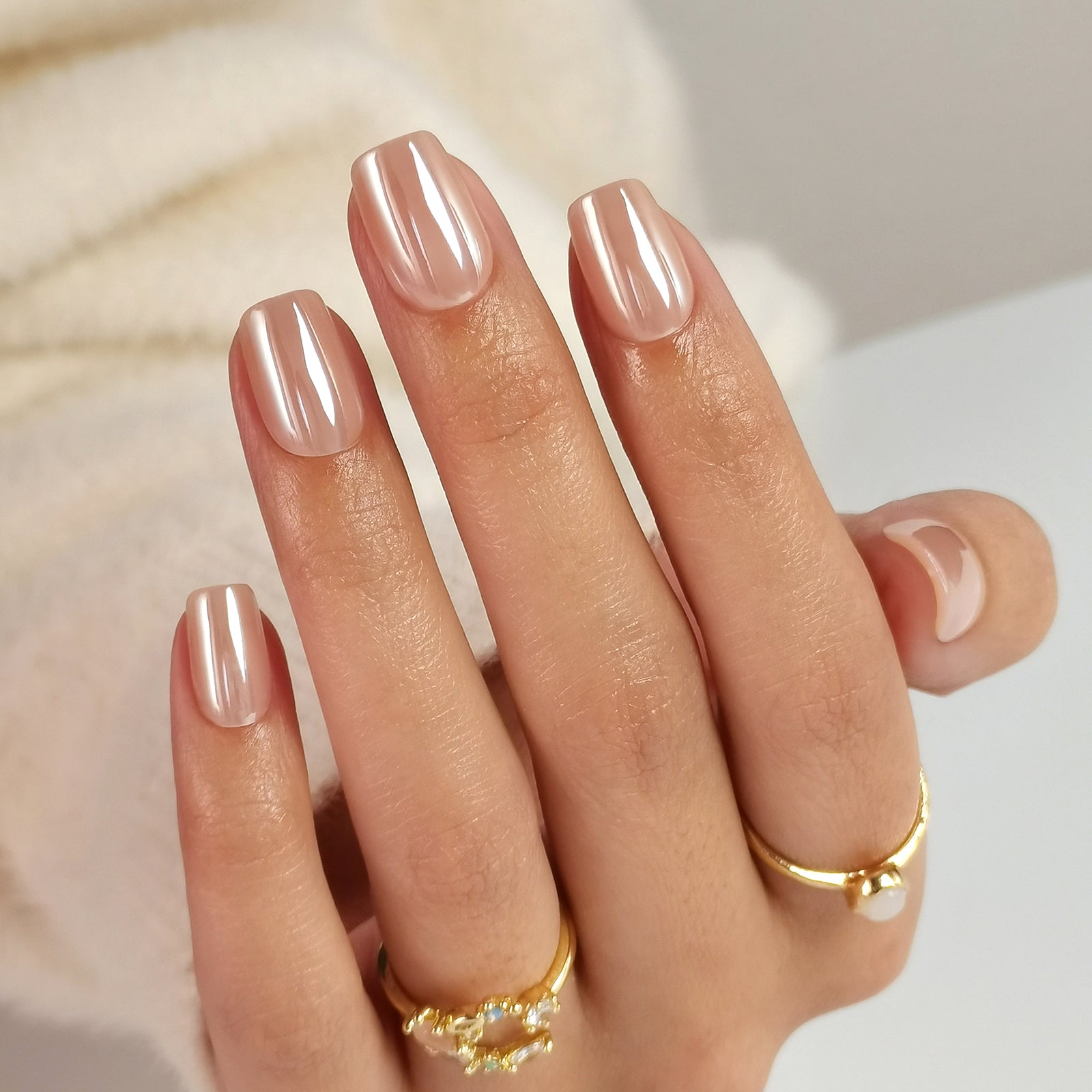
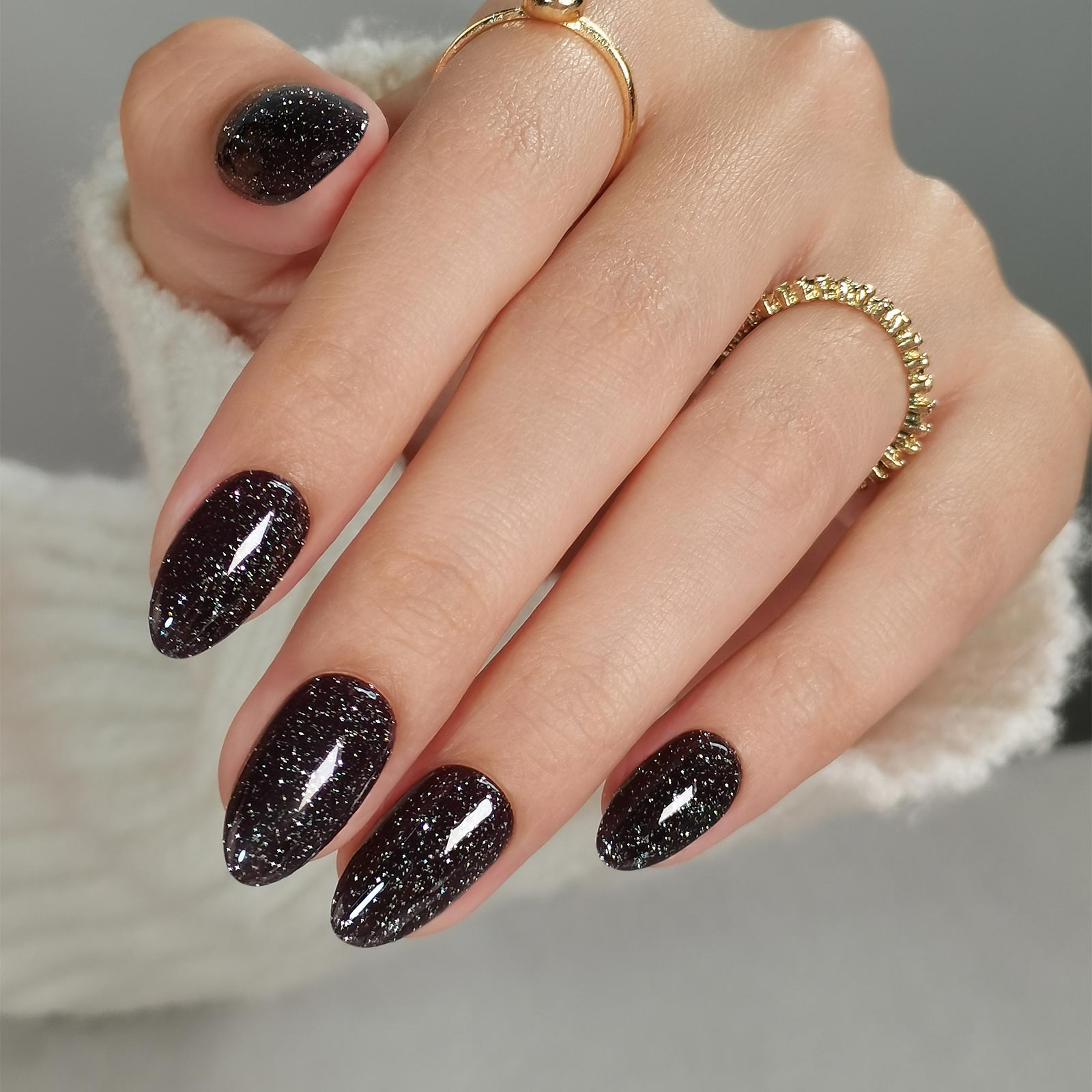
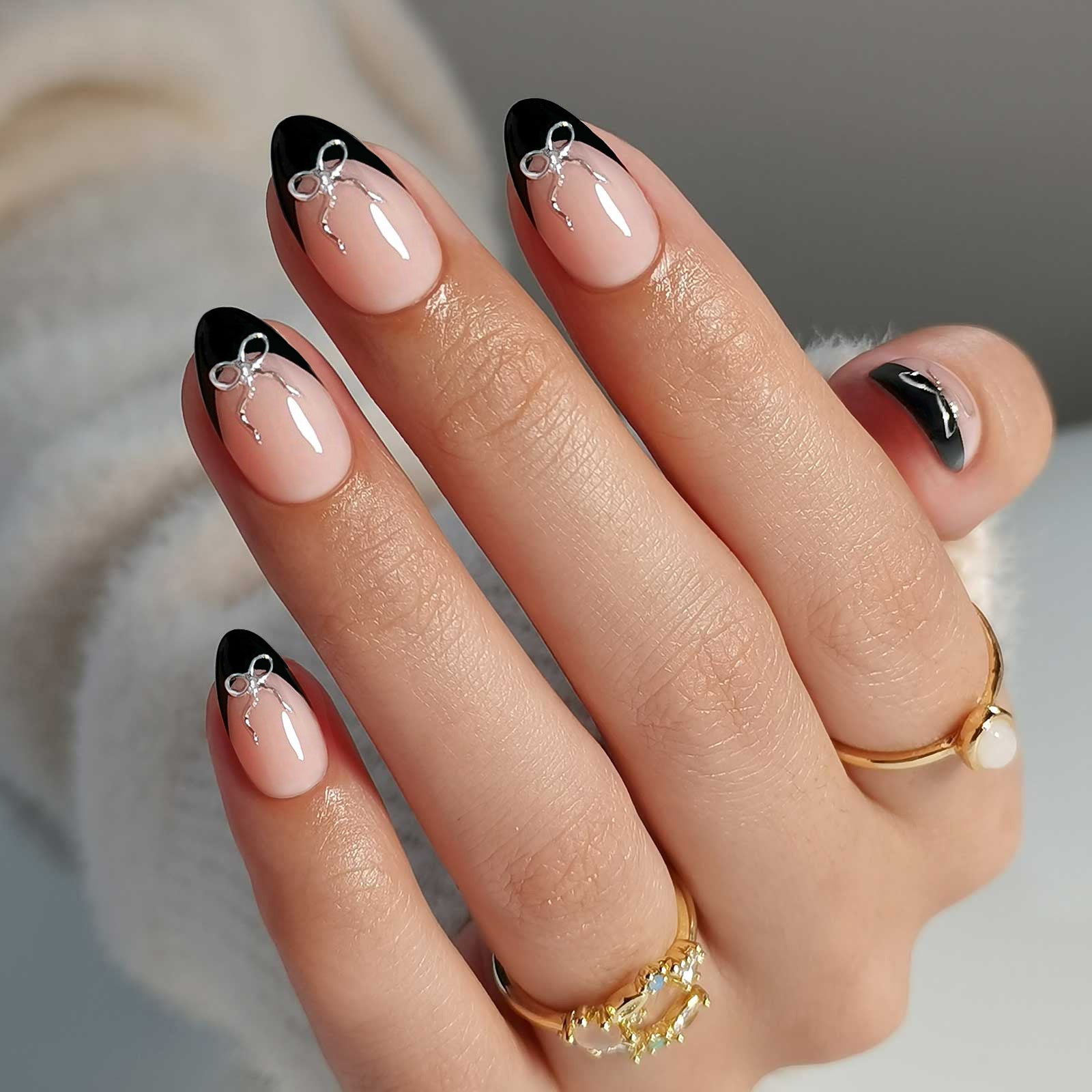
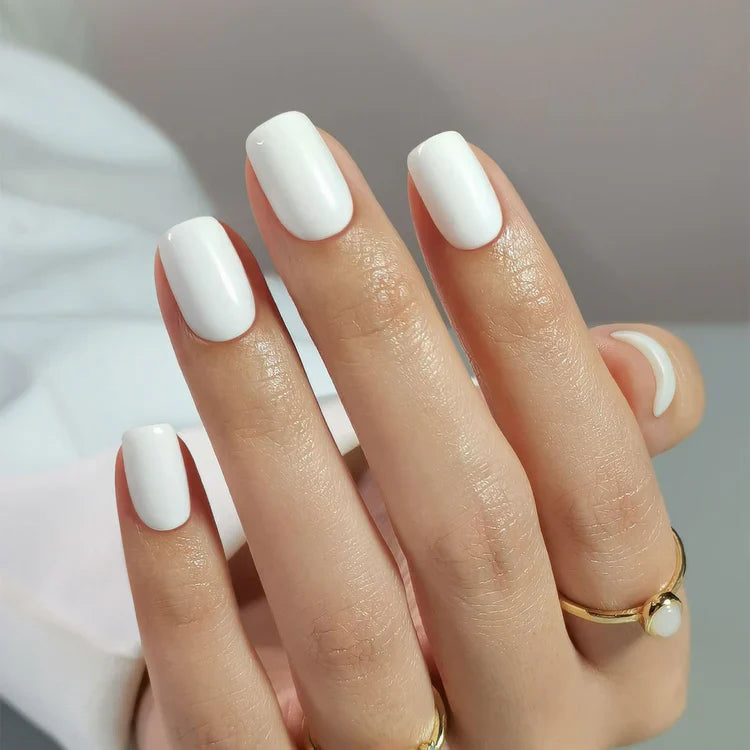
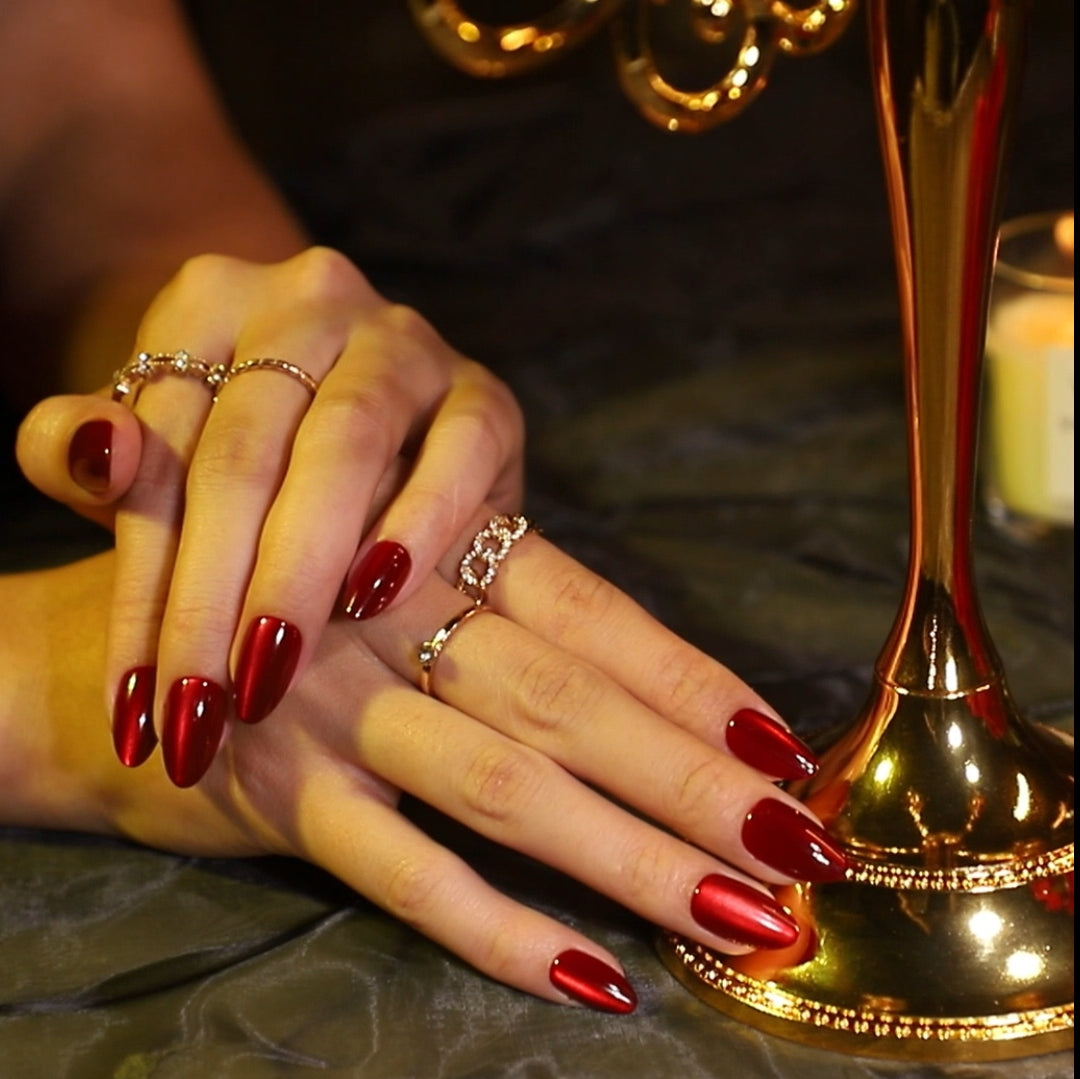
Modern UV gel press-on nails come pre-printed with designs that used to require a nail technician and 45 minutes of salon time. The printing technology — UV gel over an engraved base — reproduces fine linework, gradient color, chrome effects, and multi-element patterns at a level of detail that is genuinely difficult to replicate at home with regular nail polish.
That is the price anchor beginners should keep in mind: a salon nail art appointment can run $60-$120 before tip, while a SHANGMENG soft gel press-on set is manufactured with factory-controlled printing and costs a fraction of that. For a broader starter overview, see our press-on nails for beginners guide.
The practical implication: if you want a marble swirl, a geometric abstract, or a precise French tip with negative space detail, a press-on gives you that result in 15 minutes with zero skill required. If you want the experience of painting your own nails and building a technique, this guide covers that path completely.
Most nail enthusiasts do both — use press-ons for occasions when the design matters most, and practice DIY techniques when they have time to develop the skill.
For the DIY approach, here is what works at the beginner level.
20 Easy Nail Art Designs for Beginners
Dots and Lines (Designs 1–5)
Dotting and line work are the most beginner-accessible nail art techniques. They require no brush control — only a steady downward press (for dots) or a slow, confident drag (for lines). The tools are a dotting stylus (or the blunt end of a bobby pin), a toothpick, or a thin striping brush.

Design 1: Single Dot Accent One large dot, placed at the base of the nail near the cuticle on a contrasting base color. Use a dotting stylus loaded with a small amount of polish. Press straight down — do not drag. Let dry completely before top coat. Best base colors: nude, white, pale pink. Best dot colors: black, burgundy, gold.
Why it works for beginners: One dot eliminates the need for consistent spacing or repetition. Even if placement is slightly off-center, the design still reads as intentional.
Design 2: Diagonal Dot Row Five or six dots arranged diagonally from the bottom left corner to the upper right. Use the same dotting method, spacing the dots roughly evenly. Load your tool consistently between dots — the same amount of polish each time — to keep size uniform. This design looks best on short square or oval shapes.
Design 3: Single Fine Line A single thin stripe running vertically from the base to the tip. Use a striping brush (narrow, long bristles) loaded lightly with polish. Draw in one continuous motion — hesitation creates wobbles. Practice on paper first. Start at the cuticle end and pull toward the tip, keeping your wrist fixed and moving your arm. Gold over a dark base is the most forgiving combination.
Design 4: Negative Space Line Apply a base color, let it dry fully, then use nail tape to mask off a thin diagonal strip. Apply a second contrasting color over the entire nail, let it dry to a matte finish (not fully cured), then remove the tape to reveal a clean strip of the base color. This creates a geometric negative space effect without requiring freehand precision.
Design 5: Dot Frame Place small dots around the perimeter of the nail — along the sides and across the tip — leaving the center of the nail bare. Use a small dotting tool and reload between each dot for consistent sizing. The result is a floating frame effect that looks far more complex than it is.
French Variations (Designs 6–10)
The French tip is one of the most recognized nail looks in existence, and it's also one of the most forgiving for beginners because small imperfections in the tip line read as stylistic choices rather than mistakes.

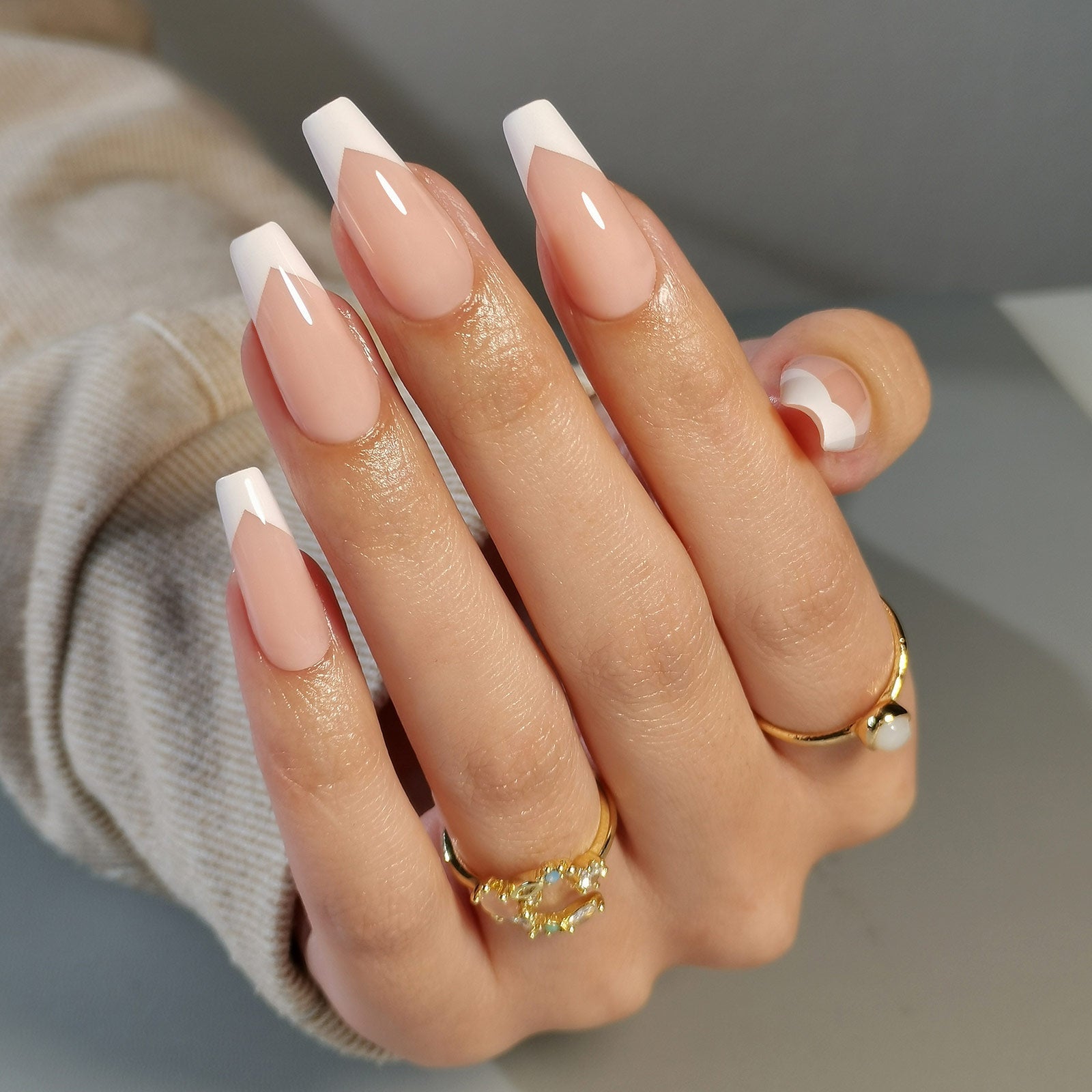
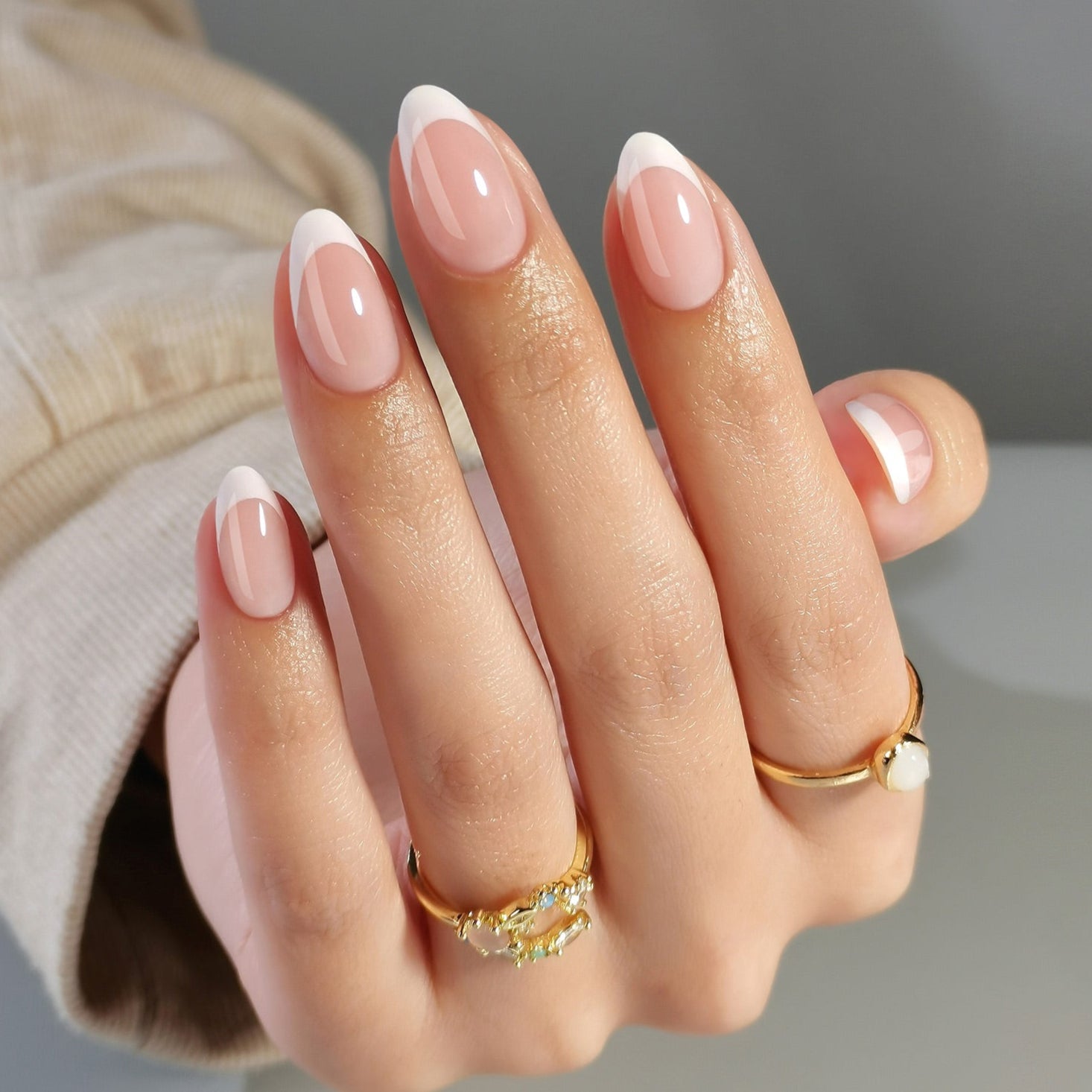
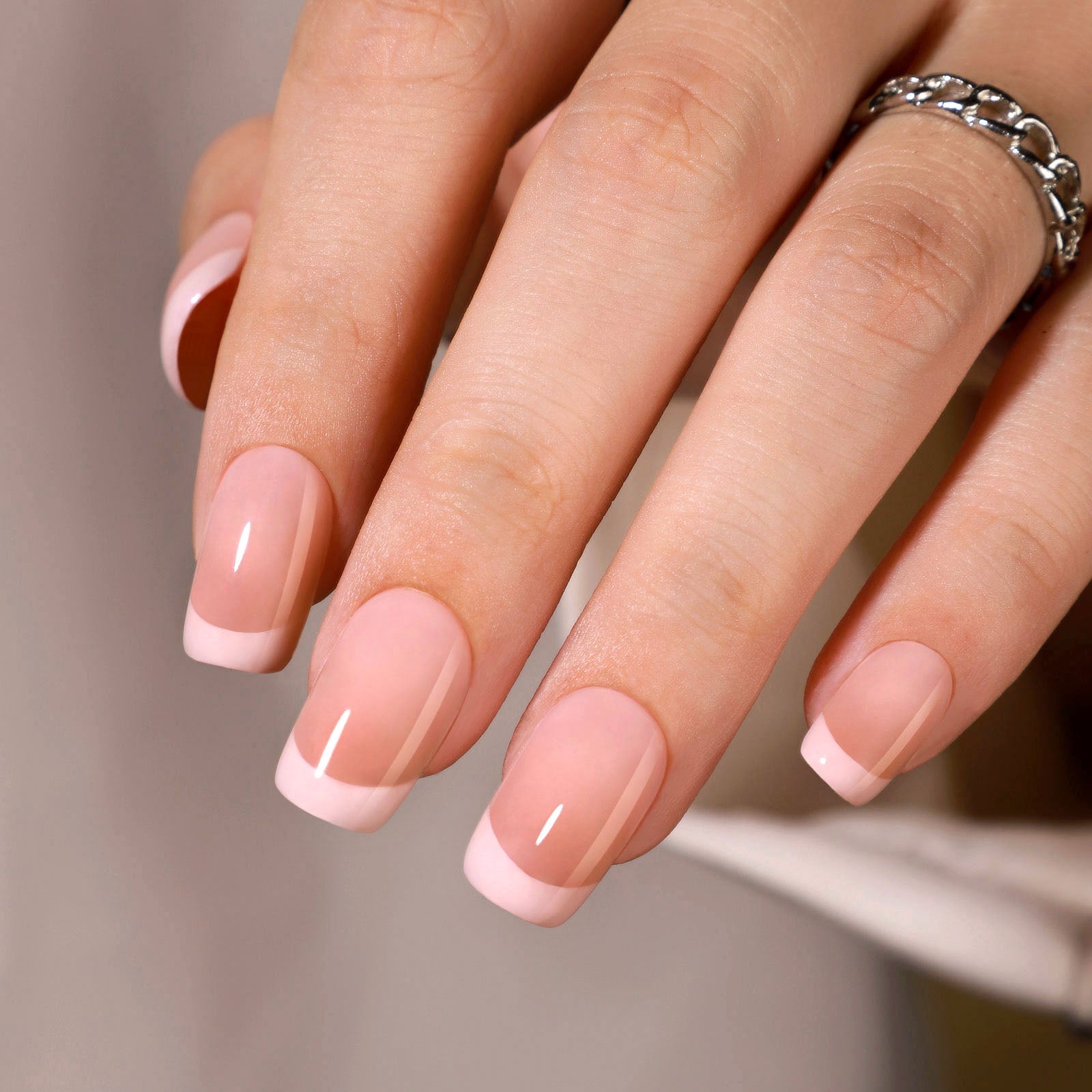
Design 6: Classic White French Tip The original. Apply a nude or sheer base, let it dry. Use a flat brush loaded with white polish to paint across the tip, following the natural curve of the nail edge. Two thin coats work better than one thick one. Nail guides (sticker guides that create a clean smile line) are available at most beauty supply stores and eliminate the need for a steady hand entirely.
Design 7: Colored French Tip Substitute any color for white: a dusty rose tip on a nude base, a deep burgundy tip on a cream base, an orange tip on a sand base. The technique is identical to a classic French tip — only the color changes. Colored French tips read as modern rather than classic, which means a slightly uneven smile line is even more acceptable. Start with colors that are close in tone to the base for the most forgiving result.
Design 8: Reverse French (Half Moon) Instead of painting the tip, paint a half-moon at the base of the nail near the cuticle. Use a reinforcement sticker (the kind used for binder hole reinforcing — circles available in any office supply section) as a guide. Place the sticker over the base of the nail, paint over it with a contrasting color, let dry, then peel the sticker. The result is a clean half-moon cutout at the base.
Design 9: Diagonal French Tip Paint the tip at an angle rather than following the natural smile line. The diagonal line starts from one bottom corner of the nail and travels to the opposite top corner. Use nail tape for a clean edge. This creates an asymmetric geometric look from a very basic technique. Works best on square and almond shapes.
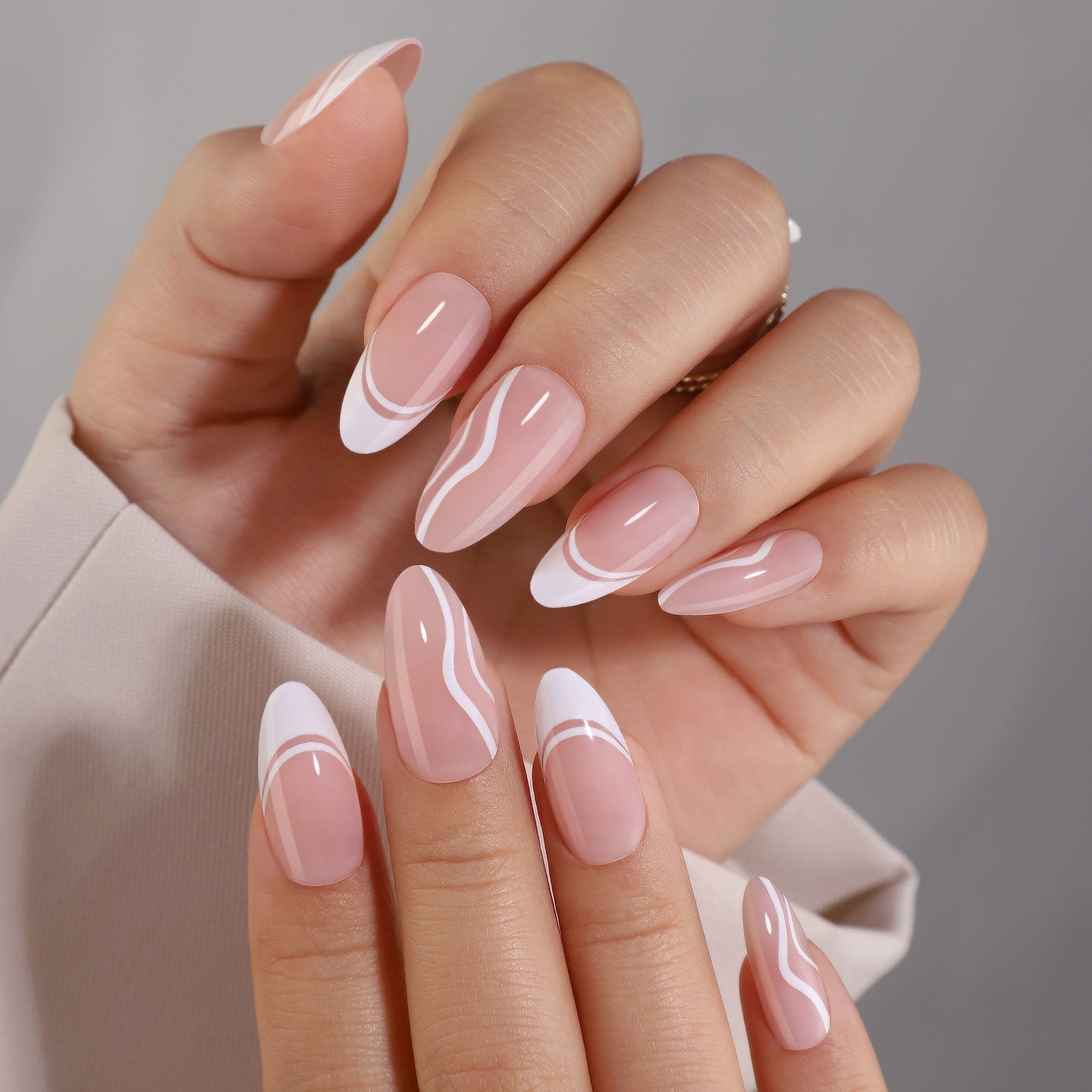
Design 10: Double French Two thin tip lines instead of one — paint a white or cream first line, let it dry, then paint a thinner contrasting color line just below it. The result is a stacked tip effect. This looks best when the second line is a metallic or contrasting color: gold below cream, black below white.
Color Block (Designs 11–15)
Color blocking uses tape or guides to create clean geometric sections of two or more colors on a single nail. The technique is mechanically simple — tape placement and color application — and produces results that look precision-cut.

Design 11: Diagonal Split Apply one base color to the full nail and let dry completely — this is essential, because partially wet polish will lift when you remove the tape. Lay nail tape diagonally across the nail, apply a second color to the exposed half, let dry until just set (about two minutes), then remove the tape slowly and at a low angle. Seal with top coat. Choose colors with enough contrast to read as two distinct sections: white and navy, dusty pink and terracotta, cream and black.
Design 12: Vertical Split The same technique as Design 11, but the tape runs vertically down the center of the nail. The left half is one color, the right half another. Works best on wider nail shapes (square, squoval). Metallic versus matte creates a textural split that looks more complex than a simple color difference.
Design 13: Color Block Accent Nail Paint all nails a single neutral (nude, white, soft grey) and use the color block technique on one nail only — typically the ring finger. This approach amplifies the graphic impact of the single blocked nail while keeping the overall look wearable. Use a bolder, more unexpected color on the accent nail: cobalt blue on a white base, deep plum on a nude base.
Design 14: Three-Section Block Divide the nail into three horizontal sections using two strips of tape placed across the nail. Apply a different color to each section. This requires some patience — paint the top section, let dry, reposition tape, paint the middle section, let dry, paint the bottom section. The math is simple and the result is a clean striped nail that looks salon-produced. Use three colors that sit naturally adjacent on a color wheel (terracotta, amber, cream) or three tones of the same color family (light pink, dusty rose, deep blush).
Still worried they will look fake? Find your shape and finish by matching your natural nail width; the right set reads polished, not pasted on.


Design 15: Geometric Block Use multiple pieces of tape to create a triangle or polygon in the center of the nail. Apply one color inside the tape shape, another color outside. This creates a floating geometric shape with clean edges. The more complex the shape, the more tape pieces you need — but the tape does all the precision work. A simple triangle at the tip is the most beginner-friendly starting point.
Sticker and Accent (Designs 16–20)
Nail stickers and decorative elements (gems, foil flakes, nail decals) require zero painting skill. They are applied directly over a base color and sealed with top coat. The design work has already been done — your job is placement.

Design 16: Single Gem Accent One rhinestone or flat-back crystal, placed at the base of the nail or at the center. Apply a base color, cure or dry fully, apply a tiny drop of nail glue or gel top coat to the placement spot, press the gem in place with the tip of an orange stick or tweezers, then seal with a layer of top coat (avoid getting top coat directly on the gem, as it can dull it). This is the simplest possible "nail art" and consistently photographs beautifully.
Design 17: Foil Flake Texture Apply base color and let it become about 80% dry — still slightly tacky. Press small pieces of gold, silver, or holographic foil onto the tacky surface. The foil adheres to the tackiness and creates an organic, broken-mirror texture. Seal immediately with top coat. No tools required beyond the foil and your fingertip for pressing.
Design 18: Nail Decal Transfer Water-slide nail decals and nail sticker sheets are available across price points and cover virtually every motif — florals, botanicals, abstract shapes, characters, text. Apply a base coat, apply the decal according to its instructions (usually water activation or peel-and-press), press flat, then seal with top coat. The design precision is entirely in the decal itself.
Design 19: Gradient-to-Glitter Paint the bottom two-thirds of the nail in a base color. While still wet, use a torn cosmetic sponge to dab glitter polish over the tip, blending downward into the wet base. Sponge application creates soft edges that a brush cannot replicate. This technique is the easiest way to achieve a gradient effect without an airbrush or specialized tools. Seal with extra top coat to smooth the glitter texture.
Design 20: Mixed Accent Nails Choose one accent technique — gems on the ring finger, foil flakes on the thumb — and apply it over a uniform base color on all nails. The consistency of the base holds the design together while the accent elements add visual interest. This approach lets beginners experiment with one technique per session without committing to a full accent-nail set.
Tools for DIY vs Pre-Designed Press-Ons
Understanding what you actually need prevents overspending on tools you won't use.

Minimum DIY toolkit for designs 1–20:
| Tool | Used For | Budget Option |
|---|---|---|
| Dotting stylus | Dots (designs 1–5) | Bobby pin blunt end |
| Striping brush | Lines (designs 3, 10) | $2–4 at beauty supply |
| Nail tape | Color blocks (designs 11–15) | Scotch tape cut narrow |
| Base coat + top coat | All designs | $3–6 total |
| Nail decals | Designs 18 | $2–8 for a sheet |
| Rhinestones + nail glue | Design 16 | $3–6 |
Total investment for the full toolkit: roughly $15–30, available entirely from a pharmacy beauty aisle or Amazon.
When pre-designed press-ons outperform DIY:
- Designs requiring steady brushwork over multiple nails (marble, detailed florals, fine gradient lines)
- Occasions where you need the nails to look professional with no practice time
- Complex multi-color patterns requiring precise repeat across all ten nails
SHANGMENG press-on sets include 32 pieces (16 sizes) in UV gel with pre-applied designs, and apply in 15 minutes. For anyone learning nail art, wearing a pre-designed set gives you a reference point — you can see the finished result and then reverse-engineer the techniques used. Our press-on nails with designs guide covers how to read the design language of pre-made sets and what to look for in quality.
Practice Tips That Actually Work
Most beginner nail art fails for one reason: insufficient drying time between steps. Paint always feels dry before it is dry. Here are the practice habits that produce consistent results:
Wait longer than you think. Between base coat and design, wait at least five minutes — ideally ten. Between design and top coat, wait until the design feels completely dry to a light touch with your knuckle, not a fingertip (fingertip pressure can still distort paint that feels surface-dry).
Practice the motion on paper or a plastic bag first. For dots and lines especially, run through the motion several times on a flat surface before approaching the nail. The muscle memory from ten practice strokes on paper translates directly to the nail.
Use thin coats. Two thin coats of any color or design element produce cleaner edges and faster drying than one thick coat. Thick coats blur detail and take dramatically longer to dry.
Accept asymmetry. Your hands are not identical. Designs on your dominant hand will look more precise than designs on your non-dominant hand. This is universal — professional nail artists acknowledge it. Symmetry within a single nail matters more than symmetry across both hands.
Work in natural light. Overhead artificial light creates shadow that makes color and edge assessment unreliable. Natural daylight shows polish color accurately and reveals edge quality clearly.
When to Skip DIY and Buy Pre-Made
There are legitimate situations where DIY nail art is the wrong choice:
Before an event with less than 24 hours to spare. Learning a new technique the night before a wedding, interview, or special occasion introduces variables you cannot control. Pre-designed press-ons eliminate those variables entirely.
When the design requires consistent repetition. A single dot accent on one nail is achievable. The same dot pattern, exactly replicated, on all ten nails, is a different skill level. UV gel press-ons use precision printing that produces identical design elements across all 32 nails in a set.
When nail health is a concern. If your natural nails are thin, damaged, or growing out from a previous enhancement, DIY painting requires repeated acetone-based removal if you want to change designs. Press-ons applied with adhesive tabs (rather than glue) come off with warm water in 15 seconds, with no acetone contact. See our beginner's guide to press-on nails for a full comparison of application methods.
When you want a specific complex design. Unique nail art designs — aurora chrome, dual-finish gradient, intricate 3D gel texture — are available as ready-made press-ons. Building the skill to replicate these at home takes months. Wearing one takes fifteen minutes.
The distinction to understand: DIY nail art is a craft hobby that takes real time to develop. Pre-designed press-ons are a beauty product that solves the style problem without the practice curve. Both are valid. You don't have to choose one permanently.
FAQ
What nail art is truly beginner-proof?
Single dots, nail stickers, and foil flakes are genuinely beginner-proof. They require no brush control, no freehand drawing, and no steady hand. A dotting stylus pressed straight down, a sticker peeled and placed, or foil patted onto tacky polish — all three produce clean results on the first attempt. Color blocking with nail tape is the next easiest step: the tape does the precision work, not your hand.
What tools do I actually need to start?
A dotting stylus, nail tape, and a striping brush cover every technique in this guide. You can substitute a bobby pin for the stylus. You can cut regular Scotch tape narrow for nail tape. The only non-negotiable is a quality base coat and top coat — without them, designs chip within a day and application becomes difficult. Total cost for a functional toolkit is under $15.
How do I stop nail polish from bleeding under tape?
Let your base coat dry completely before applying tape — at least ten minutes, ideally longer. The most common cause of bleeding is applying tape over polish that is still soft. When the tape is in place, press the edges firmly (run your fingernail along the tape edge to seal it). Remove the tape while the design coat is still slightly tacky, not fully dry — removing tape from fully dried paint often pulls the design with it.
How long does it take to get good at nail art?
Most people see noticeable improvement in dots and lines within three to five practice sessions. Color blocking becomes consistent within two or three attempts once you understand the drying time requirement. The technique that takes the most patience to develop is freehand brushwork — consistent lines and curves across multiple nails. If you want complex freehand nail art, plan for six to twelve weeks of regular practice before results look intentional.
Are press-on nails or DIY better for beginners?
Pre-designed press-ons give better immediate results; DIY polish gives better skill development. If you want to build a skill that becomes self-sufficient, DIY practice is the path. Many people use press-ons for occasions and practice DIY during low-stakes weeks.
Can I combine DIY techniques with press-on nails?
Yes — and this is actually one of the best learning strategies. Apply a solid-color press-on set, then practice accent techniques on top: add a gem, apply a sticker, use a striping brush to add a single line. You get the benefit of a clean, uniform base without the skill barrier, while developing your technique on a surface that's more forgiving than natural nail polish. Our guide on how to apply press-on nails covers the base application, and abstract nail art ideas shows what's achievable with pre-designed sets when you're ready for more complexity.
Start with the Right Foundation
Learning nail art is easier when you have a clean, consistent base to practice on. SHANGMENG press-on nail sets come in 32 pieces across 16 sizes — solid color options give you a stable surface for practicing every technique in this guide.
Shop beginner-friendly SHANGMENG press-on sets →

Nail art for beginners is not about producing salon-quality results on the first session. It is about understanding which techniques match your current skill level, executing them correctly, and building from there. The 20 designs in this guide represent the first twelve to eighteen months of a nail art practice — achievable now, extendable as your confidence grows.
Pick one design from one category. Practice it three times. Then move to the next.
Explore Pre-Designed Options While You Practice
Not every occasion allows time to practice. Browse SHANGMENG's pre-designed press-on sets for designs that go beyond beginner techniques — chrome effects, gradient prints, and detailed nail art in UV gel, ready to apply.
See press-on nails with designs →
Related reading: - Unique Nail Art Designs: 25 Ideas for Every Skill Level - Abstract Nail Art: 25 Modern Press-On Designs for 2026 - How to Apply Press-On Nails: 9 Steps to Last 2 Weeks
Share