


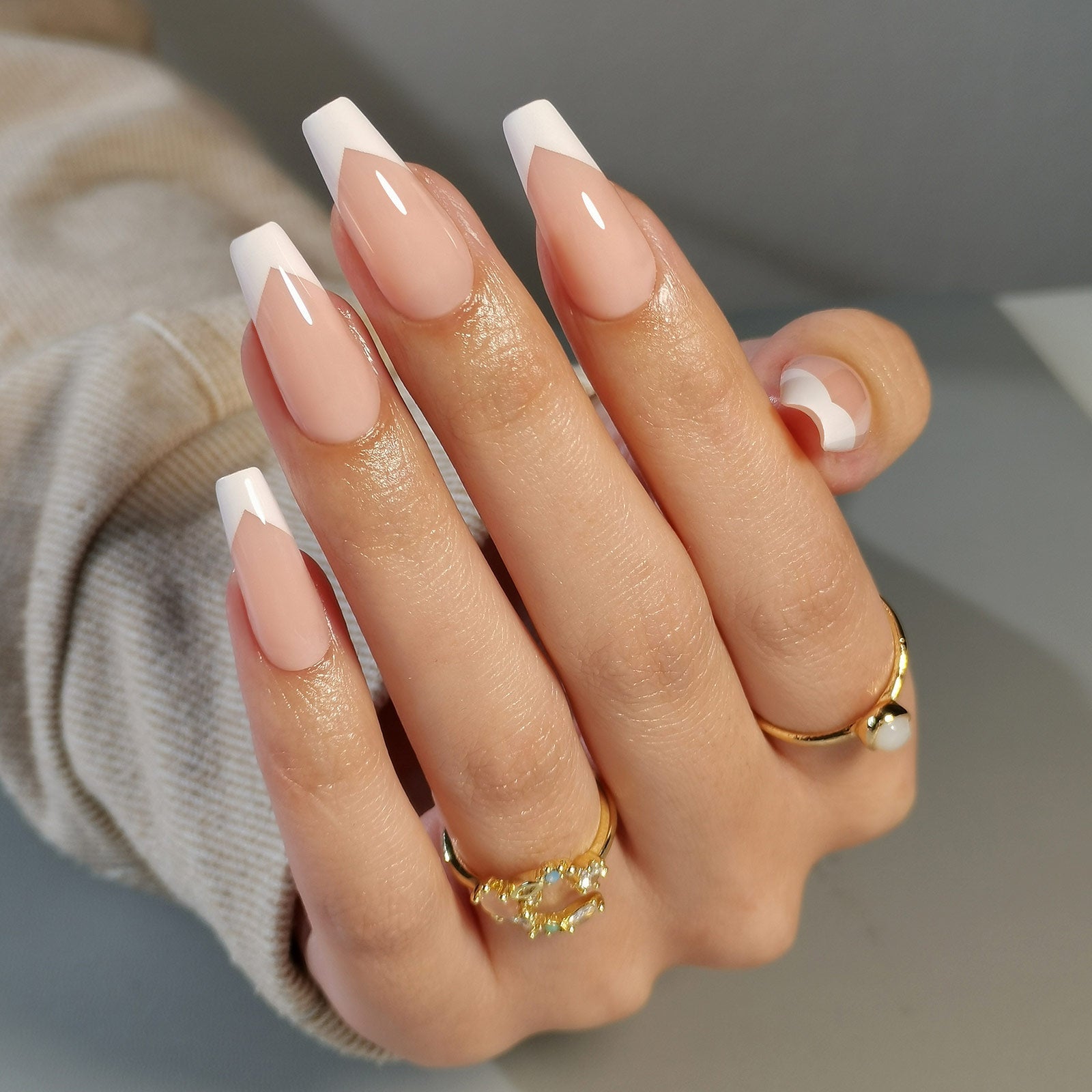
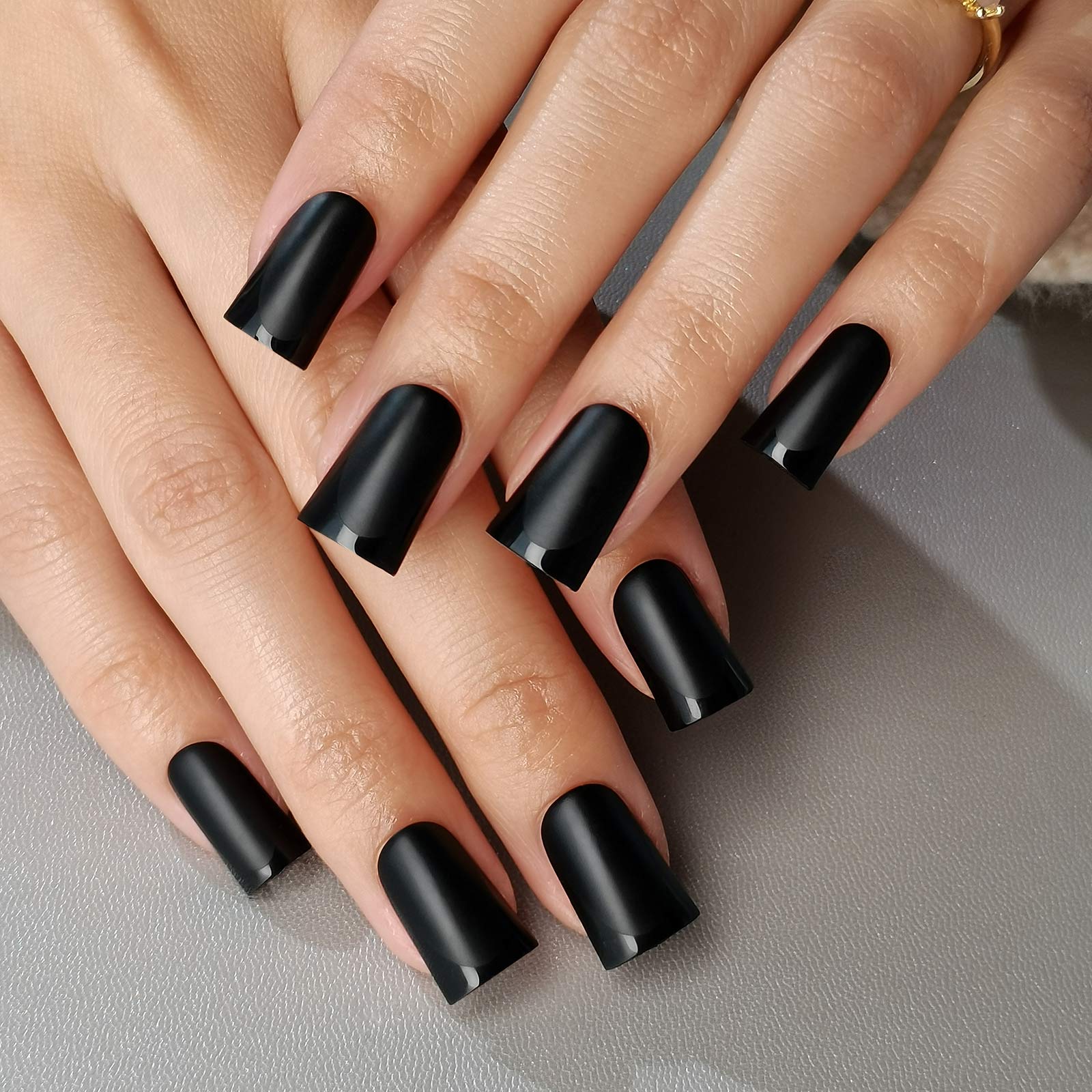


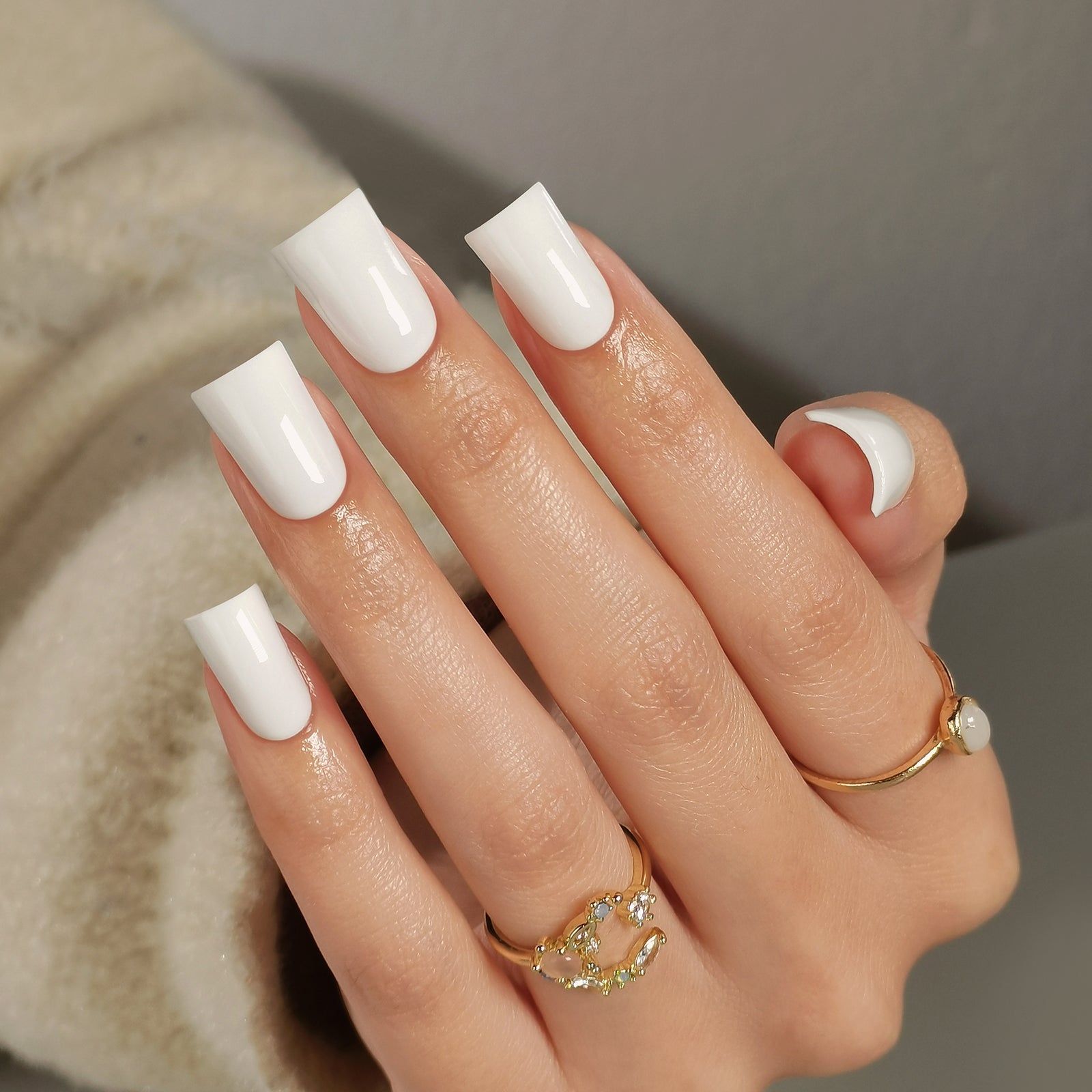
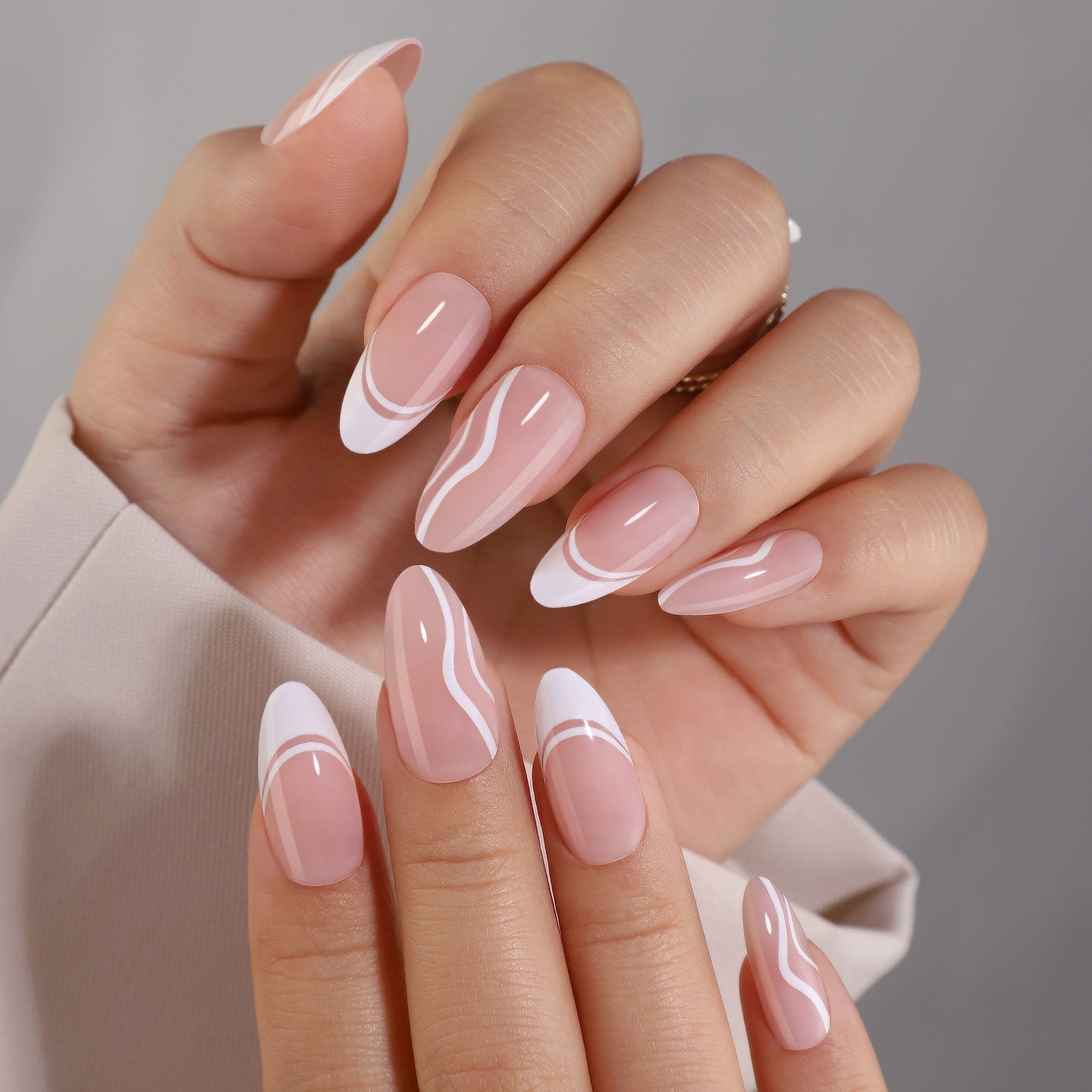




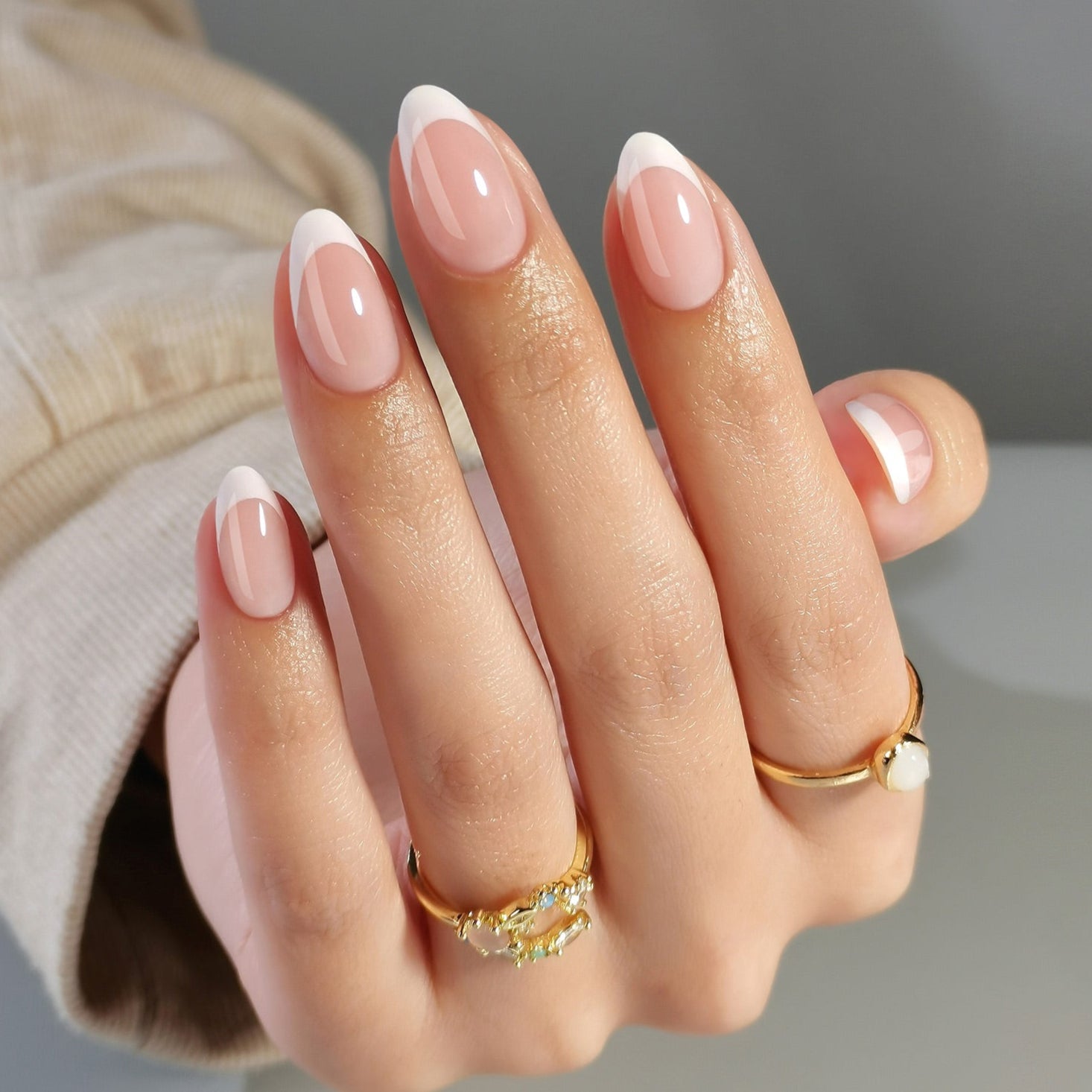


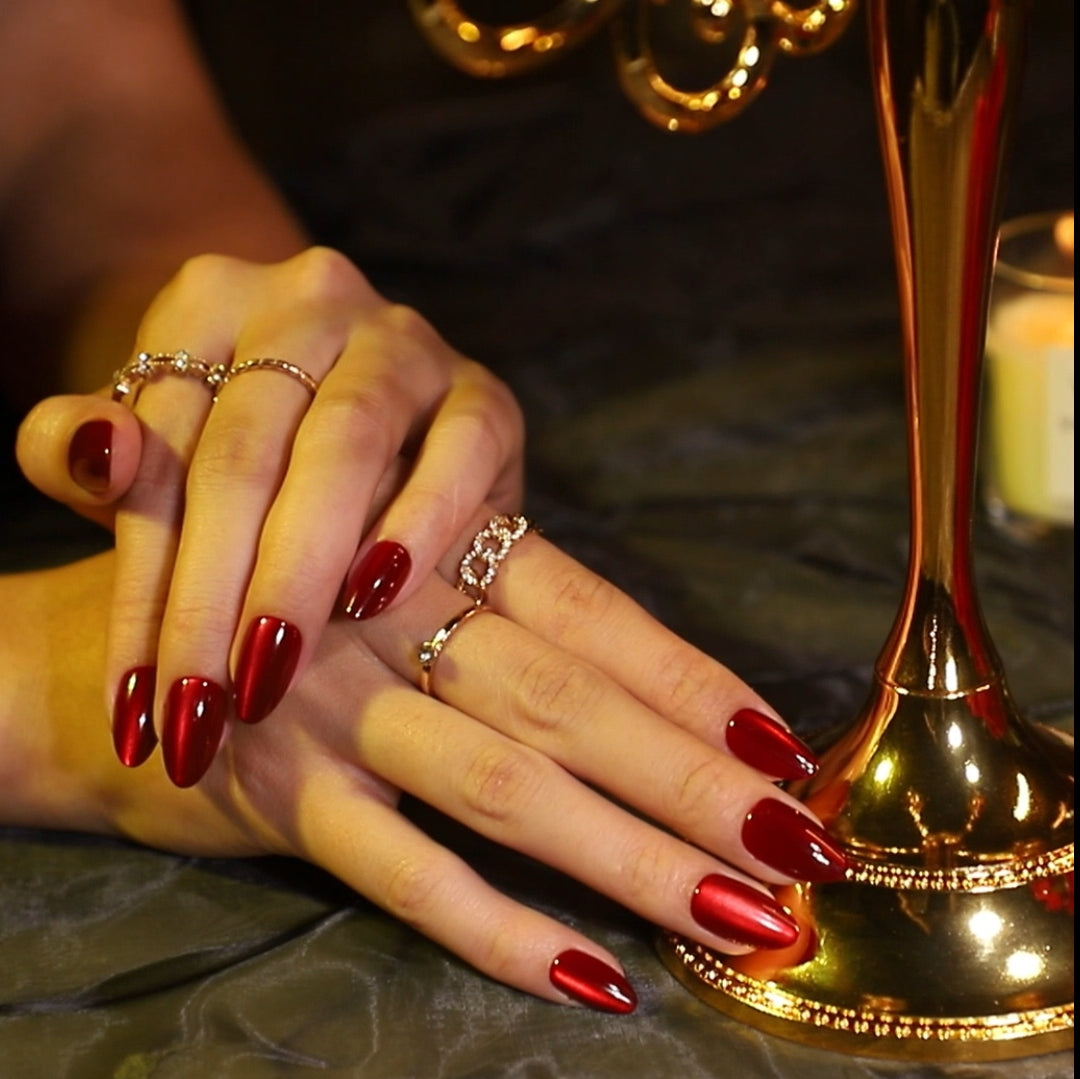

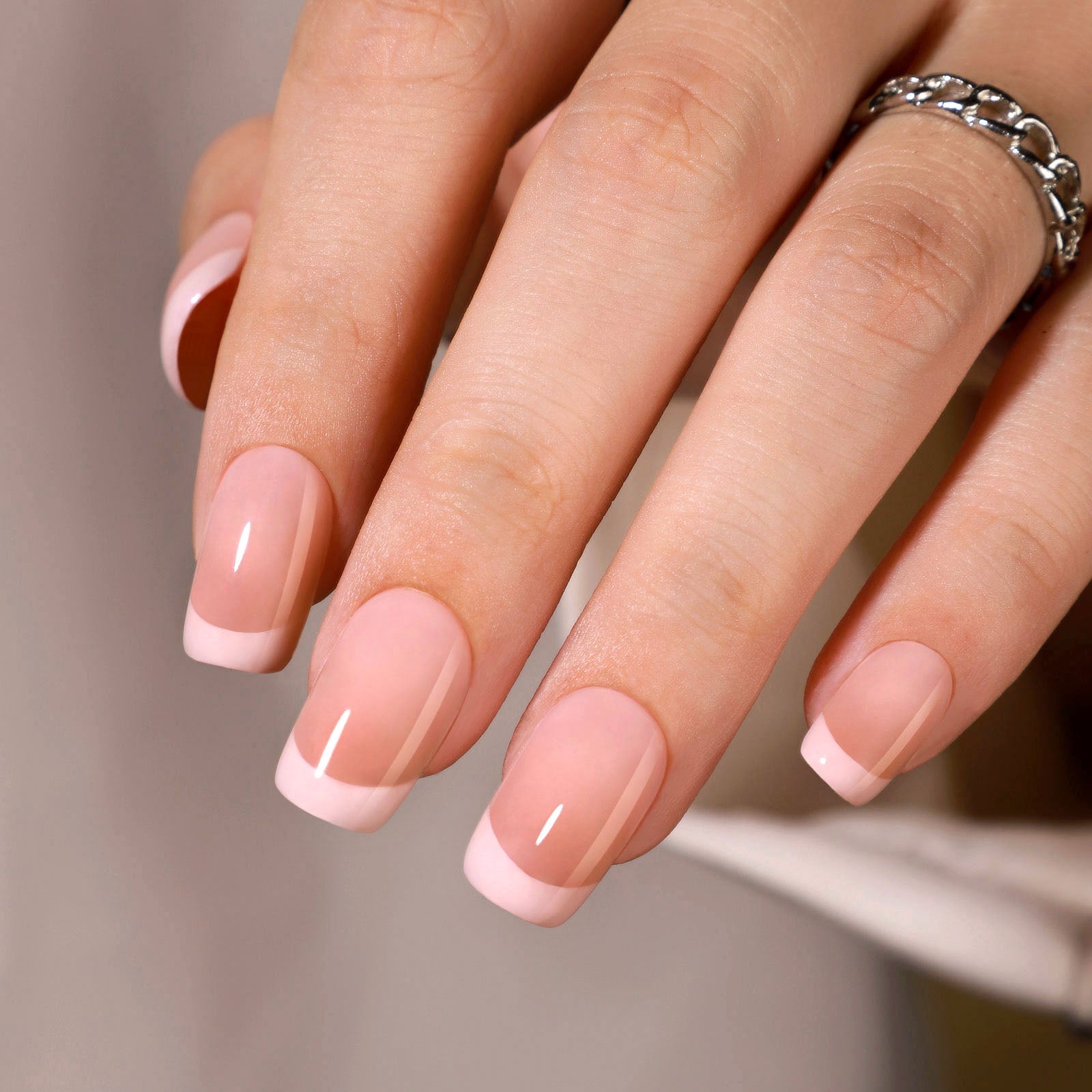


How to File Press-On Nails to a Shorter Length
By Paul, SHANGMENG Press-On Application Specialist.
Key Takeaways: - Yes — soft gel press-on nails file easily and cleanly, behaving similarly to natural nail material. - Use 180-grit for length reduction, then 220–240 grit to smooth the edge. Avoid metal files. - File before applying to your natural nail — it is easier to hold and control. - You can reduce most sets by 3–5mm without affecting the nail structure. Beyond that, the nail bed depth becomes the limiting factor. - Filing a press-on also lets you change shape: square to round, coffin to oval, almond to soft squoval.
The most common reason people end up with press-on nails that do not quite work: the set came in long and the length is not right for the occasion, the workplace, or the lifestyle. Maybe you ordered a coffin set in medium-long and one look at them tells you they will not survive three days of typing or cooking. Maybe the shape is right but the length needs to come down by 3mm.
The question people search constantly: can you actually file press-on nails shorter, or does that damage them?
For soft gel press-on nails — the format used by SHANGMENG and most quality press-on sets — the answer is yes, without qualification. Soft gel files exactly like natural nail. The material is designed for post-application shaping in salon contexts, which means its behavior under a file is well-understood and controlled.
This guide covers the tools you need, how to read grit numbers, a six-step process for shortening and shaping, how short you can realistically go, and the mistakes that cause press-ons to crack, peel, or look unfinished.
For baseline nail-care hygiene, the American Academy of Dermatology recommends keeping nails shaped and free of snags with an emery board, and Mayo Clinic gives the same gentle-trim, rounded-tip advice for healthy fingernails.
Not sure which shape, length, or size fits your natural nails?
Can You Actually File Press-On Nails Shorter?
The short answer is yes, with one important distinction by material type.

Soft gel press-ons — the type with a flexible, slightly rubbery texture — file cleanly and smoothly. The soft gel formula is essentially the same family of material used in salon soft gel manicures, which are routinely filed and shaped with a hand file. There is no cracking, no delamination, no shattering. The material removes predictably and the edge finishes smoothly. If you have never filed a soft gel press-on, the experience is closer to filing a thicker natural nail than anything else.
Hard acrylic press-ons — older-style plastic press-ons with a rigid, firm texture — file less pleasantly. They can crack under lateral pressure, shatter if filed aggressively at the free edge, and tend to produce coarser edges that require more finishing work. They can still be shortened, but with more care and lower patience.
The practical rule: If your press-on bends slightly without snapping when you hold it at both ends and apply light pressure, it is soft gel and it files easily. If it is completely rigid, treat it as hard acrylic and file more carefully.
For sizing guidance on selecting the right press-on nail size before you even start filing, see How to Choose Press-On Nail Size.
Tools You Need

Files and Buffers
The most important variable in filing press-on nails is grit number. Grit refers to the coarseness of the abrasive particles on the file. Lower number = coarser = removes material faster. Higher number = finer = smooths and finishes.
| Grit | Use |
|---|---|
| 100–150 | Too aggressive for soft gel — risk of over-removal and heat friction |
| 180 | The right grit for shortening length. Removes soft gel efficiently without cracking risk. |
| 220–240 | Edge smoothing. After length reduction, this grit refines the shape and removes any roughness. |
| 280–320 | Finishing — removing the fine scratch marks from 220 grit for a cleaner edge before top coat. |
| 400–600 (buffer block) | Polishing — getting the free edge smooth enough to look professional. Optional for press-ons. |
What to buy: A standard nail file set with 180/240 grit options covers everything. You do not need specialty salon files.
Avoid metal nail files for soft gel press-ons. Metal files are too aggressive and create micro-tears in the gel surface. The edge appears smooth but develops small cracks over time that spread.
Nail Clipper (Optional)
If you need to remove more than 5mm of length, a nail clipper used gently before filing significantly reduces the filing time. The clipper does not produce a clean edge on press-on materials — it is only for rough length removal. Always follow clipper use with filing to refine the edge.
Do not use scissors. The lateral pressure of scissors tends to cause cracking or delamination in gel materials, particularly at the free edge.
Glass Nail File (Alternative)
A glass nail file is an excellent alternative to a standard emery board for soft gel press-ons. The glass surface is gentle, produces a very clean edge, and lasts significantly longer than paper-emery files. The tradeoff is that glass files are slower — they are better for fine shaping than for rapid length removal. Use a standard 180-grit emery for bulk removal, then a glass file for edge finishing.
Step-by-Step: How to File Press-On Nails Shorter
The six steps below apply to filing soft gel press-ons to a shorter length before application — which is the recommended approach. Filing press-ons before applying them to your natural nail gives you better control over the nail angle, lets you hold the nail securely, and eliminates any risk of filing your natural nail accidentally.

Step 1: Size Your Nails First
Before touching a file, complete the sizing process. Hold each press-on over your natural nail and confirm the width matches. It is easy to file a nail to a perfect length only to discover it was not the right nail for that finger — wasting both the nail and the time.
Lay out the sized nails in order (thumb to pinky, both hands) before starting. See nail shape and length guides for reference on how length relates to shape proportions.
Step 2: Mark Your Target Length
Hold the press-on over your natural nail and identify visually where you want the free edge to end. If you have a white eyeliner pencil or fine marker, you can make a light line across the press-on surface at the target length. This prevents you from over-filing by giving you a visible reference point.
Alternatively, hold the press-on alongside a nail that is already the right length as a reference. This is particularly useful when shortening a full set to a consistent length across all nails.
Step 3: Optional Rough Trim with Clipper
If you are removing more than 4–5mm of length, use a nail clipper to take off the bulk first. Hold the press-on flat with the concave side up. Position the clipper jaw so the blade line is 1–2mm above your target length (you will lose this extra material in the filing step). Apply even pressure across the clipper jaw and cut smoothly — avoid rocking motions.
Inspect the clipped edge. It will be rough and slightly irregular. This is expected. The file will refine it.
Step 4: Length Filing with 180-Grit
Hold the press-on between your thumb and index finger with the concave (inner) surface facing your palm. This stabilizes the nail against your fingers while you file.
File in one direction — from the outer edge toward the center, in downward strokes toward the free edge. Do not saw back and forth. The back-and-forth motion causes heat friction and can create small tears at the edge of soft gel material.
Filing angle: Hold the file at approximately 45 degrees to the free edge. Filing straight across (parallel to the nail tip) shortens length cleanly. Filing at an angle shapes the corners simultaneously.
Work in short strokes, checking your progress every 10–15 strokes. Remove the file, hold the press-on over your natural nail to check the length, then continue if needed. It is easier to file more than to undo over-filing.
Still worried they will look fake? Find your shape and finish by matching your natural nail width; the right set reads polished, not pasted on.


Continue until you reach 1mm above your target — the 220-grit step will remove the final amount.
Step 5: Edge Refinement with 220-Grit
Switch to your 220-grit file or buffer. Using the same downward one-direction strokes, refine the edge to your exact target length. The finer grit removes less material per stroke, giving you more precise control for the final millimeter.
After reaching target length, use the 220-grit to slightly bevel the free edge — tilt the file slightly so it angles under the nail edge. This micro-bevel removes the sharp corner created by straight filing and gives the free edge the rounded, finished profile you see on salon-finished nails.
If you have a 280–320 grit buffer, run it lightly over the free edge to remove any remaining scratch texture.
Step 6: Check Shape and Symmetry
Hold all five nails for one hand up together and check that the length is consistent and that the shape is symmetrical from nail to nail. Slight inconsistencies are easy to correct at this stage with a few additional strokes on the longer nail.
Check the corners: are they smooth and rounded (if you want an oval/round/almond finish) or clean and sharp (if you want square or coffin)? Adjust with the 220-grit file as needed.
Once satisfied, wipe the surface of each nail with a dry cloth to remove any gel dust before application.
How Short Can You Go?

Most soft gel press-on nails can be shortened by 3–5mm without any structural concerns. Beyond that, you are approaching the nail bed — the rounded, slightly concave portion of the press-on that sits over your natural nail plate. The nail bed is generally 10–14mm depending on set size and design.
The practical limit: You can safely file until you reach the point where the press-on surface begins to curve away from flat. The visible transition from flat free edge to curved bed is the visual cue for the structural limit. Filing into the bed section reduces the surface area available for adhesion and can cause the press-on to lose structural rigidity.
For short press-on nail applications, choosing a set designed for short lengths from the outset is always preferable to heavily filing a long set — the nail bed proportions are different and the result looks more natural. See Fake Nail Lengths Guide for a full comparison of how length affects the look and wearability.
After application: You can also file press-on nails after applying them to your natural nail, using the same 180/220 grit sequence. This requires more care to avoid touching your natural nail, and the angle is less convenient. Keep the file moving in one direction only and check frequently.
Filing to Change Shape
Shortening length and changing shape are often done simultaneously — and this is where filing press-on nails becomes genuinely useful rather than just corrective.

Square to Round or Oval
A square nail has straight sides and a flat top. To move it toward round: file the corners diagonally at 45 degrees first, then use the 220-grit buffer to smooth the corner into a curve. Work symmetrically — the same number of strokes on each corner. Check the symmetry by holding the nail at eye level.
Round is achieved by continuing to smooth the corners until there is no sharp angle remaining. Oval goes a step further — gently filing the sides of the nail very slightly to narrow the width at the free edge, creating a tapered effect.
Coffin to Oval or Squoval
A coffin nail has a flat tip and tapered sides. Filing straight across the flat tip while simultaneously rounding the corner edges transitions coffin toward a soft squoval — straight sides with rounded corners. For full oval, you would also need to taper the sides, which removes more material and shortens the nail slightly more than pure length reduction.
Almond to Soft Oval or Round
An almond nail is already tapered and pointed. Rounding the tip — using the 220-grit buffer in circular motions across the point — softens the almond to a soft oval. The degree of rounding determines how close to round the result is.
Consult Nail Shape Chart: Visual Guide for a side-by-side reference of shapes and the filing movements that create them.
Common Filing Mistakes

Sawing Back and Forth
The most common and most damaging filing mistake. Back-and-forth filing generates heat from friction and creates micro-tears at the gel edge. The result looks rough immediately and develops visible edge damage over time. One-direction strokes only.
Filing Too Aggressively with Coarse Grit
Using 100 or 120 grit on soft gel removes material too quickly and unevenly. You pass your target before realizing it. Always start with 180 for soft gel — it is the correct balance between efficiency and control.
Filing After Applying to the Natural Nail at Wrong Angle
When filing press-ons already on the finger, the natural tendency is to angle the file down toward the fingertip — which files the underside of the free edge rather than the top. Keep the file angled slightly upward and work the free edge from the top surface to maintain clean shape.
Ignoring Symmetry
Left-right asymmetry is the most visible quality issue in a DIY press-on manicure. After any filing session, hold all five nails for one hand in a line and check that corners, length, and shape match consistently from nail to nail. Correct any outlier before applying.
Skipping the Finishing Step
Filing with 180 grit only and skipping the 220-grit finishing step leaves a rough, matte edge texture. This is not just a cosmetic issue — rough edges catch on fabric, hair, and other surfaces, increasing stress on the adhesive bond and reducing wear time. Always finish with 220 or finer.
Filing Natural Nail Accidentally
If filing press-ons after application to the finger, accidental contact with the natural nail tip below the press-on free edge removes natural nail material. This is avoided by filing before application whenever possible. When you must file after application, use a guide — place a piece of tape across the area where the natural nail tip might be exposed.
Related Guides
- How to Choose Press-On Nail Size — Getting the right width fit before you start filing.
- Nail Shape Chart: Visual Guide — Reference for all major shapes and how filing angle creates them.
- Fake Nail Lengths Guide — How different lengths look and wear day-to-day.
- Best Short Press-On Nails — When choosing short from the start is better than filing long.
- High-Quality Press-On Nails Guide — What makes soft gel file better than cheaper alternatives.
Frequently Asked Questions
Can you file press-on nails after they are already on your finger?
Yes. Use a 180-grit file first for length, then 220-grit to smooth the edge. The technique is the same as filing before application, but the angle is trickier because the nail is on your finger rather than held flat. File in one direction only, and keep the file slightly angled upward so you are working the top of the free edge rather than the underside. The risk of accidentally catching your natural nail below the press-on is the main reason most people prefer to file before application whenever possible.
Will filing damage soft gel press-on nails?
No, if done correctly. Soft gel is designed to be filed — it is the same material category used in salon soft gel services that are routinely filed into shape before curing and refinished with a file before gel removal. Filing with the correct grit (180 for length removal, 220 for edge finishing) produces clean results without cracking, delamination, or structural damage. The mistakes that damage press-ons during filing are: using a metal file, using coarse grit aggressively (below 150), sawing back and forth, or filing into the nail bed section where the press-on curves away from flat.
How do you make press-on nails shorter without a nail file?
A nail clipper is the fastest option for rough length removal on soft gel press-ons. Hold the press-on concave-side up and clip straight across at 1–2mm above your target length, then smooth the clipped edge on any textured surface — a 220-grit buffer, an emery board, or even a fine-grit sanding block. The result without a proper file will be functional but rougher than a filed edge. For a clean finish, some kind of abrasive finishing step is always needed after clipping. Scissors are not recommended — lateral pressure from scissors causes cracking in gel materials.
Can you file press-on nails into a different shape?
Yes — and this is one of the most useful things you can do with a set that has the right color but wrong shape. The most common transformations: square to round (file the corners at 45 degrees, then smooth), coffin to squoval (file the flat tip into a curve), almond to oval (round the pointed tip), and long coffin to short coffin (straight across length reduction followed by cleaning up the corners). What you cannot do by filing is add width — you can only remove material. If the shape you want requires the nail to be wider, you need a different press-on rather than a filed version of the current one.
What grit nail file should I use for press-on nails?
180-grit is the correct grit for length reduction on soft gel press-ons — aggressive enough to remove material efficiently but not so coarse that it creates cracking or over-filing. After reaching your target length, switch to 220 or 240 grit to refine the edge and remove any texture left by the 180-grit strokes. If you have a fine buffer block (280–320 grit), run it lightly along the free edge as a finishing step. Avoid anything below 150 grit — coarse files are appropriate for hard acrylic in salon settings but are too aggressive for the softer, more flexible material of gel press-ons.
Should you file press-on nails before or after applying them?
Filing before application is generally recommended for most people. Reasons: (1) you have complete access to the nail from all angles without worrying about the natural nail underneath; (2) the nail is easier to hold and control when it is not on your finger; (3) you can test fit the shaped nail against your finger and make further adjustments before committing to adhesive. The exception is minor shaping after application — smoothing a small rough spot or evening out a corner that looks slightly asymmetrical after applying. For these small adjustments, gentle 220-grit work after application is appropriate. Significant length reduction is always better done before applying.
Share