


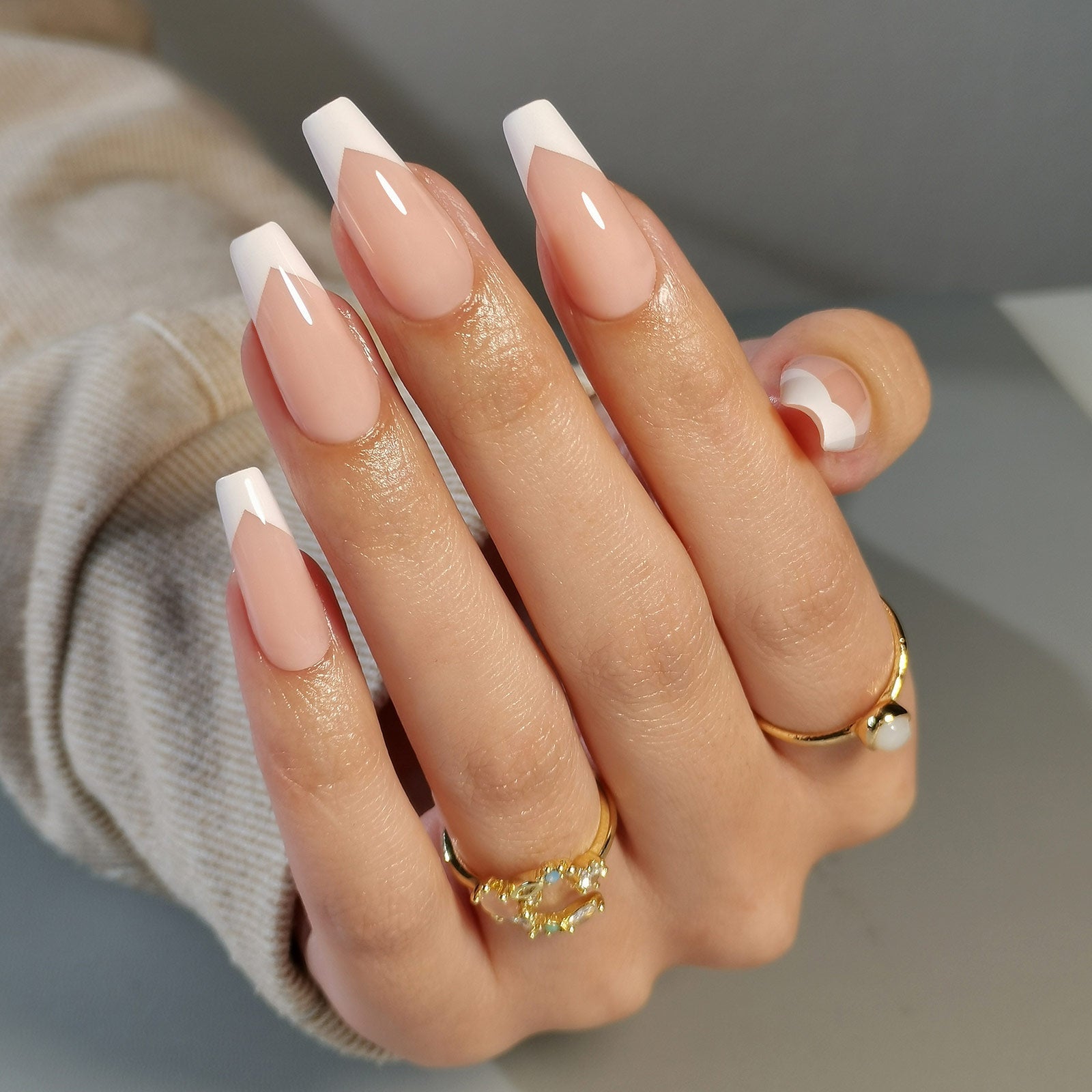
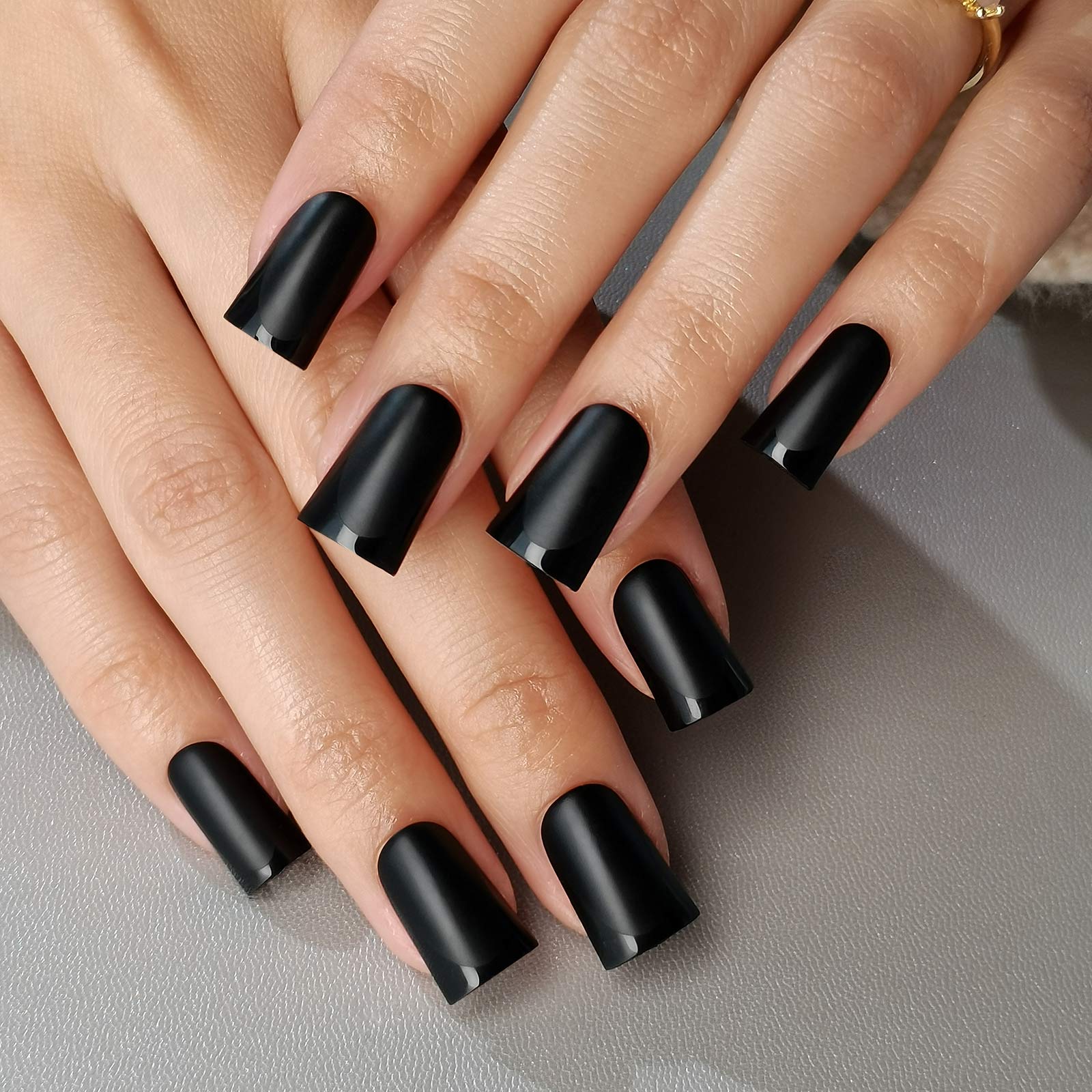


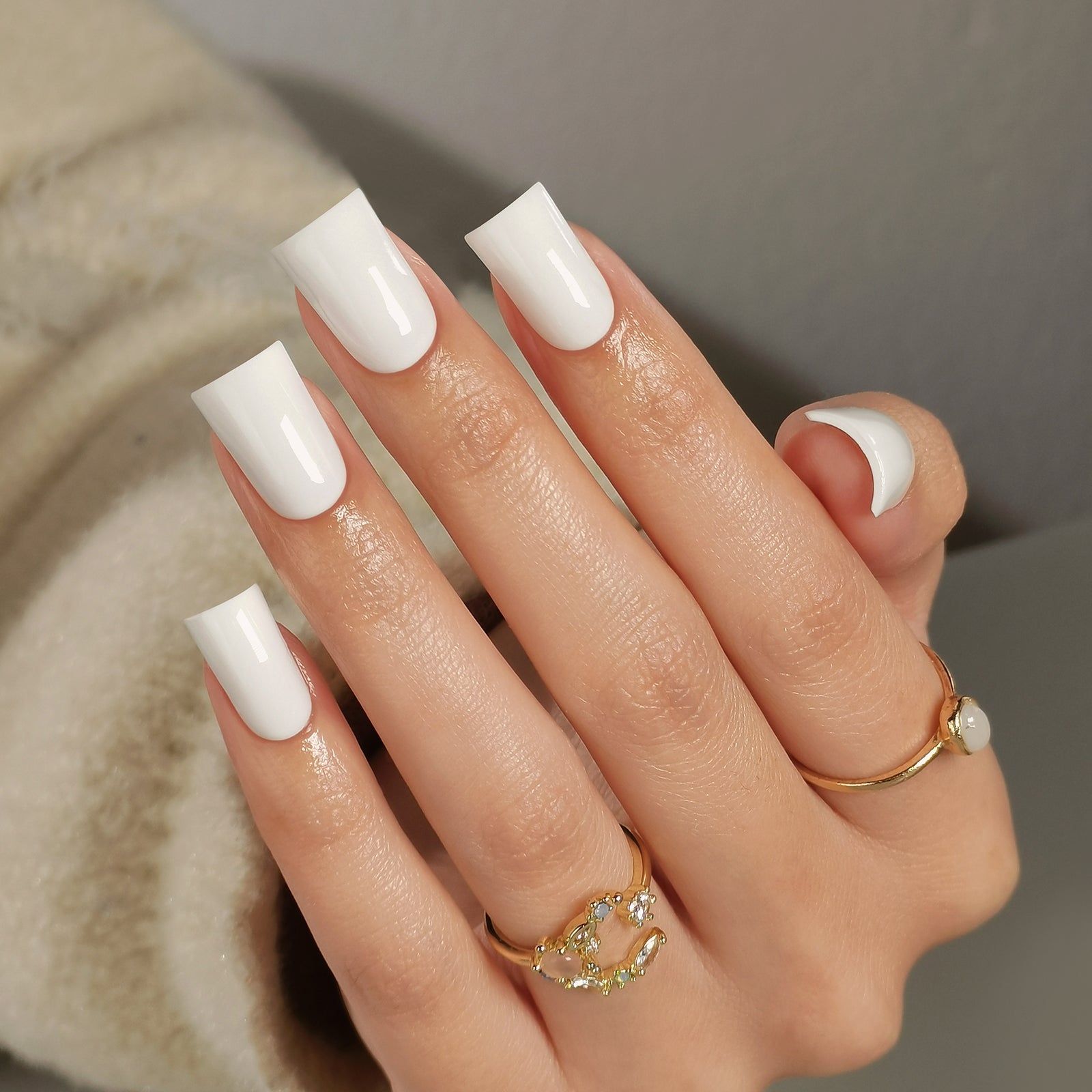
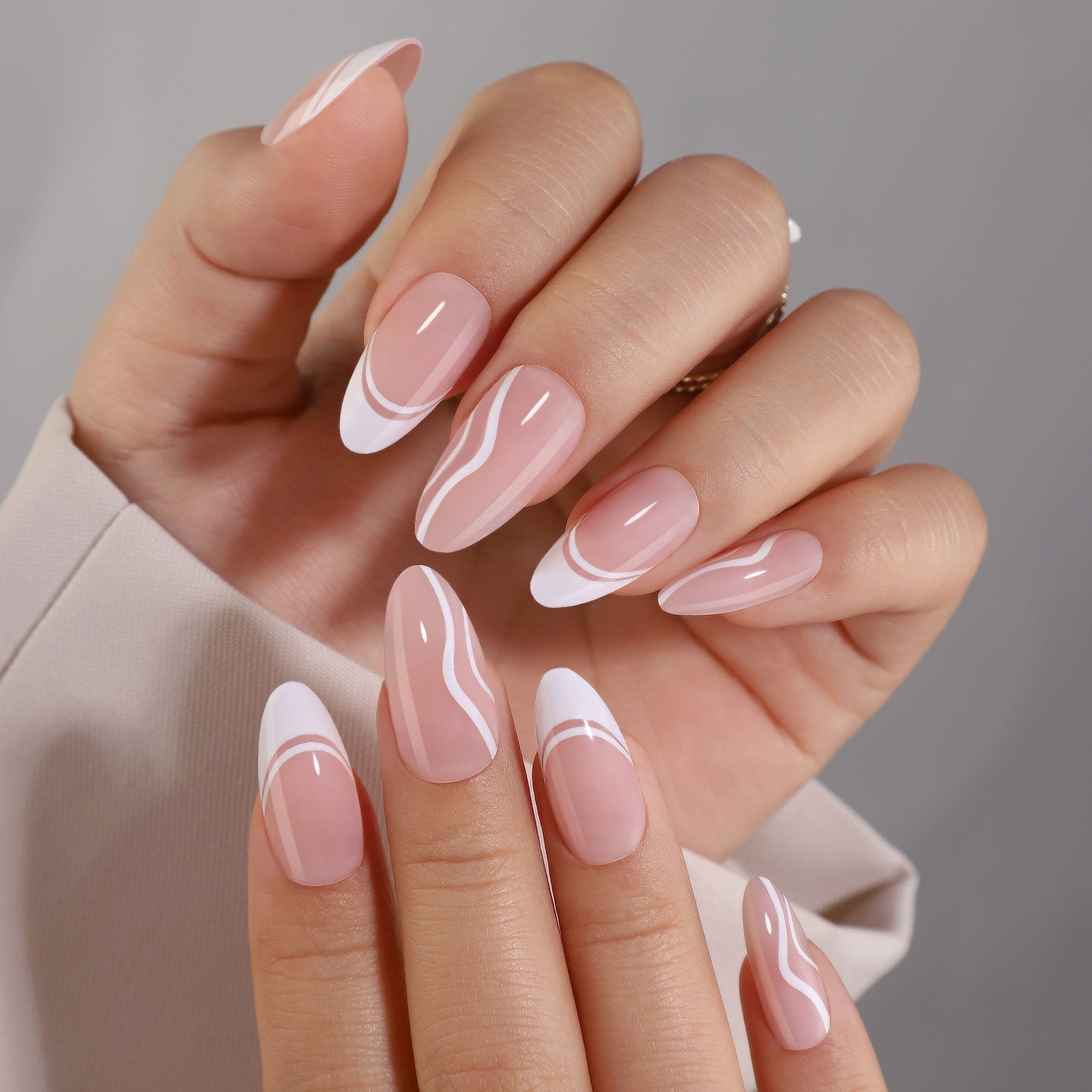









What Makes Press-On Nails High Quality? A Buyer's Guide
By SHANGMENG Team — 20+ years manufacturing press-on nails.
High quality press-on nails are soft gel artificial nails manufactured at 0.5–0.8mm thickness with UV-cured finish, a C-curve that matches natural nail anatomy, and 16+ size options — the combination that separates salon-grade sets lasting 10–14 days from ABS plastic alternatives that lift within 3–5 days. Price is an unreliable indicator; these seven manufacturing specs are the real differentiators.
A salon gel manicure can cost $60 or more before tip; a well-built $12–$15 press-on set is only a bargain if the material, curve, and finish are right.
Key Takeaways: - Material is the single biggest quality driver — soft gel lasts 1–2 weeks; ABS plastic averages 3–5 days - Thickness matters: 0.5–0.8mm is the sweet spot for durability without the "fake nail" look - A proper C-curve fit prevents premature lifting more than any adhesive upgrade - 16+ sizes in a single kit is the clearest signal a brand has invested in real fit engineering - A complete prep kit (pad + file + cuticle stick) separates professional sets from nail-only impulse buys
Not sure which shape, length, or size fits your natural nails?
Why "Quality" Isn't About Price
A $40 press-on set from a hyped DTC brand can start peeling at day two if the material is wrong. A $12 set with the right soft gel formulation and a proper C-curve can last a full two weeks. The difference has nothing to do with the price tag.
This disconnect exists because press-on nails are easy to package attractively but difficult to manufacture well. A brand can spend its budget on influencer seeding and pastel packaging while sourcing ABS plastic nails at the lowest possible cost. Meanwhile, a manufacturer with decades of mold tooling experience can offer a technically superior product for less.
Before you shop by price — or by aesthetic — these are the seven markers that actually determine how long your nails will look good and stay on.
7 Quality Markers That Actually Matter
1. Material: Soft Gel vs. ABS Plastic
This is the most consequential decision in the entire supply chain. ABS plastic is rigid, lightweight, and inexpensive to mold — it's also the reason press-on nails developed a reputation for looking cheap and snapping off at inconvenient moments.
Soft gel (also called HEMA gel or flexible gel) is chemically closer to the gel used in professional salon services. It has enough flex to absorb impact without cracking, conforms more closely to the natural nail plate, and has a translucency that mimics the depth of real nails. Under UV light, the finish bonds at a molecular level rather than simply drying on the surface.
What to look for: The words "soft gel," "flexible gel," or "gel-based" in the product description. If a listing only says "nail tips" or "artificial nails" without specifying gel, assume ABS. For a deeper breakdown of the gel difference, our guide to soft gel manicure vs. press-on nails covers the chemistry side in detail.
2. Thickness: The 0.5–0.8mm Sweet Spot

A nail that is too thin (under 0.4mm) is fragile — it flexes under typing pressure and micro-cracks around the edges. A nail that is too thick (over 1.0mm) creates an obvious ledge at the cuticle line that reads as unmistakably artificial.
Professional-grade sets are engineered to the 0.5–0.8mm range. This provides structural integrity while keeping the profile low enough to look like a natural, polished nail. The thickness should taper toward the free edge rather than staying uniform, mimicking the natural thinning of a real nail tip.
Why this matters in practice: Thick nails catch on fabric, feel heavy, and telegraph immediately that you're wearing press-ons. Thin nails break during application or while opening a car door. The right thickness is the one you forget you're wearing.
3. Nail Curvature: Why the C-Curve Determines Wear Time
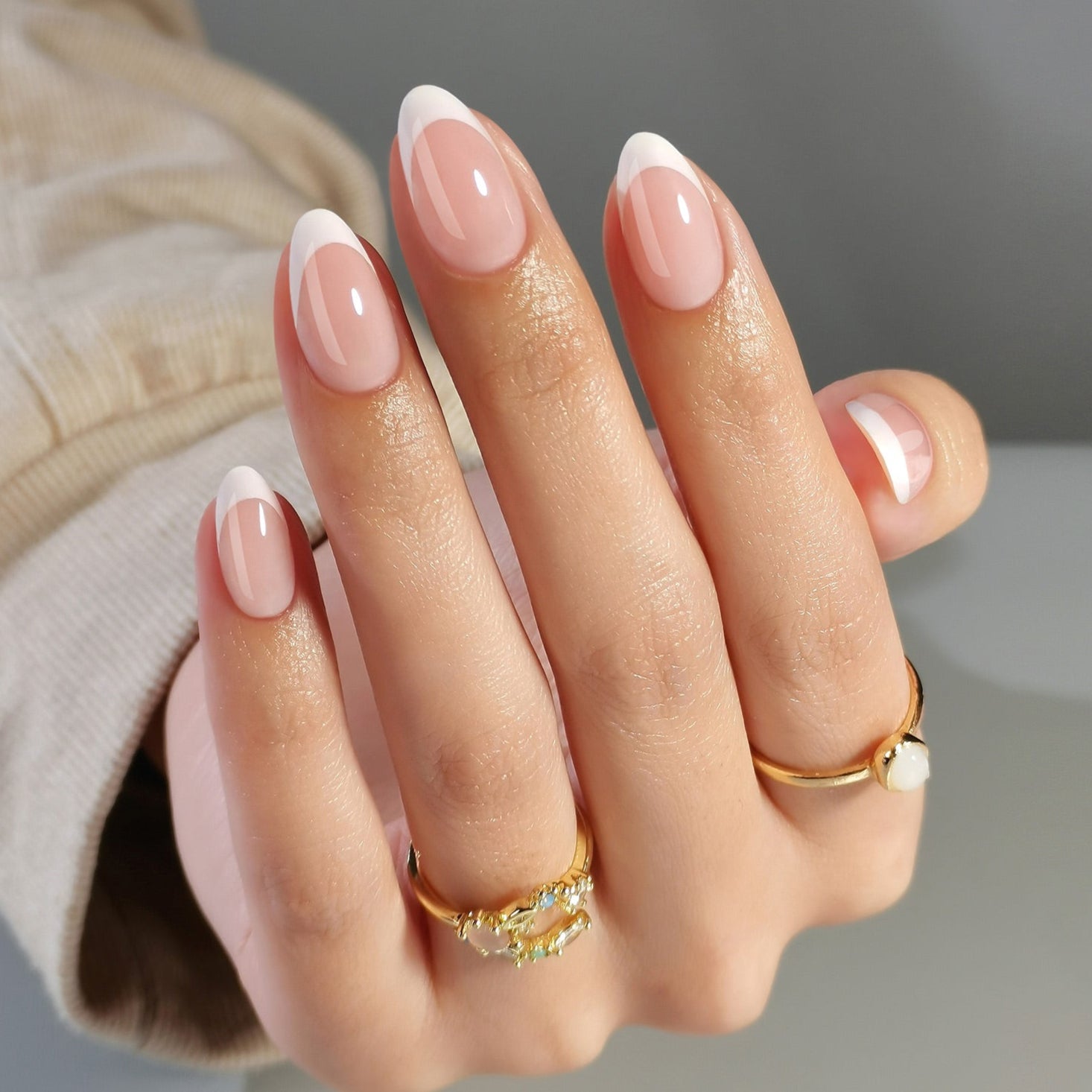
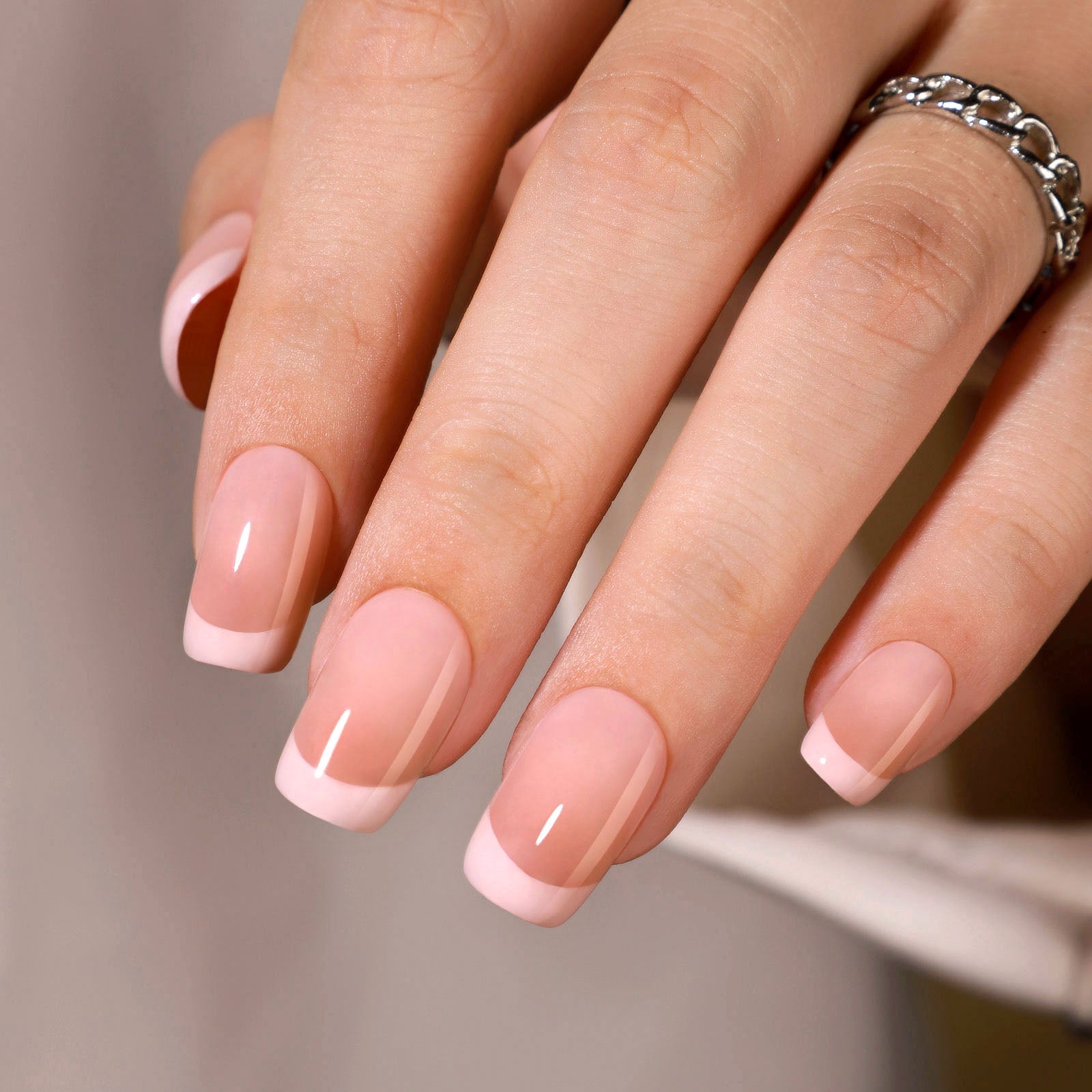
The C-curve refers to the lateral arch of the nail — how much it curves from side to side across the width. Most natural nails have a moderate C-curve; nails that are completely flat are rare and usually associated with specific nail conditions.
When a press-on nail's C-curve doesn't match the wearer's natural nail plate, there are air gaps at the sides. Those gaps let moisture and debris underneath the nail, breaking down the adhesive bond from the inside. This is why nails that look perfectly applied on day one start lifting by day three — not because the glue failed, but because the fit was wrong from the start.
High-quality manufacturers produce nails in multiple C-curve depths, or use a medium-deep curve that fits the majority of nail types. Bargain sets use a single mold for all sizes, which means only a narrow range of nail anatomies will get a proper seal.
4. Surface Finish: UV-Cured vs. Painted

Color and shine on press-on nails can be applied in two ways: painted on with standard nail lacquer, or locked in with a UV-cured gel process.
Painted finishes chip the way regular nail polish chips — starting at the tips within 3–4 days, accelerating with hand washing. UV-cured finishes are chemically bonded to the gel nail body. The color doesn't sit on top of the nail; it is part of the nail. The result is chip resistance that holds up through multiple days of dishwashing, typing, and normal wear.
A simple field test: press your thumbnail firmly along the top edge of a nail. A painted finish will show micro-scratches immediately. A UV-cured finish will show nothing.
Production reality: UV curing requires dedicated equipment and adds time to the manufacturing process. It's a reliable proxy for a brand's overall quality investment — brands that cut corners on finish almost always cut corners elsewhere. According to Allure's nail product testing methodology, UV-cured press-on finishes withstand 15+ days of normal wear without visible chipping, versus 4–6 days for painted finishes under the same conditions.
5. Size System: 16+ Sizes vs. One-Size

A press-on nail that doesn't cover your nail edge-to-edge will lift. A nail that's too wide creates pressure points that accelerate peeling. Nail width varies significantly across a single hand, and it varies even more across different people's hands.
Entry-level sets come in as few as 5 generic sizes. Mid-range sets offer 10–12 sizes. Professional-grade sets offer 16 or more distinct sizes with the full kit containing duplicates for each hand (32 total nails for 10 fingers).
Sixteen sizes sounds like a lot until you measure the difference between adjacent sizes in a narrow set — sometimes 2–3mm per step. A 16+ size system typically steps in 0.5–1mm increments, which means a nail that actually matches your nail bed width instead of approximating it.
Choosing the right size makes more difference to wear time than any other single factor — including the quality of the adhesive.
Still worried they will look fake? Find your shape and finish by matching your natural nail width; the right set reads polished, not pasted on.


6. Adhesive System: Dual Options, Cosmetic-Grade
Quality kits include two adhesive options: nail glue and adhesive tabs. This matters because different wearers have different needs.
Nail glue (cyanoacrylate, cosmetic grade) bonds strongly and is appropriate for wear times of 1–2 weeks. Adhesive tabs (double-sided gel strips) are repositionable, gentle on the natural nail, and ideal for event wear or wearers who want to reuse their nails. A brand that provides both is catering to real-world use cases; a brand that provides only tabs is optimizing for initial "wow, it's gentle" reviews at the expense of wear time.
What "cosmetic grade" means: The formulation has been assessed for skin contact safety. Craft-supply cyanoacrylate (super glue) has not. The concentration and stabilizer package is different. Cosmetic-grade glue is gentler on the nail plate and significantly less likely to cause contact irritation.
7. Kit Completeness: What's Included Beyond the Nails
A set of nails without prep tools is like a paint kit without brushes. The prep step — degreasing the natural nail, lightly buffing the surface, pushing back the cuticle — accounts for roughly 70% of how long your application lasts.
A complete, professional-grade kit includes: - Prep pad (isopropyl alcohol wipe to remove oil and moisture) - Mini nail file (to lightly abrade the natural nail surface for adhesive grip) - Cuticle stick (to push back cuticle cleanly before application) - Nail glue + adhesive tabs (both, as covered above)
Sets that include only nails and glue — or nails with a single applicator sheet — are not designed for serious wear time. They're priced for impulse purchase, not results.
Red Flag vs. Green Flag Checklist
| Feature | 🚩 Red Flag | ✅ Green Flag |
|---|---|---|
| Material | "Nail tips," "artificial nails," no material named | "Soft gel," "flexible gel," "gel-based" |
| Size count | 5–10 sizes, 20 nails total | 16+ sizes, 32 nails total |
| Finish process | "Nail polish" or no finish described | "UV-cured," "gel topcoat," "chip-resistant" |
| Adhesive | Tabs only, or glue only | Both nail glue + adhesive tabs included |
| Kit contents | Nails + glue only | Prep pad + file + cuticle stick included |
| C-curve | Flat profile visible in product photo | Visible lateral arch in product photo |
| Brand transparency | No manufacturer info | Factory origin or years in manufacturing stated |
| Reviews | Generic "so cute!" comments | Reviews mentioning specific wear days ("lasted 12 days") |
How to Test Quality Before You Buy
If you have a set in hand, three physical tests take less than 30 seconds and tell you most of what you need to know.
Test 1 — The Flex Test. Hold the nail between two fingers and gently flex it lengthwise. Soft gel will flex slightly and spring back without whitening. ABS plastic will resist then snap or craze white along the stress line.
Test 2 — The Edge Test. Draw your thumbnail firmly across the top surface. UV-cured gel shows no mark. Painted finishes scratch immediately.
Test 3 — The Fit Test. Place a nail against your nail bed without applying adhesive. The side walls should touch your skin continuously from cuticle to free edge with no visible gap. If you can see daylight at the sides, either size up or down — never apply that nail.
For outside context before buying, compare Allure's press-on nail picks with the American Academy of Dermatology's artificial nails tips, especially the removal and nail-health warnings.
Frequently Asked Questions
How do I know if press-on nails will damage my natural nails?
High-quality press-on nails applied and removed correctly cause no lasting damage to the natural nail plate. According to the American Academy of Dermatology, the primary risk factors for nail damage from artificial nails are: (1) using the wrong adhesive — industrial super glue instead of cosmetic-grade nail glue; (2) forceful removal — peeling rather than soaking with acetone; and (3) leaving nails on for more than 2–3 weeks, which allows moisture to accumulate underneath. Soft gel press-ons with proper prep and gentle acetone removal are considered safe for regular rotation by dermatologists. Signs of unhealthy nail practice include white spots on the nail plate, unusual thinning, or surface peeling — none of which result from well-fitted, properly removed soft gel press-ons.
Are expensive press-on nails better quality?
Not reliably. Price reflects marketing spend, packaging, and brand positioning as much as it reflects manufacturing quality. A $35 set from a social media brand may use the same ABS plastic as a $5 set — just with a more elegant box. The seven markers above (material, thickness, C-curve, finish, sizing, adhesive, kit) are better predictors of quality than price. A soft gel set with 16 sizes at $12 will outperform a painted ABS set at $40 on every measurable metric.
How can you tell if press-on nails are soft gel?
Three methods: First, read the listing for the words "soft gel" or "flexible gel." Second, perform the flex test — soft gel bends and returns to shape; ABS plastic resists and then snaps. Third, check the translucency in product photos — soft gel has a slight depth and natural-looking edge profile; ABS plastic often looks uniformly opaque with a sharper, more plastic edge. Some brands bury the material information in the third paragraph of their description; if a brand doesn't lead with "soft gel," treat that as a data point.
Why do some press-on nails feel thick and fake?
Two causes, often combined. First, the material — ABS plastic cannot be thinned below a certain point without losing structural integrity, so most ABS sets trend thicker than necessary. Second, manufacturing cost-cutting — proper nail thinning requires more refined mold tooling and quality-control steps that add to production cost. High-quality soft gel nails taper toward the free edge and are engineered to the 0.5–0.8mm range so the profile blends naturally with the natural nail. A thick, blocky profile at the cuticle line is almost always an ABS set or a poorly manufactured gel set.
What's the longest-lasting press-on nail material?
Soft gel, consistently. In controlled wear testing, well-fitted soft gel nails with proper prep last 1–2 weeks for most wearers. ABS plastic under the same conditions averages 3–5 days before lifting begins at the edges. The wear advantage of soft gel comes from two factors: its flexibility absorbs mechanical stress that would crack ABS, and its chemistry creates a stronger adhesive interface with both the natural nail and the cosmetic glue. For context, how long press-on nails last depends significantly on prep and fit — but material sets the ceiling.

Putting It All Together
The brands that consistently score well on all seven markers share a common profile: they came from a manufacturing background first, not a marketing background. They understand mold tooling, gel chemistry, and nail anatomy before they think about packaging.
SHANGMENG nails are manufactured in our own facility with 20+ years of press-on production experience. Every set uses soft gel material with UV-cured finish, comes in 32 nails across 16 sizes, and includes the complete prep kit. Our customers' hundreds of reviews on Judge.me average 4.94/5.0, with the most common feedback being specific wear times: "lasted 10 days," "still on after 2 weeks." That specificity is only possible when the material, fit, and finish are all working together.
If you're comparing brands before your first purchase, our beginner's guide covers application technique in detail — because even the highest-quality nails will underperform with a rushed application. And if you're already confident about technique and want ranked picks across brands and budgets, the best press-on nails of 2026 is the place to start.

Share