













Square vs Round Nail Shape: Which Is Right for You?
Written by Elia, SHANGMENG Style Editor
Quick Answer: Square nails give a bold, graphic look with flat tips and straight sides. Round nails follow the fingertip's natural curve for a soft, versatile silhouette. Square suits long nail beds and bold aesthetics; round suits shorter fingers and everyday practicality. Both work in press-on form — no filing required.
Walk into any nail salon and two shapes dominate the conversation: square and round. They're the most requested, the most copied, and the most hotly debated in online nail communities. The argument usually goes: "Square nails are cleaner." "Round nails are softer." "Square breaks easier." "Round suits more nail types." Everyone has an opinion, and most of it is right — for some people.
The question isn't which shape is objectively better. It's which shape is better for you, your hands, your lifestyle, and the looks you want to wear. This guide breaks that down honestly.
Key Takeaways
- Square nails have flat tips and straight sides — maximum graphic, geometric impact
- Round nails follow the natural curve of the fingertip — softer, wider appeal
- Long nail beds look proportional in both shapes; shorter fingers usually flatter with round or squoval
- Square nails snag more on fabric; round nails are more practical for daily tasks
- Press-on nails come pre-shaped — switching between square and round means swapping sets, not filing
What Makes a Nail "Square"?

A square nail has three defining features: straight sidewalls, a flat top, and a sharp 90-degree corner at each edge. The nail plate is filed or shaped so the free edge extends straight across with no rounding at the corners.
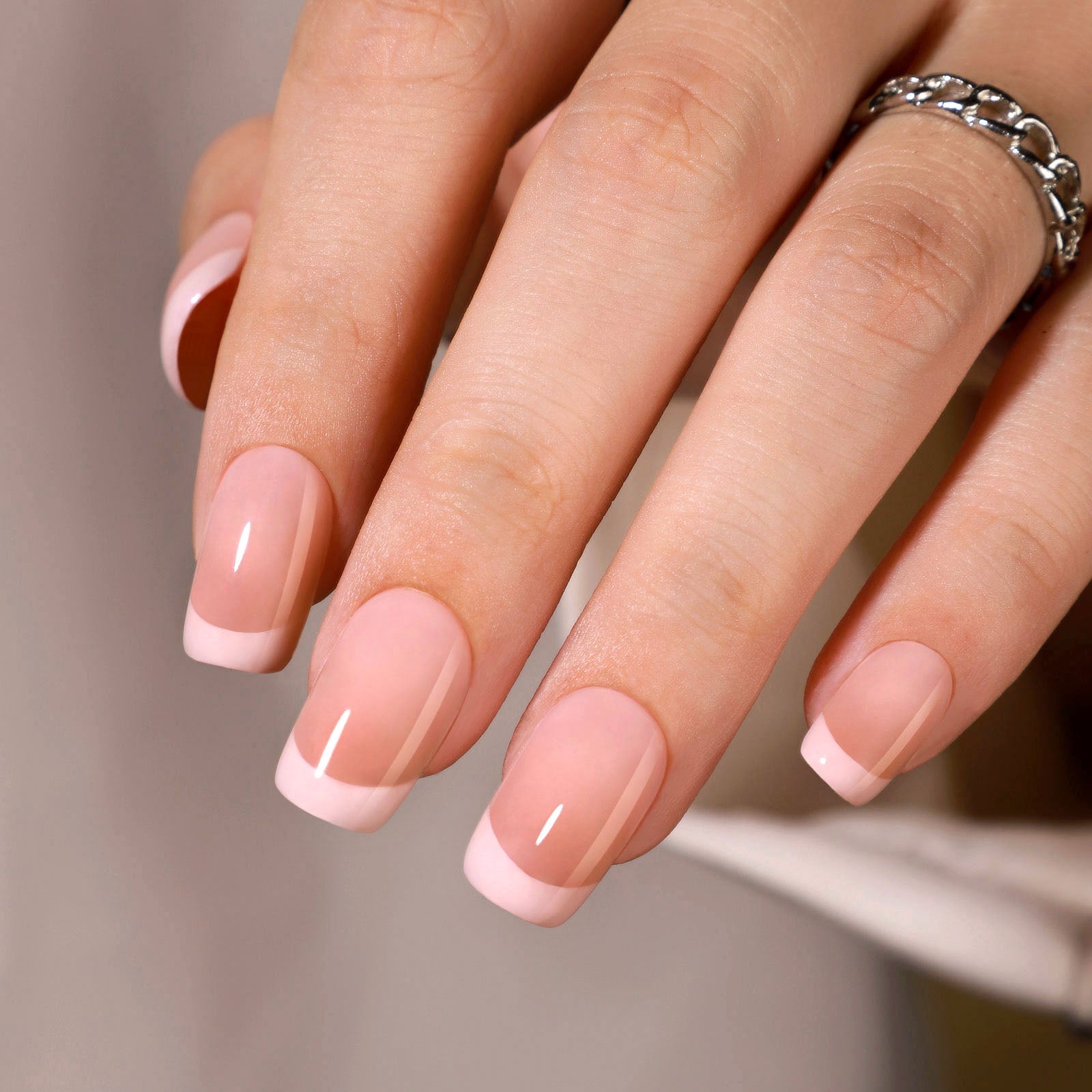
This is the nail shape most associated with: - Gel manicures in the early 2010s (when square and squoval dominated salon menus) - Editorial and high-fashion nail art where geometric symmetry is the point - French tips — the straight edge of a square nail makes a perfect canvas for a clean white or colored tip - Bold solid colors like cherry red, glossy black, or stark white that benefit from graphic geometry
Anchoring note: A salon gel manicure in square shape runs $50-80 per appointment. With press-on square nails, you get the same look for $12-18 per set — replicating the shape exactly, no salon required.
When square looks best: Longer nail beds that are relatively narrow tend to suit square well — the added width at the tip balances a slender shape. Fans of clean, minimal, architectural aesthetics often prefer square because it photographs extremely well flat-on.
When square is harder to wear: Very wide or very short nail beds can look stubby with square — the flat edge emphasizes horizontal width. And in practical terms, the sharp corners of a square nail are the snag point — they catch on fabric, hair, and keyboard edges. If you type all day or do physical work, square corners become a habit-management exercise.
What Makes a Nail "Round"?

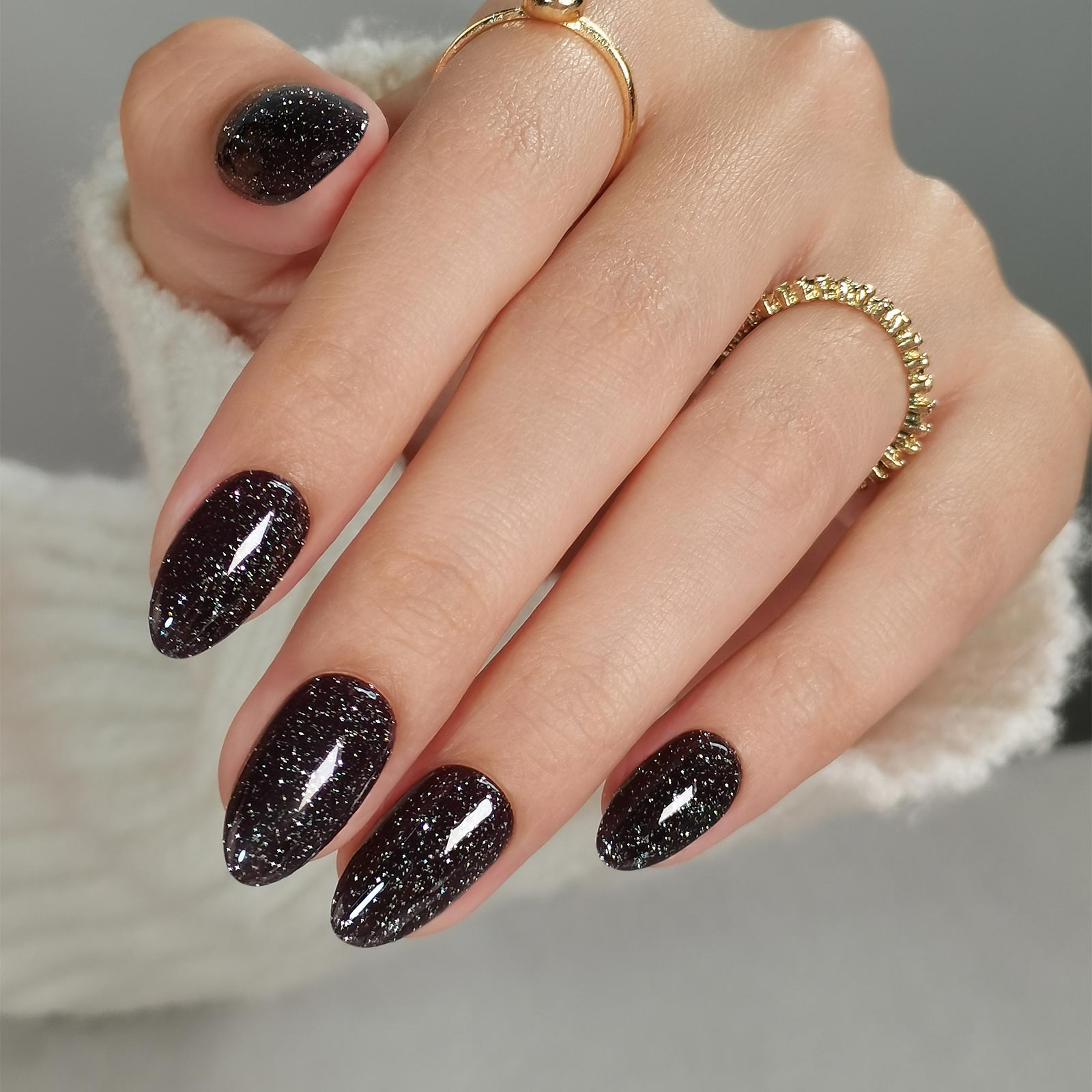
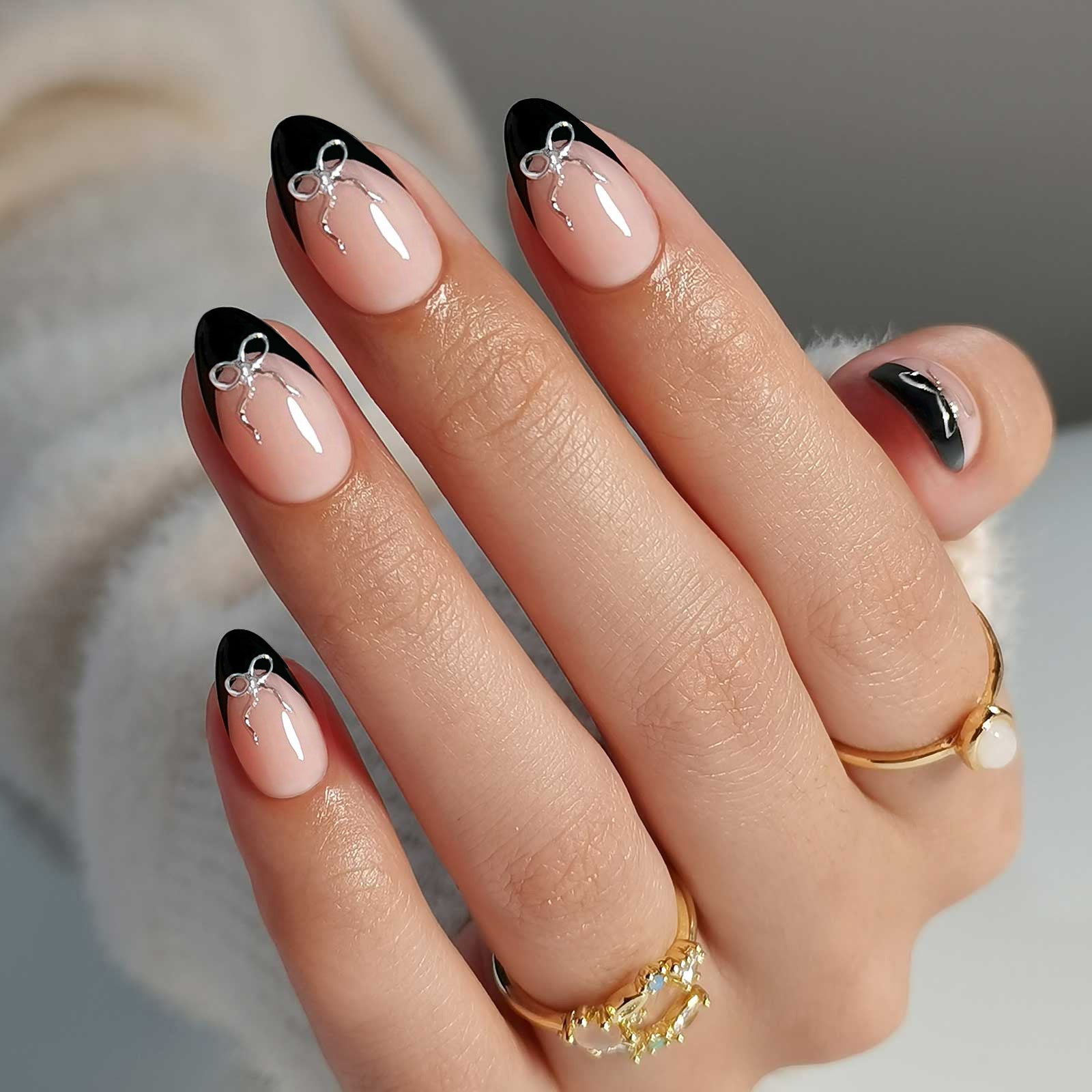
A round nail follows the natural curve of the fingertip. The sidewalls are straight like a square nail, but instead of extending to a flat edge, the tip is rounded to mirror the shape of the finger beneath it. The result is soft, organic, and continuous.
Round nails are: - The go-to shape for minimalists who want neat, clean nails without edge drama - Preferred for shorter lengths where the extra curve makes the nail look more proportional - Popular in workplaces with conservative appearance standards — round nails are the least "statement" shape in the catalog - The most snag-resistant common shape — no corners to catch
When round looks best: Short-to-medium lengths. Wide nail beds or shorter fingers often look most proportional with round because the soft curve doesn't add artificial geometry to a compact space. Round is also the shape that most closely mimics a well-manicured natural nail — if you're trying to extend your look without drawing attention, round achieves this best.
When round is harder to wear: Very long lengths. On very long nails, round can start to look plain or unfinished compared to almond, coffin, or oval. If you love editorial nail art and bold design, round has less of a frame effect than square.
Head-to-Head: 6 Key Factors

| Factor | Square | Round |
|---|---|---|
| Edge style | Flat, 90° corners | Soft curve following fingertip |
| Best finger type | Longer, narrower nail beds | Short, wide, or average nail beds |
| Best length | Medium to long | Short to medium |
| Snag risk | Higher (sharp corners) | Low (no corners) |
| Design versatility | Geometric art, French tips, solid colors | Everything, especially natural looks |
| Trendiness | Cyclically trendy (2010s, now again) | Perennially classic |
3 Best Square Nail Looks
1. Classic Red Square French Tip
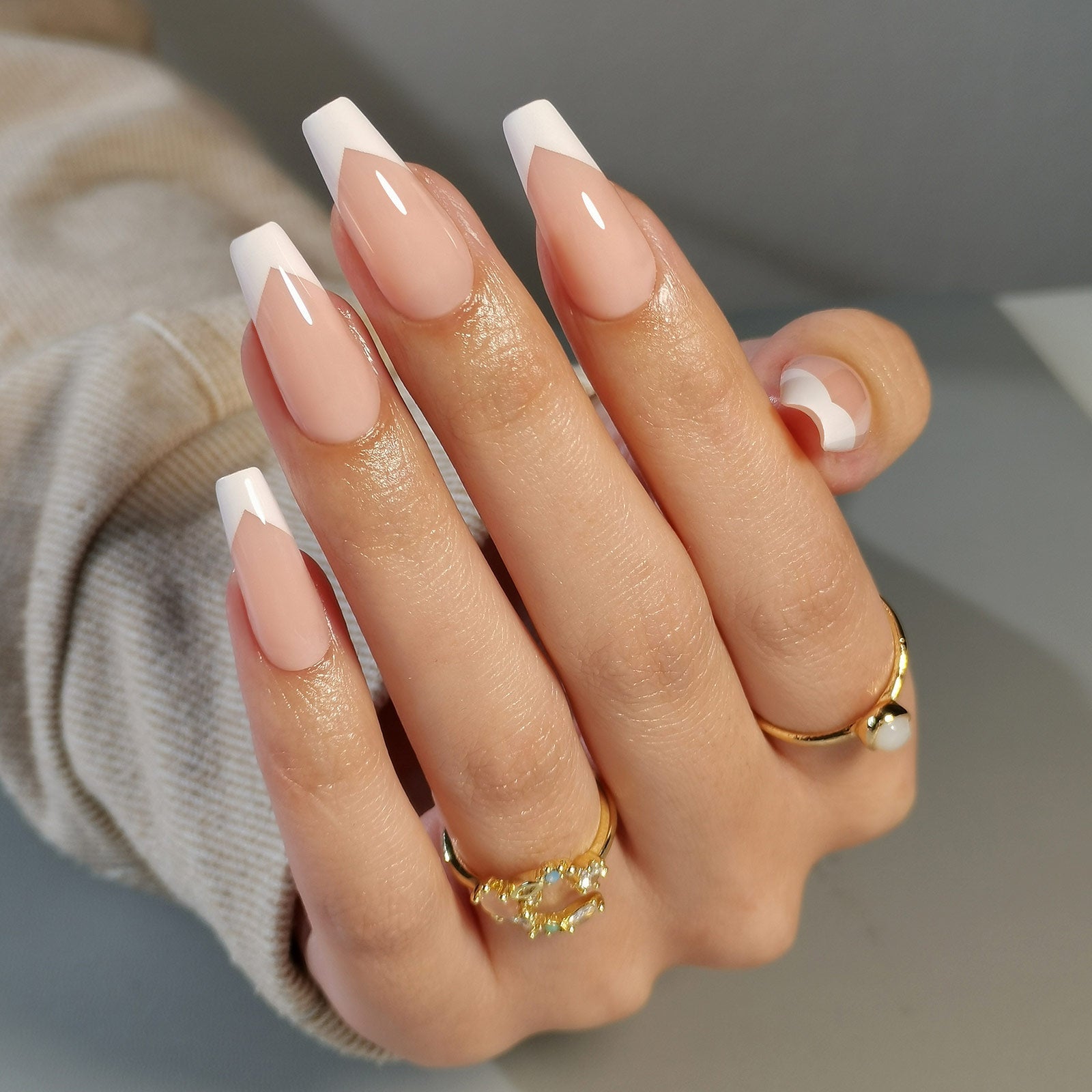
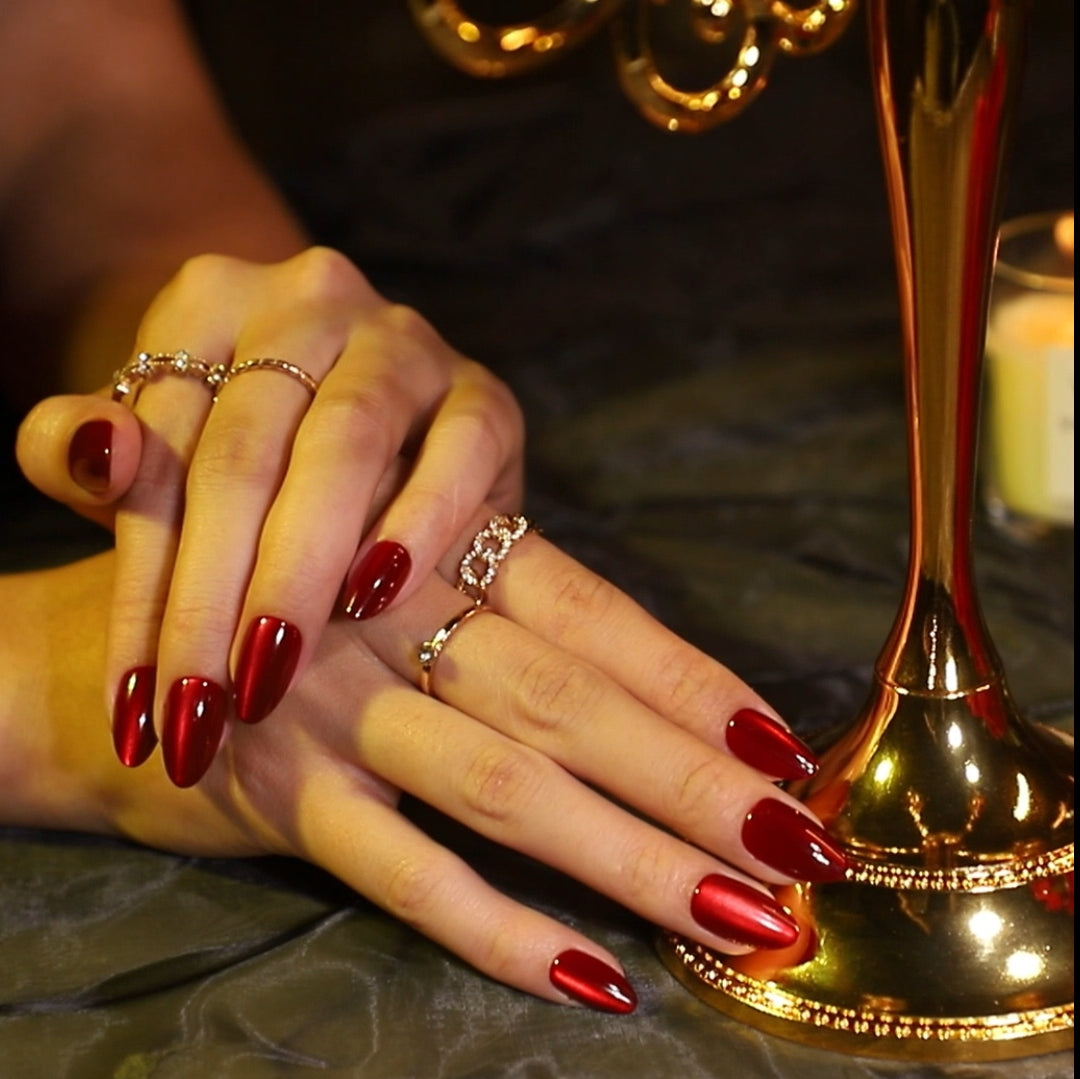
The square French tip is as iconic as it gets. A flat white tip on a sheer pink or nude base — sharp, clean, and unmistakably polished. Wearing it in red (red tip on sheer base) brings the format into something more editorial and more of-the-moment. The flat edge of the square tip is what makes the line look precise. Round tips create a soft arc that diffuses the contrast; square tips give you a razor-sharp line of color.
Pair with: All-black outfit, minimalist jewelry, structured handbag.
2. Square Glossy Black
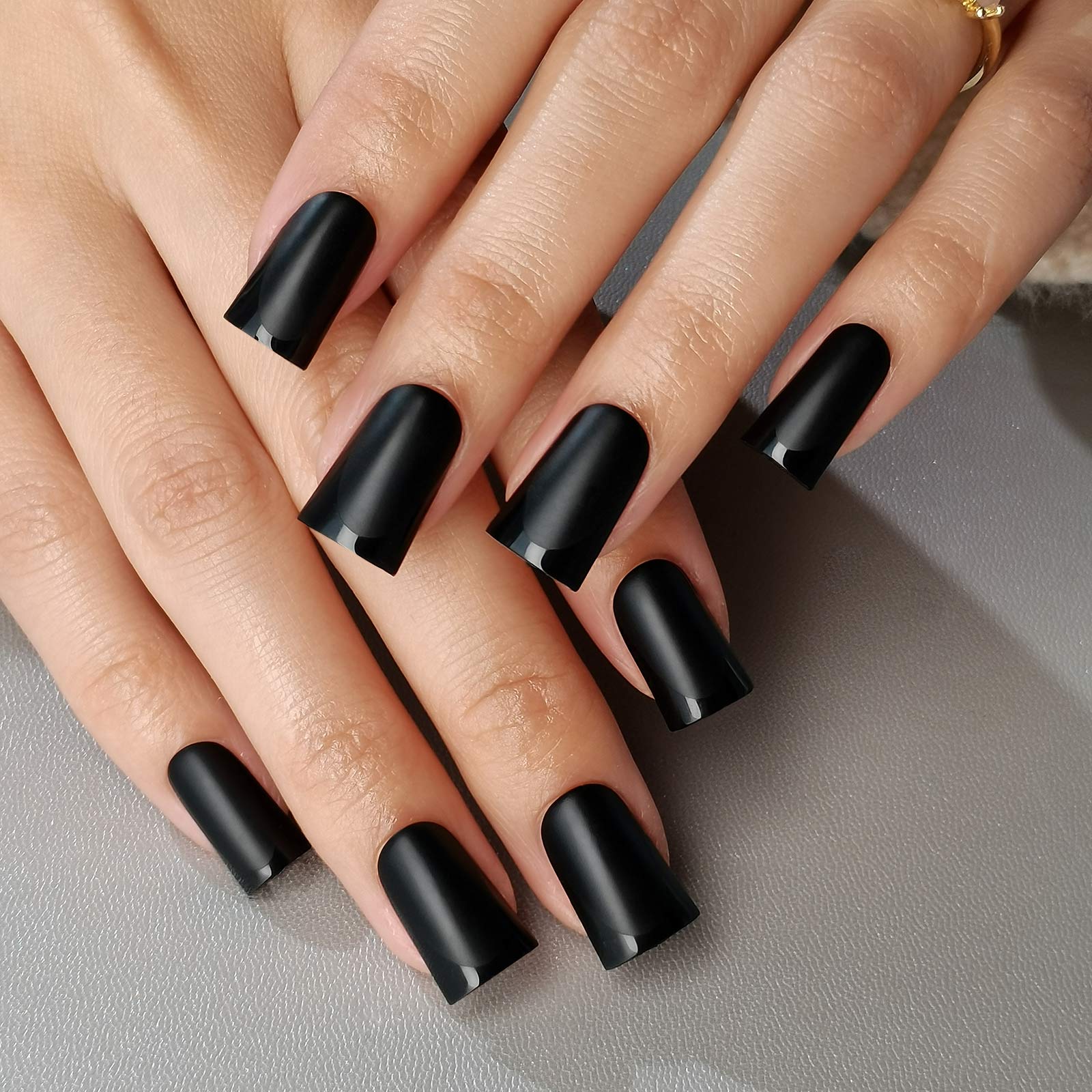
Nothing shows the geometry of a square nail more clearly than a single high-gloss dark color — and black is the definitive choice. Square black nails are the nail equivalent of a crisp tailored blazer: not trying to impress anyone, but immediately recognizable as intentional. The flat top reflects studio-quality light.
Pair with: Monochrome outfits, silver jewelry, editorial or streetwear aesthetics.
3. Square Chrome with Metallic Finish
Square + chrome is a combination that looks genuinely expensive in photographs. The flat reflective surface of a square tip acts like a small mirror — and chrome finishes (silver, rose gold, holographic) reflect light in a way rounded shapes don't replicate as precisely. This is the choice for special events when you want the nail to be a talking point.
3 Best Round Nail Looks
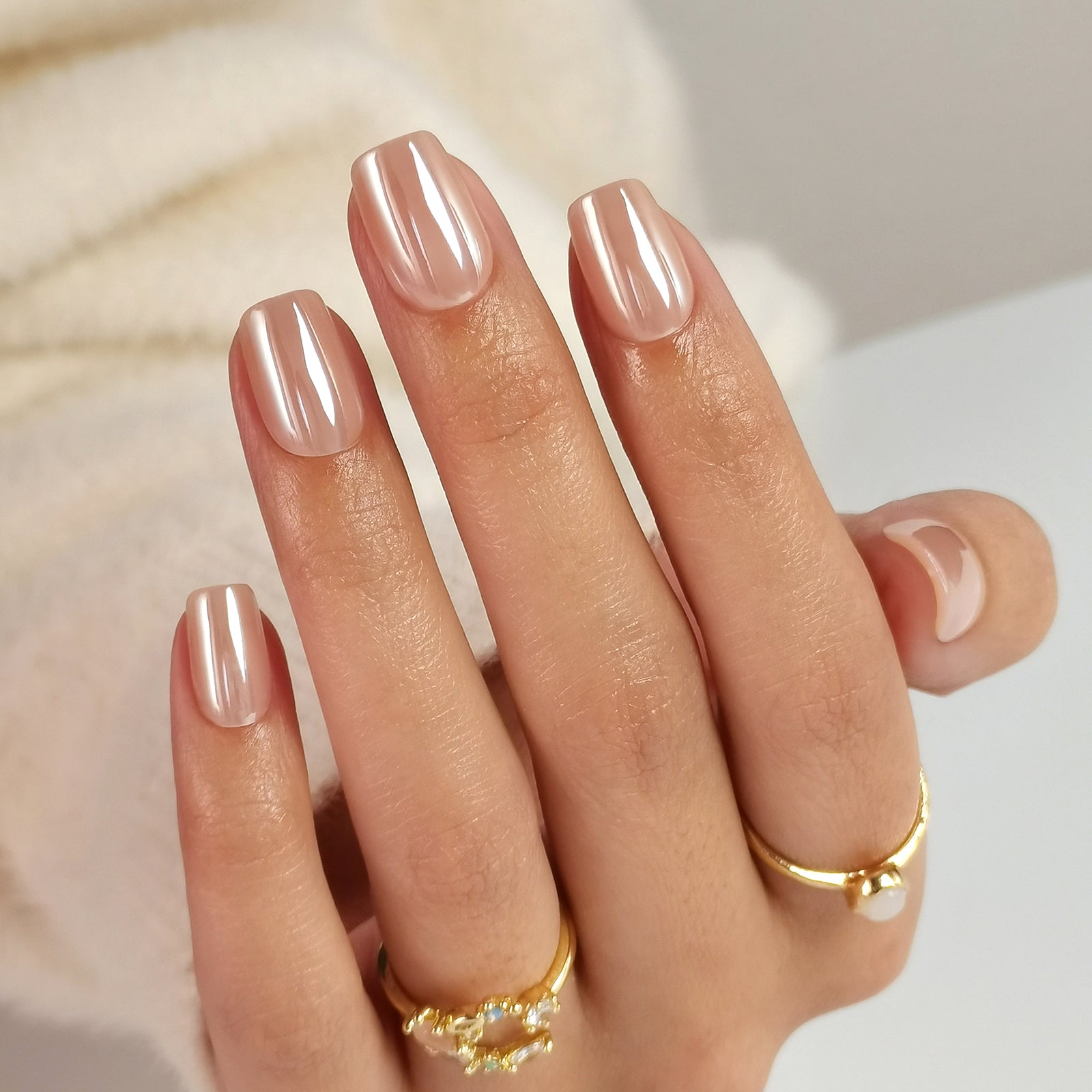
1. Sheer Nude Round Nails
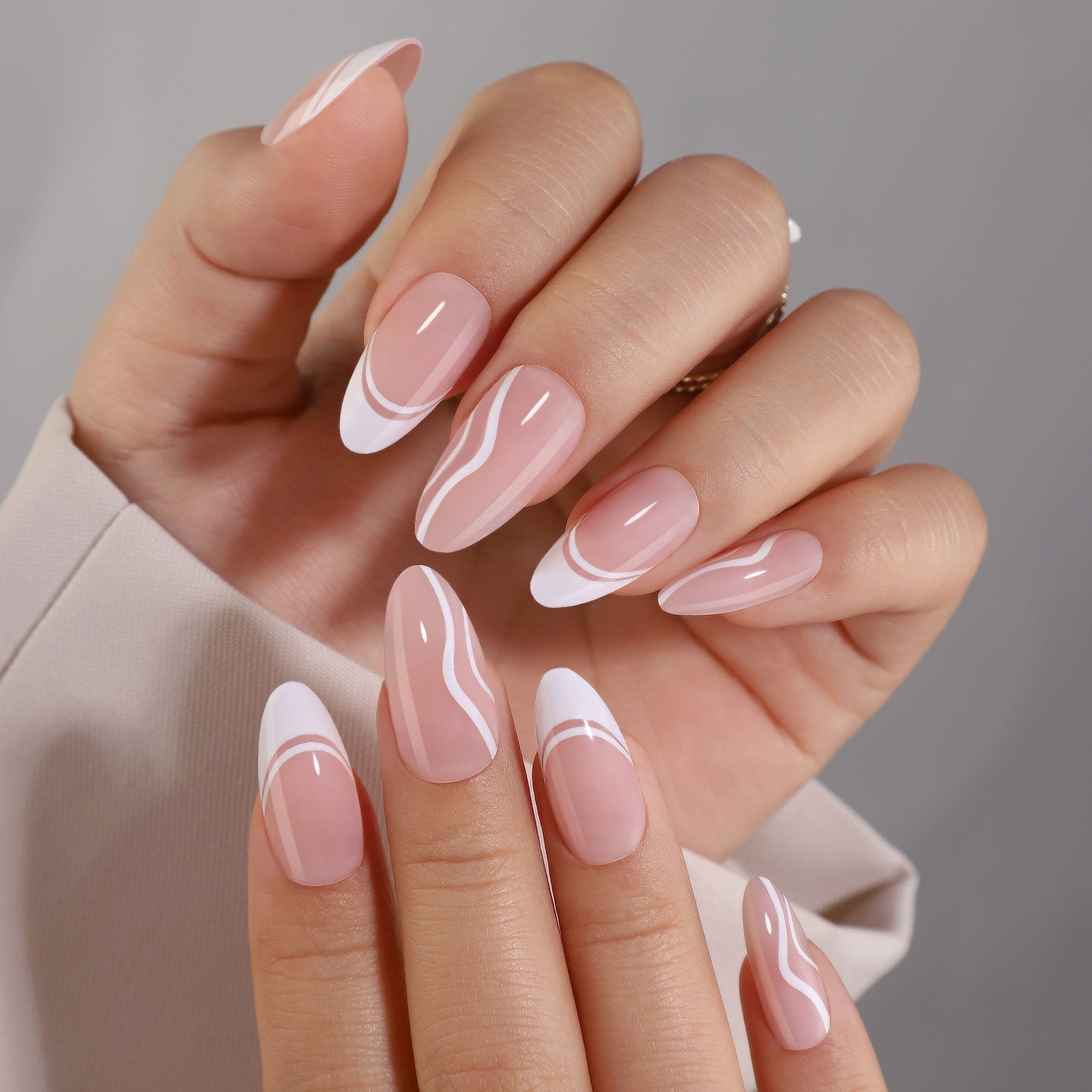
Round nails in a sheer nude shade are the definition of "quiet luxury" — the nail that doesn't shout but is always impeccable. The soft curve of round harmonizes with the natural shape of your fingertip, so the extension reads as an enhancement rather than a statement. This is the manicure that works in boardrooms, at weddings, and with every outfit.
Pair with: Neutral tones, gold jewelry, professional or casual-elegant looks.
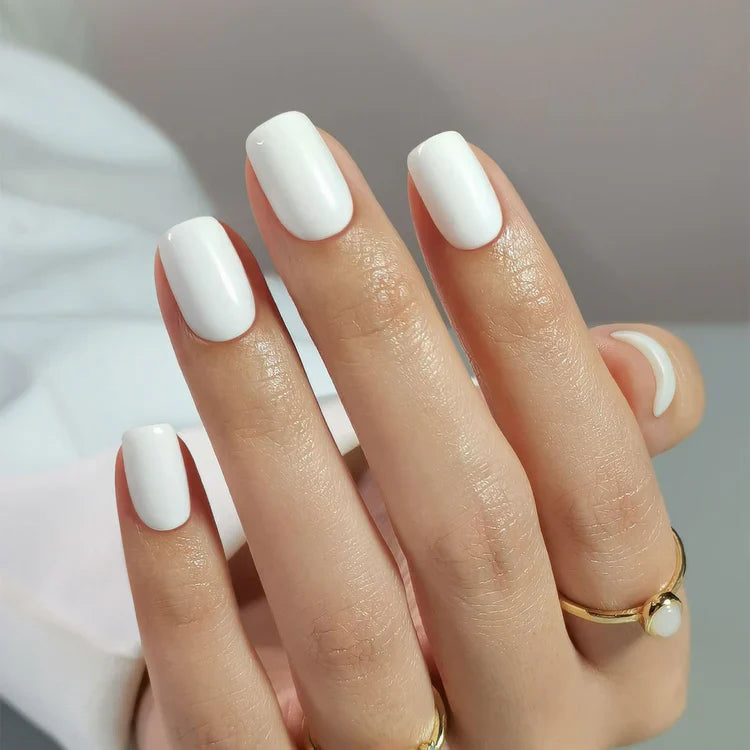
2. Milky White Round Nails
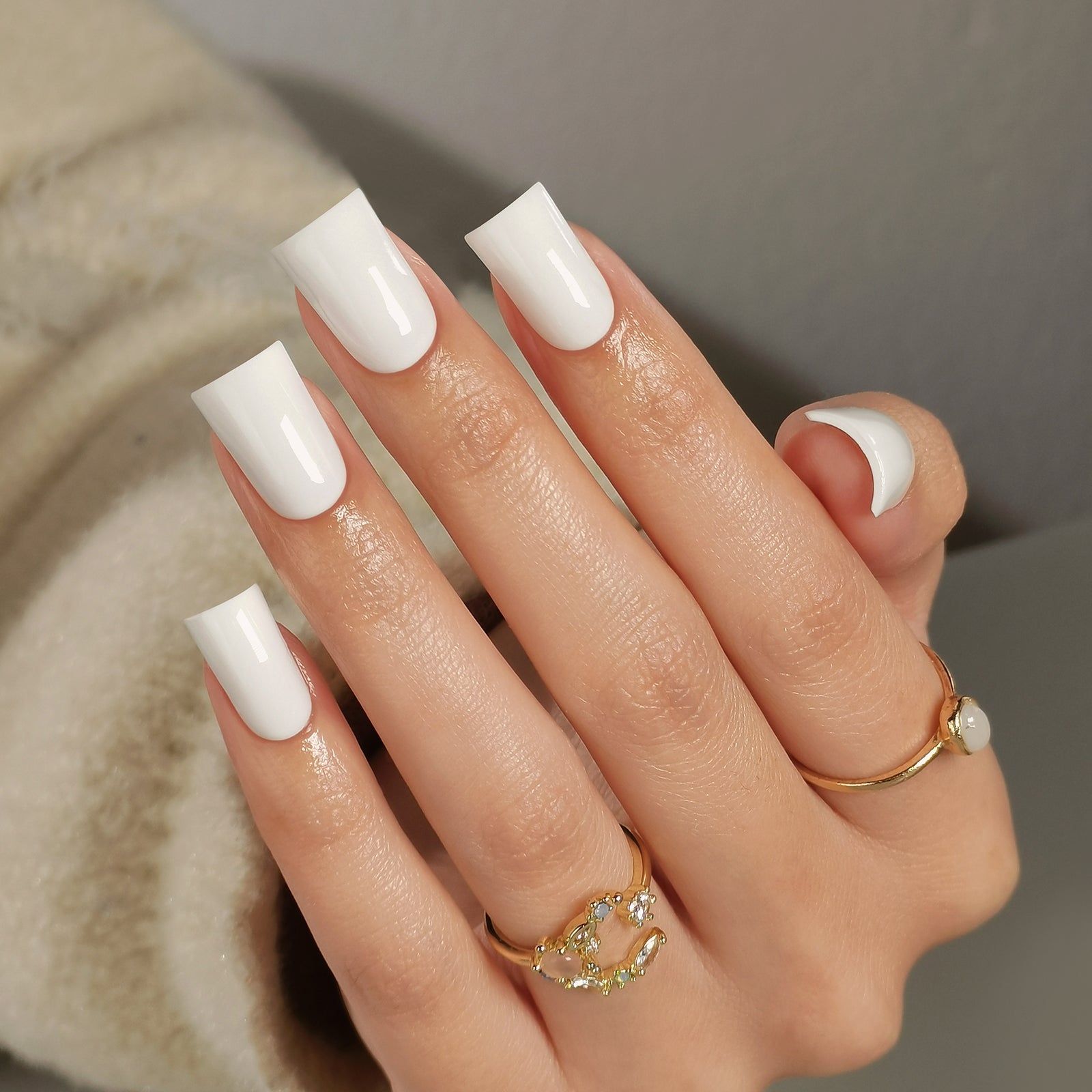
The milky white nail — semi-opaque, soft, slightly luminous — is having a sustained moment across social platforms. Round shapes carry this look better than square because the gentle curve matches the softness of the milky tone. Square milky white can feel stark; round milky white feels like healthy, glazed natural nails.
Pair with: Minimal jewelry, clean beauty aesthetics, spring and summer wardrobes.
3. Pink Ombré Round Nails
Ombré gradients (soft pink to white, blush to nude) work particularly well on round shapes because the gradient follows the curve of the nail tip without termination at a sharp edge. The transition looks continuous and natural — like the nail is glowing from within rather than having color blocked off by geometry.
Pair with: Romantic outfits, floral patterns, rose gold or pearl jewelry.
The Shape Between: Squoval
If you love the structure of square but find the corners impractical, squoval is the answer. A squoval nail has the straight sidewalls of a square shape but the corners are rounded off — creating a hybrid that's softer than square but more defined than round. It's one of the most popular nail shapes sold in salons, and for good reason: it's practical, flattering on a wide range of finger types, and design-versatile.
SHANGMENG press-on sets include shapes across square, coffin, almond, and squoval variants — all pre-shaped so you wear them as-is without filing.
Still not sure which option is worth trying first? Find your best set by solving the concern you just compared: fit, finish, wear time, or price.


Which Shape for Your Finger Type?
Short fingers: Round is generally the most flattering because it elongates the finger by continuing the natural line. Square can add a horizontal emphasis to fingers that already feel compact.
Long fingers: Both shapes work. Square adds drama and geometry; round keeps it elegant. The additional length of long fingers means you have more canvas to work with, so personal preference should drive the decision.
Wide nail beds: Round or oval tend to work better than square because they don't extend the horizontal width to a flat terminus. Square can make wide nail beds look even wider at the tip.
Narrow nail beds: Square works well — the straight sidewalls and flat top create a neat, contained look that suits a narrow surface.
Short nail beds: Round is safest. Very short nail beds with square tips can look blunt. If you love square, go medium length to give the shape room to read properly.
Switching Shapes with Press-On Nails
With gel or acrylic nails, switching shapes means a salon appointment, a new set, or a lot of filing. With press-on nails, switching shapes means ordering a different set. This is one of the most underrated aspects of press-ons: you can have a square nail wardrobe and a round nail wardrobe, changing with your outfit, mood, or occasion.
SHANGMENG sets include 32 nail tips in 16 sizes — so whether your dominant hand needs a size 3 and your pinky needs a size 8, the sizing range covers you without forcing compromise.
If you're new to press-on nail shapes: - Try round first for maximum versatility and ease - Try square when you want to commit to a specific editorial look - Compare in the mirror before committing — most people discover their preference immediately
FAQ
Is square or round nail shape more popular?
Both remain consistently popular but appeal to different aesthetics. Round nails dominated in the natural-nail movement of the late 2010s and early 2020s. Square had a strong resurgence in 2023-2025 alongside the clean-girl and minimalist aesthetics. Neither has "won" — they serve different style identities. Globally, round and squoval combined probably account for the highest number of manicured nails, while square dominates editorial and fashion-forward circles.
Do square nails break more easily?
Square nails break more often than round, and the reason is geometry: the 90-degree corner is a stress concentration point. When force is applied — catching a corner on fabric, or impact from the side — the corner bears the brunt rather than distributing it along a curve. This is true for both natural nails filed square and rigid press-ons. Soft-gel press-ons are more resistant to this because they flex under impact rather than snapping, but the corner is still more vulnerable than a curved shape.
Is round or square nail shape more professional?
Both are accepted in professional environments, though round is conventionally considered the most "universally safe" shape. The logic: round nails closely resemble well-maintained natural nails and avoid the graphic sharpness of square corners. That said, "professional" standards vary enormously by industry — what's conservative in finance is standard in fashion. At medium length in a neutral color, square nails are equally professional in most modern workplaces.
What's the difference between round and oval nail shapes?
Round nails follow the natural curve of the fingertip, so the tip width matches the nail plate width. Oval nails are narrower at the tip — the sides are filed slightly inward to create a pointed oval rather than a hemispherical curve. Oval is more elongating than round (ideal for short fingers wanting visual length) but requires more nail length to read properly. For short nails, round is safer; for medium-to-long nails, oval gives an elegant elongation that round doesn't.
Can I switch between square and round press-on nails?
Yes — this is one of the main advantages of press-on nails over salon nails. Different sets come in different pre-shaped styles, so switching from square to round is as simple as choosing a different set. You can build a small press-on wardrobe with multiple shapes to rotate based on outfit or occasion. SHANGMENG offers both square and round-adjacent shapes across 200+ designs.

The Bottom Line
Square nails are for the statement maker — geometric, graphic, bold. Round nails are for the classicist — soft, versatile, effortlessly maintained. Both are right. Both look great. The choice comes down to your hands, your habits, and your aesthetic identity.
Still wondering if press-on shapes look as good as salon nails? The soft-gel construction and 16-size fit system close that gap — these aren't the plastic drugstore press-ons of 10 years ago. With press-on nails, you don't have to choose one shape forever. Try square for a special occasion, round for the office week, coffin for Saturday night. Shape-switching with press-ons takes 20 minutes and costs $12-18 vs the $50-80 you'd pay at a salon — for the exact same shape.
For more nail shape guides and style inspiration, explore the SHANGMENG blog.
Share