












Home
›
Trends — Nail Inspiration & Designs
›
Coffin Nail Art: 15 Bold Designs From Minimalist to Maximal

Coffin Nail Art: 15 Bold Designs From Minimalist to Maximal
Written by Elia, Lead Nail Designer at SHANGMENG
A single salon appointment for this style runs $60–$90 — a SHANGMENG press-on set achieves the same look for $14–$20, applied at home in 15 minutes.
Key Takeaways: - Coffin nails have the flattest, widest tip of any nail shape — that geometry is not an accident, it is the best canvas for nail art - The tapered sides create natural visual framing that makes even a single painted line look intentional and architectural - 15 designs here, sorted from "easy enough to do tonight" to "book it as a set of SHANGMENG press-ons" - SHANGMENG soft gel coffin press-ons give you the precision base that nail art demands — 32 pieces across 16 sizes - For an overview of coffin press-on styles and how to apply them, start at the Coffin Press-On Nails Guide
There is a reason coffin nails took over beauty editorial pages and have refused to leave. It is not just the drama of the shape — it is what that shape does for nail art. The flat tip is a true canvas. The tapered sides act as a frame. And the length means you have real estate to work with.
This guide covers 15 coffin nail art designs, grouped by aesthetic family, each with a difficulty rating and the occasions where they land. Whether you are the kind of person who considers a single gold line "maximalist" or the kind who instinctively reaches for rhinestones, something here is for you.
Not sure which shape, length, or size fits your natural nails?
Why Coffin Shape Is Best for Nail Art
Before the designs: a brief case for the shape itself, because it genuinely matters for what nail art can do.
The flat surface is a literal canvas. Every other nail shape ends in a curve, a point, or a tight square. Coffin nails end in a wide, flat plane — the same geometry as a painter's panel. When you add art to a curved surface, the design warps slightly as you look at it from different angles. On a coffin tip, a geometric line stays geometric. A flower petal reads as a petal, not a curved smear. The flatness is not incidental; it is why nail technicians reach for coffin shapes when they want to show off detailed work.
The tapered sides create visual interest without additional decoration. The coffin silhouette narrows from the widest point of your nail toward the flat tip. That convergence is inherently elegant — it draws the eye inward and upward in a way that makes even a plain base color look designed. Add art on top, and the sides amplify it. A vertical line drawn down the center of a coffin nail reads as an accent; the same line on a round nail reads as a mistake.
Length gives you room. Most standout nail art needs distance to breathe — a gradient needs space to transition, florals need room for petals, geometric patterns need repetition. Medium and long coffin nails provide that room. Even short coffin nails (the 5–6mm extension zone) give you more workable flat area than a comparable round or oval nail.
For length guidance and how to choose your coffin extension, see Coffin Nails Medium Length: The Perfect In-Between.

Category 1: Minimalist (4 Designs)
These four designs share a principle: restraint as a design choice, not a limitation. Each is achievable in an evening with the right base nail.
1. Single Line
Description: One fine line — horizontal, vertical, or diagonal — drawn across a bare or neutral base. Nothing else. The line is typically metallic (gold or chrome) or a high-contrast color against the base.
Why it works on coffin: The flat tip gives the line a terminus point. A horizontal line drawn parallel to the tip edge creates a minimalist bar graphic. A diagonal cuts across the taper with graphic tension. Neither reads this way on a curved nail.
Difficulty: Easy. One striping brush, no second-guessing.
Best occasion: Work, everyday wear, events where understated matters.
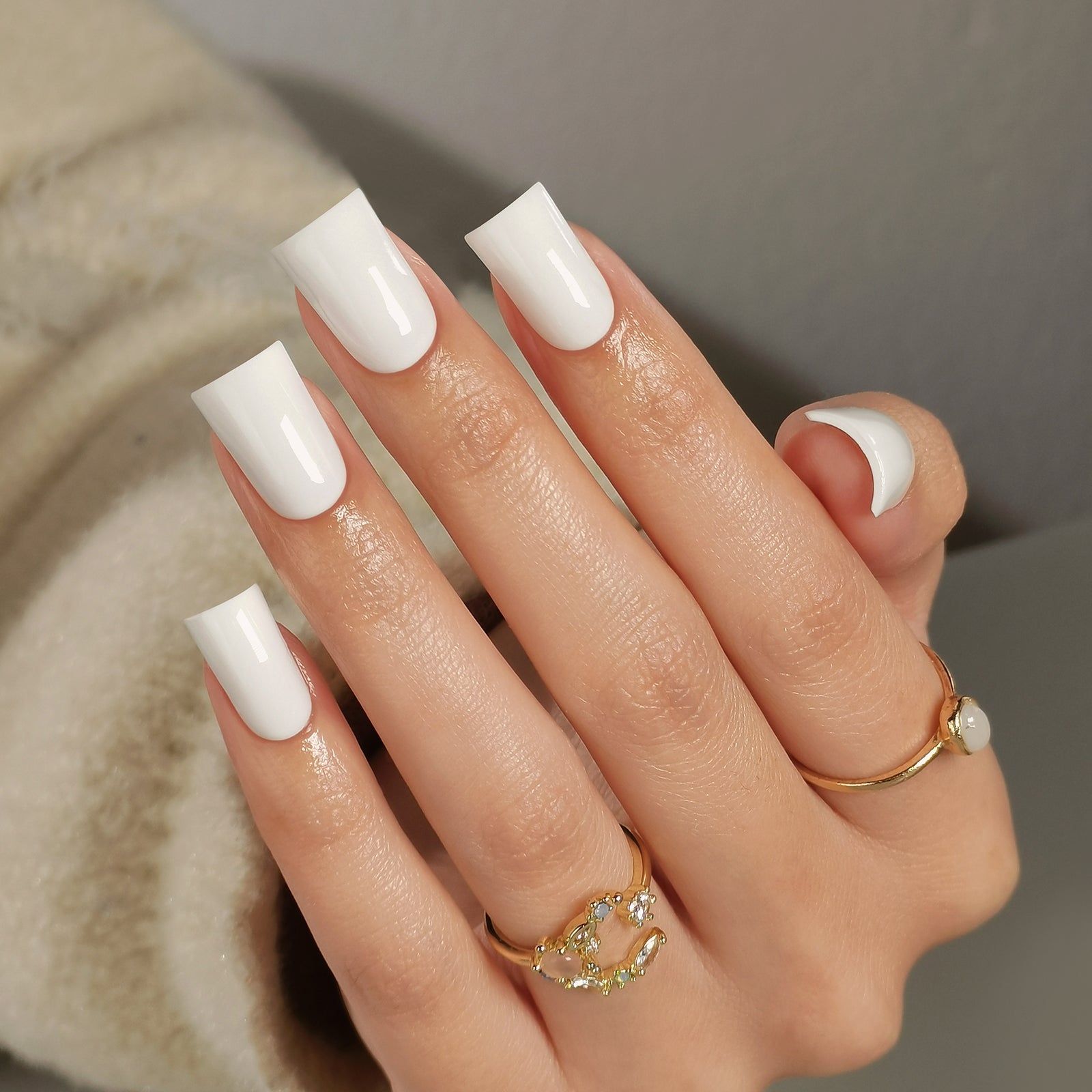
2. Negative Space
Description: Geometric windows left unpainted in an otherwise solid base, revealing the natural nail beneath. Triangles near the cuticle, a half-moon cut-out, or a band across the center.
Why it works on coffin: The wide flat tip anchors the negative space so it reads as deliberate geometry. The taper frames any cut-out placed along the sides, making simple shapes look architectural.
Difficulty: Easy–Moderate. Tape is your tool; clean edges are the goal.
Best occasion: Creative workplaces, weekend wear, photo occasions.
3. Color Block
Description: Two or three solid colors divided by a clean horizontal or diagonal line. No gradients, no blending — just a hard split. Popular combinations: cream and caramel, white and deep burgundy, nude and black.
Why it works on coffin: The flat tip becomes one distinct color zone. The taper becomes a second. With a diagonal divide, the coffin shape creates a natural asymmetry that gives the design movement.
Difficulty: Easy. Tape keeps the line clean.
Best occasion: Any occasion. Color block scales from casual to formal depending on color choice.
4. Micro Dots
Description: A scattering of tiny dots — or a precise grid of them — across a neutral base. Often done in one contrast color: white dots on navy, gold dots on black, dusty pink dots on ivory.
Why it works on coffin: The flat tip accommodates a tighter dot cluster at the end, giving the design a focal point. Dots placed along the taper guide the eye toward the tip without requiring any complex brushwork.
Difficulty: Easy. A dotting tool and patience.
Best occasion: Casual, everyday, spring and summer events.
Category 2: French Variations (4 Designs)
French manicure on coffin nails is one of the great nail art pairings of the last decade. The flat tip was built for a French smile line — but the variations have moved far beyond the original.

5. Neon Tips
Description: The classic French tip, but the white is swapped for a high-visibility neon — electric yellow, neon coral, vivid lime green, or hot pink. The base stays sheer or nude. The contrast is the statement.
Why it works on coffin: The wide flat tip maximizes the neon band. A thin neon tip on a round nail looks like a smudge; on a coffin tip, it looks intentional and precise.
Difficulty: Easy.
Best occasion: Concerts, festivals, summer events, social media content days.
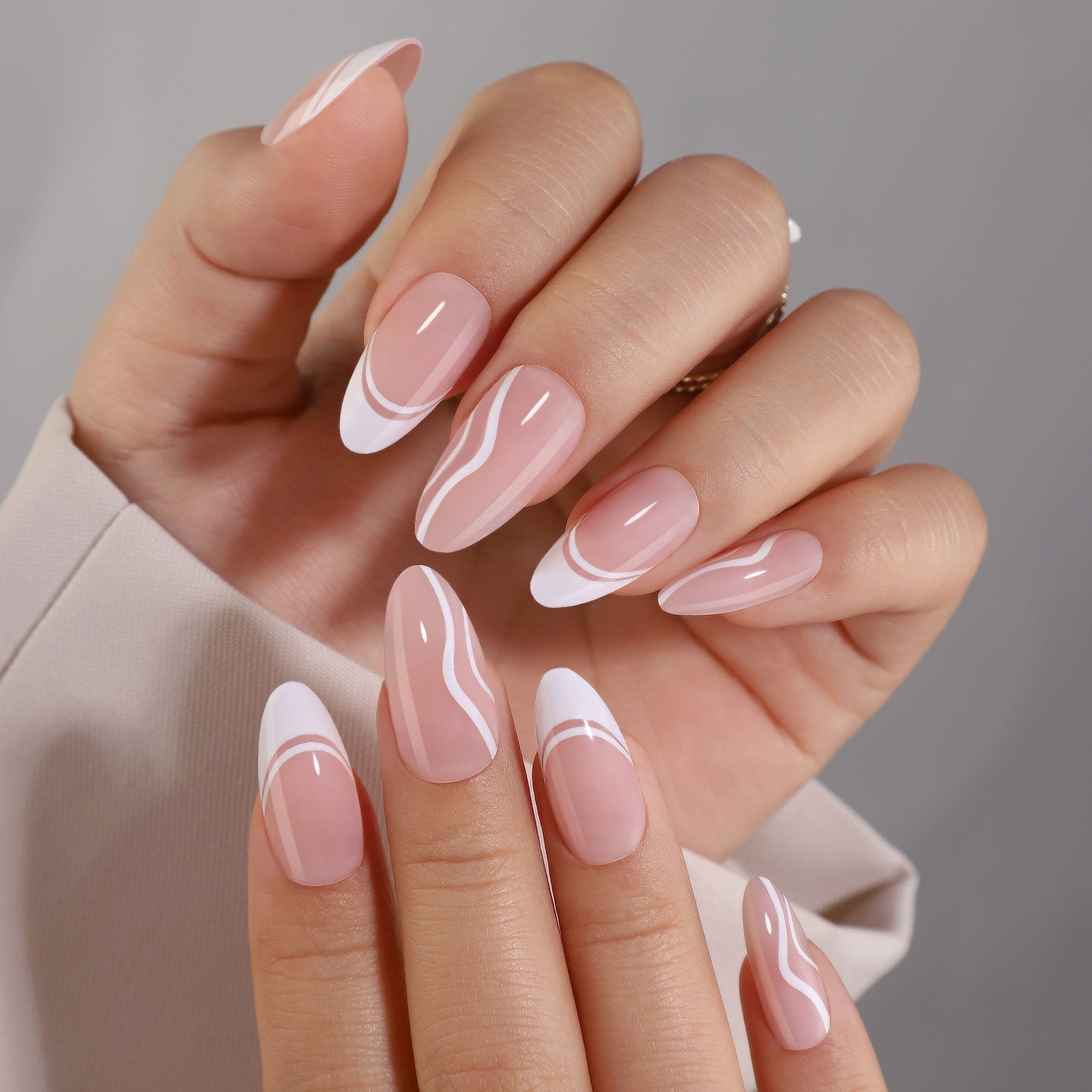
6. Double Line
Description: Two thin parallel lines tracing the smile line, leaving a gap between them. Often both lines are the same color (gold, silver, or black); occasionally the inner and outer lines contrast.
Why it works on coffin: The flat tip gives both lines parallel edges to sit against. The geometry stays sharp in a way it cannot on curved shapes.
Difficulty: Easy–Moderate. Steady hand or striping tape.
Best occasion: Date night, evening events, elevated casual.
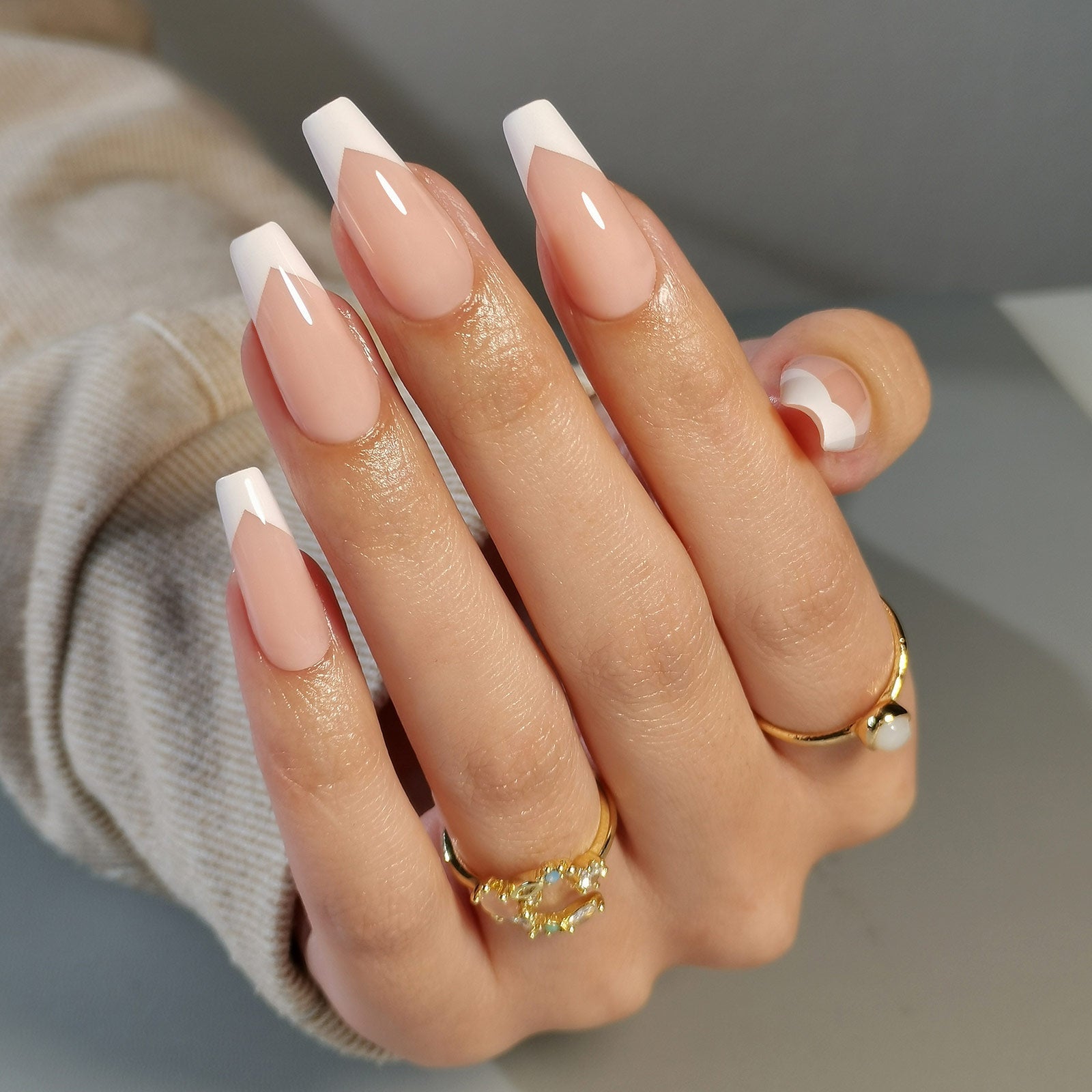
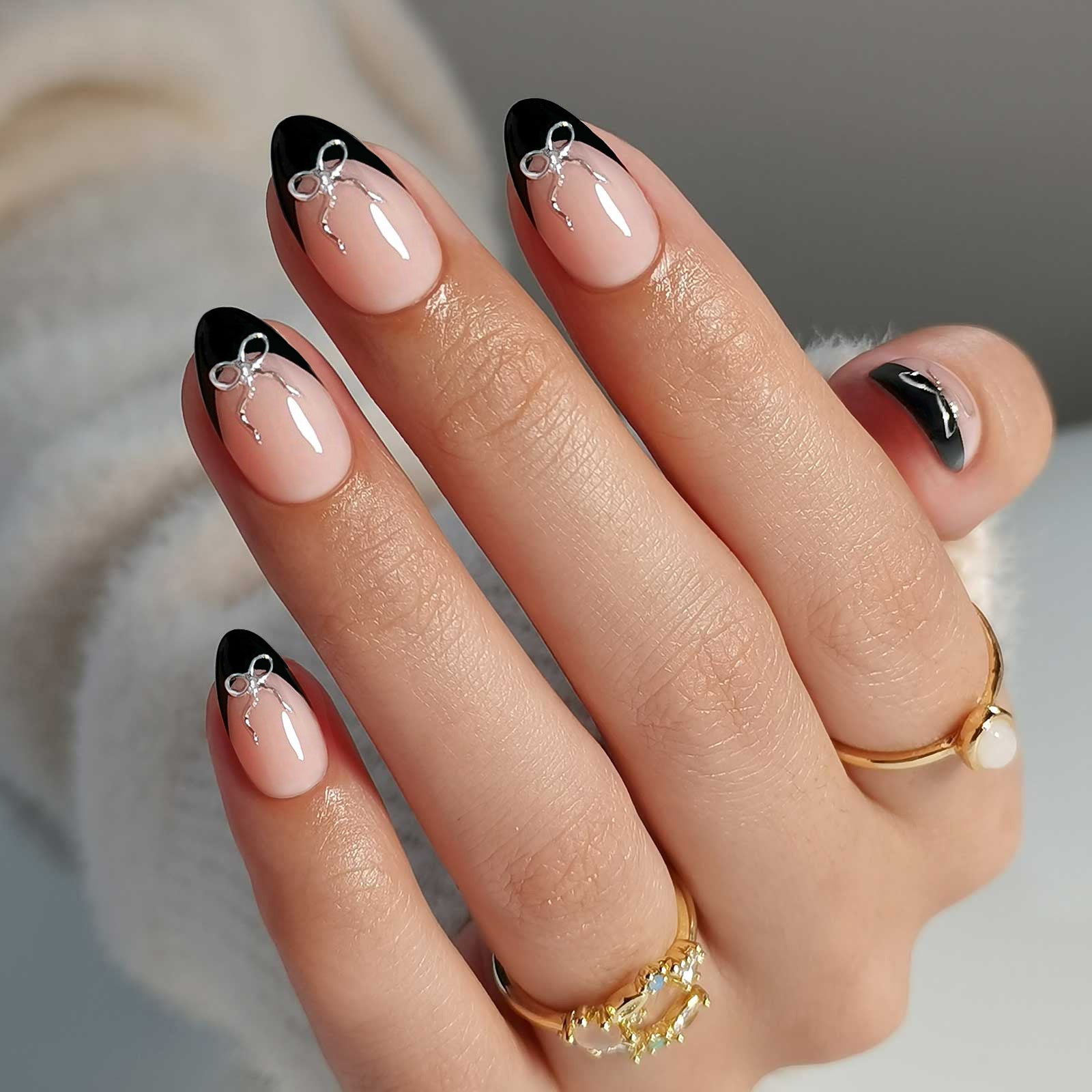
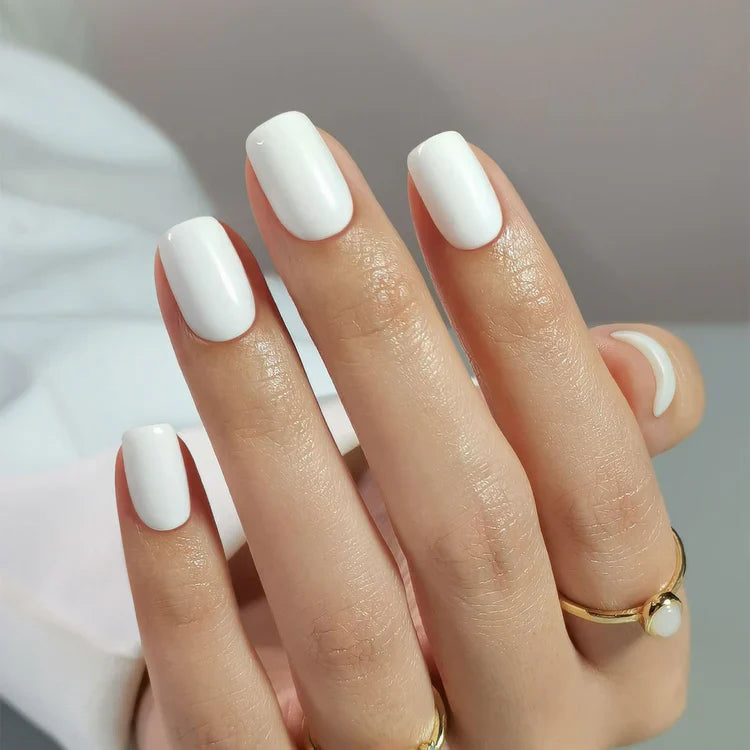
7. Reverse French
Description: The classic French tip logic flipped: the base is opaque and the cuticle area is a contrasting sheer or colored crescent. Common versions include white base with a black crescent, nude base with gold crescent, or deep red base with a nude crescent.
Why it works on coffin: The taper concentrates attention at the cuticle edge, making the reverse crescent a focal point rather than an afterthought.
Difficulty: Moderate. Cuticle edge work requires a steady hand or careful tape placement.
Best occasion: Formal events, editorial looks, occasions where you want the design to read from across the room.
8. Gradient Tip
Description: A soft ombre transitions from the base color to the tip — the classic "baby boomer" style when done in pink-to-white, but the principle extends to any palette: caramel-to-nude, wine-to-blush, navy-to-sky.
Why it works on coffin: The flat tip is where the gradient lands and concentrates. The wider the tip, the more visible the transition. Coffin nails give the ombre room to complete itself.
Difficulty: Moderate. Sponge application, feathering at the transition zone.
Best occasion: Weddings, bridal events, spring looks, everyday luxury.
Category 3: Texture and Dimension (4 Designs)
These designs are less about line work and more about how the nail surface catches and holds light. They photograph exceptionally well on coffin shapes.
9. Marble
Description: White or grey base with hand-drawn veining in charcoal, gold, or rose gold. The veining follows irregular diagonal paths across the nail, with feathered edges created by a thin brush or a piece of plastic wrap.
Why it works on coffin: Marble veining that crosses the flat tip and continues down the taper reads like a slab of stone cut at an angle. The coffin geometry turns a decorative finish into something that looks genuinely architectural.
Difficulty: Moderate. The veining is freehand; imperfection is part of the aesthetic.
Best occasion: Office wear, social events, any occasion where understated luxury reads better than overt color.
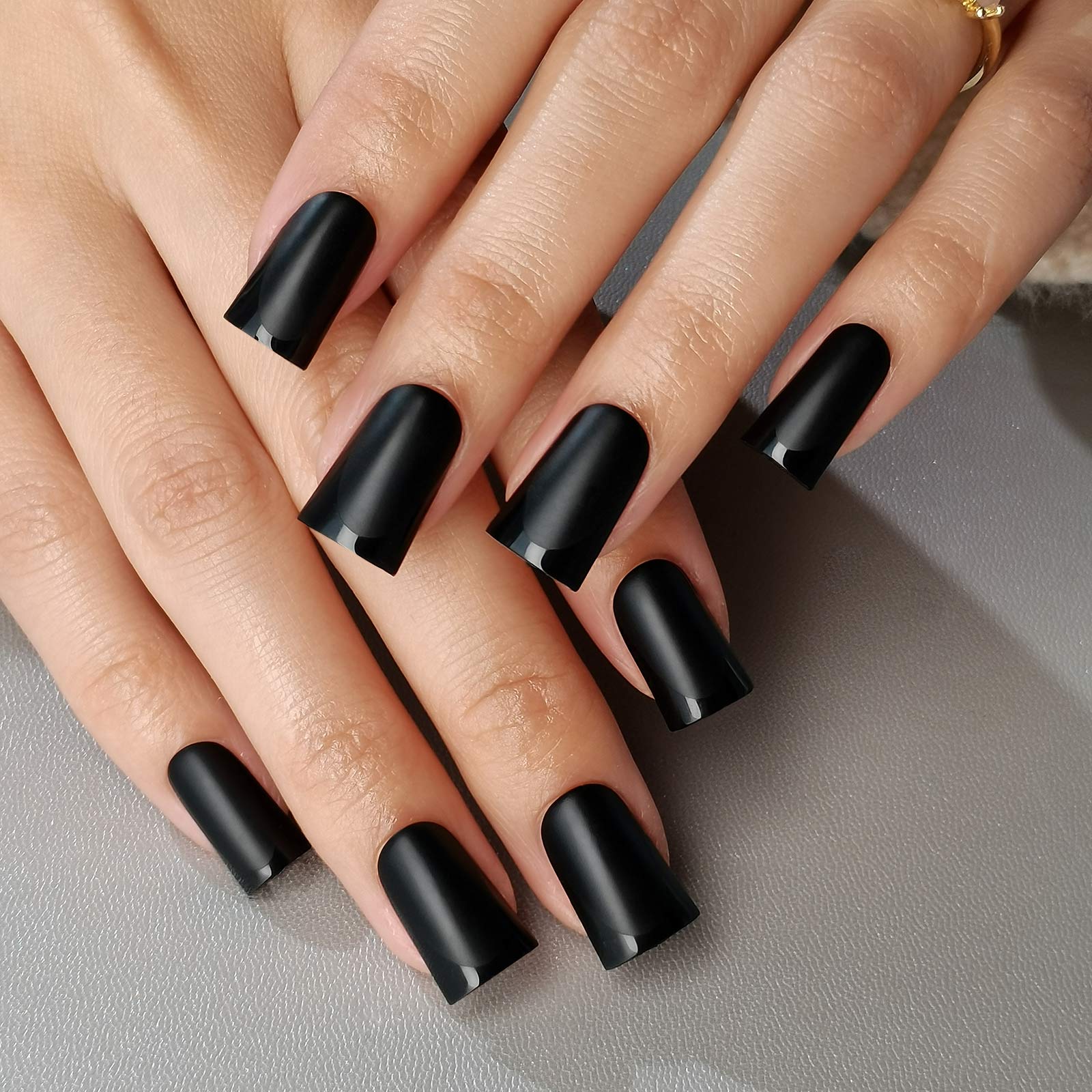
10. Velvet Matte
Description: A deep, full-coverage matte finish — midnight navy, black cherry, forest green, or dusty mauve — applied at high opacity with a matte top coat sealing the surface. No art layer; the texture is the art.
Why it works on coffin: Matte finishes eliminate shine, which means the nail's silhouette becomes the visual element. The coffin shape is dramatic enough that a matte coat alone is a design statement.
Difficulty: Easy. Quality matte top coat is the only requirement.
Best occasion: Autumn and winter, evening events, editorial shoots.
11. Chrome Foil
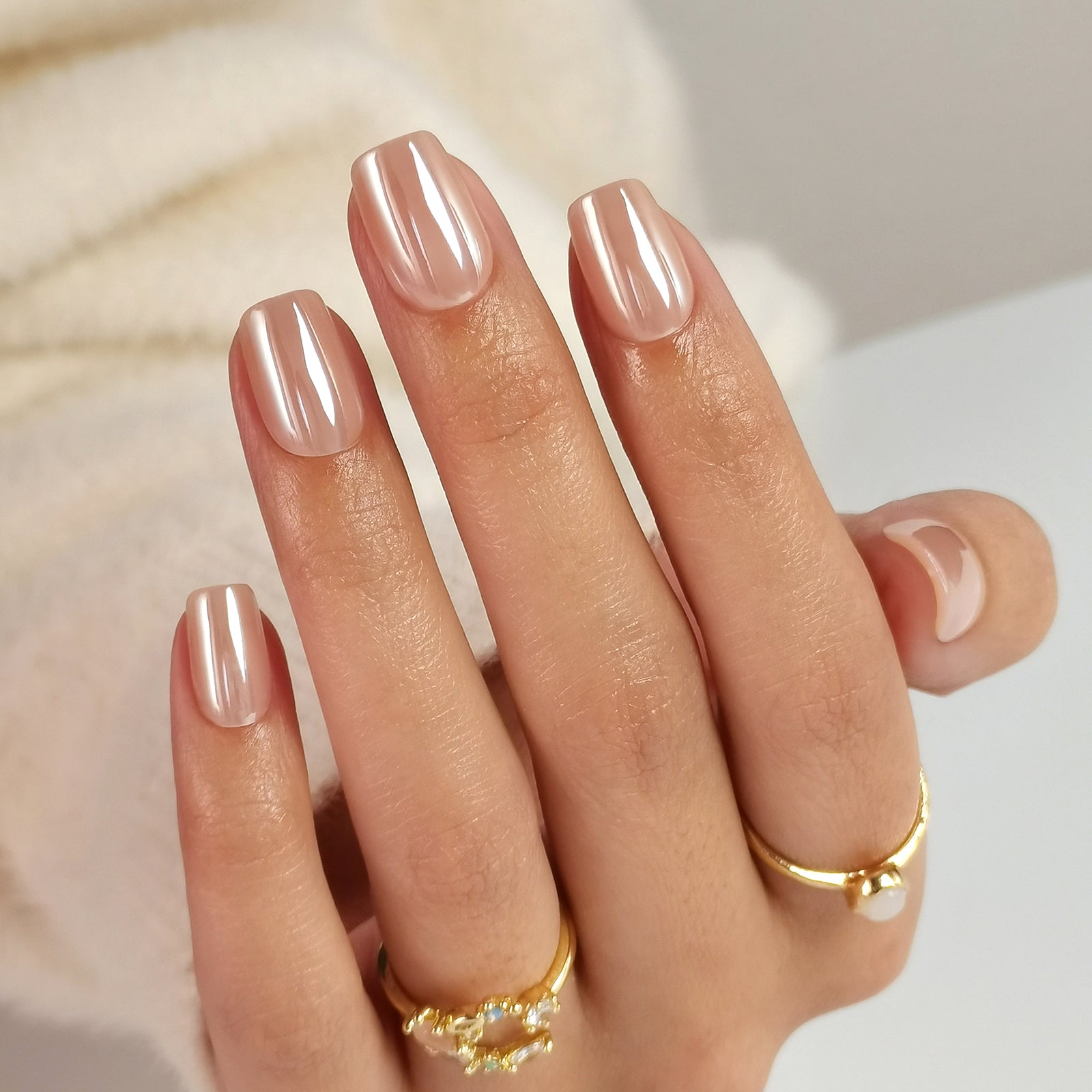
Description: Metallic foil transfers — silver, rose gold, holographic — pressed onto a gel base before curing or applied as a top layer. The result is a mirror-like or prismatic surface with fracture lines from the foil application process.
Why it works on coffin: The flat tip reflects light at a consistent angle, creating a coherent mirror effect. On curved nails, foil reflects inconsistently. On coffin nails, the flat panel acts like a small rectangular mirror.
Difficulty: Moderate. Foil requires a tacky base and firm, even pressure.
Best occasion: New Year's Eve, holiday events, any occasion where your hands are part of the outfit.
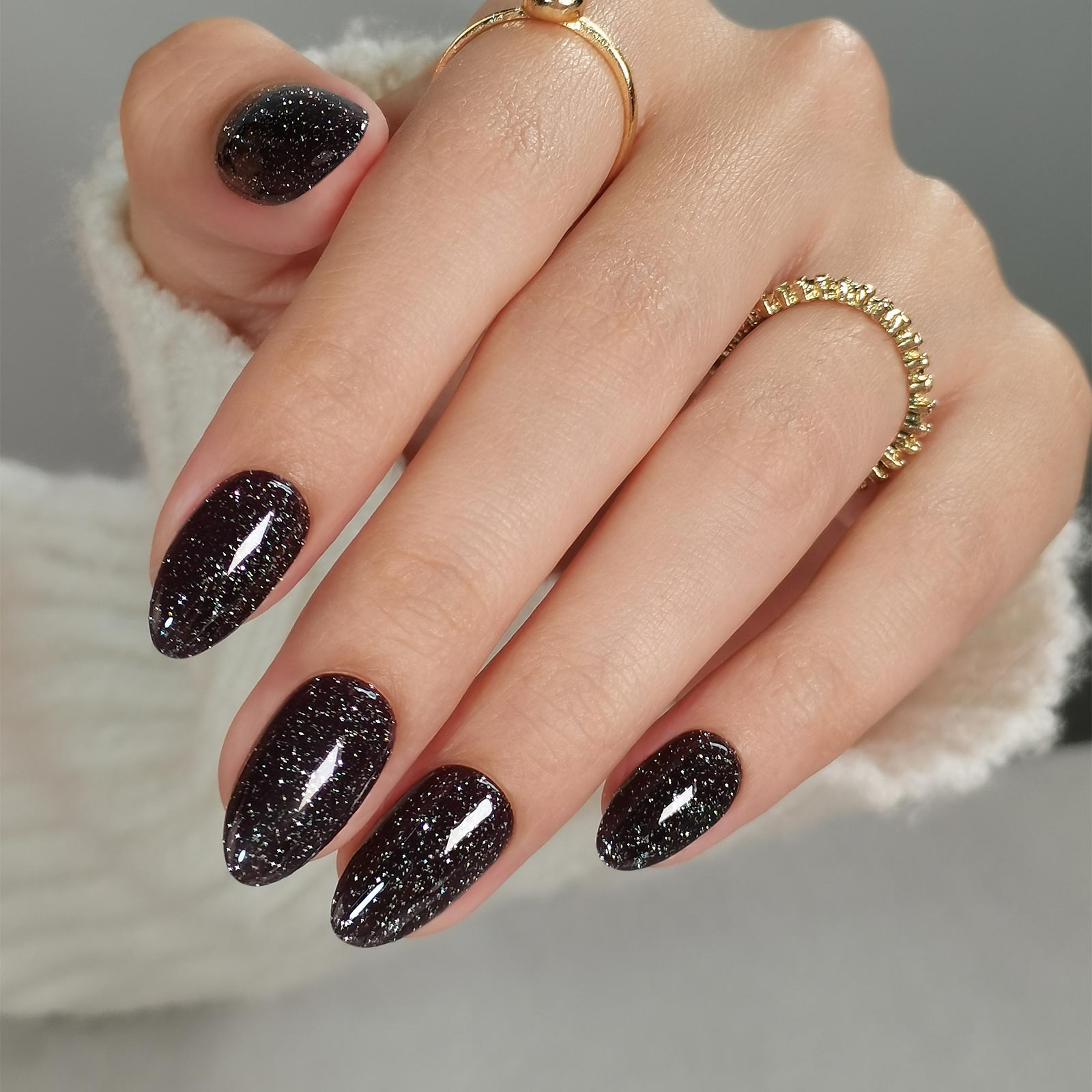
12. Glitter Ombre
Description: Fine glitter concentrated at the tip, fading toward the cuticle into a sheer or nude base. The glitter density creates a gradient — heavy at the flat tip, sparse at the halfway point, absent at the cuticle.
Why it works on coffin: The flat tip holds the densest glitter concentration and reflects it uniformly. The taper creates a natural fade path. The result is a gradient that looks planned rather than patchy.
Difficulty: Easy–Moderate. The fade requires building in thin layers.
Best occasion: Holiday events, parties, any occasion with ambient lighting.
For a deeper guide on glitter nail approaches and what combinations photograph best: Glitter Nails: Sparkle Without the Mess.

Category 4: Statement (3 Designs)
These three designs are the full-commitment coffin nail art options — each one warrants a second look, a comment, a photo. They are also the designs where starting with a professionally finished press-on base matters most. The American Academy of Dermatology recommends limiting the time artificial nails are continuously worn and ensuring removal is done gently to protect the natural nail plate underneath.
13. 3D Gems
Description: Flat-back rhinestones, crystals, or pearls applied with nail adhesive in clusters, lines, or scattered patterns. The placement logic ranges from one accent gem at the cuticle corner to a full-coverage constellation across the flat tip.
Why it works on coffin: 3D elements need a flat surface to sit flush. On a curved nail, gems rock and catch at odd angles; on a coffin tip, they sit level. A cluster of gems at the flat tip edge becomes a wearable jewel.
Difficulty: Moderate. Application is straightforward; placement strategy takes thought.
Best occasion: Weddings (as accent nails), photo days, events where statement details reward close observation.
14. Hand-Painted Florals
Description: Small painted flowers — typically roses, cherry blossoms, or simple five-petal forms — placed along the flat tip or scattered across the nail surface. Usually done on a white, cream, or blush base. Fine detail brush is essential.
Why it works on coffin: The flat tip gives each flower a stage. A rose painted on a coffin tip reads as a full composition; on a round nail, the same rose is cut off by the curve. The taper creates natural negative space around the florals, preventing crowding.
Difficulty: Difficult. Fine brushwork, botanical accuracy, color layering.
Best occasion: Spring and summer events, bridal looks, garden parties, occasions where the detail is meant to be discovered rather than announced.
15. Abstract
Description: Freeform shapes — blobs, brush strokes, swirls, splatter — in a curated color palette. The design is intentionally non-representational. Recent iterations include matisse-inspired organic shapes, ink-splash patterns, and negative space abstracts in two contrasting colors.
Why it works on coffin: The long flat nail provides the canvas a true abstract needs — enough room for the shapes to interact without crowding. The coffin tip acts as a natural boundary that contains and frames the composition.
Difficulty: Moderate–Difficult. Technically accessible; compositionally demanding.
Best occasion: Creative industries, art events, social content, any occasion where you want the conversation to start at your hands.
Press-On vs Hand-Painted Coffin Art
The case for starting with press-on nails when you want coffin nail art comes down to two factors: precision and reusability.
Precision. Nail art performed on a professionally manufactured press-on nail starts from a perfectly even, smooth surface. The base color is applied uniformly in a controlled environment; the shape is machine-consistent across all 16 sizes. Hand-painting art on top of that surface is easier and produces cleaner results than painting directly on natural nails, which vary in ridge texture, curvature, and surface irregularity.
Reusability. A set of SHANGMENG coffin press-ons can be removed, gently cleaned, and reapplied two to three times. This means a set with hand-applied nail art — rhinestones you placed yourself, foil you pressed on at home — can be worn multiple times across different occasions. Peer-reviewed research published by the National Institutes of Health confirms that press-on nail adhesives have a favorable safety profile compared to chemical bonding systems when applied and removed correctly. The alternative is booking a salon appointment and paying for the full service each time.

SHANGMENG soft gel coffin press-ons are the base we recommend for any of the designs in this guide. The flat tip is exactly as flat as it looks in product photos — no curve distortion, no uneven edges. Each set comes with 32 nails across 16 sizes, so you get the correct fit for every finger without improvised trimming that changes the coffin geometry. The material is flexible soft gel: it moves with your hand, does not snap under pressure, and produces a finish that is visually indistinguishable from salon acrylic.
SHANGMENG brings over 20 years of nail manufacturing expertise to every set — each nail is UV-cured in our own facility for consistent quality and fit.


FAQ
Q: What nail art looks best on coffin nails?
Coffin nails suit the widest range of nail art styles of any shape, because the flat tip acts as a true canvas and the tapered sides frame any design. The designs that take particular advantage of the coffin shape: geometric line work (the flat tip gives lines a clean terminus), gradient and ombre (the flat tip concentrates the color landing zone), marble veining (the diagonal taper makes veins look like cut stone), and 3D elements like rhinestones and gems (which sit flush on a flat rather than curved surface). For a starting point, single-line minimalist and glitter ombre are the easiest to execute at home; hand-painted florals and 3D gems are the most visually striking.
Q: Can I do nail art on press-on nails?
Yes — and in several respects, it is easier than painting on natural nails. A professionally manufactured press-on nail has a uniform, smooth surface free from ridges and irregularities. Striping brushes, dotting tools, and foil transfers all perform more predictably on a consistent flat surface. You can add nail art to a SHANGMENG press-on nail before or after applying it to your finger. The additional advantage: the press-on set is reusable 2–3 times, so a set with hand-applied gems or painted details can be worn across multiple occasions.
Q: What is the easiest nail art design for coffin nails?
Single-line minimalist is the most accessible coffin nail art design — one striping brush, one metallic polish, one line drawn parallel to or across the flat tip. Color block is the second easiest: tape a diagonal line across the nail, paint one section, remove the tape, paint the other section. Both designs benefit directly from the coffin shape and require no advanced technique. If you prefer a pre-finished look with zero painting involved, glitter ombre coffin press-ons from SHANGMENG achieve the same visual result without any DIY application.
Q: How do I keep nail art from chipping on coffin nails?
Two factors determine how long nail art lasts on coffin nails: surface preparation and top coat application. For press-on nails, degreasing the natural nail with an alcohol wipe before application removes oils that cause premature lifting — lifting is the primary reason nail art chips, because once the edge lifts, the design follows. For painted-on art, a UV-resistant top coat applied over the completed design and wrapped around the tip edge (including the flat tip) seals the design and prevents tip wear. Avoid using the flat tip as a tool — opening cans, peeling stickers — as tip pressure is the second most common cause of coffin nail art damage.
Q: How long do coffin nail art designs last?
SHANGMENG coffin press-on nails with correct prep — degreased nail surface, nail glue (not adhesive tabs) applied to both surfaces, 30 seconds of firm pressure per nail — routinely last 1–2 weeks before any lifting or chipping. Pre-applied designs on press-ons (like the glitter ombre and French tip sets) maintain their finish for the full wear window because the design is sealed during manufacturing. DIY nail art added on top of the press-on — rhinestones, hand-painted details — lasts as long as the adhesive used to apply it, typically 5–10 days with standard nail gems adhesive.
Q: What coffin nail art is trending right now?
The most prominent coffin nail art directions across editorial and social content: gradient French tips (the baby boomer ombre in updated color combinations beyond pink-to-white), micro-gem clusters at the flat tip edge (a single row or scattered grouping of small rhinestones), abstract brush-stroke designs in earthy or pastel palettes, and chrome foil on a dark base. Velvet matte finishes in jewel tones — deep emerald, bordeaux, midnight navy — remain consistent across seasons because the texture reads differently in every lighting environment.