













Matte Nails: 20 Press-On Designs from Velvet to Stone
By Elia, SHANGMENG Style Editor — covering nail trends, color, and inspiration.
AEO Definition — "Matte Nails": Matte nails are nails with a non-reflective, flat finish that absorbs rather than reflects light. Unlike glossy nail finishes that show a clear reflection of the light source, matte finishes produce a diffused, velvety surface texture. In press-on nails, matte finishes are either pre-applied at the factory or created by applying a matte top coat over a completed nail. Matte nails are particularly suited for low-light environments, editorial photography, and sophisticated daily wear where gloss feels excessive.
There is a specific quality that matte nails have in a room. Where glossy nails catch every overhead light and draw attention through reflection, matte nails are noticed differently — through texture, color depth, and an almost tactile visual quality that reads as intentional in a way that gloss cannot replicate. A salon matte set often adds specialty finish fees on top of a $60+ manicure; press-ons make the finish a repeatable at-home choice instead.
For the nail-health side of wearing and removing any manicure, the American Academy of Dermatology's nail-care basics are the safest baseline. For fashion context, Vogue's nails coverage tracks how matte, chrome, velvet, and other finishes move through editorial beauty.
The velvet nail trend, the concrete nail trend, stone-effect textures, matte chrome — these are all expressions of the same underlying principle: light absorption as design language. This guide covers 20 of the best matte nail designs for press-ons, organized from everyday wearable to full editorial statement.

Twenty matte directions: the shared quality is the absence of a specular highlight. Every surface here absorbs rather than reflects light — which gives each color more depth and each texture more presence.
Why Matte Works Differently Than Gloss
Before getting into specific designs, it is worth understanding what the finish actually does — because it changes how every color reads.
A glossy nail finish adds a reflective layer over the color. This layer catches specular highlights (the bright point where light hits directly), which makes colors look lighter, more vivid, and more immediate. It also means the color varies significantly depending on where the light source is.
A matte finish eliminates the specular highlight. The color you see is the color — not the color plus a reflection. This has several effects:
Colors appear deeper: A deep burgundy in matte reads richer and more saturated than the same color in gloss because you are seeing only the pigment, not the pigment plus reflected light.
Textures become visible: Matte finishes reveal surface texture that gloss would fill and obscure. This is why stone effects, concrete finishes, and velvet textures look most convincing in matte.
Wear shows differently: Matte finishes hide minor surface contact and edge wear better than gloss because there is no reflective layer to lose. A matte nail that has been worn for a week looks close to its original state; a gloss nail that has micro-scratches from a week of use shows those scratches clearly.
Low-light environments: In candlelight, restaurant lighting, and evening settings, matte nails read more dramatically than gloss because the finish holds its character without depending on direct overhead light.

Same color, two finishes. The gloss version has a bright specular highlight that lightens the apparent color. The matte version shows only the pigment — which reads as deeper, richer, and more textile-like.
The Neutral Mattes (Designs 1-6)
These are the everyday wearable matte designs — sophisticated enough for professional settings, editorial enough to be interesting.
1. Concrete Grey
Medium-grey with a slightly warm, dusty undertone — the color of polished concrete or a grey linen blazer. This is the neutral matte that the fashion and architecture worlds have been using as a foundational tone for a decade. On nails, it reads as unexpectedly wearable: not cold, not boring, not trying to be a statement. Pairs with everything.
Best shape: Squoval, oval. The clean lines of these shapes complement the architectural quality of the color.
2. Velvet Sage
Soft green with a grey-brown undertone, slightly muted — the green of dried herbs or muted botanical prints. Sage in matte achieves something gloss cannot: it reads as a natural, organic color rather than a fashion statement. This is the design for people who want green nails without the neon or jewel-tone associations.
3. Dusty Rose Matte
The pink that sits exactly between blush and mauve, in a matte finish that removes any sweetness from the color. Glossy dusty rose reads feminine and delicate; matte dusty rose reads precise and intentional. Same color, fundamentally different impression.
4. Warm Taupe
A beige-brown with enough warmth to avoid reading cold or grey. Warm taupe in matte is the nail equivalent of a camel coat — it works across seasons and occasions without announcing itself. The matte finish gives it more weight than a sheer nude would.
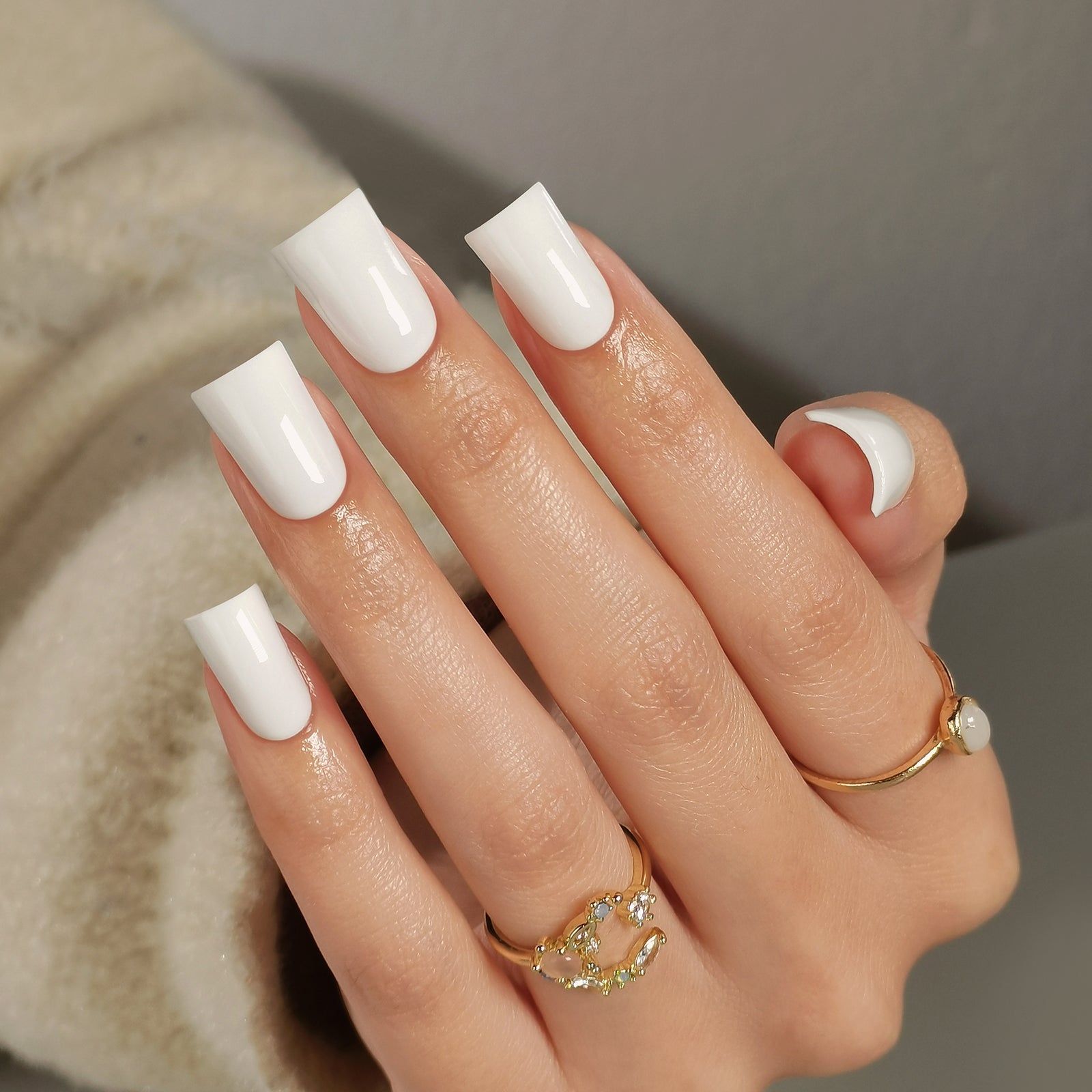
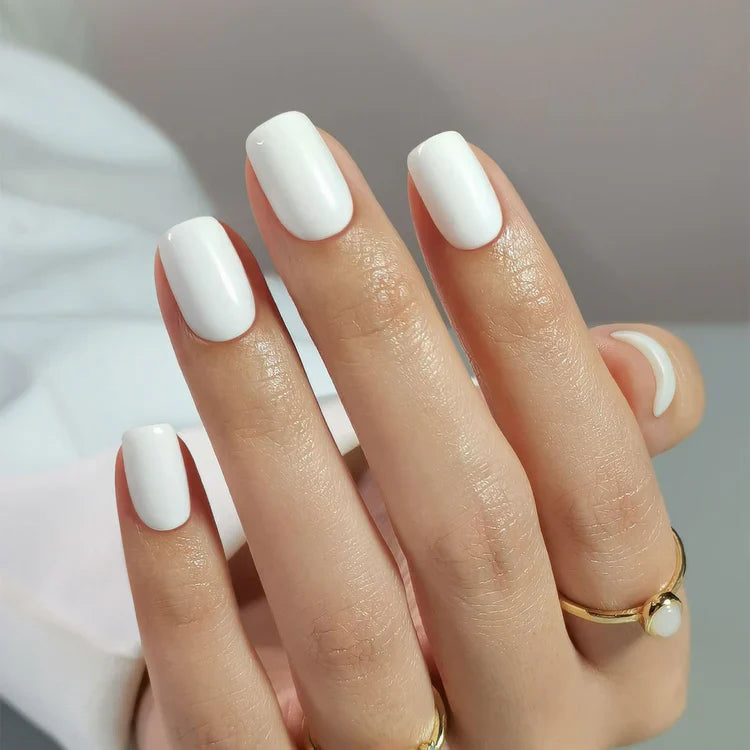
5. Chalk White
Pure white in matte is not the same as the high-contrast shine of glossy white. Chalk white reads like a freshly washed white cotton shirt — clean, textured, considered. For editorial shoots and minimalist aesthetics, this is consistently one of the strongest design choices regardless of season.
6. Slate Blue
A medium blue with enough grey to sit between navy (too formal) and cornflower (too sweet). Slate blue in matte is a blue that works as a neutral — it does not demand to be the focal point of an outfit, but it adds more personality than a true neutral.

The six neutral mattes across skin tones. Note how concrete grey and chalk white perform across the full range; velvet sage has a particularly strong presence on deeper skin tones.
The Editorial Darks (Designs 7-12)
Deep, saturated matte colors that photograph with intensity and read as fashion-forward in any context.
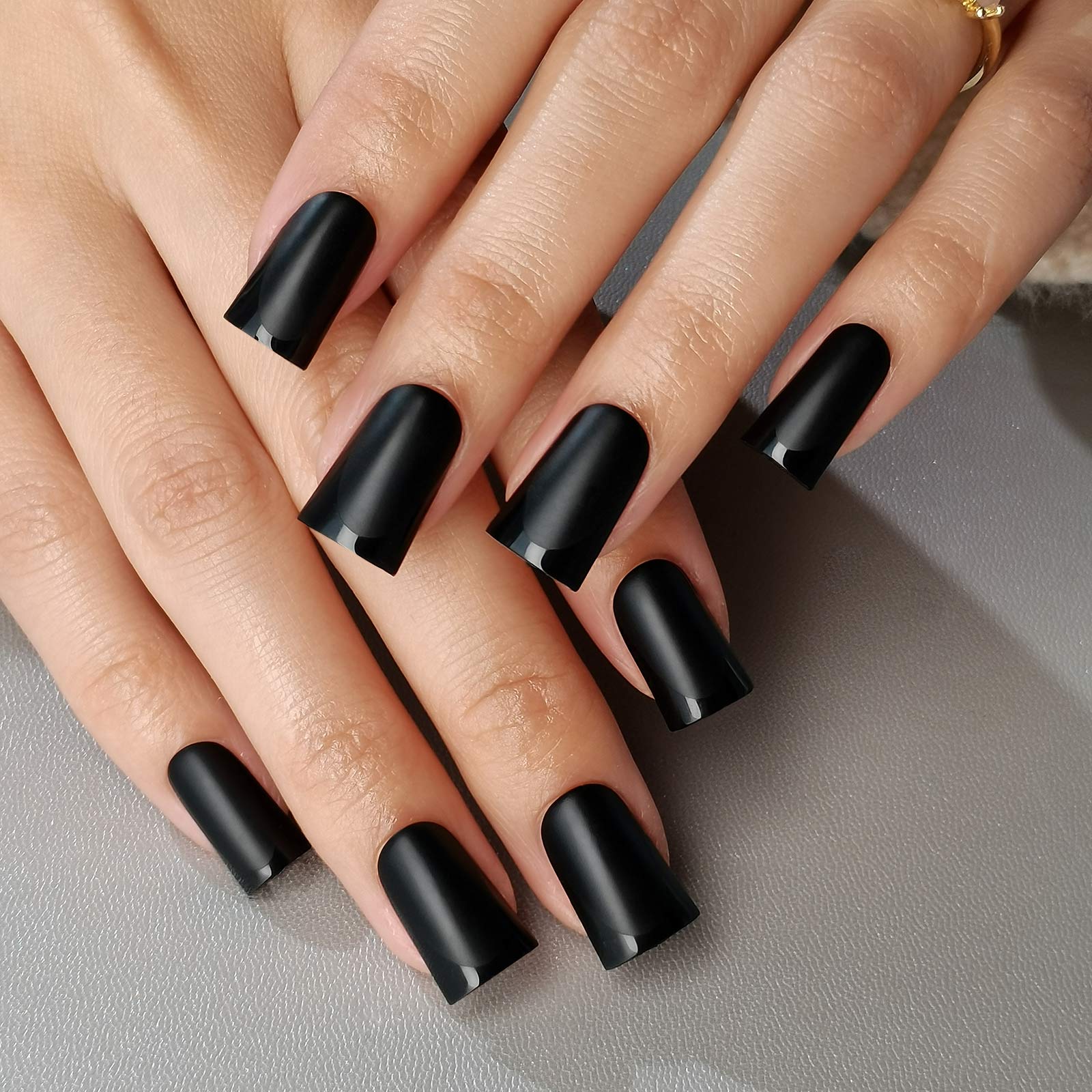
7. Matte Black
The foundational matte design. Not the high-gloss patent black of classic noir nails — matte black has more gravity and less drama. It is the design that suggests editorial confidence rather than costume boldness. This is what nail technicians and creative directors reach for when they need a nail that will not compete with anything else in the frame.
8. Deep Plum Velvet
Dark purple with enough red to prevent it from reading as navy in low light. In matte, the "velvet" description is accurate — the finish has a textile quality that gloss cannot replicate. For evening events, this is one of the strongest nail designs available regardless of season.
9. Oxblood Matte
A deep red-brown that sits darker than burgundy, darker than brick — in the territory that nail technicians call "vampy." In gloss, oxblood can read as heavy. In matte, the finish removes the excess weight and reveals the sophistication of the specific color. Best worn from late summer through winter.
10. Forest Green Matte
A deep, saturated green in the range of pine or hunter green. The matte finish prevents the color from reading as vivid or cartoonish — which it might in high gloss — and instead it reads as jewel-toned and rich. Pairs particularly well with gold jewelry.
11. Dark Chocolate
A deep warm brown that reads almost black in low light, revealing its warmth in direct light. Chocolate brown in matte has been having a sustained moment as a manicure choice, driven partly by the fashion industry's renewed interest in warm brown tones as the new neutral.
12. Midnight Navy
Deepest navy in matte reads as nearly black until direct light catches it, revealing a rich blue tone. This is the deep nail design for people who want something other than black but still want full depth. Works for formal occasions where black nails might feel too abrupt.

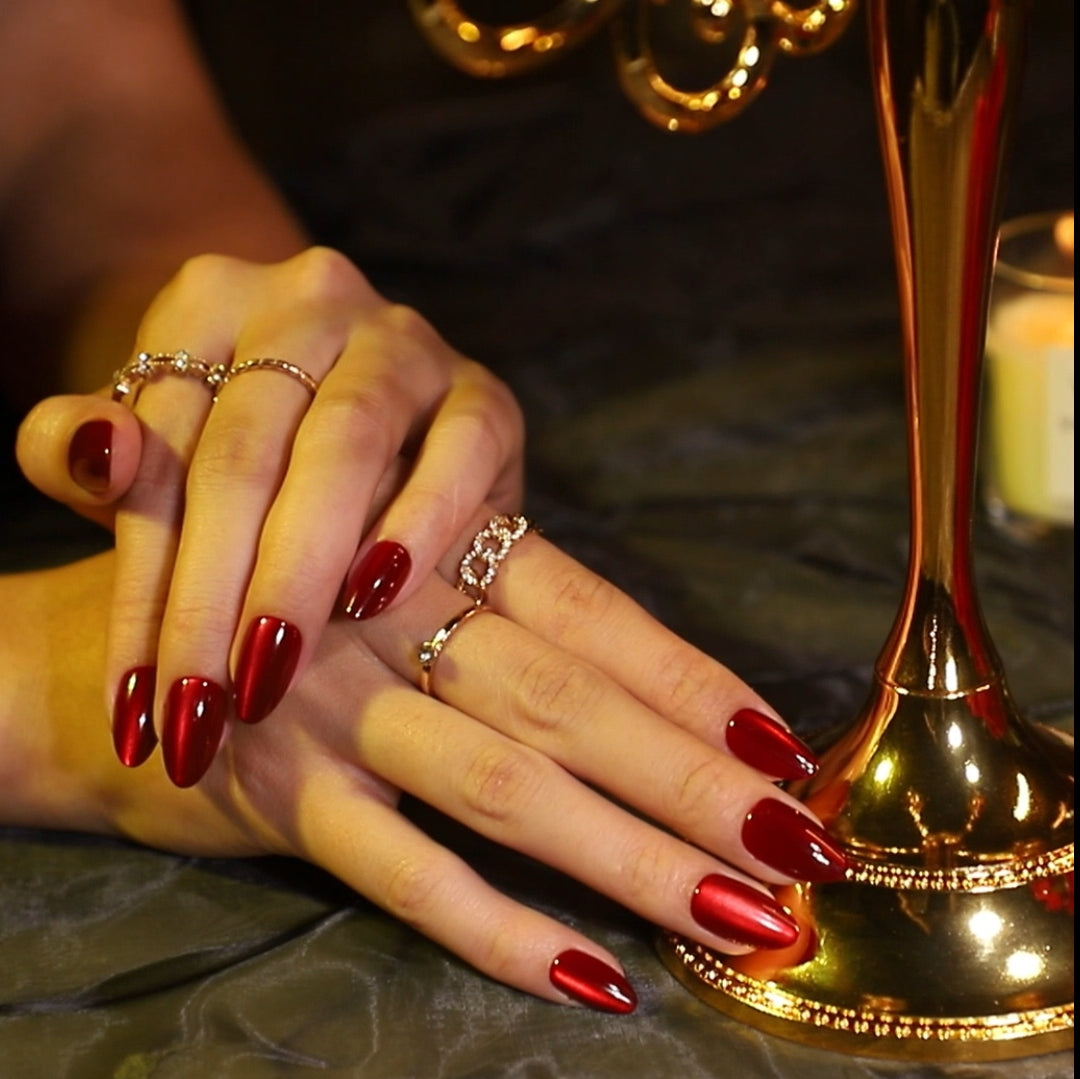
The editorial darks in candlelight. Gloss nails in this light environment would pick up the yellow tone of the candle light and look warm and reflective — matte nails hold their color character regardless of light direction.
Still worried they will look fake? Find your shape and finish by matching your natural nail width; the right set reads polished, not pasted on.


The Textured Mattes (Designs 13-16)
Matte finishes that use texture — real or simulated — as a core design element.
13. Stone Marble (Matte)
Marble nail art in matte reads as a material reference rather than a pattern — the finish simulates the actual texture and non-reflective quality of natural stone. The veining (typically white or grey on a light base) is more visible in matte than in gloss because there is no reflective surface competing for attention.
Best shape: Square or squoval — the flat nail body best displays the marble veining.
14. Suede Lavender
The suede finish is a specific matte texture with a subtle pile-like quality — created in press-on nails through micro-textured film application at the factory level. Lavender in this finish reads as a designer material reference: the lavender color is the fashion version, the suede texture is the luxury material version. Together, they read as high-end without being precious.
15. Concrete Crackle
A deliberate crackle or cracked-earth texture in a warm grey concrete tone. The texture is pressed into the nail surface during manufacturing — it is not a surface treatment that can wear off. This finish reads as intentional and slightly sculptural, particularly on square or coffin shapes where the flat surface maximizes the texture display.
16. Dusty Terracotta (Matte)
Terracotta in matte has an almost terracotta-clay quality — the matte finish reinforces the material reference of the color, making it feel like the nail is actually the material rather than the color. For travel photography, resort settings, and warm-climate editorial shoots, this is one of the most versatile design choices.

Macro view of the four textured matte designs. Texture that would be partially obscured by a glossy top coat is fully visible in the matte finish — which is why these designs exist specifically in matte.
The Statement Mattes (Designs 17-20)
Matte finishes applied to high-impact designs: chrome, color-blocking, neon-matte contrast, and seasonal art.
17. Matte Chrome
Chrome nails in matte sounds like a contradiction — chrome is defined by its mirror reflectivity. Matte chrome is a recent development in nail manufacturing that applies a chrome effect to a surface treated to diffuse the reflection rather than create a mirror. The result is a metallic nail with depth rather than a reflective nail with surface. It reads as more sophisticated than standard chrome and photographs more interestingly because the metallic quality shows in highlights without creating a blinding specular reflection.
SHANGMENG's matte chrome collection uses dual-layer manufacturing: the chrome effect is applied, then a micro-matte finish is applied over it to create the signature diffused metallic quality.
18. Matte Neon (Paradox)
Neon matte sounds impossible — neon colors are defined by their vivid, almost glowing quality that seems inseparable from a reflective finish. Matte neon works because the saturation of neon pigments is high enough to maintain their vibrancy without the reflective surface. The result is a color that reads as vivid but has a soft, velvety surface — which makes it look designed rather than loud.
Best color: Electric yellow or coral neon in matte. These two color families hold their energy best in the matte finish.
19. Two-Tone Matte and Gloss
Not a purely matte design, but one that uses matte as a contrast element. A solid matte base with a gloss accent — a gloss tip on a matte body, or a gloss graphic stripe on a matte background — uses the contrast between the two finishes as the design itself. This is the approach used in editorial photography because the finish contrast photographs sharply and reads as intentional design rather than decoration.
20. Seasonal: Burgundy Matte with Gold Foil Detail
A deep matte burgundy base with deliberate gold foil flecks applied as an accent to one or two nails in the set. The foil and matte combination creates a deliberate juxtaposition — the rough surface of the matte against the flat reflective quality of metal foil. This is the design for late-year occasions: October events, holiday parties, winter weddings.

The statement mattes. Matte chrome (top left) shows how the diffused metallic reads as more sophisticated than mirror chrome; matte neon (top right) demonstrates that saturation survives a matte finish; the foil-on-matte (bottom right) uses material contrast as the design.
Maintaining Matte Press-On Nails
Matte nails require slightly different care than gloss nails — specifically, one habit to avoid and one to add.
Do not apply gloss top coat. This is the most common matte nail mistake. Glossy top coat applied over matte press-ons defeats the entire purpose of the finish — it seals the surface and converts the matte back to a gloss or satin. If you want to reseal the edge or add durability, use a matte top coat specifically. SHANGMENG's soft gel press-ons with factory-applied matte finish do not require additional top coat — the finish is sealed during manufacturing.
Apply cuticle oil at the edges only. Cuticle oil at the nail surface can reduce the matte quality of some finishes over time, particularly suede textures. Apply oil at the cuticle and sidewall edges where the press-on meets the skin — not over the nail surface itself.
Avoid hand cream over the nail surface. Hand cream oils that sit on the nail surface between applications can gradually affect the matte finish on some textures. Apply hand cream, wait until it absorbs fully, and wipe the nail surface lightly with a dry cloth if any cream residue remains.
Cleaning: For surface residue or fingerprint smudges on matte nails, a very slightly damp cloth (not wet) wiped gently across the surface removes marks without affecting the finish. For stubborn residue, a dry microfiber cloth.

The edge-only cuticle oil application for matte nails. The oil nourishes the cuticle and maintains the seal between nail and skin without affecting the matte finish of the nail surface.
FAQ
Q: Do matte nails show scratches and wear more than gloss? Matte nails actually hide surface wear better than gloss in most cases. A gloss nail that has been scratched shows the scratch as a dull line against the reflective surface — high contrast and immediately visible. A matte nail that has been scratched looks similar to its original state because the entire surface is already non-reflective. The exception is matte nails with very fine suede or flocked textures, which can show flattening of the texture in high-wear areas.
Q: Can I make regular press-on nails matte by adding a top coat? Yes. A matte top coat (specifically labeled as matte or velvet) applied over a gloss press-on will convert the finish to matte. Apply a thin, even coat and let dry completely — typically 3-5 minutes for matte top coats. Do not apply additional coats, as buildup creates an uneven finish. Be aware that matte top coat over gloss is not as durable as a factory-applied matte finish in soft gel press-ons.
Q: Are matte nails appropriate for professional settings? Yes, and often more so than dramatic gloss designs. The neutral mattes (concrete grey, dusty rose, chalk white, warm taupe, slate blue) read as clean and intentional in professional contexts. Matte black is universally accepted in creative industries. Deep matte colors (oxblood, forest green, dark chocolate) are appropriate for most professional environments except the most conservative (traditional law, finance boardrooms). The matte finish itself signals intention and thoughtfulness in a way that casual gloss does not.
Q: How do matte nails look in photographs? Matte nails photograph differently from gloss — and in many cases better. Gloss nails create a specular highlight that dominates the nail in photography, particularly with flash or studio lighting, reading as a bright white spot rather than the color of the nail. Matte nails photograph as their actual color in any lighting condition, with more color accuracy and detail. For this reason, editorial photography, product photography, and social media content frequently use matte finishes.
Q: Do matte nails look good on short nails? Yes, and in some cases better than on long nails. The matte finish emphasizes the nail's shape rather than its length, which means short, well-shaped nails in matte look proportionate and intentional. The chalk white, concrete grey, and velvet sage designs in this guide are particularly flattering on short nail lengths. Very long nails can use matte effectively for the textured designs (stone, suede, crackle) where the large surface area maximizes the texture display.
Q: What skin tones look best with matte nails? All skin tones can wear matte finishes effectively. Specific color notes: warm skin tones are enhanced by terracotta, dusty rose, warm taupe, and forest green mattes; cool skin tones work particularly well with concrete grey, slate blue, chalk white, and deep plum. Matte black, oxblood, and dark chocolate work equally well across all skin tones because they are deep enough that undertone differences become minimal.
 SHANGMENG's matte collection: factory-applied matte finishes on soft gel press-ons. The matte quality is integrated into the nail material rather than applied as a surface coat, which means it does not require a matte top coat and does not fade or chip the way a surface-applied finish can. 4.94/5.0 across hundreds of verified reviews.
Twenty designs. One finish. Infinite situations where matte simply performs better than gloss.
From the concrete neutrals you wear every week to the matte chrome statement you reach for when you need the nails to be part of the editorial story — the matte finish is not a trend. It is an approach to color and surface that produces results gloss cannot.
Browse SHANGMENG's matte-ready styles: New press-on nail arrivals
For complementary glossy looks: Our chrome press-on nails guide covers mirror and duo-chrome finishes for when you want the full reflective statement.
Seasonal design ideas: The 2026 nail color trends guide includes matte recommendations across the year's color families.
Share