












Home
›
Trends — Nail Inspiration & Designs
›
Gyaru Nails: The Y2K Japanese Street Style That Made Nails Extra

Gyaru Nails: The Y2K Japanese Street Style That Made Nails Extra
By Elia, SHANGMENG Nail Design Specialist.

Quick Answer: Gyaru nails are the bold, maximalist nail aesthetic from Japanese street fashion — long, heavily embellished sets featuring mirror chrome, holographic glitter, 3D accents, and dramatic color. Born in Japan's 1990s youth subculture and currently in a full Y2K revival, the look translates directly to press-on nails. SHANGMENG's glitter press-on nails and chrome press-on nails cover the core gyaru palette from $10.61, applying in under 10 minutes.
There is a specific kind of nail that refuses to disappear into the background — the light-catching chrome, the 3D stars, the glitter that shifts color as your hand moves. They have presence. That presence is not accidental. It comes from a street-fashion subculture that spent decades developing an aesthetic language around exactly this quality: nails as declaration, nails as identity. That subculture is gyaru, and in 2026, its nail aesthetic is in one of its most significant revivals since the early 2000s.
This guide covers where gyaru nails came from, what defines the aesthetic, how it differs from other Japanese nail styles, why Y2K culture is pulling it back — and eight real press-on sets that let you wear the look today.
Not sure which shape, length, or size fits your natural nails?
What Is Gyaru? A 2-Minute Cultural Primer
Gyaru (ギャル) emerged as a distinct Japanese street-fashion subculture in the 1990s, centered in Tokyo's Shibuya district. The word derives from the English "gal," reframed by Japanese youth as a self-descriptor for young women who deliberately styled themselves against conventional expectations of quiet femininity and professional conformity.
The look was bold by design: bleached or dramatically colored hair, heavy eye makeup, and — critically — nails that matched the intensity of everything else. Gyaru nails weren't an afterthought. They were a core element of the aesthetic, as deliberately composed as the outfit.
At its peak through the late 1990s and mid-2000s, gyaru encompassed several distinct sub-styles, each with its own nail vocabulary:
- Hime gyaru ("princess gal") leaned into pink, pearls, and royalty references — nails in soft pink bases with rhinestones and dimensional detail.
- Agejo was the more glamorous sub-style: longer nails, richer colors, heavier embellishment. This is the sub-style most associated with the long, rhinestone-covered acrylic look that defined gyaru nail art in the mid-2000s.
- Ganguro (often confused with gyaru as a whole, but actually one specific sub-style) pushed into high contrast — bold nails in hot pink, orange, and white. Ganguro is a sub-style, not a synonym for gyaru.
- Manba went further still: full maximalist nails with chrome, glitter, and everything at once.
The common thread was intentionality. Gyaru practitioners built their look deliberately as a form of identity expression. Scholars who have studied the movement consistently frame it as deliberate self-construction rather than trend-following. Gyaru's peak faded through the late 2000s, but the aesthetic never fully disappeared — and in the Y2K revival moment, it's back.
The Gyaru Nail Aesthetic: What to Expect
Understanding gyaru nails requires separating them from "Japanese nail art" broadly — a conflation that misrepresents both gyaru specifically and the enormous diversity of Japanese nail culture generally.
Gyaru nails have specific characteristics. They are not minimalist. They are not neutral. Here is what defines the aesthetic:

Length and shape: Gyaru nails skew medium-long to long. Almond and coffin shapes are most historically accurate — both create the elongated profile the aesthetic requires. Short nails can reference gyaru through color and finish, but length is part of what makes them read as gyaru.
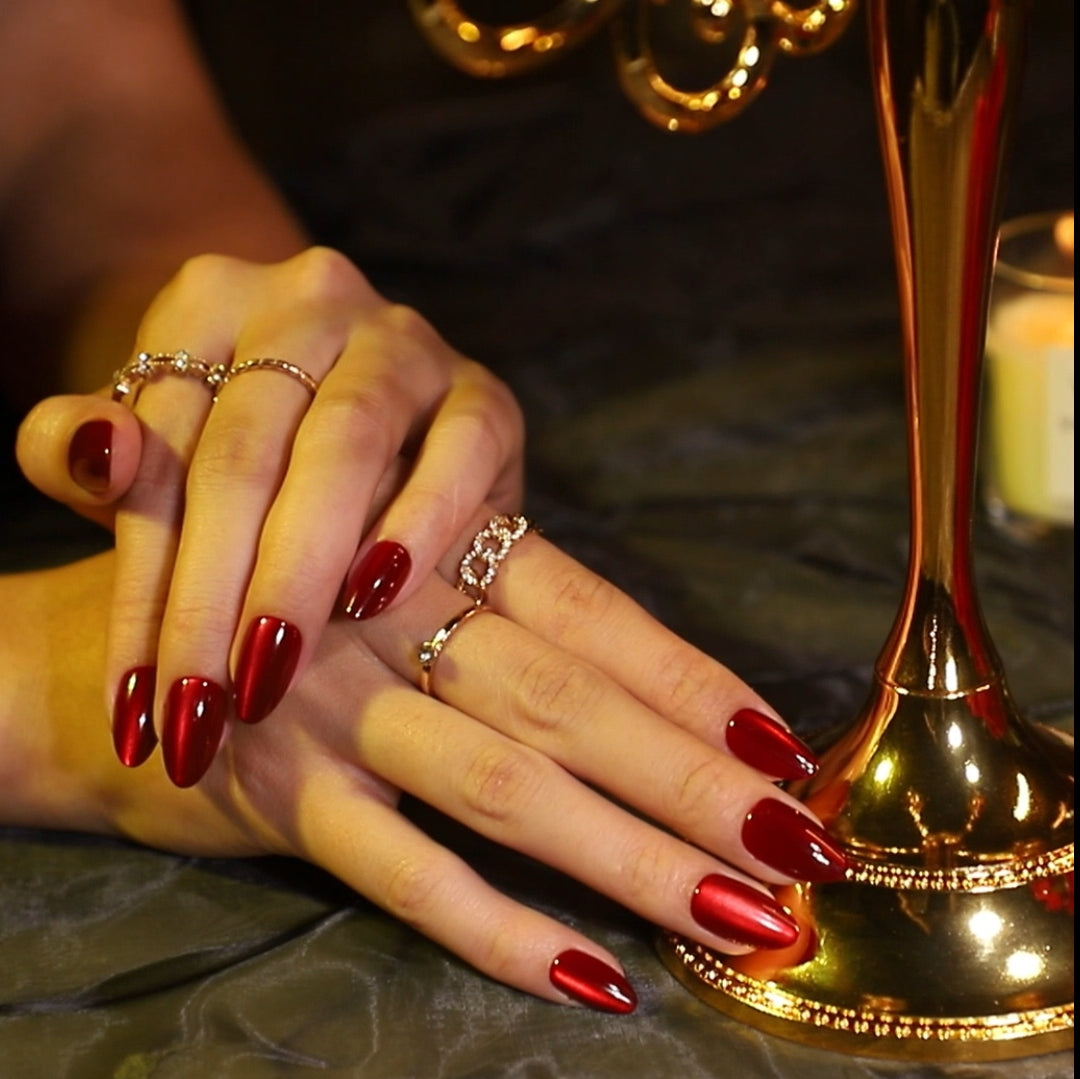
Finishes: Mirror chrome (high-polish, metal-like reflectivity) is central. Holographic glitter that shifts in light, multi-chrome that moves between hues, and cat-eye finishes with a magnetic shimmer line are all within the gyaru vocabulary. Not subtle, by design.
Embellishments: 3D elements are a gyaru signature — rhinestones, stars, swirls, dimensional accents that build up from the nail surface. Elaborate embellishment signaled investment, attention, and identity.
Colors: Hot pink, electric purple, chrome silver, rainbow iridescence, deep black, aurora multi-color. Notably absent: nude, blush, barely-there. Gyaru nails want to be seen.
This is the aesthetic press-on technology serves particularly well — embellishment complexity that used to require two hours in a nail studio now applies in 10 minutes.
Gyaru Nails vs. Other Japanese Nail Aesthetics
Because "Japanese nail art" encompasses an enormous range of styles, it's worth briefly placing gyaru in context against the styles it's most often confused with:
Gyaru vs. kawaii nails: Kawaii ("cute") nail art leans pastel and playful with small cute motifs. Gyaru shares maximalism but differs in tone: kawaii is sweet and soft; gyaru is bold and glamorous.
Gyaru vs. harajuku: Harajuku is shorthand for Japanese street fashion broadly — it encompasses Lolita, Decora, gyaru, and many other styles. Gyaru is one specific style within that ecosystem, not a synonym for Harajuku fashion.
Gyaru vs. jirai kei: Jirai kei ("landmine girl") is a more recent Japanese aesthetic with a dark, feminine, emotionally inward register — distinct from gyaru's outward glamour.
The practical takeaway: if you're drawn to mirror chrome, glitter, 3D accents, and hot pink, you're in gyaru territory. The aesthetics may share influences but they're not interchangeable.
Y2K Connection: Why Gyaru Nails Are Back

The Y2K revival is not a single trend — it's a broad reclamation of early-2000s aesthetics across fashion and beauty, and gyaru nails sit in its most expressive corner. The connections are direct: chrome finishes, maximalist embellishment, the rejection of "natural and understated," and the embrace of bold color as identity. These were gyaru properties long before the millennium turned.
Reddit's nail communities capture the shift plainly. A frequently upvoted comment in a press-on nail discussion: "When I want to be a baddie, press ons are my go-to." That framing — nails as a deliberate identity move — is exactly the register gyaru has always operated in. Search data confirms the momentum: y2k press on nails is among the fastest-growing nail search terms in 2026, and gyaru's specific vocabulary — chrome, glitter, 3D stars — is precisely what those searchers are looking for, even when they don't yet have a name for it.
How to Get Gyaru Nails at Home — Press-On Edition
The practical barrier to gyaru nails has historically been significant. Long, heavily embellished nail art requires either a skilled nail technician (2+ hours, $80–$150+) or serious at-home acrylic skills most people don't have. Press-on technology changes that calculation entirely.
Here's how to approach a gyaru press-on set for maximum effect:
Choose the right length. Gyaru nails want length. The medium-long range — free edge 5–7mm past the fingertip — captures the aesthetic without the full adaptation time that very long nails require. Our long press-on nails collection includes sizing guidance if you're calibrating for the first time.
Still worried they will look fake? Find your shape and finish by matching your natural nail width; the right set reads polished, not pasted on.


Commit to a finish. Gyaru is built around a dominant finish choice: all chrome, all glitter, or all 3D. Start with one primary finish and let the color and embellishment do the work.
Prep matters more for embellished sets. Raised elements — stars, rhinestones, 3D swirls — catch on fabric more than flat nails, making edge adhesion critical. Clean with isopropyl alcohol, let it evaporate fully, then apply firm even pressure from the cuticle outward for 20–30 seconds.
Adhesive tabs vs. glue: Tabs give clean removal at 5–7 days; glue extends to 2+ weeks for travel or events. For sets you want to reuse, tabs preserve the embellishments better through removal.
For broader context, aad.org and aad.org are useful independent references when comparing at-home nail routines with salon-style results. For the style lineage, Allure's coverage of 3D jelly nails places dimensional jelly nail art in the Gyaru, Lolita, and Harajuku fashion world rather than treating it as a generic salon trend.
8 Gyaru Press-On Looks to Shop Now
These eight sets cover the core gyaru finish categories — chrome, glitter, 3D, and aurora — organized from the most instantly recognizable gyaru looks to the more experimental edge of the aesthetic.

Hot Pink Glitter — Agejo Energy
The Glitter Hot Pink Press-On Nails at $14.38 are the most immediately gyaru set in the collection. Hot pink is the color most associated with Agejo and Kogyaru sub-styles — it's the color that defined the most visible, most photographed era of the aesthetic. Dense glitter at this saturation level has presence from across a room.
Aurora Chrome Pink — Hime Mirror Sheen
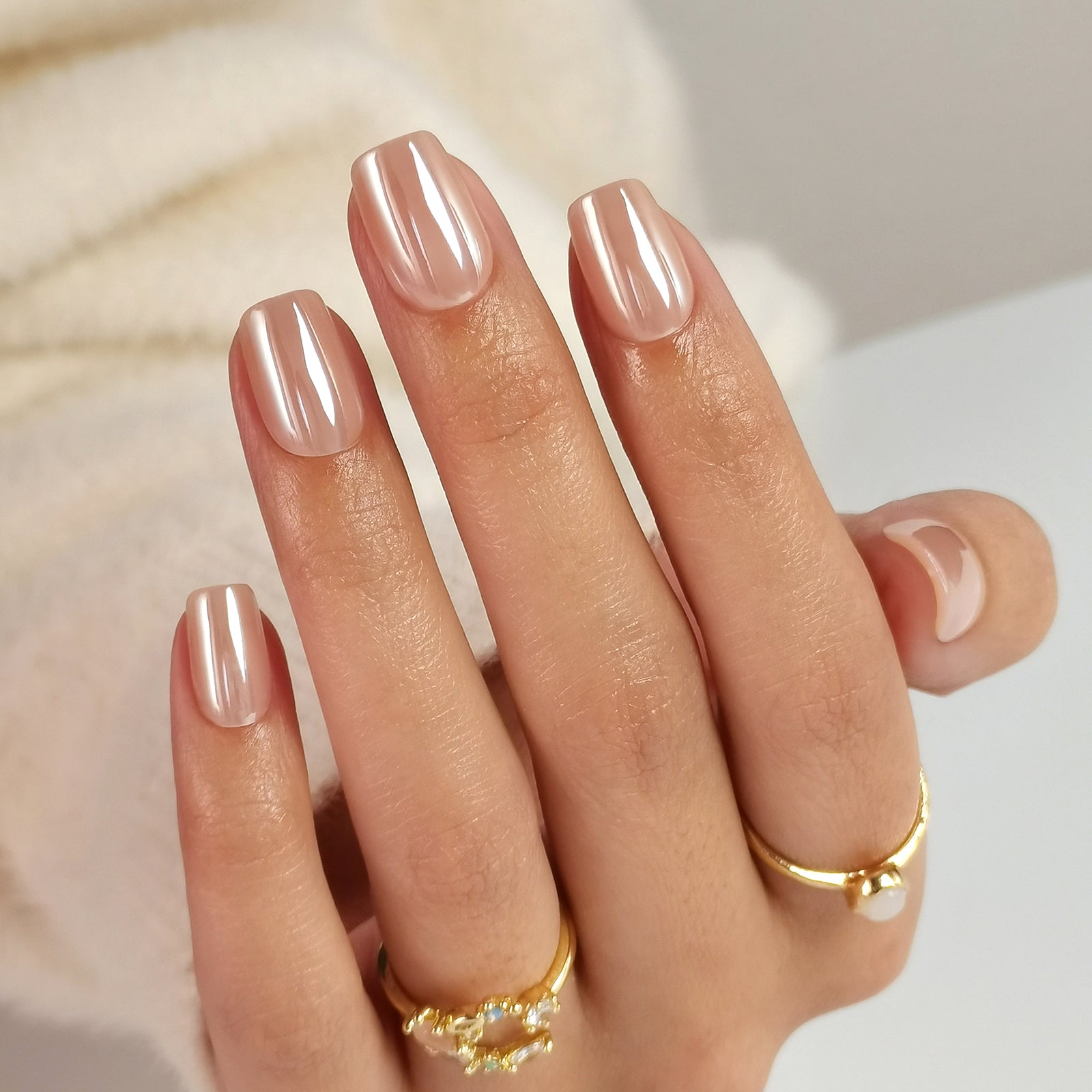
The Glazed Chrome Aurora Pink Nails at $11.99 deliver the mirror chrome finish that is a gyaru signature — iridescent, reflective, shifting between pink and aurora tones depending on the light. The chrome surface is the nail equivalent of a metallic outfit: it doesn't stay quiet.
Rainbow Glitter Candy — Y2K Maximalism
The Glitter Rainbow Candy Press-On Almond Nails at $14.38 pack every Y2K maximalist instinct into one set. Rainbow glitter shifts across the full spectrum; candy-color undertones add the saturated sweetness that Hime gyaru energy is built around. These are the nails you notice first in a group photo.
3D Silver Star Swirl — Textbook Embellishment
The Blush 3D Silver Star Swirl Almond Nails at $14.39 are the most historically accurate gyaru nail art in the collection. Stars and dimensional swirls are textbook gyaru embellishment motifs — the kind of 3D detail that defines what made gyaru nail art distinctive in the mid-2000s. Browse the full 3D gel press-on nails collection for more options in this aesthetic territory.
Futuristic 3D Pink Ombre — Space-Girl Edge
The Silver Futuristic Ombre Pink 3D Almond Nails at $14.39 push into the space-girl direction Manba-adjacent gyaru explored: silver futuristic surface, pink ombre gradient, 3D finish. For when unmistakable is the point.
Duochrome Purple-to-Green — Electric Shift
The Chrome Purple Green Short Square Soft Gel Press-On Nails at $12.79 demonstrate how gyaru boldness works in a more compact format. The duochrome shift from electric purple to green is the kind of color technology that early gyaru practitioners would have worn if they'd had access to it — pure maximalist color play. Ganguro sub-style gyaru specifically embraced this level of chromatic boldness.
Colorful Aurora Chrome — Multi-Hue Holographic
The Auroras Colorful Chrome Round Nails at $13.42 bring the holographic oil-slick finish in a softer round shape — the aurora effect shifts through multiple hues depending on the light source and angle. This is the most wearable gyaru-adjacent set for people who want the aesthetic language without the maximum intensity level. Explore the full aurora press-on nails range for more in this multi-chrome direction.
Black Starry Sky Glitter — Rokku Sub-Style Entry
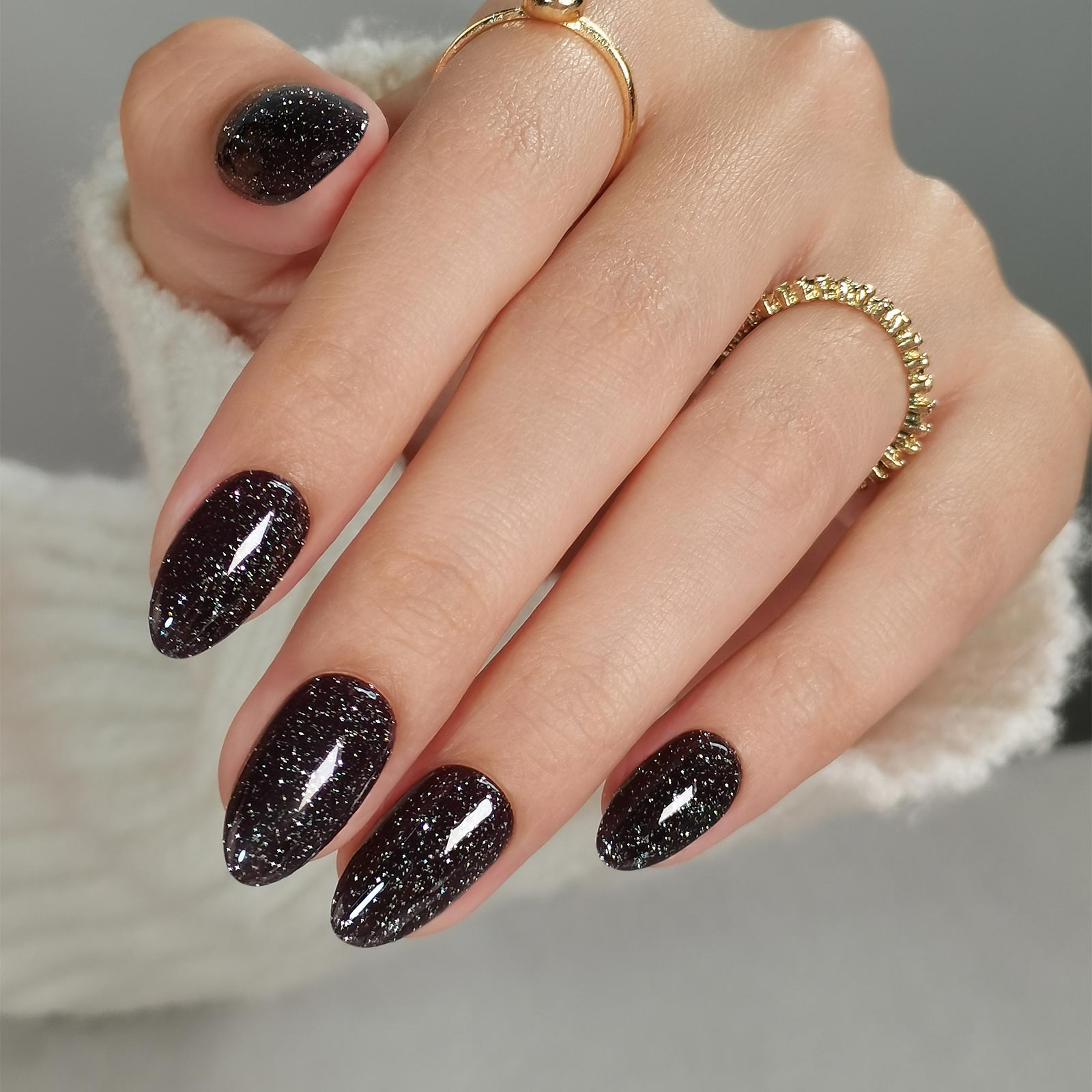
The Glitter Black Starry Sky Press-On Nails at $10.61 are the entry-price anchor and the only dark-base set in this lineup. Black glitter with embedded star detail is the nail aesthetic of Rokku (rock-influenced) gyaru — the sub-style that pointed the aesthetic toward its edgier, darker edge. At $10.61, this is also the starting point if you want to test gyaru nail territory without full commitment.
Gyaru Nail Colors: The Defining Palette

The gyaru color vocabulary is specific. Hot pink is the foundational gyaru color — most associated with Agejo and Hime sub-styles, the single color that reads unmistakably gyaru. Aurora and iridescent chrome are the technological peak: multi-color shift, never the same twice, different in every light source. Electric purple goes saturated and bold, never soft. Rainbow in gyaru context means full-spectrum maximalism — every color at once, deliberately. Black with embellishment is Rokku's signature: darkness as a base that makes stars and glitter more visible, not less.
What these colors share is refusal — they refuse to disappear, refuse to apologize for being seen, refuse the convention that nails should be background. That refusal is the through-line of gyaru across all its sub-styles.
Related Collections
Browse our curated collections to find the perfect press-on nails for your style:
Frequently Asked Questions
What are gyaru nails?
Gyaru nails are the bold, maximalist nail aesthetic originating from Japan's gyaru street-fashion subculture, which peaked in the 1990s and mid-2000s. Defining characteristics include medium-long to long length, almond or coffin shapes, mirror chrome or holographic glitter finishes, 3D dimensional embellishments like stars and rhinestones, and a palette built around hot pink, aurora, electric purple, and rainbow tones. They're defined by presence and intentionality — the opposite of the quiet, natural-nail aesthetic.
Is wearing gyaru nails cultural appropriation?
Worth answering directly: gyaru drew openly from Western fashion, Black American beauty culture, and global youth aesthetics — it was never ethnically exclusionary by design. Researchers who study gyaru frame it as deliberate identity construction that actively incorporated outside influences as part of its DNA. Wearing chrome, glitter, and 3D embellishment associated with gyaru aesthetics is engagement with a visual language, not appropriation of something closed or sacred. The standard to meet is the one this guide models: understand the context, name the source accurately, and don't flatten a diverse subculture into a caricature.
How is gyaru different from kawaii nails?
Kawaii nail art tends toward soft pastels, cute motifs, and a gentle, playful tone. Gyaru nail art is bolder: higher saturation colors, more intense finishes (chrome, holographic), more elaborate embellishment, and a glamorous rather than cute register. The aesthetics can overlap in color (pink appears in both), but their emotional and visual intent is distinct. Gyaru is deliberate and dramatic; kawaii is sweet and soft.
Can I achieve the gyaru nail look with press-on nails?
Yes — more easily than with salon acrylic. The key elements of gyaru nail aesthetics (mirror chrome finishes, glitter density, 3D embellishment, longer almond shapes) are all available in press-on format. The practical advantage of press-ons over traditional salon acrylics for gyaru looks is significant: application takes 10 minutes instead of 2+ hours, costs $11–$15 instead of $80–$150, and individual sets can be changed more frequently to experiment with different sub-style aesthetics. The glitter press-on nails and chrome press-on nails collections cover the core gyaru palette.
What's the difference between Hime, Agejo, and Ganguro gyaru nail aesthetics?
Hime ("princess") nails are feminine and ornate: soft pink bases, rhinestones, dimensional accents. Agejo goes longer, richer in color (hot pink, red, bold purple), and heavier on embellishment — the most glamour-forward sub-style. Ganguro is a specific sub-style (not a synonym for gyaru) defined by high contrast: bold neons and bright colors, often against a darker base. All three share length and embellishment but differ in palette and tone.
How long do gyaru press-on nails last?
With adhesive tabs over a clean, oil-free surface, press-on nails typically hold 5–7 days. Nail glue under the tab extends this to 2+ weeks for events or travel. For sets with 3D embellishments, tabs are preferable for removal — they release more cleanly without stressing the raised elements. Soak in warm water 5–10 minutes before removal.
Explore the glitter press-on nails collection for gyaru-aesthetic sets from $10.61, applying in 10 minutes with 16 sizes per set. For the multi-chrome direction, see the aurora press-on nails collection.
More editorial nail guides: chrome nails guide · aurora chrome nails · starlight nails trend · stardust glitter guide.
Share