













False Nails for Toes: Complete Press-On Toenail Guide
False Nails for Toes: The Complete Guide to Press-On Toenails
Written by Elia, SHANGMENG Style Editor
The same press-on nail revolution that changed fingernails has arrived for toes — and in some ways, the case for toenail press-ons is even stronger. Salon pedicures take 45-90 minutes, cost $30-60, and — unless you're wearing sandals immediately and can afford to air-dry — risk smudging the moment you put your shoes back on. Press-on toenails take 15 minutes, cost a fraction of the salon price, and are fully dry the moment they're applied.
If you've only ever thought of press-on nails as a fingernail product, this guide is for you.
Not sure which shape, length, or size fits your natural nails?
Key Takeaways
- Press-on toenails apply with the same adhesive tab or glue method as fingernail press-ons — no special technique required
- Sizing matters more for toes than for fingers because toenails, particularly the big toe, vary dramatically in width between individuals
- Wear time is typically 1-2 weeks with adhesive tabs and up to 2 weeks with nail glue under normal conditions including showering
- False toenails are fully waterproof once applied and set — swimming and showering don't require special precautions
- Open-toe shoes and sandals are safe to wear immediately after application — no dry time
Why Press-On Toenails Beat Salon Pedicures in Summer
The traditional salon pedicure timeline: make appointment → travel → wait → 45-90 minutes of service → wait for dry → travel home in flip-flops in the rain. Total commitment: 3-4 hours. Cost: $30-60 every 3-4 weeks.
The press-on toenail alternative: 15 minutes at home, sandals on immediately, $12-15 per kit, up to 2 weeks wear. Total commitment: half a TV episode.
This isn't about sacrificing quality — the designs available in press-on toenail format include everything from classic French tip to chrome ombre to 3D floral, at quality levels that photograph indistinguishably from salon work.

The one area where salon pedicures remain superior: cuticle work, callus removal, and the massage elements. Press-on toenails solve the "I need my toes to look polished" problem; they don't replace the spa experience. Both serve different needs.
Sizing False Nails for Toes: The Critical Difference
The main technical difference between fingernail and toenail press-ons is sizing. Toenails — particularly the big toenail — can vary dramatically in width between individuals, and the sizing of press-on toenail kits needs to accommodate this range.
What to look for in a kit: - Multiple big toenail sizes (big toes range from approximately 14mm to 22mm wide across individuals) - Clear sizing guidance — ideally a printable size guide - At least 10 sizes across the 10 toenails
How to size for toenails:
- Measure each toenail at its widest point with a soft tape measure or printed size guide. Toenails that appear similar are often different widths — don't assume your second toe matches your third.
- Choose the size that matches or is slightly smaller than the nail width. Press-on nails should cover the nail bed from edge to edge without overlapping onto the skin.
- For the little toenail: Most little toenails are unusually small and curved. Many people skip the little toe entirely or use a smaller press-on and trim it to fit.
SHANGMENG press-on toenail kits include 32 Nail Tips · 16 Sizes designed specifically for toenail proportions.
Explore More → Pedicure Press-On Nails
Application: Step-by-Step for Toes

Preparation (5 minutes)
- Remove old polish if any. Acetone-based remover works faster and leaves a cleaner surface.
- Trim and file natural toenails to be as flat and low as possible. Toenails should be trimmed straight across (not rounded) to maximize the contact area between the press-on and the natural nail. Longer natural toenails can cause the press-on to arch and lift faster.
- Push cuticles back gently with an orange wood stick. Cuticle oil makes this easier if cuticles are dry — but apply and wipe off before the press-on application, as residual oil prevents adhesion.
- Buff the nail surface lightly with a fine-grit buffer (180+ grit). This creates a slightly textured surface that adhesive grips better.
- Wipe each toe with the alcohol prep pad. This is the most commonly skipped and most important step. The nail surface must be completely free of oils and moisture for the adhesive to bond.
Application (10 minutes for 10 toes)
- Sort press-ons by size before starting — matching all 10 first is faster than matching each individually at the moment of application.
- For adhesive tabs: Peel the backing, apply to the press-on nail back, then peel the second backing and press onto the natural toenail. Hold with firm pressure for 30 seconds.
- For nail glue: Apply a thin layer to the natural toenail (not the press-on), wait 30 seconds until tacky, then press the false nail on with firm, even pressure for 30 seconds.
- Press from center outward to avoid air bubbles.
- Apply extra pressure at the edges — this is where toenail press-ons most commonly lift first.
Best Designs for False Toenails
Not all fingernail designs translate to toenails. Here are the categories that work best:
Classic solid colors: Red, burgundy, coral, and nude — the traditional pedicure palette. These are the most universally flattering and work for every occasion from beach to formal.

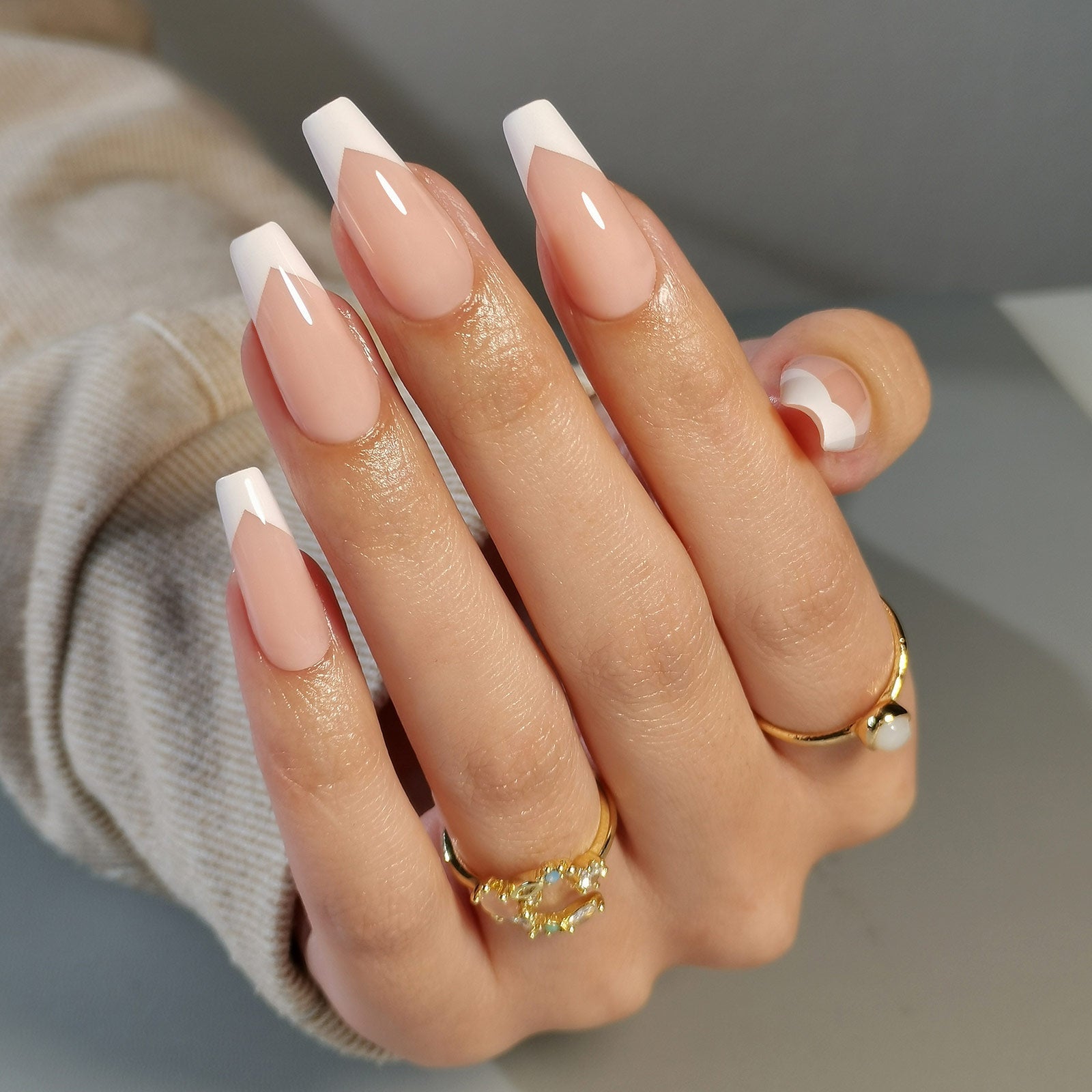
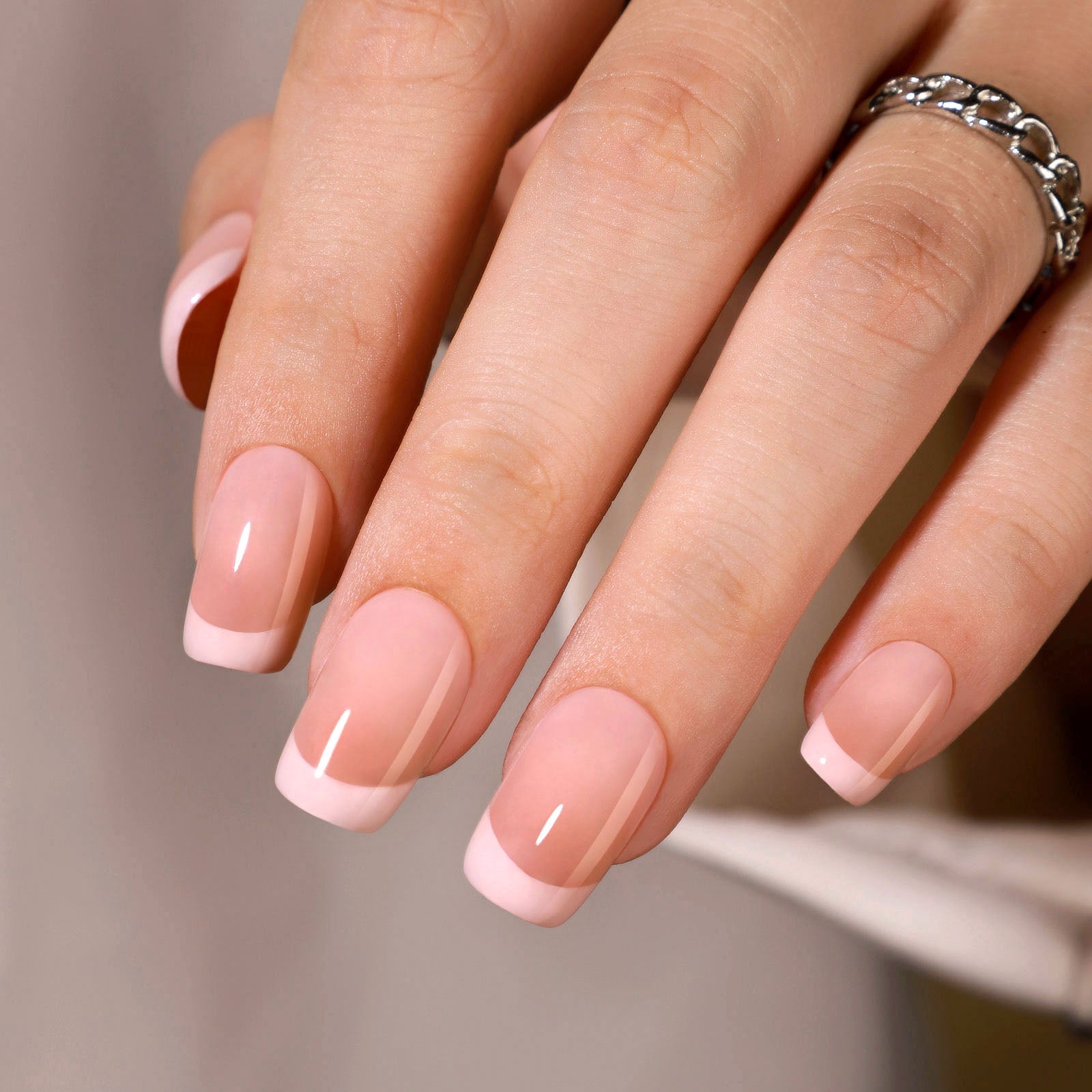
French tip: White-tipped French on toenails is arguably more elegantly proportioned than on fingernails — the natural toenail shape creates a clean smile line. This is the most requested "formal" toenail look.
Soft pastels: Baby pink, lavender, mint, and peach are perennial summer toenail colors — they pair with every sandal and swimsuit color.
Glitter accent: A glitter big toenail with solid color on the remaining nine is one of the most effective toenail designs for special occasions. Minimizes effort while maximizing impact.
Avoid for toes: Very long extension nails (uncomfortable in shoes and impractical for walking), extremely 3D designs with raised elements (get caught in socks and shoes), and very dark colors that chip visibly (though this is less of a concern with press-on nails than with traditional polish).
How Long Do Press-On Toenails Last?
Toenails are in a different wear environment than fingernails: they're enclosed in shoes for much of the day, subjected to friction from walking, and less frequently exposed to water than fingernails. This actually extends wear time for some people:
| Adhesive Type | Expected Wear Time | Notes |
|---|---|---|
| Adhesive tabs | 1-2 weeks | May be shorter with very active walking/sports |
| Nail glue | Up to 2 weeks | Standard for most people |
| Combined (tab + glue layer) | Up to 2 weeks | For special occasions or beach vacations |
Factors that shorten wear time: - Tight-fitting shoes that press on the toe edge - Frequent barefoot walking on rough surfaces - Active sports with lateral foot movement - Natural toenails that were too long before application (creates lift point)
Factors that extend wear time: - Complete nail prep (buffed and dehydrated surface) - Flat natural toenails (more contact area) - Wearing shoes most of the day (protects edges from catching)
Removing False Toenails
The same methods as fingernails apply:
Adhesive tabs: Soak foot in warm water for 10-15 minutes. Toenail press-ons may take slightly longer to release than fingernails because they're often applied more firmly. Apply lateral sliding pressure — don't pry upward.
Nail glue: Soak in acetone or use acetone-soaked cotton pads wrapped in foil around each toe. 15-20 minutes. Slide off gently.
Related: Best Way to Remove Fake Nails

After removal, apply foot cream and cuticle oil to the toenail and surrounding skin — the same aftercare as fingernails, but often even more appreciated after extended wear inside shoes.
Frequently Asked Questions
Are false nails for toes safe to wear?
Yes — press-on toenails applied correctly over healthy natural toenails are safe. The same rules as fingernail press-ons apply: don't apply over damaged or infected nails, size correctly so the nail doesn't overlap onto the skin, remove properly to avoid pulling the natural nail, and give nails a brief rest between extended wear periods. If you have a fungal nail condition, treat it before applying any artificial nails.
Can you wear press-on toenails in the pool or ocean?
Yes — once applied and set (allow 30-60 minutes after application before full water immersion for maximum adhesive cure), press-on toenails are fully waterproof. Swimming, showering, and beach days are all fine. Extended underwater soaking (longer than 30 minutes) may slightly soften adhesive tabs, but a firm press and air dry usually restores the bond.
Do press-on toenails work on short toenails?
Yes — most people's toenails (especially the smaller toes) are naturally short, and press-on toenail kits accommodate this. The key is sizing: choose a press-on that matches your natural nail width even if the natural nail is very short. The press-on will sit primarily on the natural nail with a small extension beyond — this is normal and doesn't affect stability.
How do you apply false nails to the little toe?
The little toe is the most challenging because of its small, curved nail and often irregular shape. Options: (1) find the smallest press-on in your kit and trim it with nail scissors to fit the little toe's width and shape; (2) skip the little toe entirely and apply to nine toes (barely visible in sandals); (3) find kits specifically designed for smaller toe coverage. Sizing down is always better than sizing up for little toes.
False nails for toes are one of the most underused nail products — mostly because people assume press-ons are for fingers only. The reality: the convenience advantage is even greater for toenails, where the alternative (salon pedicure) involves the highest time commitment of any beauty service. In 15 minutes at home, you have what would take 90 minutes and $50 at a salon.


Share