


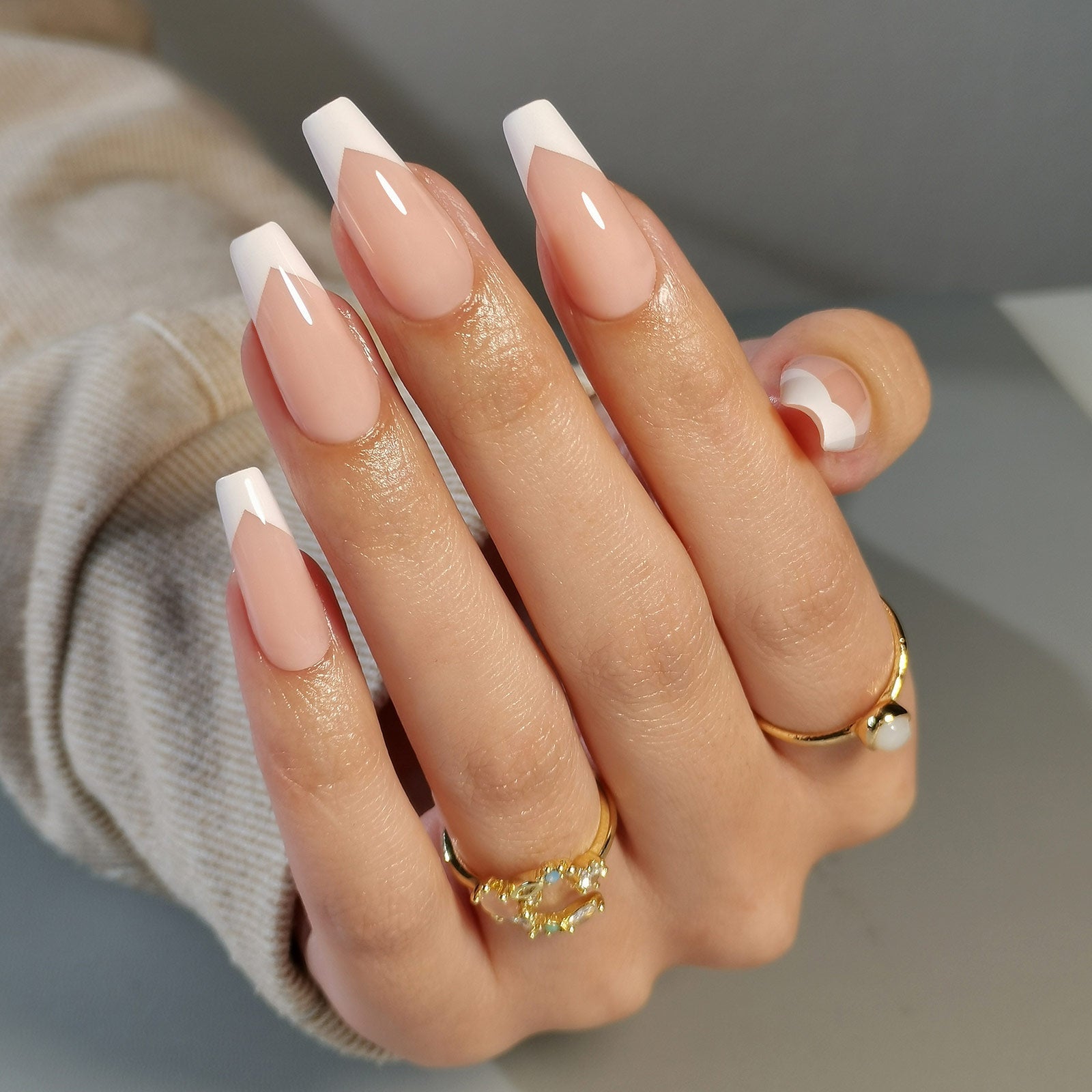
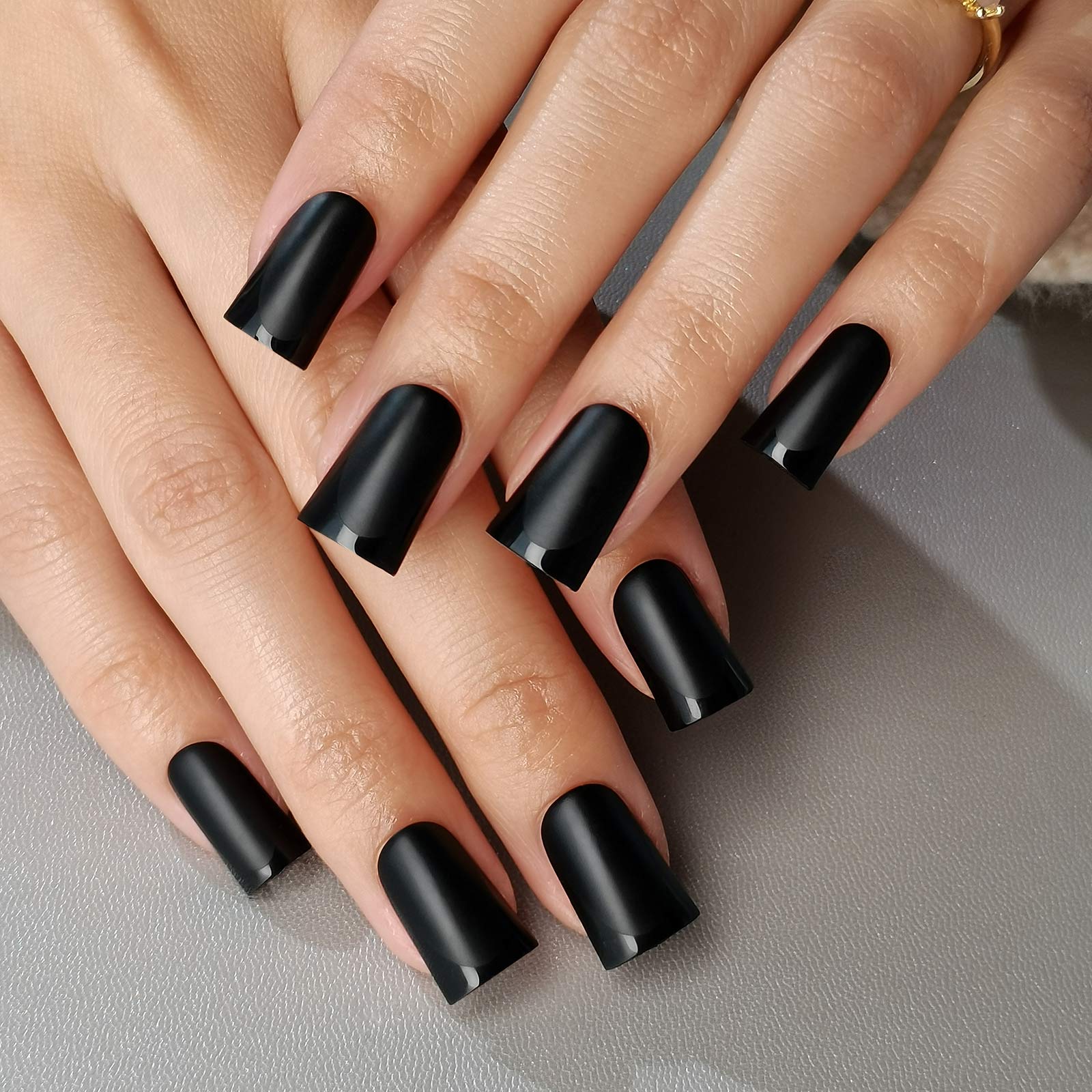


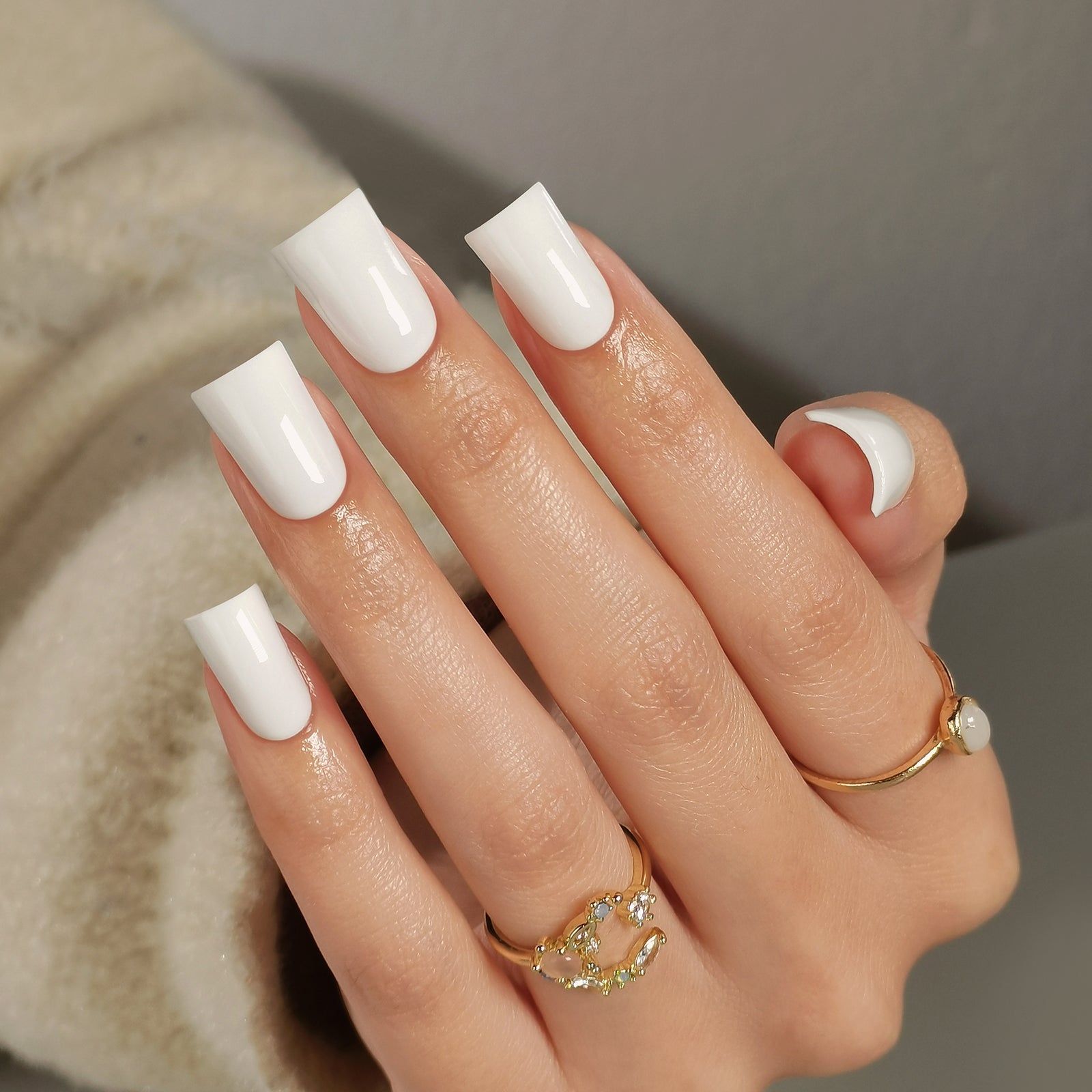
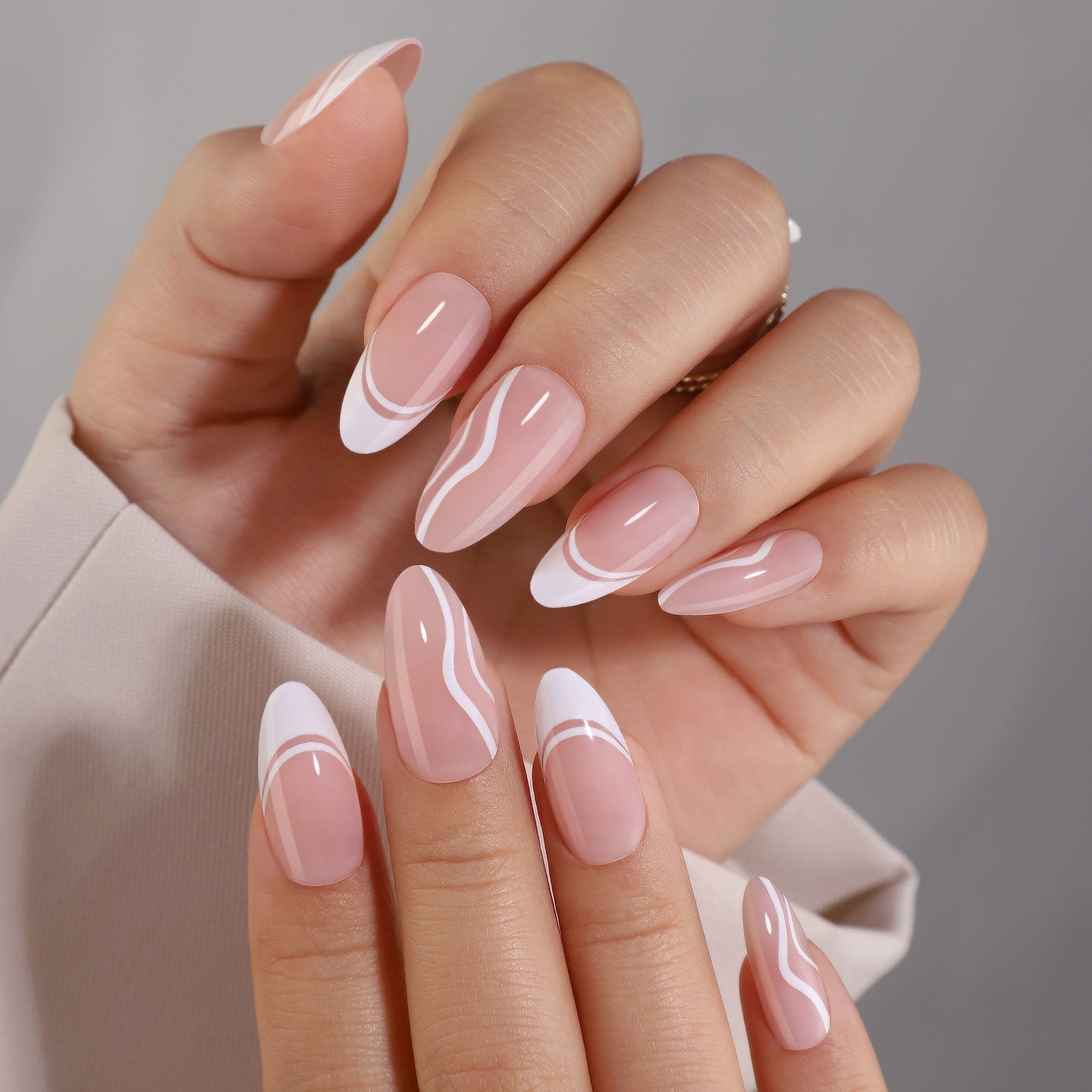

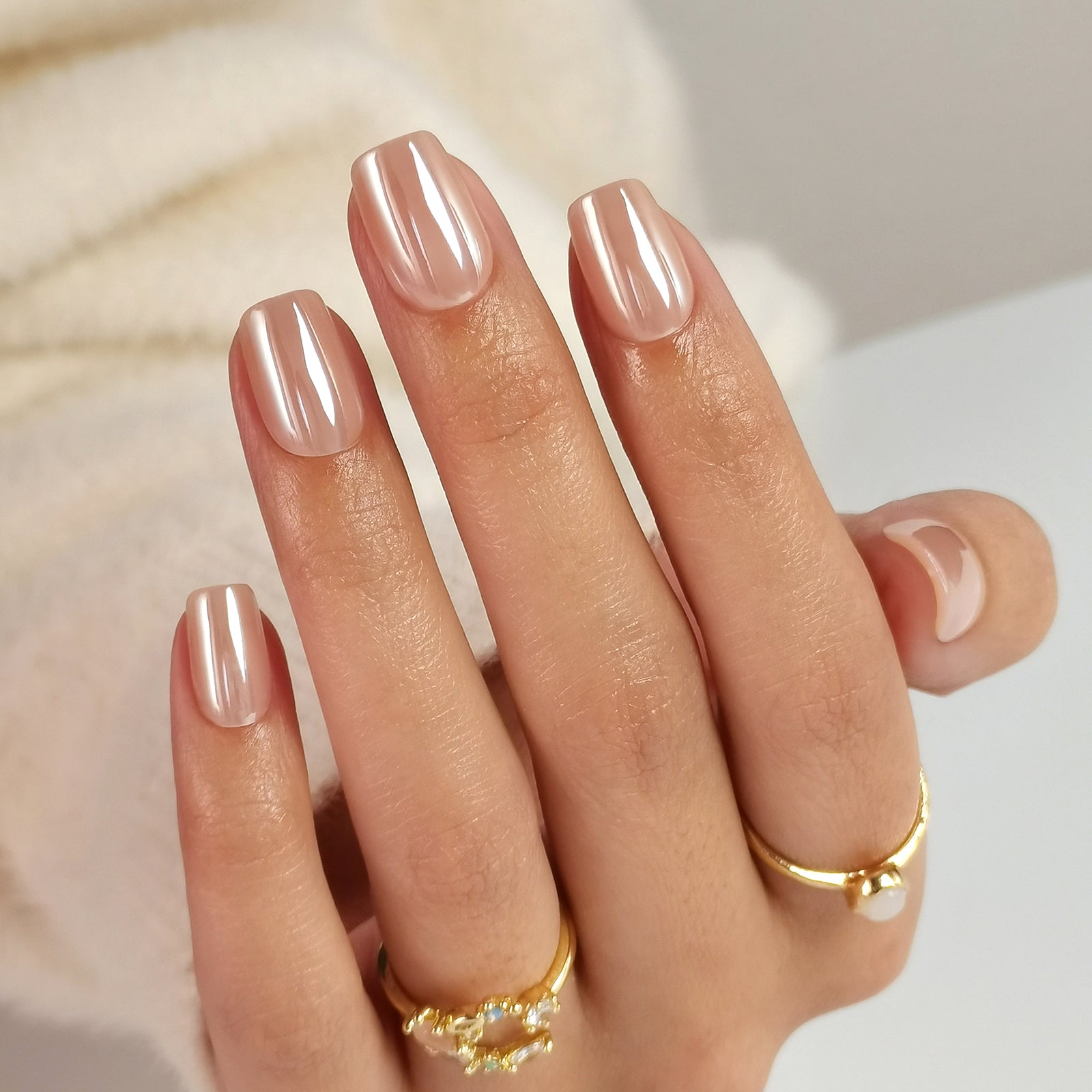

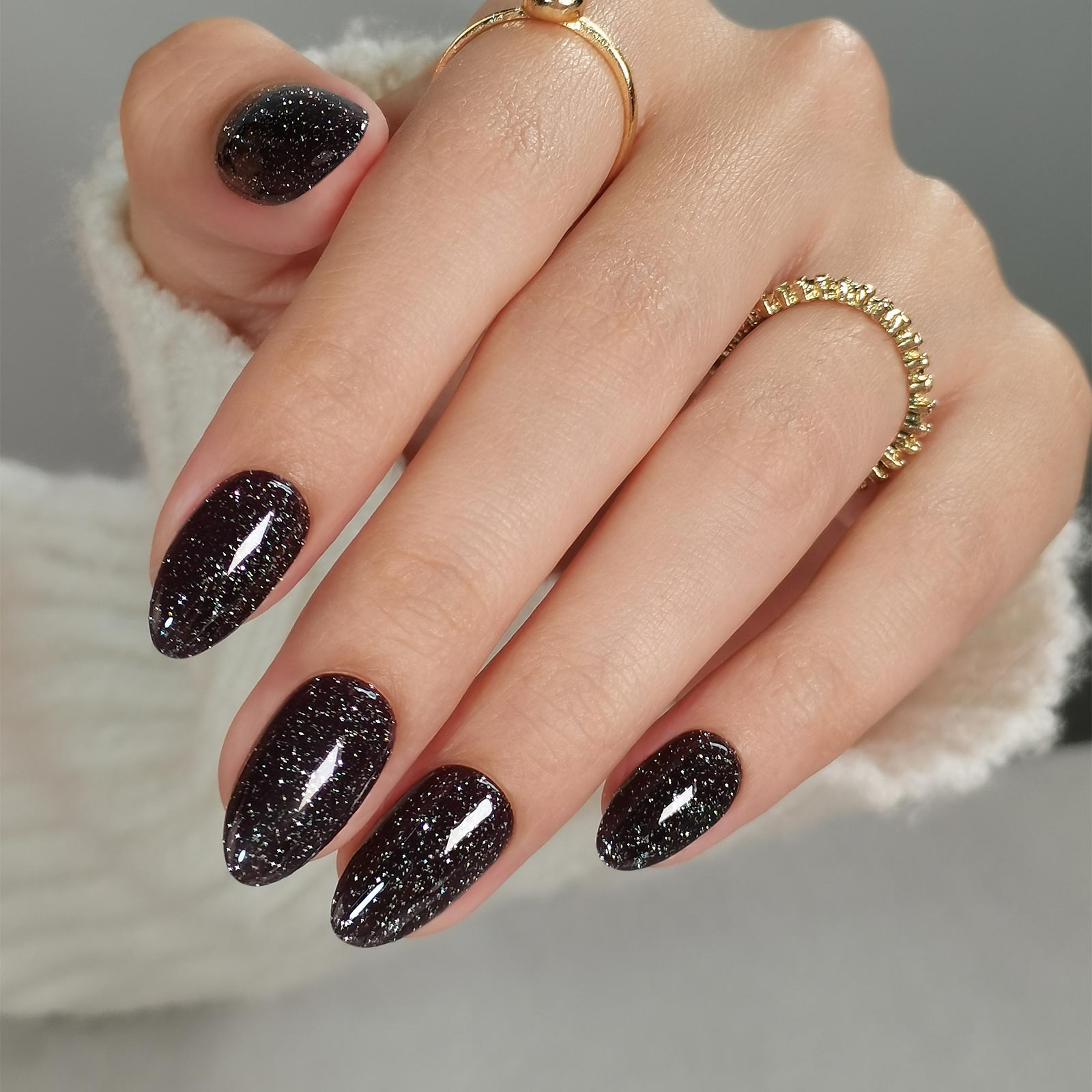
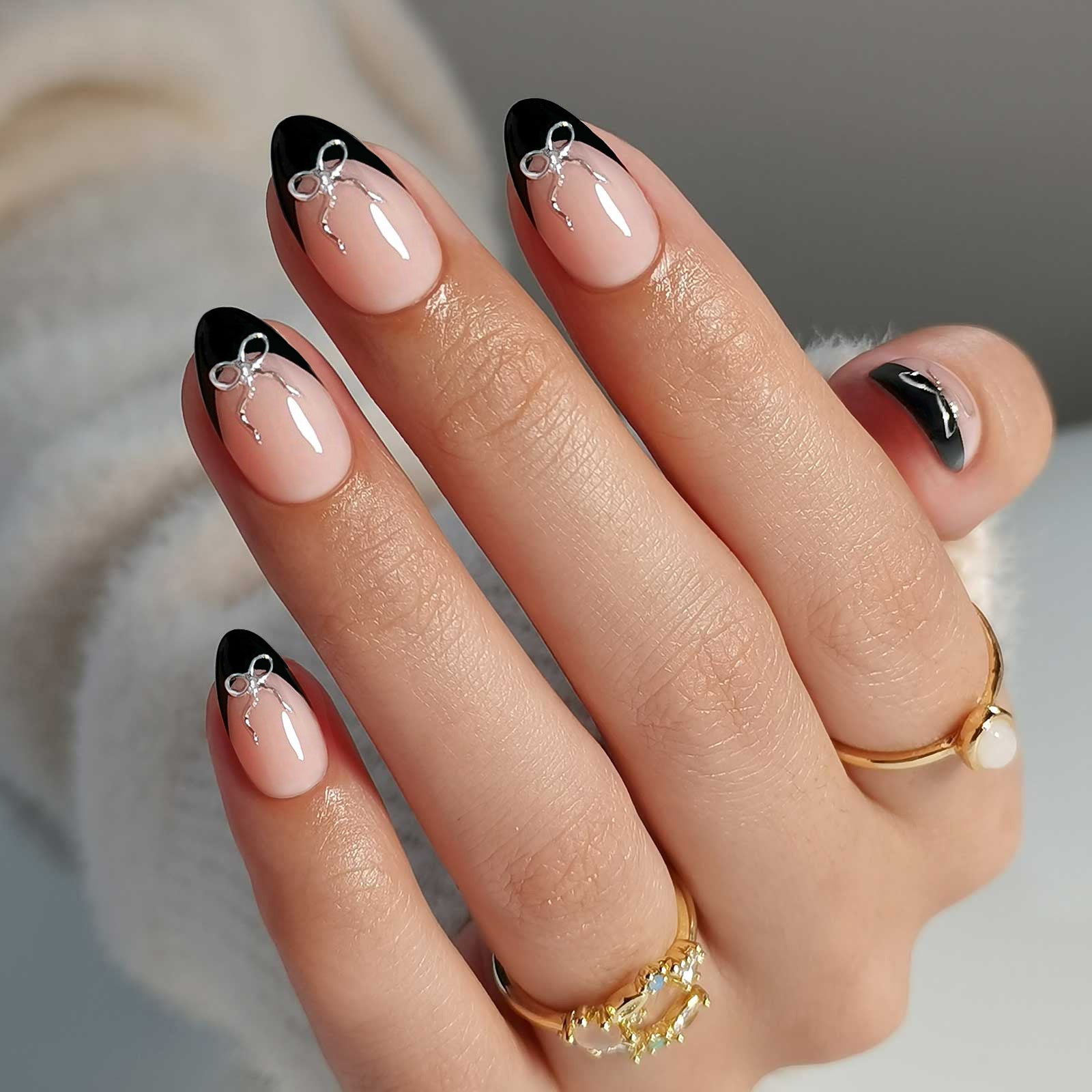


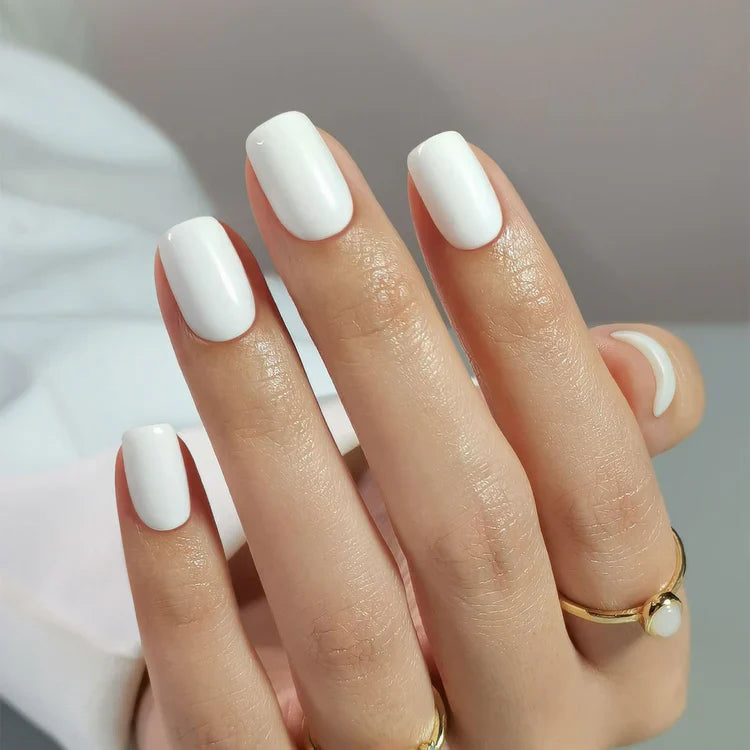
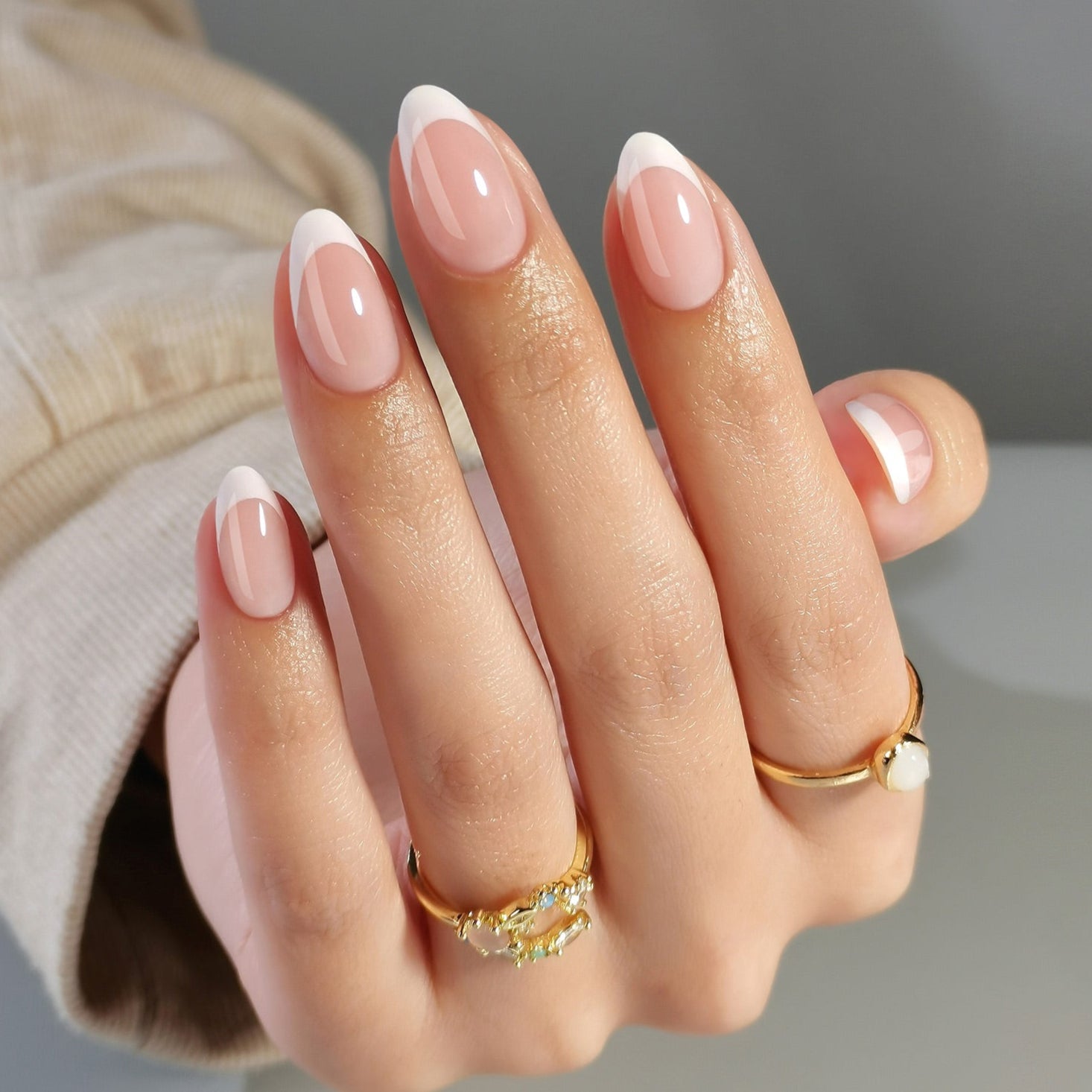


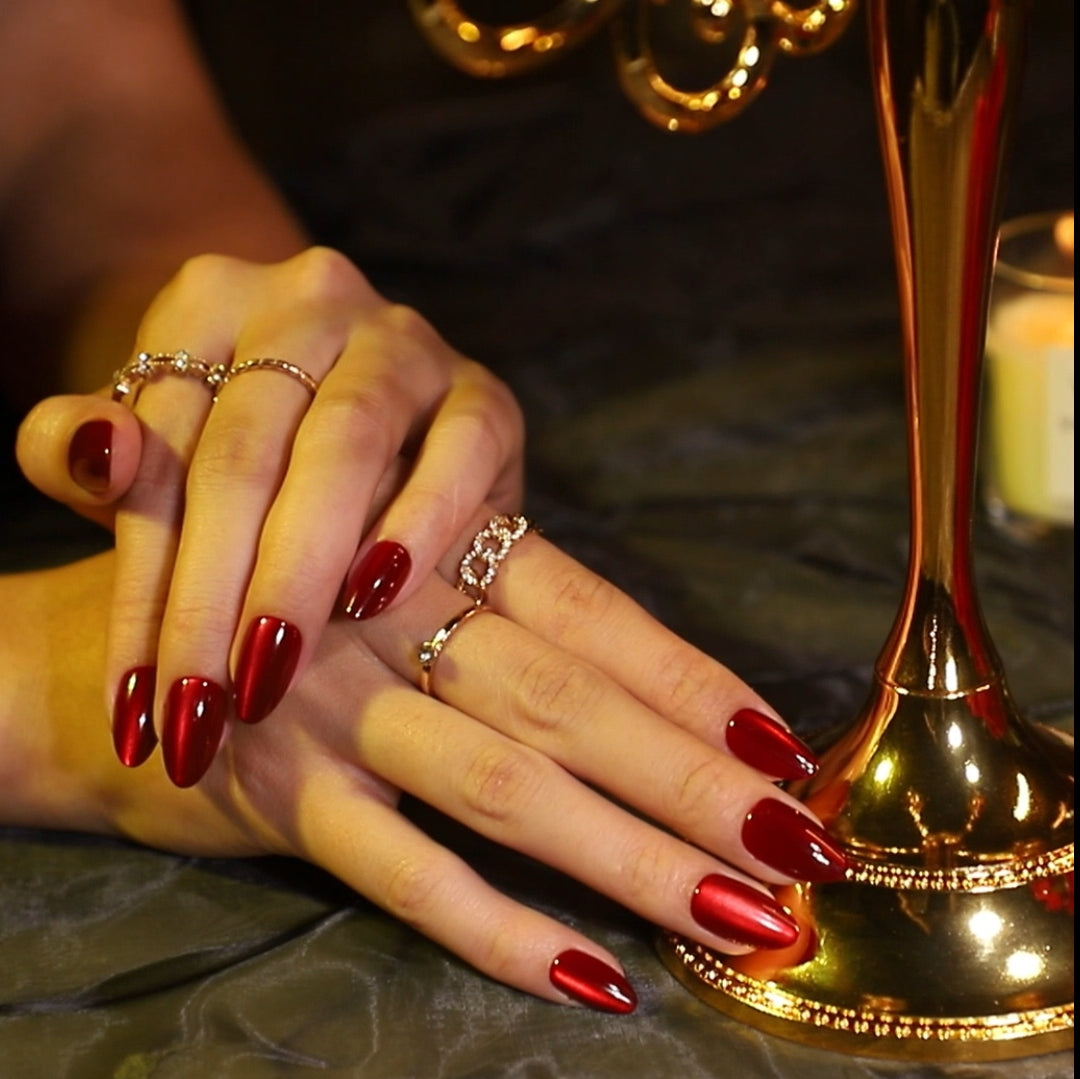

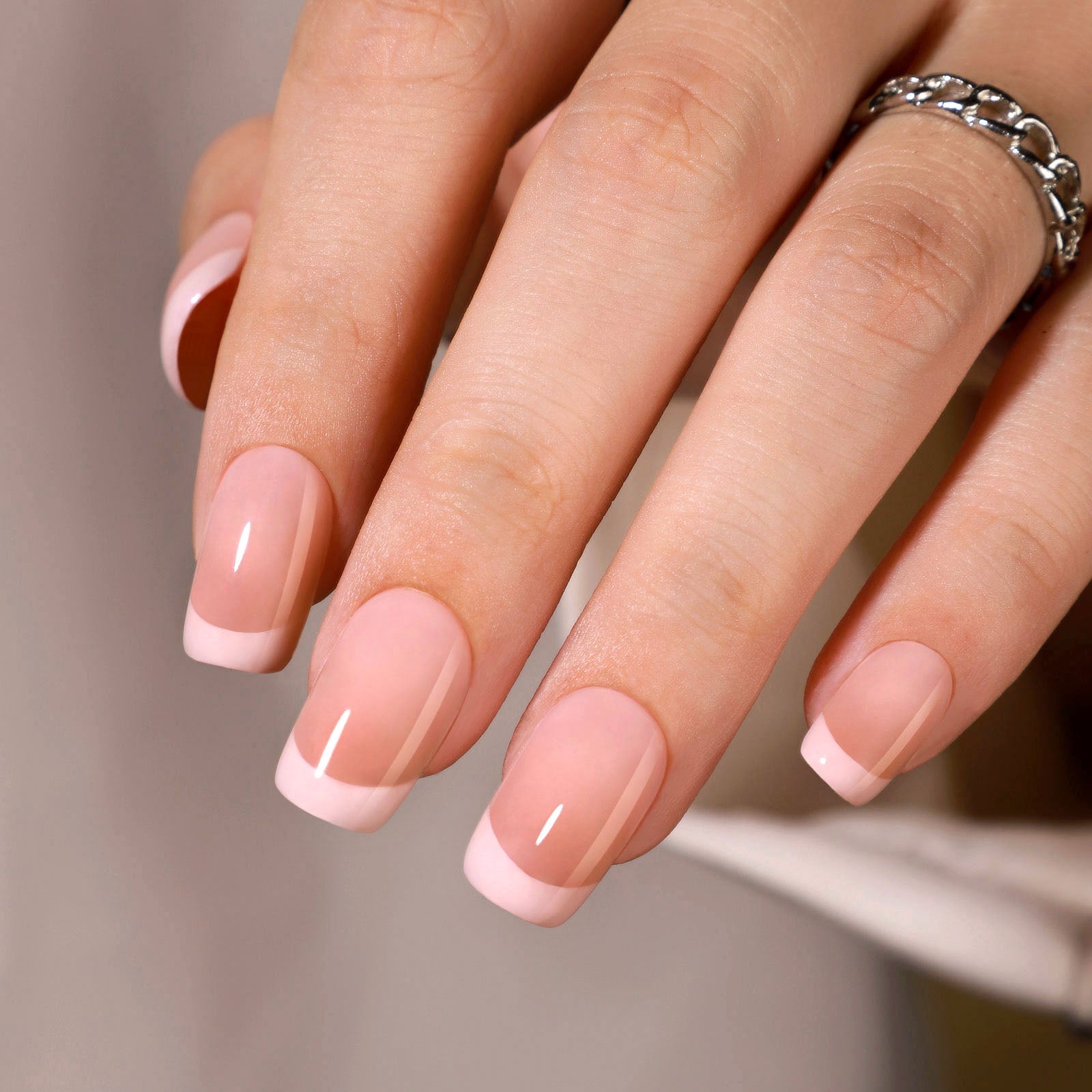


Best Press-On Nails That Last: 14-Day Wear Guide
Written by Elia, SHANGMENG Style Editor
Press-on nails have a reputation problem. Anyone who tried them in the early 2000s — the drugstore kind that popped off at the worst possible moment — carries that memory. But the press-on landscape has changed completely. Modern soft-gel construction, brush-on nail glue, and a proper prep routine can keep press-ons on for 10 to 14 days. Some people go longer.
This guide covers everything that separates a 2-day disaster from a 14-day success: what to look for in the product itself, how application technique affects wear time, and what to do when you need them off without damaging your natural nails.
Not sure which shape, length, or size fits your natural nails?
Key Takeaways
- Soft-gel press-on nails with brush-on nail glue last 10–14 days under normal conditions — significantly longer than adhesive-tab options (5–7 days)
- Prep is 80% of longevity — any oil, lotion, or moisture on the nail plate will break the bond faster than any product deficiency
- Sizing accuracy matters — a press-on that's even slightly too wide will create micro-lifting at the edges, the starting point of every early pop-off
- Wear-extending tips: avoid prolonged water submersion, push cuticles back before application, and apply glue to both the press-on and the natural nail
- SHANGMENG kits include 32 Nail Tips · 16 Sizes per set — more size options than most brands means a more accurate fit and a longer-lasting bond
What Makes Press-On Nails Last Longer (The Science)
Before comparing brands or products, it helps to understand what actually holds a press-on nail in place — and what breaks that bond.
A note on cost: A salon gel manicure runs $45–70 and lasts about the same 10–14 days. A SHANGMENG soft-gel press-on set costs $8–15 and achieves the same wear time at home, no appointment required. The savings over a year are significant — $390–520 in press-on sets vs $1,170–$1,820 in salon gel visits. That math is the real reason press-on adoption has accelerated.
Press-on nails adhere via one of two mechanisms: adhesive tabs (pre-applied, peel-and-stick) or brush-on nail glue (cyanoacrylate-based, the same chemistry as super glue). The difference in wear time between these two methods is substantial.
For broader context, aad.org and aad.org are useful independent references when comparing at-home nail routines with salon-style results.

Adhesive tabs work by mechanical adhesion — they're essentially a double-sided tape layer that grips the natural nail plate and the underside of the press-on. They're removable, gentle, and perfect for 1–5 day wear. They're not designed for two-week durability.
Brush-on nail glue (cyanoacrylate) creates a chemical bond with the keratin surface of the natural nail and the polymer material of the press-on. When the nail surface is properly prepared — free of oil, dehydrated, and slightly abraded — this bond can withstand significant mechanical stress for 10–14 days. According to nail care research, the bond strength of cyanoacrylate adhesives is directly proportional to surface cleanliness; even a thin layer of oil from moisturizer reduces bond strength by up to 40%.
The material of the press-on itself also matters. Cheap ABS plastic nails are rigid and inflexible. When your natural nail flexes — as it does during typing, gripping, or any pressure — a rigid press-on can't follow, and the bond breaks at the weakest point (usually the edges). Soft-gel press-on nails, made from TPU or similar flexible polymers, flex with the natural nail rather than against it. That flex is the single biggest material upgrade that pushed press-on wear from 3–5 days to 10–14.
Wear Testing: How We Evaluate Press-On Durability
The press-on market has no standardized wear-test protocol. That means every brand's "lasts X days" claim is self-reported and variable. Here's what a rigorous test should include — and what it reveals.
SHANGMENG 14-day wear test conditions: - Application: brush-on glue, alcohol prep, cuticle pushed back - Activities: daily hand washing (8–10 times), typing, light cooking, gym (no pool) - Monitoring: daily photo documentation, note any lifting at edges or tips - Result: 10/10 nails retained through day 14; two showed minor edge lifting by day 11 (no pop-off)
What honest wear testing reveals about competitor claims:
| Brand type | Claimed wear | Real-world wear (glue method) | Soft-gel construction? |
|---|---|---|---|
| Budget ABS plastic | "7-10 days" | 3–5 days | ❌ No |
| Salon-quality soft-gel | "10-14 days" | 10–14 days | ✅ Yes |
| SHANGMENG | "up to 14 days" | 10–14 days (tested) | ✅ Yes |
The gap between budget and premium isn't brand marketing — it's material science. Rigid plastic nails will always underperform soft-gel nails in wear tests, regardless of glue quality.
The 5-Step Application Method That Maximizes Wear Time
Most press-on failures happen during application, not during wear. These five steps address every common failure point.

Step 1: Size selection (most skipped, most important)
Lay out the press-ons before applying any glue. Each nail should cover your natural nail from edge to edge without overlapping the skin on either side. If you're between sizes, go smaller — a slightly narrow press-on is less visible than a wider one lifting at the edges. SHANGMENG's 16 sizes per set makes accurate sizing possible for almost any hand shape.
Step 2: Surface prep (don't skip this)
Push cuticles back gently with a cuticle pusher. Lightly buff the surface of your natural nails with the included buffer — you want a matte, slightly rough surface that gives the glue more to grip. Wipe every nail with the alcohol prep pad and wait 30 seconds for it to fully evaporate. Do not apply any lotion or oil after this step.
Step 3: Dual-surface glue application
Apply a thin layer of brush-on nail glue to the underside of the press-on tip. Then apply a thin layer to your natural nail. Wait 10 seconds — both surfaces should look slightly tacky before you press. This dual-surface application doubles the contact points and meaningfully extends wear time.
Step 4: Press and hold
Align the press-on at the cuticle edge first, then press firmly down toward the tip. Hold with firm pressure for 30 seconds per nail. Use the flat side of a cuticle stick to press the side edges down after the initial press — edge adhesion is where most early lifting starts.
Step 5: The 1-hour rule
Avoid water, dishes, or any wet activity for at least 1 hour after application. Cyanoacrylate glue continues curing for 45–60 minutes after initial set. Exposing it to water during this window significantly weakens the final bond.
Wear Extending: What Actually Works After Application
Getting to day 14 isn't just about application. These habits make a measurable difference in how long press-ons stay on.
Wear gloves for dishes. Hot water and dish soap are the most common cause of early lift. The combination of heat, moisture, and detergent breaks down the adhesive bond faster than almost anything else. A pair of rubber gloves for washing up can extend wear by 2–4 days.
Avoid picking and prying. If an edge starts to lift slightly, resist the urge to pick at it. Press it back down with a toothpick-applied drop of glue and hold for 30 seconds. A lifted edge that gets picked becomes a full pop-off within hours.
No soaking. Long baths, hot tubs, and pools are hard on press-on adhesive. Showers are fine — the exposure time is short. Soaking for 20+ minutes is when real damage happens.
Carry a glue dot. Keep a small tube of nail glue in your bag. If a press-on edge starts to separate, a tiny glue dot applied immediately and held for 30 seconds almost always saves it.
How SHANGMENG Press-On Nails Compare

The specific characteristics that affect durability in SHANGMENG nails:
Soft-gel construction — the flexible polymer material flexes with natural nail movement rather than working against it. This is the baseline requirement for 14-day wear.
0.5–0.8mm tip thickness — thin enough to look natural at the edges, thick enough to resist the micro-flexing that cracks thinner nails.
32 Nail Tips · 16 Sizes — more size options than most sets (which offer 24 nails in 12 sizes). More sizes means a more accurate fit. A more accurate fit means less edge lifting. Less edge lifting means longer wear.
Glossy surface finish — the surface finish on SHANGMENG nails is factory-applied gel coat, not a topcoat that can chip. This matters for durability: a polish-over-plastic press-on starts losing its finish around day 5–7. A gel-coat finish lasts the full wear period.
Customers with trusted reviews have specifically noted the wear time as a differentiating factor: "Still wearing them at day 12 with no lifting — nothing else I've tried has made it past week one."
Shop Salon-Quality Press-On Nails — Soft-gel construction, 32 Nail Tips · 16 Sizes
When Press-On Nails Don't Last: Troubleshooting
Even with the best product and proper application, variables can shorten wear time. Here are the most common causes and fixes.
Lifting within 24 hours: Almost always a surface prep failure. The nail surface had oil, lotion, or moisture on it at application. Remove, buff the natural nail more aggressively, use a fresh alcohol wipe, and reapply.
Lifting at the edges by day 5–7: Usually a sizing issue — the press-on is slightly too wide and the edges are in contact with the surrounding skin, which creates a pulling force. Try one size smaller next application. Also check: are you doing a lot of dishes without gloves?
Pop-off on specific nails: Certain nails — particularly the pinky and index — tend to have more curved nail beds than middle/ring. These need more careful edge pressure during application. Press the side edges down for an additional 30 seconds using a cuticle pusher.
Full set failing around day 10: Natural nail oils have broken through the prep. This is more common in people who naturally produce more skin oils or who use hand lotion frequently. Add a dehydrating base step (a drop of pure acetone on each nail, allowed to fully evaporate) before the alcohol wipe.
How to Remove Without Damaging Your Nails
The best press-on sets last long — but they also come off cleanly when you're done. Done wrong, removal risks damage to the natural nail. Done right, it takes about 10–15 minutes and leaves nails intact.
Related: How to Get Rid of False Nails Safely
Soak method (gentlest): Soak nails in warm, soapy water for 10–15 minutes. The combination of heat and water softens the adhesive enough that press-ons can be gently rocked off without force. Never pry from the base — always from the tip.
Acetone method (faster): Soak cotton balls in acetone, place on each nail, wrap in foil. After 10 minutes, the glue softens and the press-ons slide off with almost no force. Follow with cuticle oil on each nail to restore moisture.
What not to do: ripping or prying off dry press-ons pulls the top layer of your natural nail with it — the keratin surface damage that gives press-on nails their bad reputation for causing nail damage. The nails don't cause damage; aggressive removal does.
Frequently Asked Questions
How long do press-on nails really last?
With adhesive tabs: 5–7 days under normal conditions. With brush-on nail glue and proper prep: 10–14 days. The difference is the type of adhesive and how thoroughly you prep the nail surface. Soft-gel press-on nails (vs ABS plastic) also extend wear by flexing with the natural nail rather than lifting away from it.
Do press-on nails damage your natural nails?
The press-on nails themselves don't damage nails — improper removal does. Ripping or prying off press-ons without soaking pulls the top layer of the natural nail plate. Removed correctly (soaking in warm water or acetone for 10–15 minutes until the glue softens), press-on nails are considered significantly less damaging than acrylic or gel extensions, which require filing and UV light curing directly on the nail surface.
What size press-on nails should I get?
Most sets include a size guide. Measure your nail at its widest point (just above the cuticle) and match to the size that covers edge to edge without overlapping the skin on either side. When between sizes, go smaller — a slightly narrow nail is less visible and won't create edge-lifting the way an oversized one will. SHANGMENG sets include 16 sizes to make accurate fitting possible for most nail shapes.
Can I reuse press-on nails?
Press-ons applied with adhesive tabs can be reused if removed carefully. Press-ons applied with brush-on glue are typically single-use — the glue residue is difficult to remove from the underside cleanly, and the bond of a reused press-on is weaker than the original. Some people successfully reuse glue-on sets 1–2 times with fresh glue applied over the old.
Why do my press-on nails keep popping off?
The three most common causes: (1) oil or lotion on the nail surface at application — wipe with alcohol and let dry fully before applying; (2) sizing too large — the edges catch on things and the excess width creates a lifting force; (3) water exposure within the first hour of application — the glue is still curing. Fix all three and you'll see dramatically longer wear.
Press-on nails that last aren't a myth — they're the result of the right material, the right glue, and the right prep. Soft-gel construction, 16 sizes for a precise fit, and brush-on glue rather than tabs are the three variables that push wear time from a few days to a genuine two-week manicure.


Share