












Home
›
Trends — Nail Inspiration & Designs
›
Almond Acrylics vs Almond Press-On Nails: Honest Comparison

Almond Acrylics vs Almond Press-On Nails: Honest Comparison
Written by Elia, SHANGMENG Style Editor
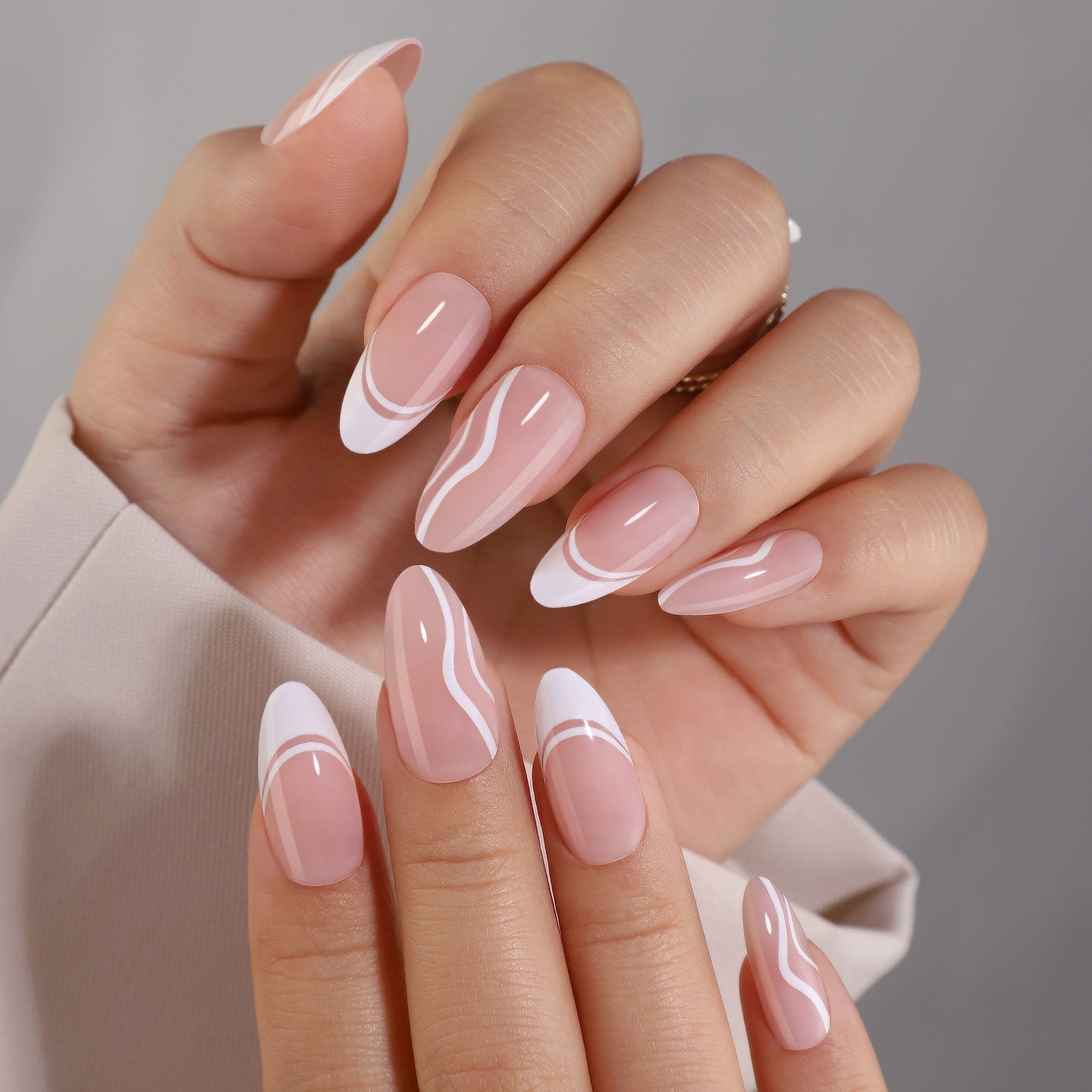
The almond nail shape — tapered sides, softly pointed tip, oval profile — has been consistently popular for years because it flatters almost every hand shape and sits at the right point between dramatic and everyday-wearable. The question isn't usually whether to get almond nails. It's whether to get them at a salon (acrylic) or at home (press-on).
This is an honest comparison. Acrylics have real advantages that press-ons don't match in every category. Press-ons have real advantages that acrylics absolutely don't. The right choice depends on what you actually want from your nails — and this guide lays out both sides without the marketing spin in either direction.
Key Takeaways
- Almond acrylics cost $40–80 per set plus $25–45 every 2–3 weeks for fills; almond press-ons cost $8–20 per set with no ongoing fees
- Acrylics last 3–4 weeks; soft-gel press-on nails with brush-on glue last 10–14 days
- Acrylic removal requires filing that damages the natural nail surface; press-on removal (soaking) leaves natural nails mostly intact
- Both look excellent when done well — the main visual difference is edge thickness (acrylic edges are thinner; press-on edges are 0.5–0.8mm)
- For most people, press-ons make more financial sense: a typical year of acrylic fills every 2–3 weeks costs an estimated ~$830 vs approximately $208–520 for press-on sets changed bi-weekly
What Are Almond Acrylics?
Acrylic nails are created by combining a liquid monomer with a powder polymer, which hardens into a durable material when exposed to air. A nail technician applies this mixture over a nail form (for length) or directly onto the natural nail, sculpts the almond shape while the acrylic is still workable, then files and buffs once it's cured.
The finished acrylic surface is extremely hard — harder than natural nail, harder than soft-gel, harder than press-on polymer. This hardness is part of the appeal (durability, chip resistance) and part of the problem (inflexibility can cause breakage, and removal requires aggressive filing).
What makes the almond shape in acrylics: The technician sculpts the taper by shaping the uncured acrylic along the sides of a form, creating the characteristic narrowing from the nail base to the pointed oval tip. The taper is filed and finished once cured. A skilled technician can create very thin, natural-looking edges — one of the genuine aesthetic advantages of acrylics over press-ons.
What Are Almond Press-On Nails?
Almond press-on nails are pre-shaped, pre-finished nail tips made from flexible polymer (soft-gel or ABS plastic) that are adhered to the natural nail using adhesive tabs or brush-on nail glue.
The almond shape is factory-molded — the taper, the tip, and the curvature are fixed and consistent rather than custom-sculpted. Quality varies significantly by brand. Cheap ABS plastic almond press-ons look visibly artificial at the edges. Soft-gel almond press-ons flex with the natural nail and have a more convincing profile.

What makes the almond shape in press-ons: The pre-molded shape. Good soft-gel press-ons replicate the taper geometry of acrylic almond nails with reasonable accuracy. The tip is slightly blunter than the finest acrylic work, but the overall silhouette reads as almond and looks natural at conversational distances.
Side-by-Side Comparison
| Factor | Almond Acrylics | Almond Press-Ons |
|---|---|---|
| Cost per set | $40–80 salon | $8–20 per kit |
| Fill cost | $25–45 every 2–3 weeks | N/A (replace full set) |
| Annual cost | ~$830 (typical estimate) | $208–520 (bi-weekly changes) |
| Wear time | 3–4 weeks | 10–14 days (glue method) |
| Application time | 60–90 minutes salon | 20–30 minutes at home |
| Natural nail damage | Significant (filing, chemical exposure) | Minimal (if removed correctly) |
| Removal time | 20–40 minutes (acetone soak + filing) | 10–15 minutes (warm water or acetone) |
| Edge thickness | 0.1–0.3mm (thinner = more natural) | 0.5–0.8mm (slightly thicker edge) |
| Shape customization | Full (sculpted to spec) | Limited to available shapes |
| At-home application | No (requires technician) | Yes |
| Travel/portability | Fixed set | Carry extras, replace anywhere |
Cost: The Most Significant Difference

The salon price for a full set of almond acrylic nails in the US ranges from $40 to $80 depending on location, salon tier, and technician experience. In major metropolitan areas — New York, LA, Miami — expect to pay closer to $60–80 for quality work.
Here's where it gets expensive: acrylics grow out. After 2–3 weeks, there's a visible gap between the cuticle and the base of the acrylic, and the whole set starts to look grown out. A fill appointment (where the technician fills in the gap and reshapes the tips) costs $25–45. Most acrylic wearers get fills every 2–3 weeks.
The math over 12 months: - Full set: $60 × 1 = $60 - Fills: $35 × 22 fills = $770 - Annual acrylic cost: ~$830 (typical estimate)
Press-on costs are simpler. A set of quality soft-gel almond press-ons costs $8–20. Changed every 2 weeks: - Annual press-on cost: ~$208–520
That's an estimated $310–$620 in savings per year — money that stays in your pocket without requiring a single compromise on how your nails look. A salon nail tech saying "press-ons look cheap" has a significant financial incentive to make that claim.
Damage: The Most Important Difference
The damage question is where acrylics have the clearest disadvantage, and where honest comparison matters most.
How acrylics damage natural nails:
-
Application filing. Before acrylic is applied, the natural nail surface is filed — sometimes aggressively — to create texture for adhesion. This removes the top layer of the nail plate (the strongest, smoothest layer) every single time.
-
Chemical exposure. Liquid monomer (methyl methacrylate or its replacements) and acrylic powder are in direct contact with the nail plate for the entire wear period. These chemicals can cause nail thinning and sensitivity over time.
-
Removal filing. Acrylic removal requires soaking in acetone and then filing off what remains. Even careful removal involves mechanical abrasion of the natural nail. Rushed removal (prying) causes severe nail plate damage — the kind that can take 6–9 months to grow out.
-
Fill cycles. Each fill appointment involves additional filing at the base. Over months of continuous wear, the nail plate can thin significantly.
The American Academy of Dermatology notes that both acrylic nails and gel nails can weaken natural nails with repeated use, primarily through the filing process. They recommend nail breaks between enhancement wear to allow the natural nail to recover. [Source: AAD nail care guidelines]
How press-ons compare:
Press-on application involves a light buffing of the natural nail surface (to create grip) — much less aggressive than acrylic filing. The adhesive is on the underside of the press-on, not applied to bare nail. The chemicals involved (cyanoacrylate glue) are in contact with the nail for a shorter period and are less penetrating than acrylic monomer.
Removal, done correctly with soaking, causes minimal damage. The nail plate is buffed rather than filed, and the press-on slides off without force. The natural nail underneath is intact.
The honest trade-off: If you're wearing acrylics continuously with fills every 2–3 weeks, your natural nails are in a constant state of chemical and mechanical stress. If you wear press-ons and remove them properly, your natural nails can maintain their integrity — or even improve if you use cuticle oil between sets.
Look and Feel: Where Acrylics Win

Acrylics have two genuine aesthetic advantages over press-ons:
1. Thinner edges. A skilled nail technician can achieve edges as thin as 0.1–0.2mm on the sides and at the tip of an almond-shaped acrylic. The thinner the edge, the more convincingly the nail appears to grow from the finger naturally. SHANGMENG soft-gel press-ons are 0.5–0.8mm at the edges — still noticeably thinner than most press-on brands (1.0–1.5mm), but not as thin as the finest acrylic work.
Still not sure which option is worth trying first? Find your best set by solving the concern you just compared: fit, finish, wear time, or price.


2. Custom shape. Every set of acrylics is sculpted individually to the person's nail bed shape, curvature, and length preference. Press-ons are manufactured in standard curvatures and lengths — most people find a size that fits well, but it's not the same as a custom-fitted manicure.
Where press-ons hold their own:
At conversational distances (arms' length and beyond), soft-gel almond press-ons are essentially indistinguishable from acrylics for most observers. The almond shape silhouette, the glossy surface finish, and the consistent length across all nails all read the same. The edge thickness difference is visible only on close inspection.
The surface of good soft-gel press-ons — factory-applied gel coat finish — also holds up better than acrylics over time. Acrylics can yellow slightly with UV exposure; soft-gel press-ons maintain their color through the wear period because you're replacing the set before that degradation can happen.
Who Should Choose Which
Choose almond acrylics if: - You want the thinnest possible edge profile for a fully natural look - You want a fully custom shape (unusual nail bed curvature, very specific taper preference) - You prefer to visit a salon as a personal care ritual - Your nails are very weak or brittle and you want structural support (acrylics reinforce weak nails) - Budget is not a constraint
Choose almond press-on nails if: - You want salon-quality almond nails for significantly less money - You're concerned about natural nail health and want to minimize damage - You want to change designs frequently (bi-weekly rather than monthly) - You travel and want to be able to fix or replace nails without finding a salon - You want the freedom to go bare between sets without an awkward grow-out phase
Related: Natural Almond Nails: Shapes, Care, and Styling Guide
Getting the Best Almond Look from Press-Ons
If you're switching from acrylics to press-ons — or trying press-ons for the first time — a few techniques bring the result closest to the acrylic look:
Size precisely. Unlike acrylics, which are applied to the full nail, press-ons need to fit within the nail boundaries. A press-on that's too wide creates a visible gap of exposed skin on the sides that looks artificial. Go through the 16 sizes in SHANGMENG sets and match each nail width individually — the extra minute this takes makes a significant visual difference.
Use brush-on glue, not tabs. Adhesive tabs are for temporary wear. Glue creates the same flat, gap-free bond that acrylics have with the natural nail. With tabs, there's sometimes a very slight lift at the base that gives away the press-on; with glue and proper prep, this disappears.
File if needed. The pre-molded almond shape on quality press-ons is accurate, but if you prefer a sharper taper or a more pointed tip, light filing with a fine-grit file adjusts the shape. File gently from the sides toward the center point to sharpen the almond tip.
Add a topcoat for longevity. Applying a thin layer of topcoat over soft-gel press-ons — after glue has cured — adds surface protection and extra shine. This is optional but can extend the appearance of freshness through the full wear period.
Frequently Asked Questions
Do almond acrylics damage your nails?
Yes, with repeated use. The American Academy of Dermatology notes that filing required for acrylic application removes the protective top layer of the nail plate, and removal involves additional filing or aggressive acetone exposure. Continuous fills without nail breaks can result in nail thinning and increased brittleness. Most nail technicians recommend periodic breaks from acrylics to allow natural nail recovery.
How long do almond acrylics last compared to press-ons?
Almond acrylics last 3–4 weeks before needing a fill, and a full set can last 6–8 weeks with fills. Soft-gel almond press-on nails with brush-on glue last 10–14 days. Acrylic lasts longer per application — but the fill cost and damage accumulation over time are the trade-offs.
Can press-on nails look as good as almond acrylics?
At conversational distances, soft-gel almond press-ons are essentially indistinguishable from acrylics for most observers. The main visual difference is edge thickness on close inspection — acrylics can be filed to 0.1mm edges; press-ons start at 0.5–0.8mm. For everyday wear and social situations, most people find the difference unnoticeable.
What's cheaper: almond acrylics or almond press-ons?
Press-ons are significantly cheaper. A full set of salon almond acrylics costs $40–80, with fills every 2–3 weeks at $25–45. Over 12 months, a typical estimate is ~$830 (one $60 set plus 22 fills at $35). Quality almond press-on sets cost $8–20, with bi-weekly changes totaling $208–520 annually — an estimated savings of $310–$620 per year without sacrificing the almond nail look.
Almond acrylics and almond press-ons both deliver the almond nail look — the difference is in cost, maintenance, and what happens to your natural nails underneath. If budget and natural nail health are priorities, press-ons win clearly. If you want the thinnest possible edge and a fully custom shape and the salon visit itself is something you value, acrylics have their place.
For most people working out the math on what works day-to-day, the fraction of the salon cost — with the freedom to change designs every two weeks — makes almond press-ons the more practical choice.
Share