












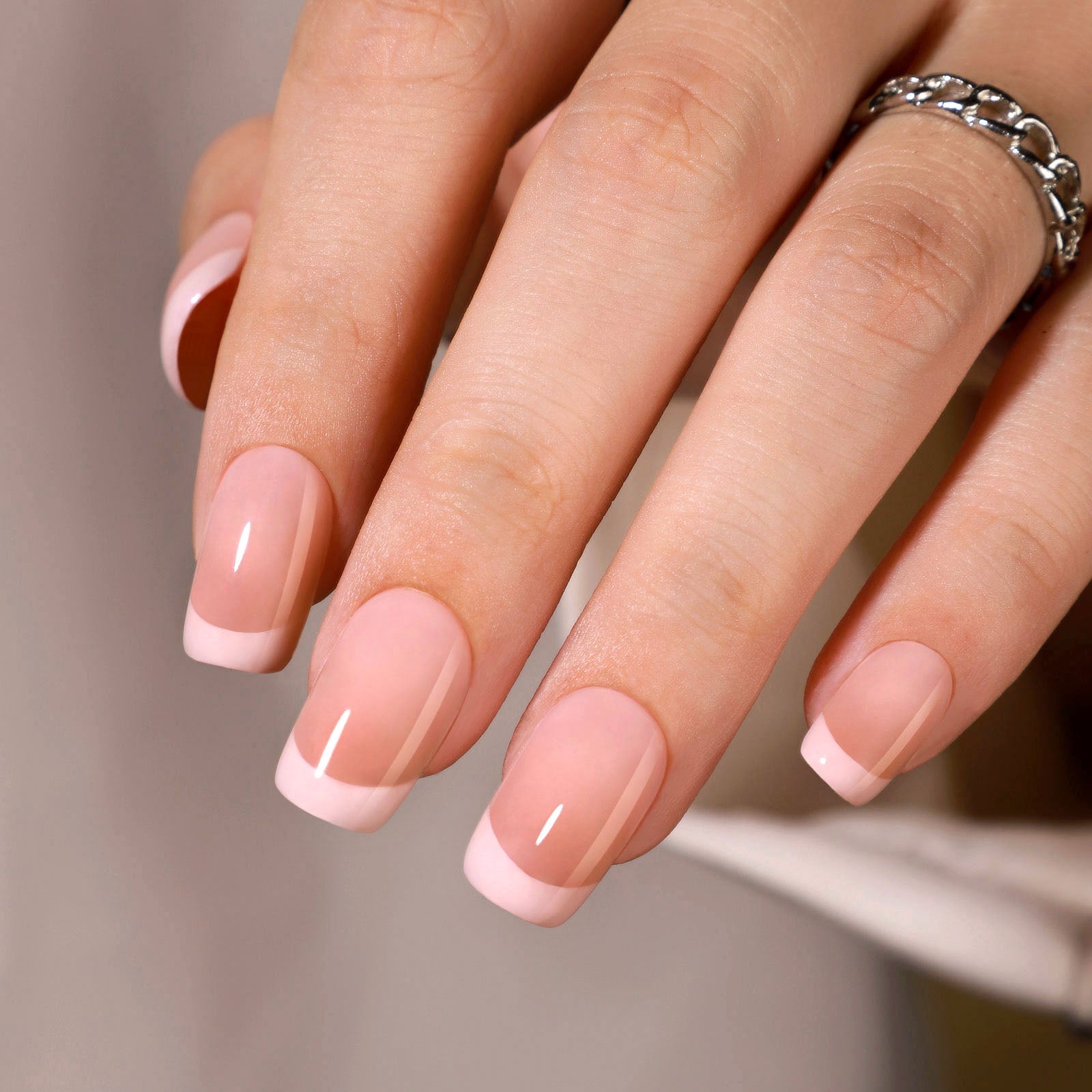


Fingernail Glue: Safety, Types & How to Use It
Written by Sophie, SHANGMENG Nail Health Specialist
Fingernail glue is one of the most widely used nail products — and one of the least understood from a safety perspective. Most people apply it without reading the label. Some people use it for years without issue; others develop sensitivities that make future use impossible. Understanding what's actually in nail glue, how it works, and how to use it safely changes the experience significantly.
A salon manicure costs $40-80 per visit. A press-on nail set with quality nail glue costs $12-18 and delivers comparable results for up to two weeks. The difference — between a result that lasts and one that lifts in three days — almost always comes down to how the glue is used, not the product itself.
This guide covers the chemistry, the safety profile, the risks worth knowing, and a clear protocol for safe application and removal — whether you're using it for press-on nails, nail repairs, or both.
Not sure which shape, length, or size fits your natural nails?
Key Takeaways
- Fingernail glue is almost always cyanoacrylate — a fast-curing adhesive that bonds to moisture on the nail surface, forming a strong polymer chain
- Skin and eye contact are the primary risks; cyanoacrylate bonds skin within seconds and requires acetone or warm water to dissolve safely
- Repeated or prolonged skin exposure can cause contact sensitization — once sensitized, even small future exposures can trigger allergic reactions (AAD guidance)
- The correct application protocol — glue on the tip, not the natural nail; no skin contact; 45-60 second hold — produces the strongest bond with the lowest risk
- Individuals with known acrylate allergies should avoid cyanoacrylate nail glue entirely and use adhesive tabs instead
What Is Fingernail Glue? The Chemistry Explained
Nail glue is not a proprietary mystery formula. The active ingredient in virtually every commercial nail glue product is cyanoacrylate — the same class of adhesive used in surgical wound closure, dental bonding, and industrial applications.

Cyanoacrylate polymerizes (hardens) through an anionic reaction triggered by moisture — including the small amount of water present on your nail surface and skin. This is why nail glue sets so quickly: room humidity and surface moisture are the catalyst, not heat or UV light.
The specific variant used in nail products is typically ethyl cyanoacrylate or butyl cyanoacrylate. Ethyl cyanoacrylate sets faster and is used in most nail glues. Butyl cyanoacrylate is slightly more flexible and is used in some medical-grade formulations.
According to the National Library of Medicine, cyanoacrylate adhesives have a well-established safety profile when used as directed — meaning controlled application to intended surfaces with appropriate ventilation and without prolonged skin contact. Source: National Library of Medicine, cyanoacrylate toxicity profile
What "bonds instantly" actually means: - Full cure: 45-60 seconds under pressure - Full strength reached: 24 hours - The initial set is strong enough to hold the nail; the full polymer cure happens overnight
Types of Nail Glue and When to Use Each
Not all nail adhesives are the same. Understanding the options helps you choose the right one for your situation.
| Type | Active Ingredient | Best For | Removal |
|---|---|---|---|
| Brush-on nail glue | Ethyl cyanoacrylate | Press-on nails, long-term wear | Acetone soak |
| Adhesive tabs | Pressure-sensitive acrylic | Shorter wear, sensitive users | Warm water soak |
| Gel nail glue | Modified cyanoacrylate | Nail repairs, crack sealing | Acetone soak |
| Nail tip adhesive | Cyanoacrylate blend | Salon nail extensions | Acetone soak |
For press-on nail applications at home, brush-on nail glue provides the strongest hold and best value. Adhesive tabs are the safer option for users with sensitive skin or those new to press-ons, and they remove cleanly without acetone.
The choice is not just about preference — it's also about your skin's history with acrylate products. More on this in the allergy section below.
How to Apply Fingernail Glue Safely

The most common mistakes with nail glue cause two problems simultaneously: weak adhesion and unnecessary skin exposure. The correct protocol solves both.
Before You Apply: Prep the Nail Surface
- Remove all traces of polish, previous adhesive, or oils with an acetone-based remover
- Buff the nail surface lightly with a 180-grit file — this creates micro-texture for the adhesive to grip, without removing nail material
- Push back cuticles with a cuticle stick; ensure the cuticle edge is clear of the area where the press-on will seat
- Wipe each nail thoroughly with an alcohol prep pad or 70% isopropyl alcohol on a cotton pad
- Wait 30 full seconds — the alcohol must fully evaporate before glue contact. Oil and moisture on the nail surface are the primary causes of early lift and, consequently, the primary reason people apply excess glue trying to compensate
Applying the Glue
The most important rule: apply glue to the press-on nail tip, not to your natural nail.
- Apply one small drop of nail glue to the center of the inner surface of the press-on tip
- Use the brush to spread the glue slightly — not to the edges (glue at the edges creates visible ridges and increases skin contact risk)
- Position the tip at the cuticle line of your natural nail, then press down firmly
- Apply even pressure from the cuticle toward the free edge
- Hold with firm, consistent pressure for 45-60 seconds
- Do not pull or test the bond for at least 5 minutes
Why glue on the tip, not the nail: When glue is applied to the natural nail first, it begins to partially cure from nail moisture before the tip makes contact. This reduces bond strength. More importantly, excess glue on the natural nail is more likely to contact surrounding skin. Glue on the tip allows precise positioning before polymerization begins.
After Application
- Avoid water contact for at least 30 minutes (1-2 hours for maximum bond)
- Do not use oil-based hand lotions on the nail area for 24 hours — they can weaken the adhesive at the edges
- If glue contacts skin, do not pull. Apply warm water; the bond will soften within 60-90 seconds and release without tearing skin
Nail Glue Allergy and Sensitization: What the Evidence Shows
This is the section most nail glue guides skip. It's the most important one for long-term nail health.

Cyanoacrylate can cause two distinct types of adverse reactions:
1. Irritant contact dermatitis — a direct chemical irritation response. Symptoms: redness, dryness, and inflammation at the contact site. This is not an allergy; it's a dose-dependent reaction that occurs in anyone with sufficient exposure. More common with repeated skin contact.
2. Allergic contact dermatitis — an immune-mediated sensitization reaction. According to the American Academy of Dermatology, acrylates (the chemical family that includes cyanoacrylate) are among the more common causes of occupational and consumer contact allergy. AAD on nail product allergies
The key clinical distinction: sensitization means the immune system has formed a memory response to the chemical. After sensitization occurs: - Future exposures — even brief skin contact — can trigger reactions - Reactions may be more severe than the initial exposure - Cross-reactivity with other acrylates is possible, including methacrylates in gel nail products
Who is at higher risk: - Individuals who frequently apply nail glue without adequate skin protection - People who have experienced reactions to acrylic nails, dental acrylics, or certain medical adhesives - Those with a history of multiple contact allergies
NIH guidance on acrylate sensitization notes that the prevalence of acrylate sensitization has increased in parallel with the rise in consumer use of gel and acrylic nail products. Source: National Institutes of Health, acrylate sensitization in the general population
If you have a known acrylate allergy: Use adhesive tabs exclusively. They are pressure-sensitive adhesives — an entirely different chemistry — and do not share cross-reactivity with cyanoacrylates.
Safe Removal: How to Get Nail Glue Off Without Damage
Incorrect removal is responsible for more nail damage than incorrect application. The principle is simple: dissolve the adhesive; never force or peel.
For press-on nails applied with nail glue:
- Fill a small bowl with warm (not hot) water and a few drops of gentle soap
- Soak the nails for 10-15 minutes — this softens the glue at the edges
- Use a cuticle stick to gently work under the side edge of the press-on tip, applying light sideways pressure
- If resistance is felt, soak for another 5 minutes — do not force
For faster removal with acetone:
- Saturate a cotton ball with 100% acetone (pure acetone works significantly faster than acetone-containing polish remover)
- Place the cotton ball on the nail and wrap each finger with a small piece of aluminum foil
- Wait 15-20 minutes
- The press-on tip should slide off with gentle pressure; do not pull
After removal:
- Buff away any adhesive residue gently with a soft file
- Apply cuticle oil to the nail plate and surrounding skin — acetone is desiccating and the nail plate benefits from immediate rehydration
- Give natural nails a 24-48 hour rest before reapplication when possible
For a complete walkthrough of removal techniques when glue holds firmly: How to Get Nail Glue Off. And if you're weighing whether nail glue is necessary at all, see Do You Need Nail Glue for Press-On Nails?
When to Use Nail Glue vs. Adhesive Tabs

Neither option is universally better. The right choice depends on wear duration, skin sensitivity, and lifestyle.
| Situation | Recommended Adhesive |
|---|---|
| Maximum hold (up to two weeks) | Brush-on nail glue |
| Sensitive skin or first-time user | Adhesive tabs |
| Known acrylate allergy | Adhesive tabs only |
| Event or short-term wear (days) | Adhesive tabs |
| Active lifestyle, frequent hand-washing | Nail glue (more water-resistant) |
| Easy at-home removal without acetone | Adhesive tabs |
| Nail repairs or cracks | Nail glue (or gel glue) |
For most users wearing SHANGMENG press-on nails, the answer is: nail glue for up to two weeks of wear, adhesive tabs for short-term wear or when you want easy, solvent-free removal.
SHANGMENG press-on nail kits include both adhesive tabs and brush-on glue so you can choose based on your plans for that set. Each kit contains 32 Nail Tips · 16 Sizes.
Browse the full range: Shop Nail Glue


Nail Glue and Natural Nail Health: The Evidence
Used correctly, nail glue does not cause structural damage to the natural nail plate. The nail plate is a dense keratin structure — the adhesive bonds to the surface but does not penetrate or chemically alter the underlying nail.
The damage seen with nail glue typically has two causes:
1. Forced removal. Pulling or peeling a glued press-on without soaking can lift the top layer of the nail plate (onychoschisis — nail splitting). This is mechanical damage, not chemical. The Mayo Clinic notes that nail splitting and thinning are the most common consequences of repeated trauma to the nail plate, including improper removal of artificial nails. Source: Mayo Clinic on nail health
2. Overuse without recovery time. Continuous coverage of the nail plate reduces its exposure to air and moisture cycling. Giving nails a 24-48 hour break between applications allows the nail plate to normalize. This is not medically mandated rest — it's practical maintenance that extends the condition of the natural nail over repeated press-on cycles.
What does not damage nails: A correctly applied and correctly removed press-on set using nail glue, with appropriate prep and recovery time between sets. The process, done correctly, is safe for routine use.
Frequently Asked Questions
Is fingernail glue the same as super glue?
They use the same chemistry — both are cyanoacrylate adhesives. However, nail glue formulations are designed for flexibility (nails flex during use), and many contain plasticizers that make the cured adhesive slightly more pliable than industrial super glue. Standard super glue is more rigid, which can cause nail cracking. For nail applications, use a product specifically formulated for nails rather than household super glue.
How long does fingernail glue last?
With proper prep (clean, dry, buffed nail surface; alcohol wipe), brush-on cyanoacrylate nail glue holds press-on nails for up to two weeks. Adhesive tabs are for short-term wear. The biggest variable is prep: an oily nail surface can reduce hold time to 3-5 days regardless of adhesive quality.
Can I be allergic to nail glue?
Yes — acrylate sensitization is a recognized clinical condition. The American Academy of Dermatology identifies acrylates as common contact allergens. Symptoms of a nail glue allergy include redness, swelling, itching, and blistering around the nail and surrounding skin, which may appear 12-72 hours after exposure. If you experience these symptoms, discontinue use and consult a dermatologist. Once sensitized, switching to adhesive tabs (different chemistry) typically resolves the issue for press-on nail use.
What removes nail glue from skin?
Warm water and time — most skin-to-skin or glue-to-skin bonds dissolve within 60-120 seconds in warm water without any pulling. For stubborn adhesion: soak in warm soapy water for 5-10 minutes. Avoid pulling or peeling bonded skin. Pure acetone (not nail polish remover, which is diluted) dissolves cyanoacrylate quickly but is drying to the skin — apply a moisturizer afterward.
How do I store nail glue to make it last longer?
Cyanoacrylate cures through moisture — humidity in the air slowly degrades an opened bottle. To extend shelf life: keep the cap tightly sealed after each use, store in a cool dry place (not the bathroom, where humidity is high), and keep the bottle tip clean by wiping with a dry cloth before capping. An opened bottle of nail glue typically remains usable for 4-6 months with proper storage. A bottle that has thickened significantly or won't flow normally has already partially cured and should be replaced.
Fingernail glue is a safe, effective product when understood correctly. The chemistry is well-studied, the risks are specific and avoidable, and the application protocol that produces the strongest bond is also the one that minimizes skin exposure. For users with sensitive skin or acrylate history, adhesive tabs offer an effective alternative without the chemistry concerns. Either way, the quality of the prep work matters more than the adhesive itself.
Your next set can last up to two weeks. The protocol above eliminates the guesswork — the adhesive is in the kit.
Share