













Press-On Nails vs Gel: Which Is Better?
Written by SHANGMENG Product Team — with 20+ years of press-on nail manufacturing experience. We make press-on nails, but we'll tell you when gel is the better choice.
Quick Answer: Neither is universally better — they're optimized for different priorities. Gel wins on durability and the "salon experience." Press-ons win on cost, flexibility, nail health, and speed. Read the full breakdown to find which fits your lifestyle.
The gel vs. press-on debate is one of the most common questions in the nail community, and most articles answer it dishonestly — by working backward from which product they're selling. This guide isn't going to do that.
Gel nails have real advantages. So do press-on nails. The right answer depends on your schedule, budget, lifestyle, and how much you care about your natural nail health long-term.
Here's the honest side-by-side.
What Are Gel Nails?
Gel nails are applied in layers at a salon: a base coat, color gel, and top coat — each layer cured under a UV or LED lamp. The result is a hard, glossy, flexible finish that bonds to your natural nail plate.
There are two main types: - Soft gel (gel polish): Applied like nail polish, removed with acetone. Usually lasts 2-3 weeks. - Hard gel / gel extensions: Used to extend nail length, applied on a form or tip. Requires filing or drilling for removal.
Average cost: $35-80 for gel polish at a salon. $60-120+ for gel extensions. Requires a salon visit every 2-3 weeks for fills or removal.
What Are Press-On Nails?
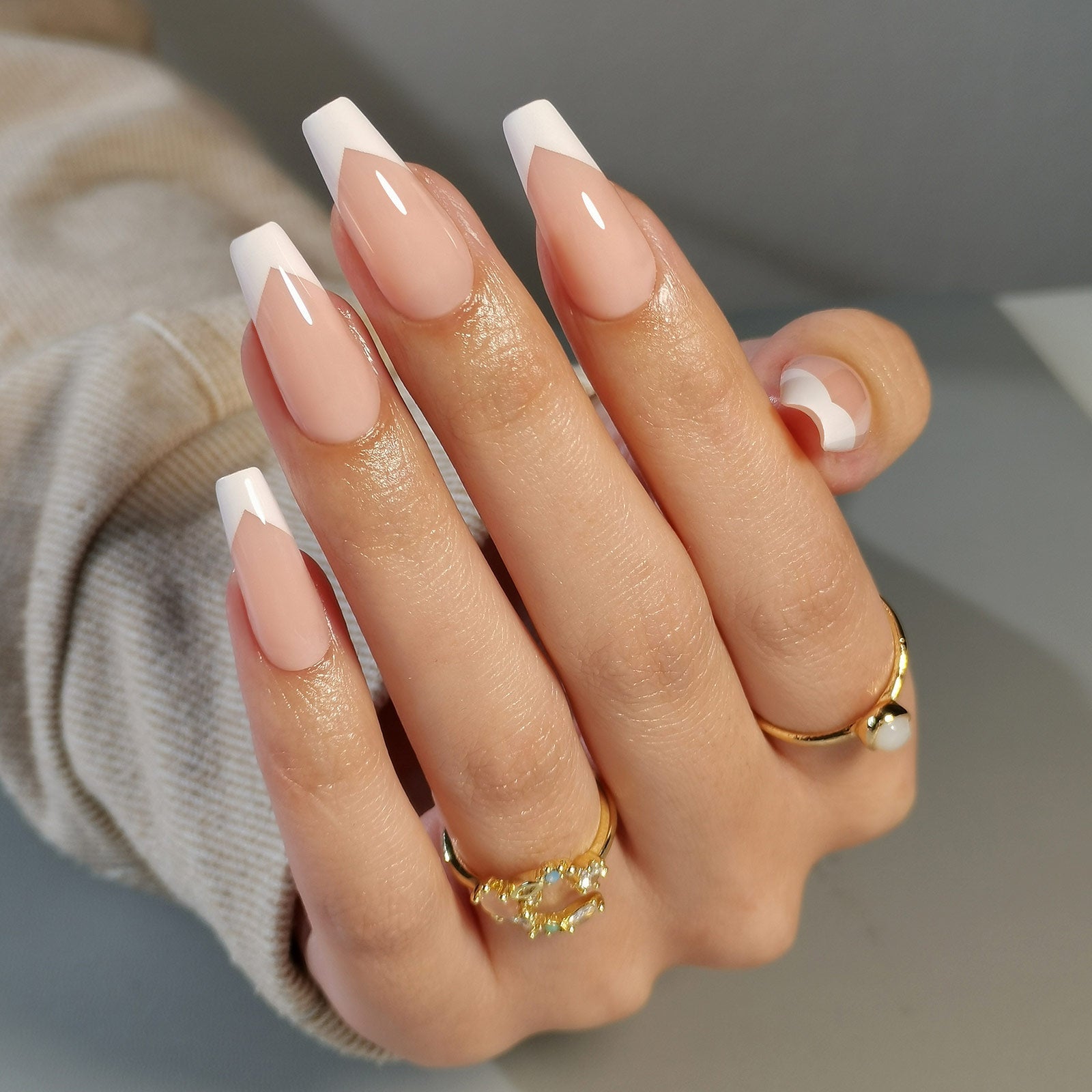
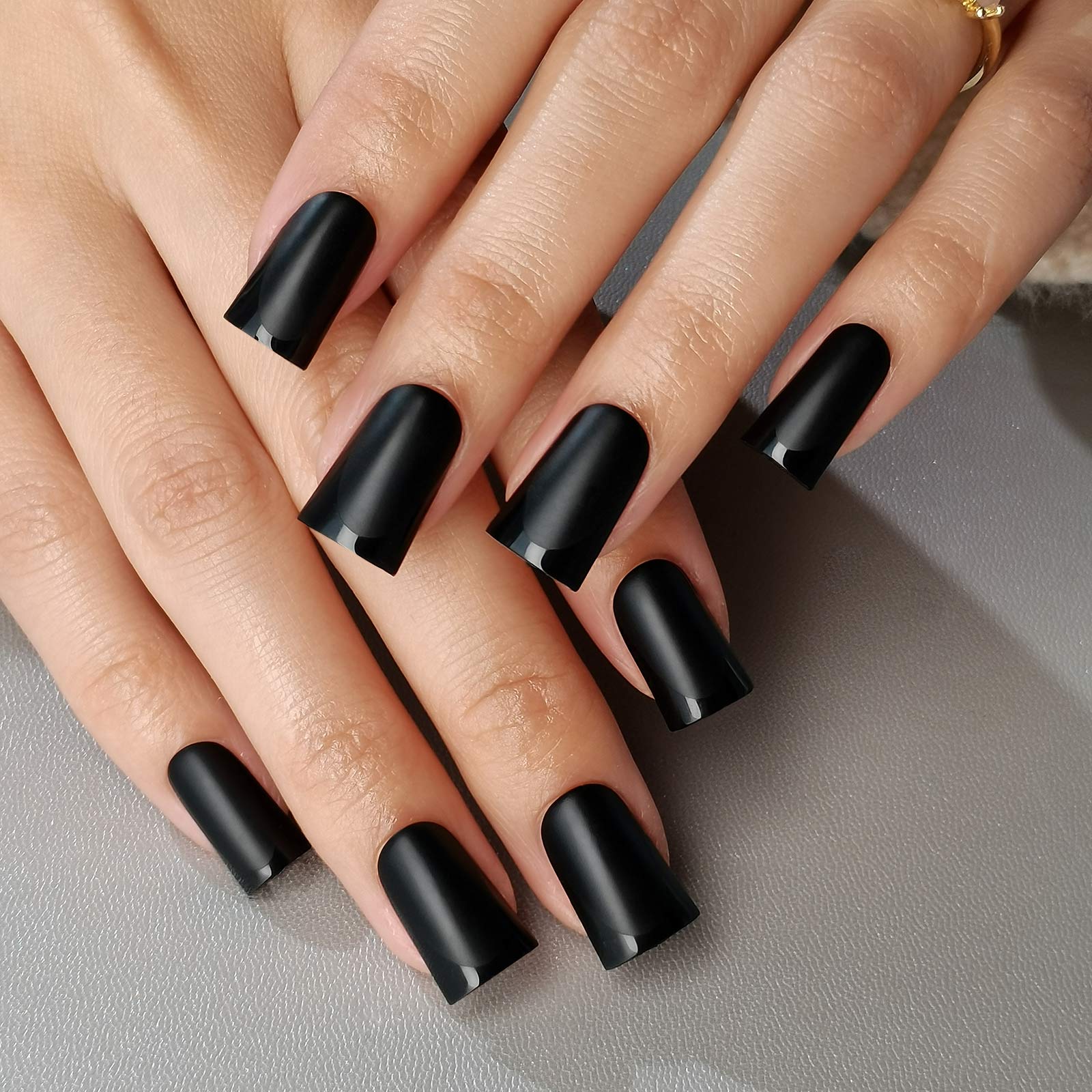
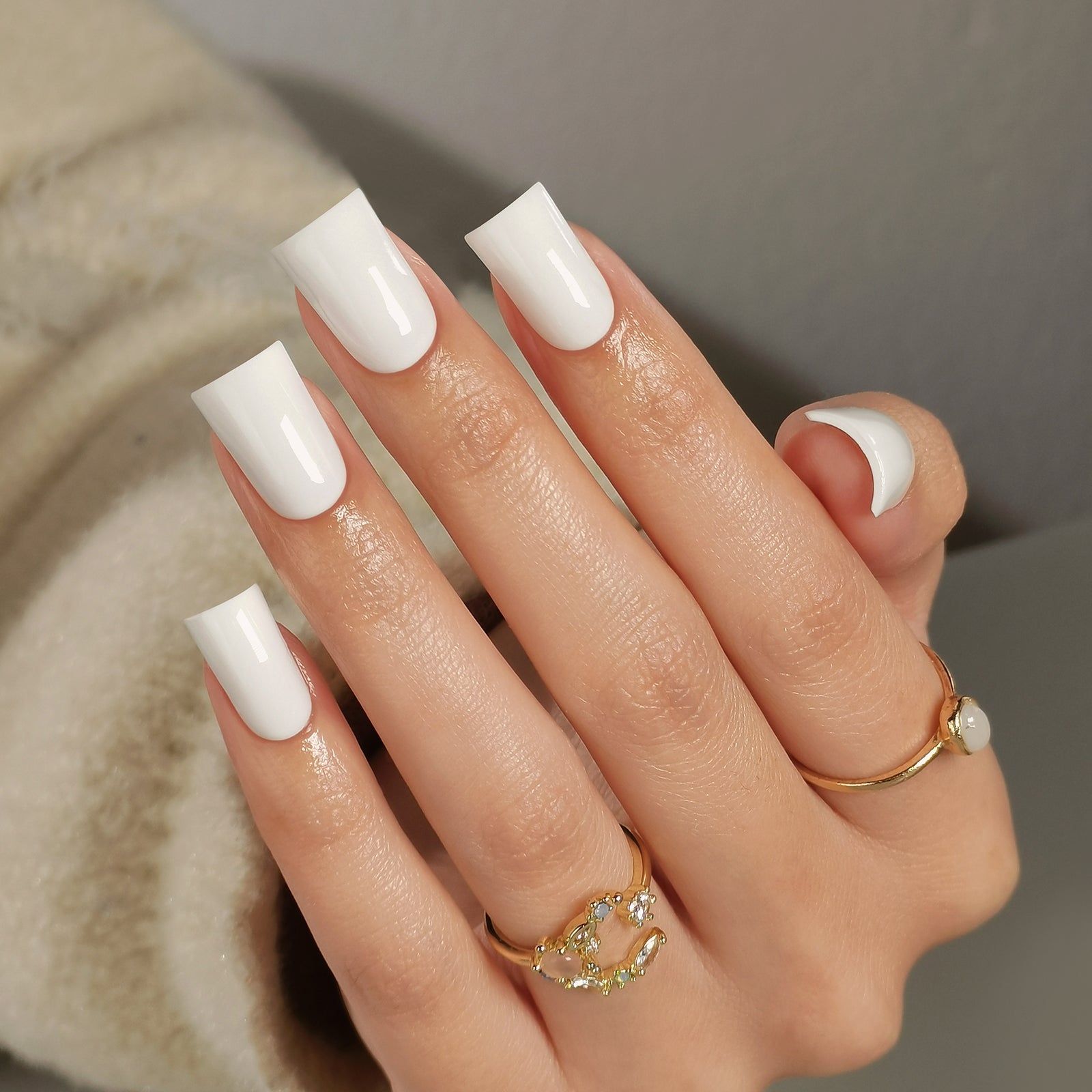
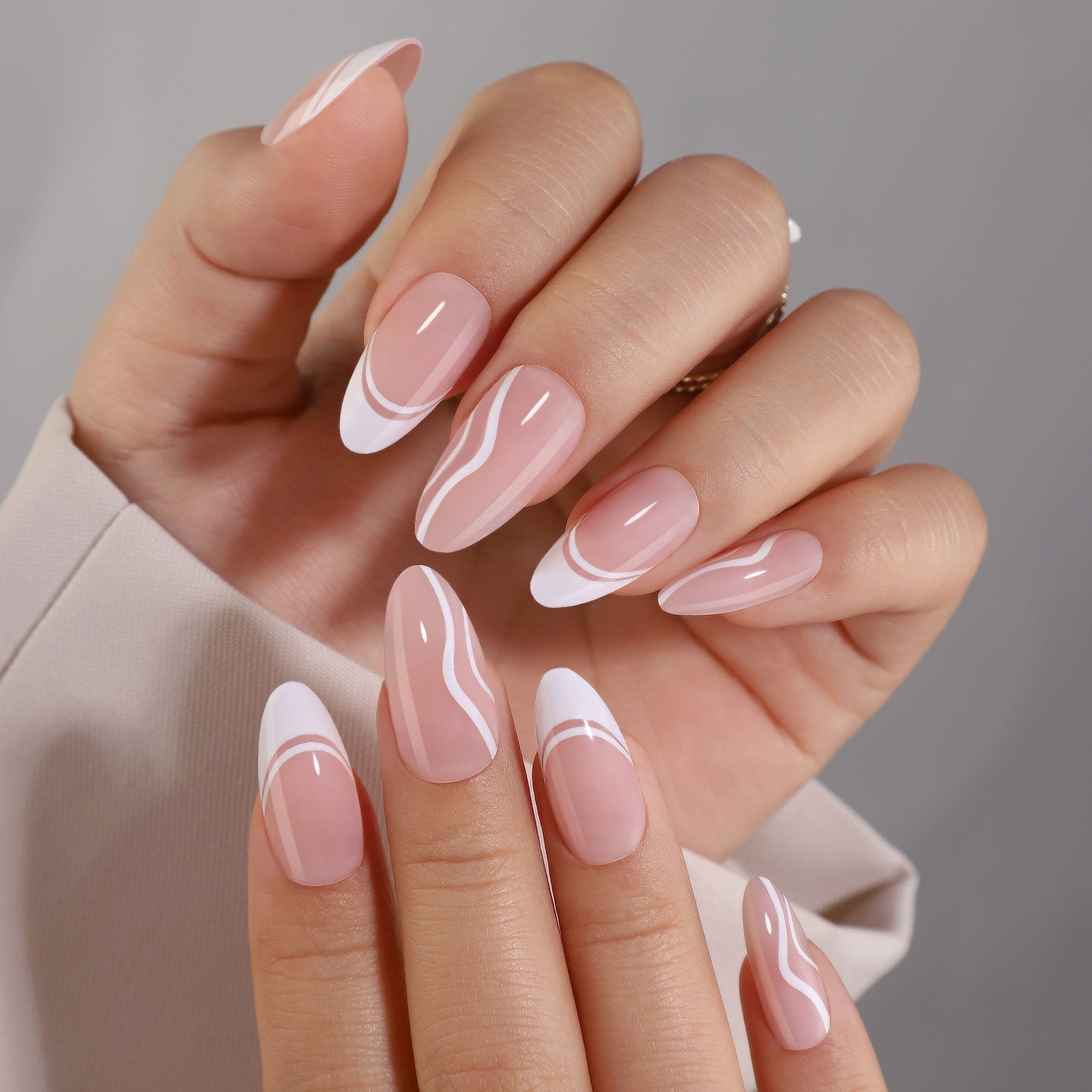
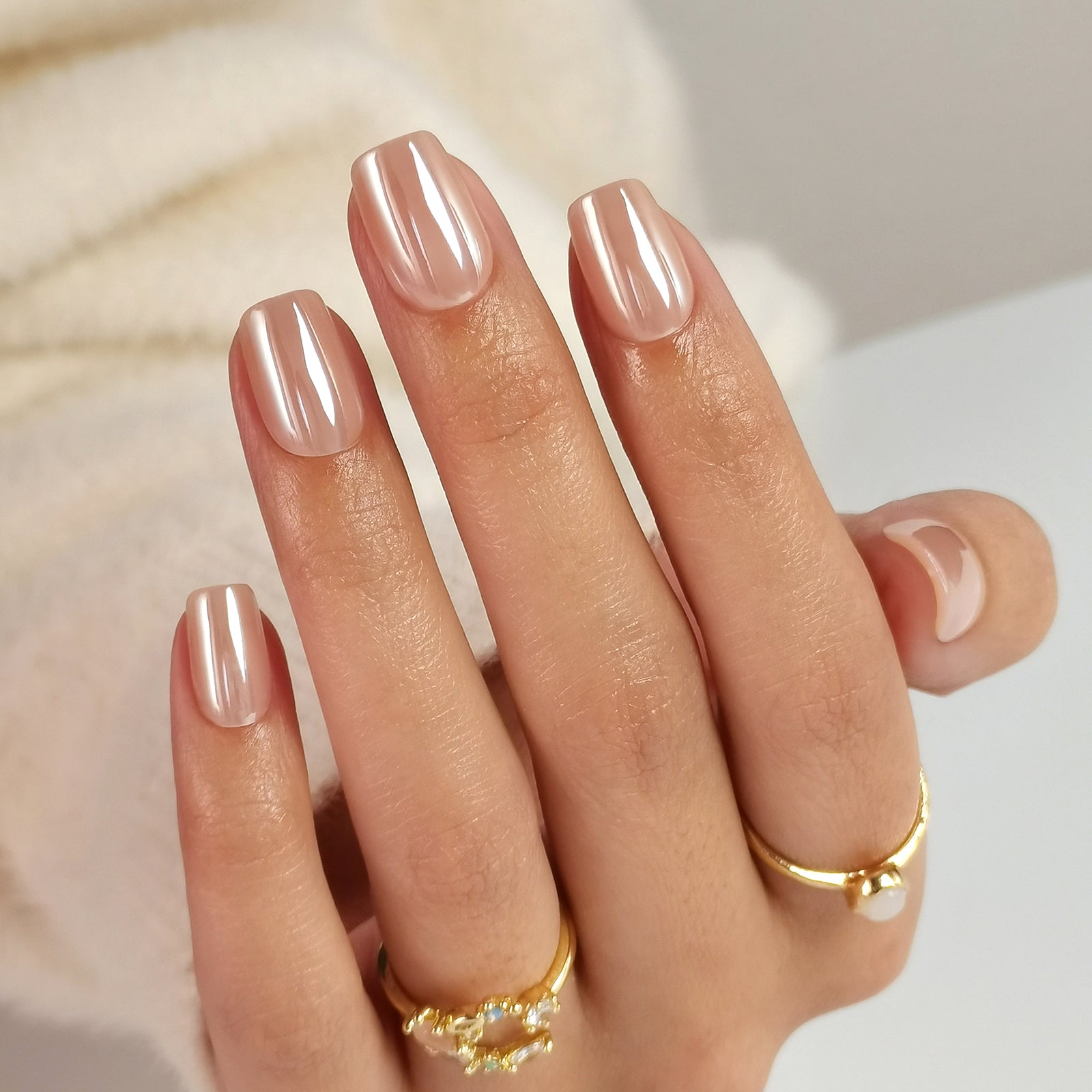
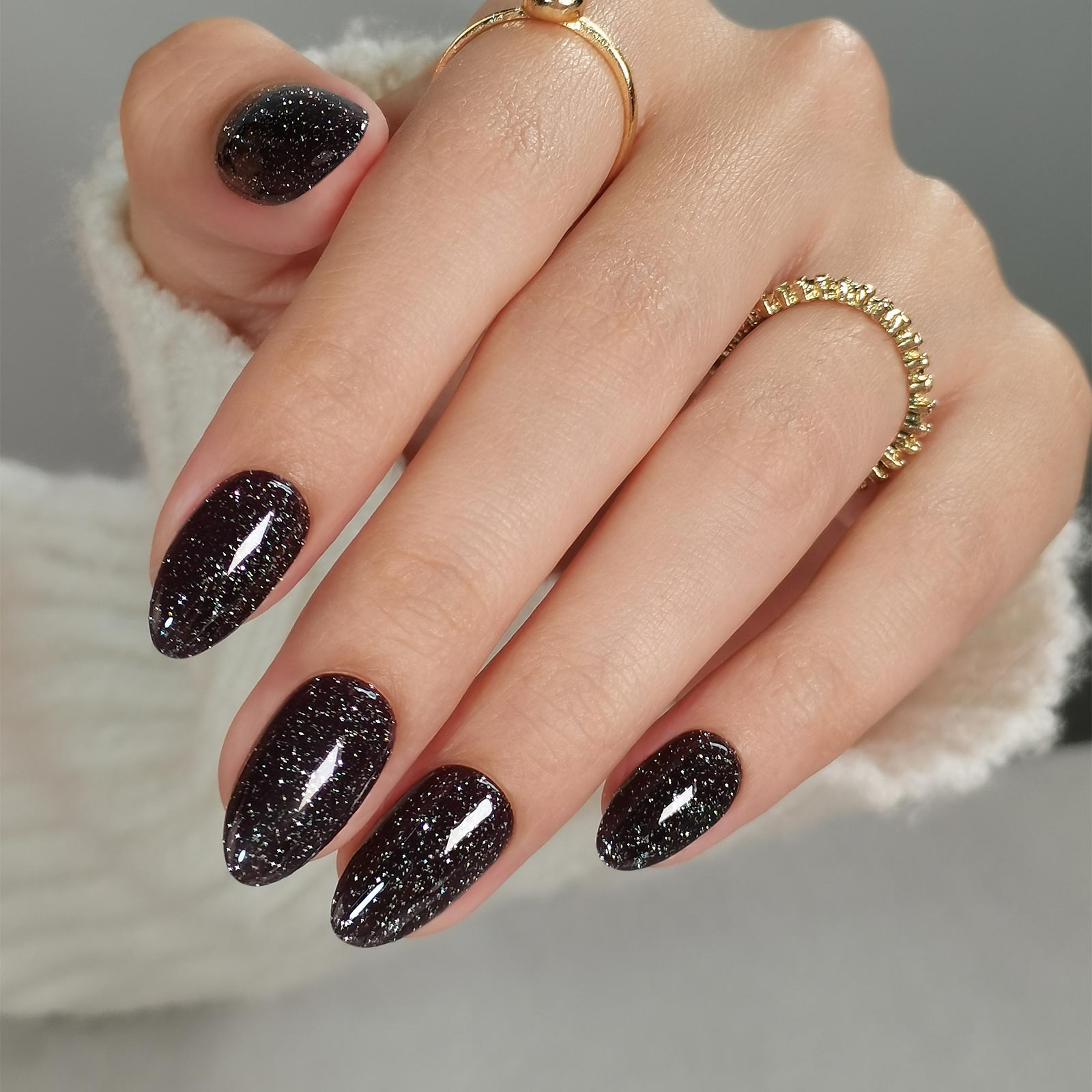
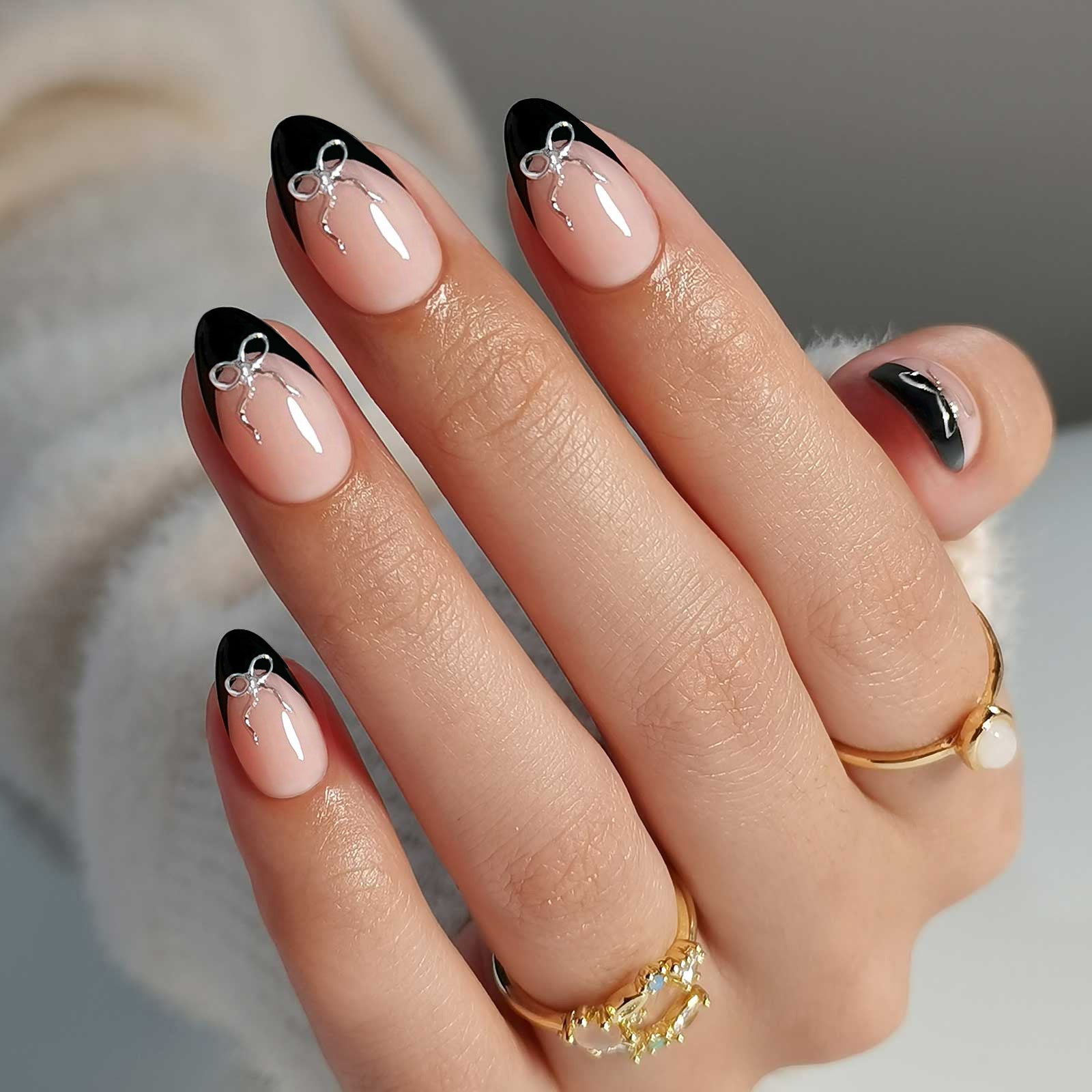
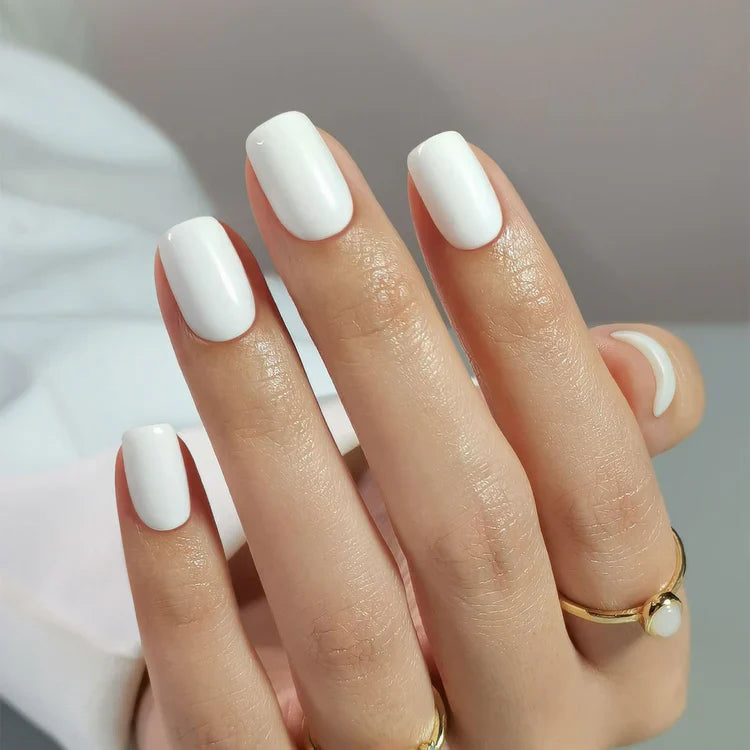
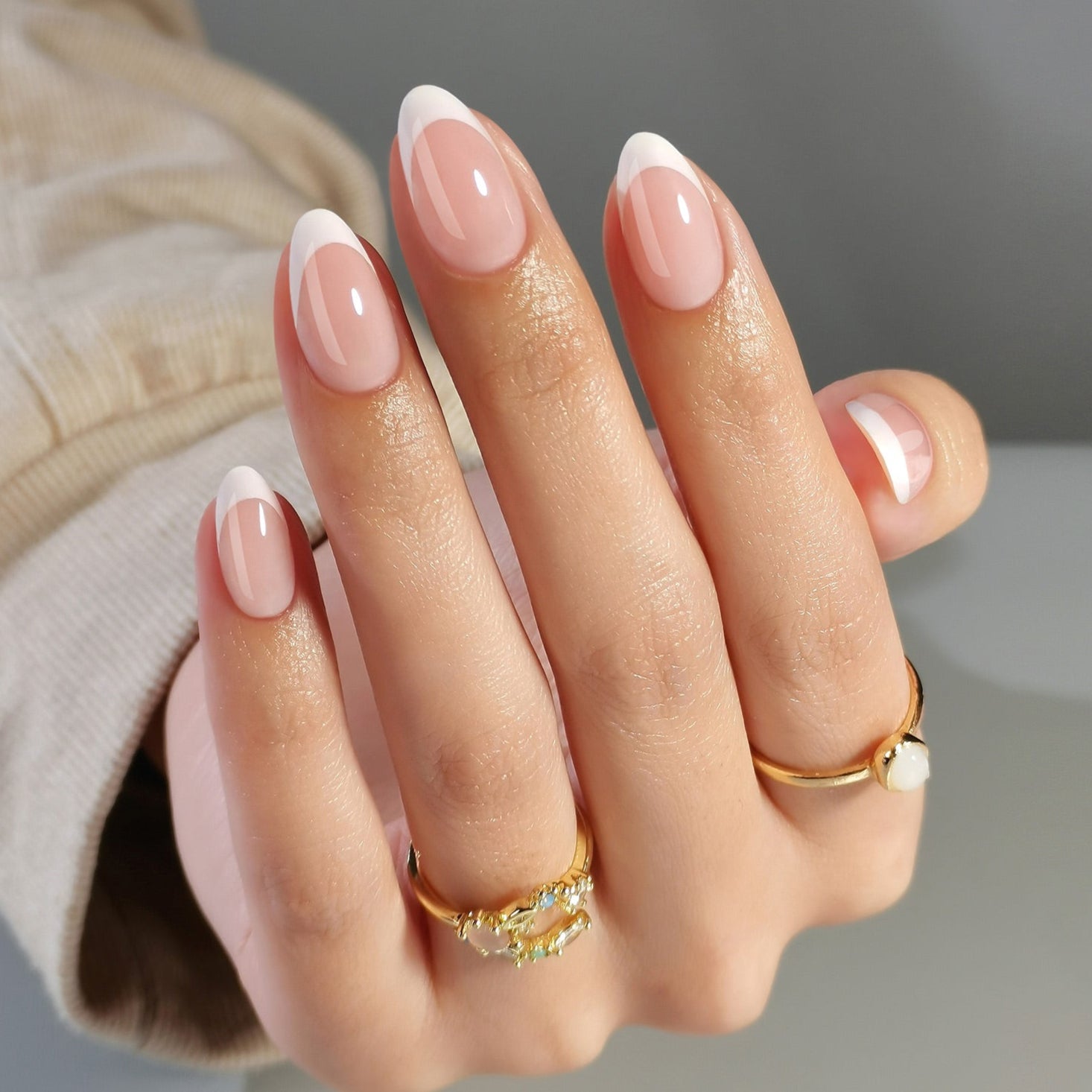
Press-on nails are pre-formed, pre-designed nail extensions that adhere to your natural nail using nail glue or adhesive tabs. High-quality press-ons are made from ABS or acrylic resin, shaped and designed at the factory, and sold in sets of 24 in 12 sizes to fit every nail.
Application is at home: size, prep, glue, press. 10-15 minutes total.
Average cost: $10-20 per set. With adhesive tabs, the same set can be reused 3-5 times — bringing cost per wear below $5.
The Full Comparison

| Dimension | Press-On Nails | Gel Nails | Winner |
|---|---|---|---|
| Cost | $10-20/set, reusable | $35-120/salon visit | Press-On |
| Wear time | 7-14 days (glue) / 1-3 days (tabs) | 14-21 days | Gel |
| Application time | 10-15 min at home | 45-90 min at salon | Press-On |
| Design variety | Unlimited — swap any time | Limited to salon menu | Press-On |
| Nail damage | Minimal with proper removal | Moderate to significant (filing, acetone) | Press-On |
| Removal | 15-20 min warm water soak | 30-45 min acetone soak or drill | Press-On |
| Natural look/feel | Very good (modern thin press-ons) | Excellent | Gel |
| Durability under stress | Good (some flex, can pop off) | Very good (harder surface) | Gel |
Gel wins: Wear time, durability under physical stress, and the closest match to natural nail appearance.
Press-on wins: Cost, application speed, flexibility, nail health, and removal ease.
Cost Breakdown: The Real Math
This is where the comparison is most stark.
Gel nail annual cost: - Average salon visit: $50 (gel polish, color, tip) - Frequency: Every 3 weeks = 17 visits per year - Annual spend: $850/year (conservative estimate; extends to $1,500+ with gel extensions) - Plus: tips, parking, time cost of 90 minutes per appointment
Press-on nail annual cost: - SHANGMENG set: $15 average - Frequency: 1 set every 2 weeks = 26 sets per year - But: with tab application and reuse, each set covers 3-5 wears - Effective sets needed: 6-9 per year - Annual spend: $90-135/year
Savings: $700-1,400/year switching from regular gel salon visits to press-ons.
The objection: "But the salon experience is worth it." Valid — if you value the salon ritual, the conversation, the luxury of having someone else do it. That's a lifestyle choice, not a nail choice. The cost difference is real either way.
Related: Best Nail Glue for Press-On Nails | How to Store & Reuse Press-On Nails
Wear Time: The Honest Numbers
Gel nails: 14-21 days is realistic for gel polish on natural nails with no lifting. Gel extensions last 3-4 weeks before needing a fill.
Press-on nails with glue: 7-14 days is the standard range. The high end (14 days) requires proper nail prep, correct glue application, and avoiding prolonged water exposure. Most customers hit 10-12 days consistently.
Press-on nails with adhesive tabs: 1-3 days, suitable for events.
The nuance: Gel's longer wear comes with a tradeoff — you're committed. If a gel nail chips on day 4, you go back to the salon or live with it. If a press-on nail chips or breaks, you replace that one nail from the included extras, or simply remove the set and apply a fresh one. The flexibility is built into the system.
"It's thick and lasted 4 weeks. Just make sure you polish with a top coat first so they don't chip." — sovanna Ourng, Amazon Verified Purchase ⭐⭐⭐⭐⭐ (7 people found this helpful)
"I've been trying to avoid gel extensions in salons due to concerns about the UV exposure and polymer sensitization." — Genevieve L, Amazon Verified Purchase ⭐⭐⭐⭐⭐
Nail Health and Damage: This Matters Long-Term

This is the dimension where press-ons have the clearest advantage.
Gel nail removal and nail health: Gel polish removal requires 15-20 minutes of pure acetone soak — which dehydrates and weakens the natural nail over time. Hard gel requires mechanical filing or drilling that thins the nail plate directly. Regular gel wearers often notice their natural nails becoming thin, brittle, and peeling after 6-12 months of continuous gel use. According to the American Academy of Dermatology's guidance on artificial nails, repeated exposure to filing and harsh chemicals during gel removal is a leading cause of nail damage in frequent salon wearers.
A 2021 review of nail cosmetics safety noted that repeated acetone exposure is associated with nail plate brittleness and proximal nail fold irritation in frequent users. The filing required for hard gel removal adds mechanical thinning on top of chemical stress.
Press-on nail removal: Warm water or oil soak for 15-20 minutes — no acetone, no drilling. Done correctly, press-on removal leaves the natural nail intact and undamaged. The only exception is improper removal (forcing or peeling off without soaking), which can pull the top layer of the nail. Follow the soak method and nail health is preserved.
The bottom line: If you wear gel nails continuously for 1-2 years, your natural nails will likely show some degree of thinning and weakening. Press-on nails used long-term don't produce the same cumulative damage, making them the better choice for anyone concerned about their natural nail health. The AAD recommends giving nails a break between enhancements and keeping them moisturized — press-on removal with warm water makes those recovery periods far easier to maintain.
Design Flexibility: The Underrated Press-On Advantage
Gel nails commit you to one design for 2-3 weeks. The design options are limited to what your salon offers and what your technician can execute freehand.
Press-on nails can be swapped any time: glue removal takes 15 minutes, and you can apply a completely different style immediately. One set for Monday-to-Friday, a different set for the weekend. Holiday nails for December, French tips for January, bold color for Valentine's Day.
This flexibility also means press-ons can be cheaper than gel even at higher apparent per-set costs: you're not locked into extended wear, so you choose exactly when to apply and remove based on your schedule, not the glue's timeline.
When Gel Is the Better Choice
Honesty matters here. There are scenarios where gel is genuinely the better answer:
Choose gel if: - You want 3+ weeks of zero maintenance without thinking about your nails - You're extremely active (gym, swimming, climbing) and need the highest-durability option - You have very oily nail beds that consistently cause press-ons to lift before 7 days - You value the salon experience as a ritual — relaxation, social aspect, being taken care of - You need length extension that goes significantly beyond your natural nail bed
Choose press-ons if: - Budget is a genuine factor — you're spending $800+ a year at the salon - You want design flexibility — different nails for different occasions - You care about maintaining long-term natural nail health - Your schedule doesn't allow regular salon appointments - You want professional-looking nails without any special equipment or appointments
The Application Experience: At Home vs. Salon
One honest note in gel's favor: the salon experience is different from doing your own nails at home, and for some people that difference matters. A skilled nail technician produces extremely clean work — cuticle prep, filing, gel application — that's difficult to replicate at home without practice.
Press-on application has a learning curve too. Your first set might not be perfectly aligned. By your third set, most people are applying cleanly and quickly. The 10-15 minute application time assumes some practice — first-timers might take 20-25 minutes.
The tradeoff is control: you choose the time, the style, the environment. No booking, no waiting, no tipping.
Related: Press-On Nails for Beginners: How to Apply in 5 Steps | Classy Short French Nails
Related SHANGMENG Guides
These guides go deeper on the styles, fit, and application details mentioned above:
FAQ
Q: Do press-on nails look as good as gel nails?
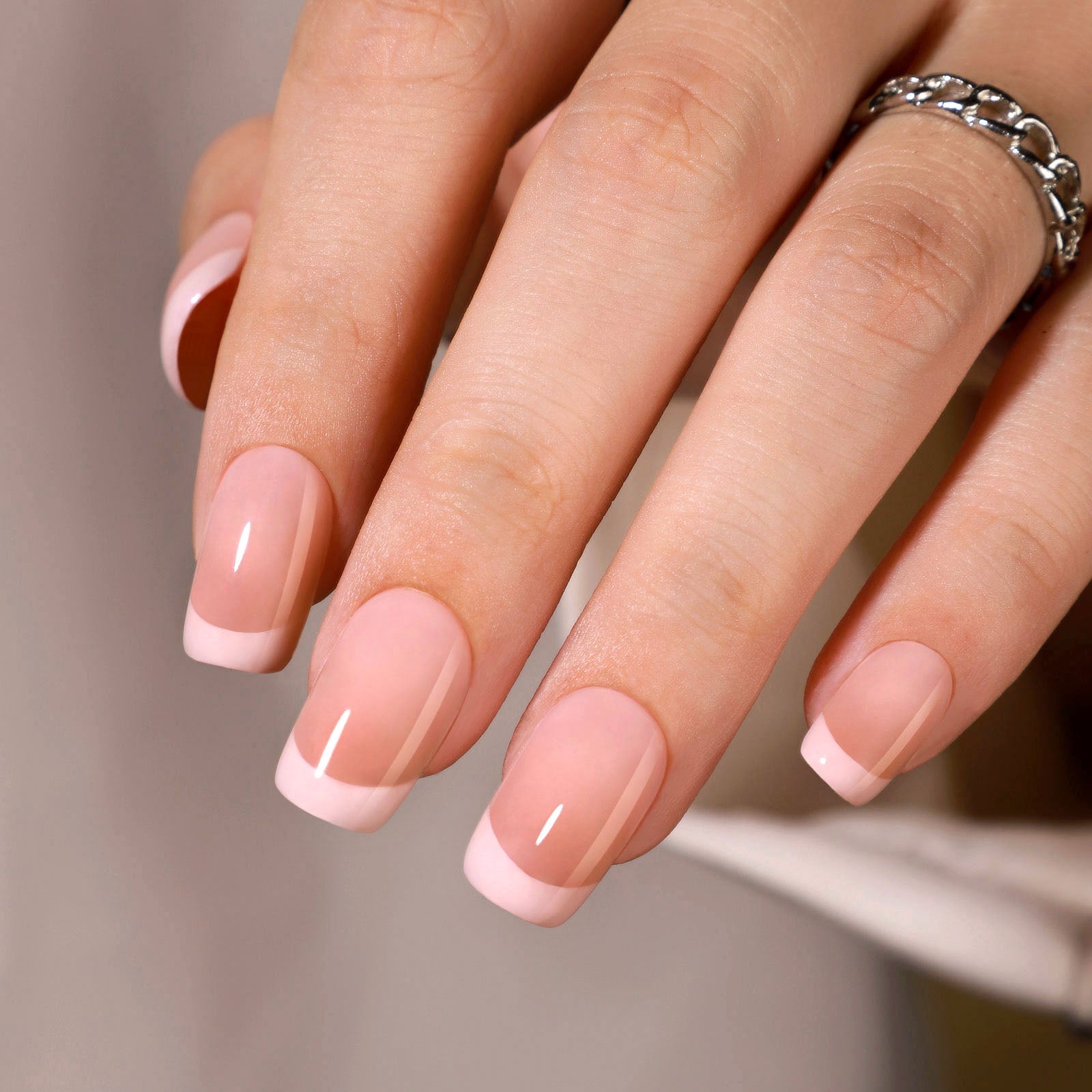
High-quality press-on nails are difficult to distinguish from gel at a glance — and in some respects, they're more consistent. Press-on designs are set at the factory using precise molds, so every nail in a set is identical in color, gloss, and finish. Salon gel nails are applied by hand, which introduces variation in thickness, color uniformity, and finish quality that depends on your technician's skill level and how tired they are that day. The main visual advantage gel has is the integration with your natural nail — gel polish flows around your cuticle more naturally than a press-on nail, which has a defined edge. Modern ultra-thin press-on nails (0.5-0.8mm at the base) have significantly closed this gap. When press-ons are properly sized and applied flush to the cuticle, the line where press-on meets natural nail is subtle and barely visible.
Q: Are press-on nails bad for your natural nails?
Press-on nails used correctly are one of the least damaging nail enhancement options. The adhesive (whether glue or tabs) doesn't require filing or drilling of the natural nail surface, and removal with warm water or oil doesn't require acetone. The main risk is improper removal — pulling or peeling off press-ons without soaking can lift the top layer of the nail plate. If you follow the warm water soak method and allow the adhesive to release naturally, your natural nails remain undamaged. Compare this to gel: acetone removal dehydrates the nail, and hard gel requires mechanical filing. Long-term gel use is associated with more cumulative nail thinning than long-term press-on use.
Q: Can I switch from gel to press-on nails?
Yes, but give your natural nails a recovery period first. After having gel removed — especially if you've been wearing gel continuously for months — your nails may be temporarily thinner, drier, or more flexible than usual. Wait 1-2 weeks before applying press-ons to let your nail plate rehydrate and restrengthen. During this time, use a nail strengthening treatment (biotin-based nail oils or treatments) and keep nails moisturized. Once your nails feel less brittle and have regained some thickness, you can start wearing press-ons. The good news: most people who switch from gel to press-ons notice their natural nails improving over several months as the acetone exposure stops.

$730 a year is a significant number
If you're spending $40-80 every 3 weeks at the salon, press-on nails from SHANGMENG cover the same time period at 10-15% of the cost — with no appointment, no waiting, and no acetone. "I've been doing gel at the salon every 3 weeks for 4 years. Switched to these press-ons and genuinely can't tell the difference — and I've saved so much money." — Verified Buyer. 32 nail tips, 16 sizes, glue and tabs included. $10-20 per set.

Share