


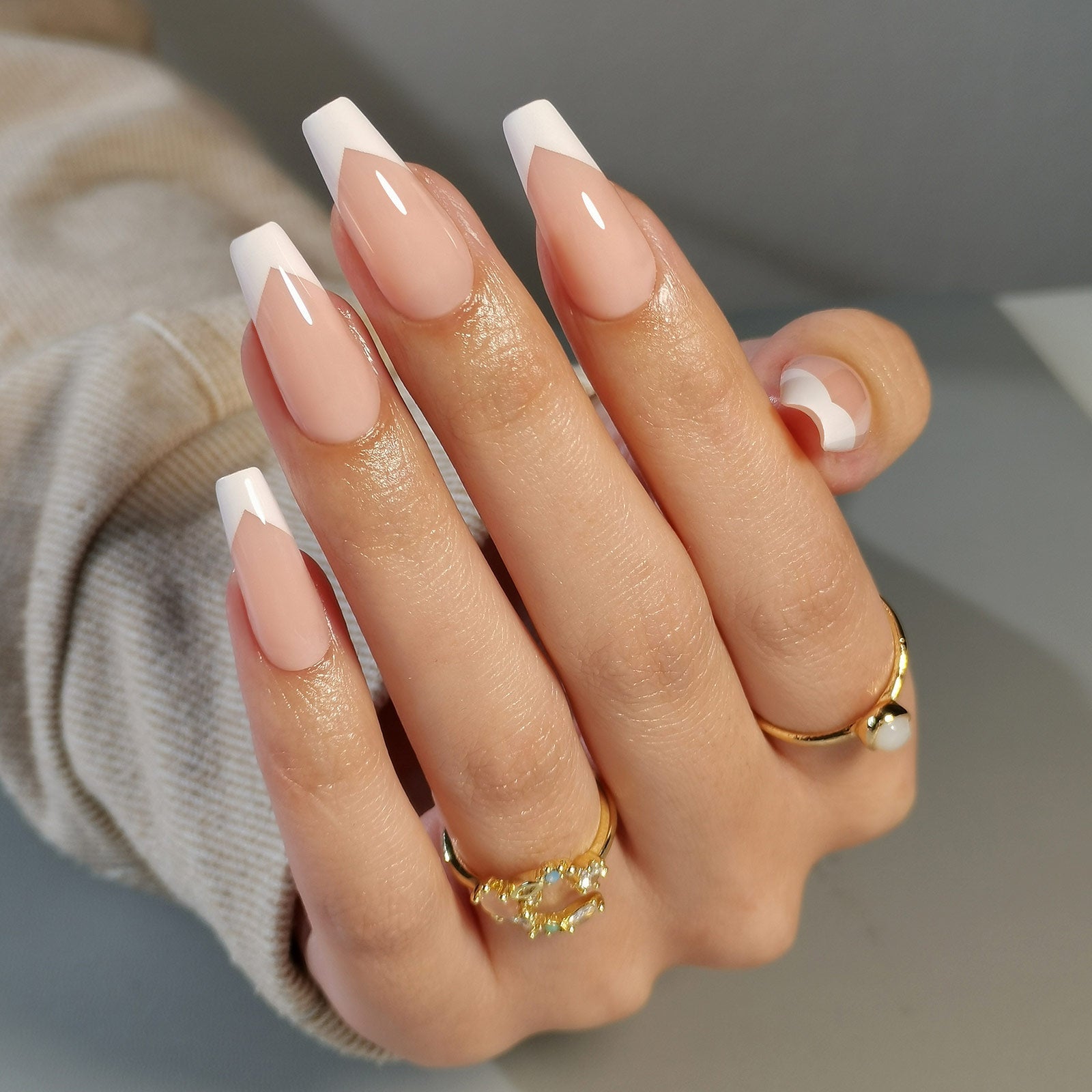
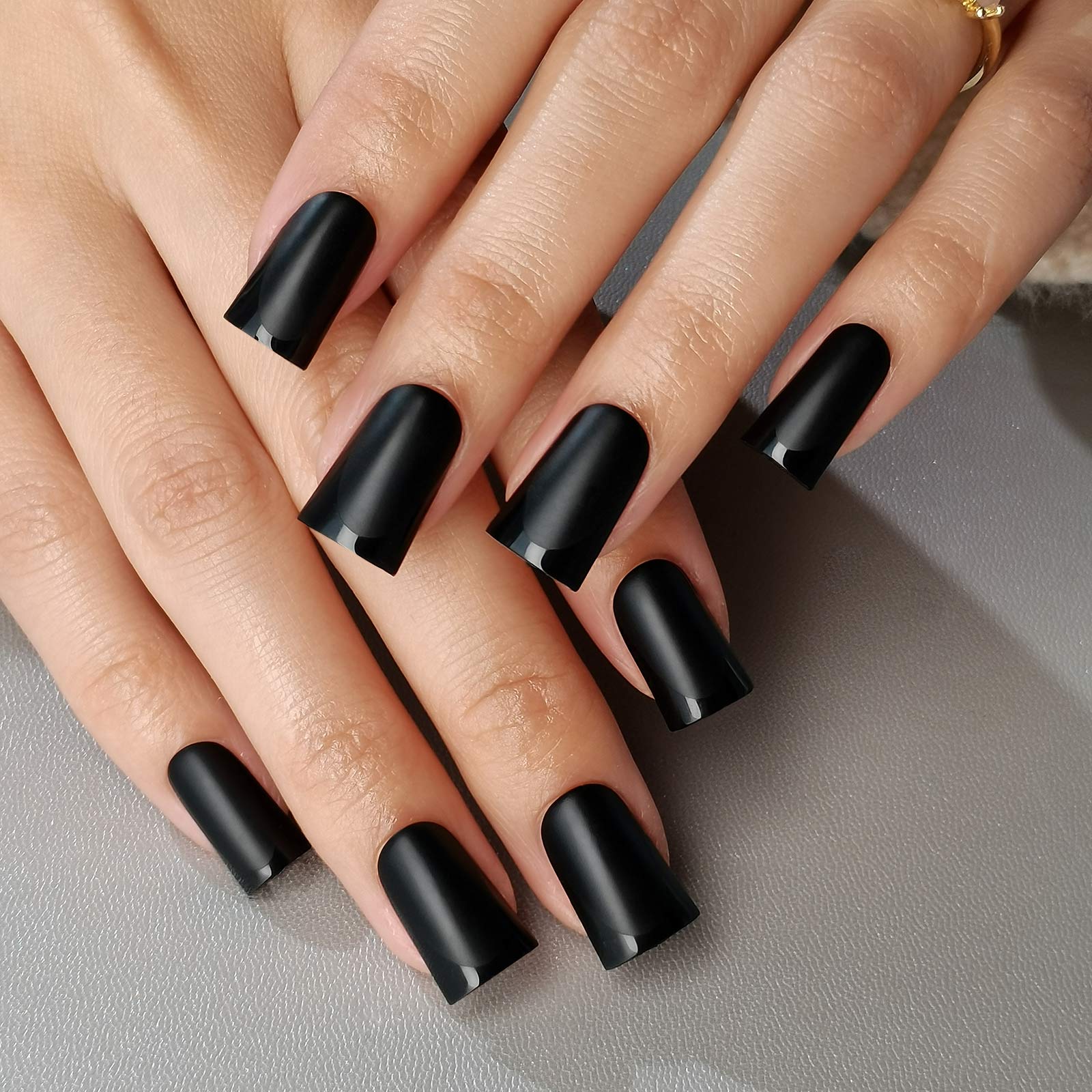


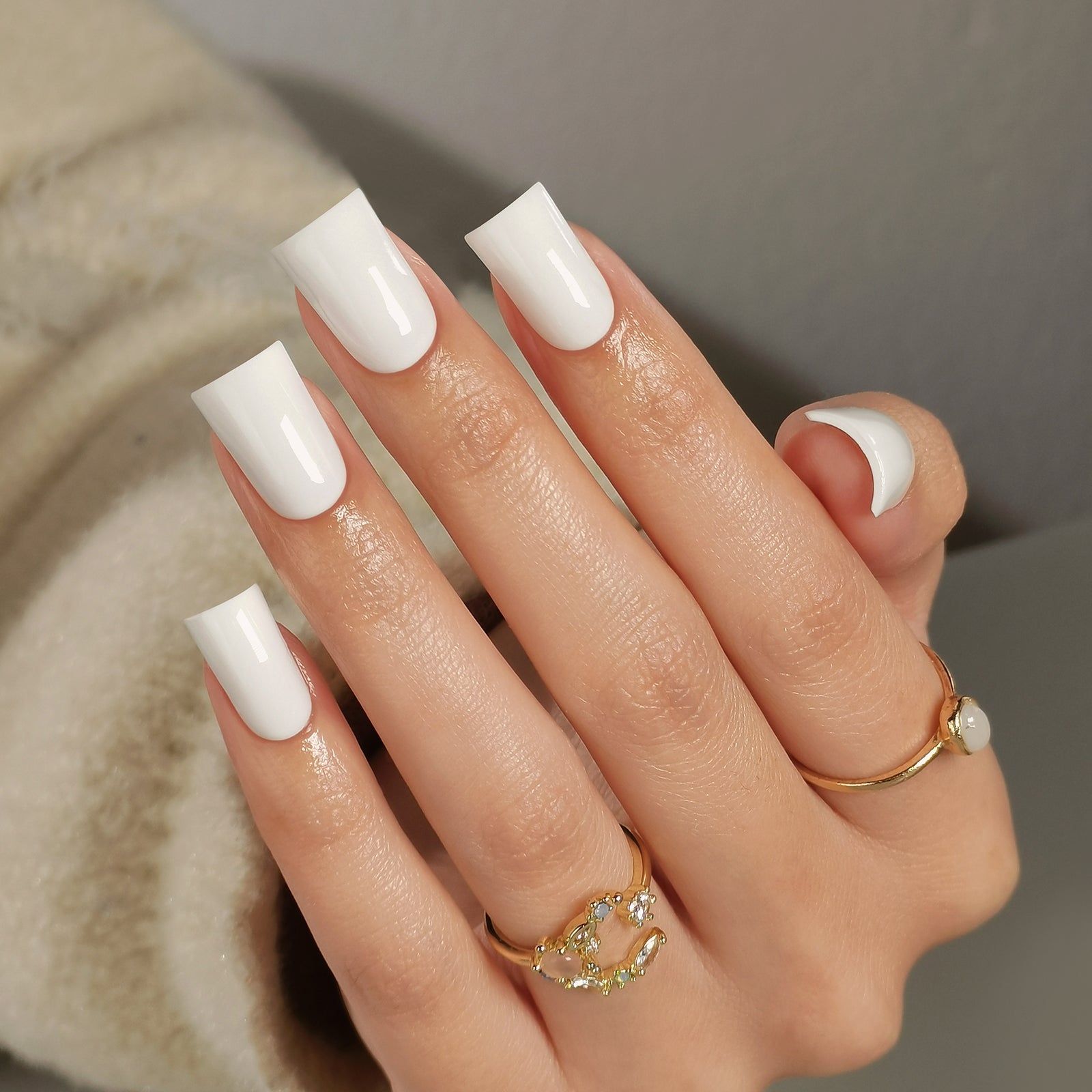
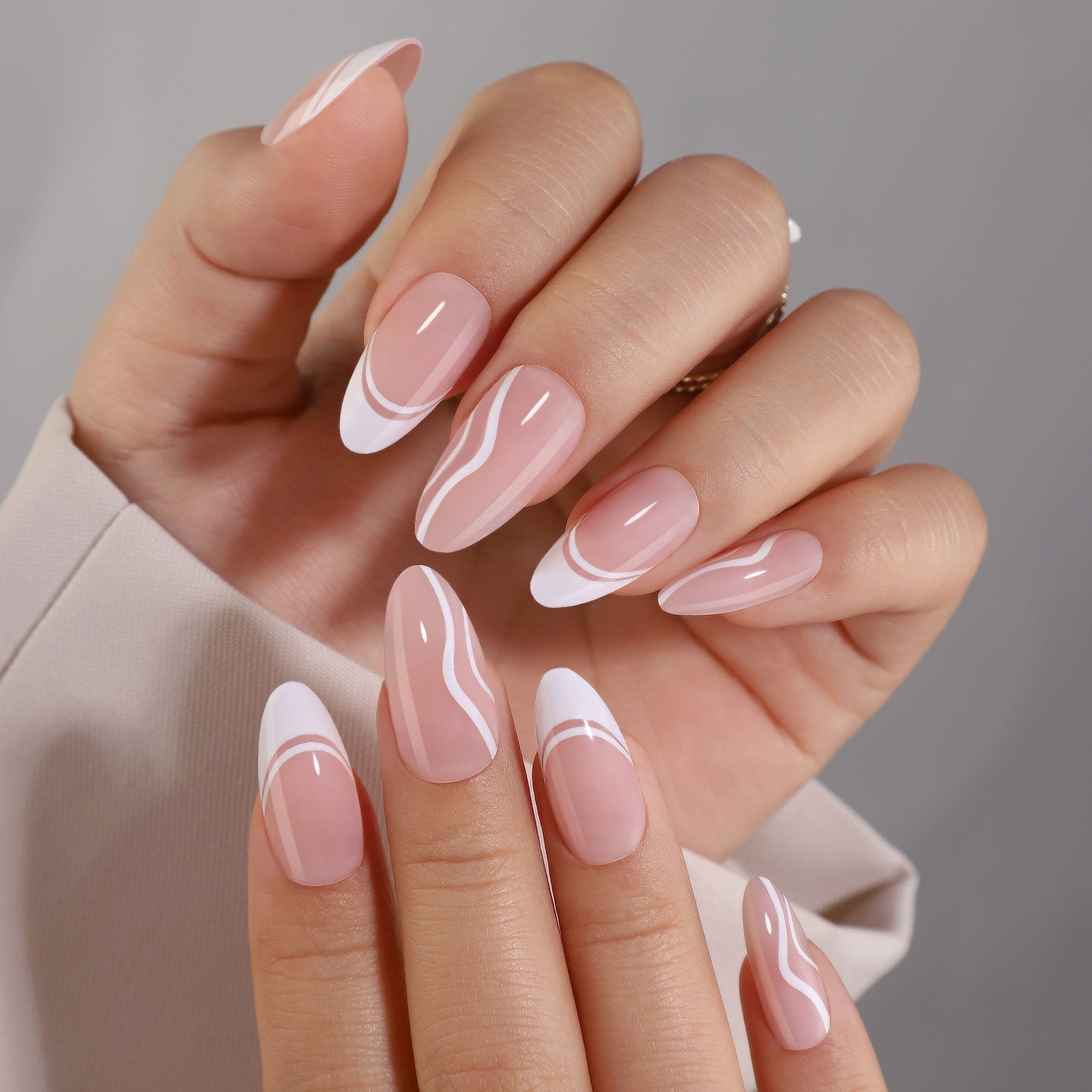









How to Resize Press-On Nails That Don't Fit
Resizing press-on nails is possible in only one direction — you can make a too-wide nail smaller by filing the sides or heat-reshaping over warm water, but a too-narrow nail cannot be stretched, so the only fixes are sizing down or switching to a wide-fit brand.
The short answer: yes — you can resize press-on nails, and in most cases it takes under two minutes per nail.
A salon custom-fit manicure can run $60+ and lock you into one shape. Resizing a $9-$12 press-on set gives you the same fit correction at home, without a second appointment.
The longer answer depends on which direction they don't fit. Press-ons that are slightly too wide can be filed, heat-reshaped, or layered differently. Press-ons that are too narrow have fewer options, and the honest advice is to go down a size or switch to a better-fit brand.
This guide walks through every method, when to use each, and how to build a sizing habit that prevents the problem from the start.
Not sure which shape, length, or size fits your natural nails?
Can You Actually Resize Press-On Nails?
Yes — with one important caveat. You can only make press-on nails smaller, never larger. Filing, trimming, and heat reshaping all reduce the nail's width or length. There is no reliable method to physically stretch a press-on nail that's too narrow.
This means the direction of the fit problem completely changes your options:
| Problem | Solution Options |
|---|---|
| Too wide (covers skin on the sides) | File sides, heat reshape, or adjust placement |
| Too long | Trim with nail clippers or file the free edge |
| Too narrow (gaps visible on sides) | Go down one size, or try a wide-fit brand |
| Too curved (doesn't sit flush) | Heat reshape over warm water |
Most sizing complaints are in the "too wide" or "too long" category — both are fixable at home.
Related: How to Choose Press-On Nail Size: The Complete Sizing Guide — includes a printable sizing template.

A press-on that's too wide creates skin contact on the sides — this is what you're trying to eliminate.
When Press-On Nails Are Too Big: 3 Fix Methods
Method 1: File the Sides (Best for Consistently Oversized Nails)
Filing is the most reliable method. It removes material from the sides of the nail, narrowing the total width without affecting the free edge shape or the finish on top.
What you need: - A fine-grit nail file (180–220 grit is ideal — coarser grits can crack the edges of soft gel) - Good lighting - Your natural nail as a guide
Step-by-step:
- Hold the press-on against your natural nail before applying any adhesive. Identify exactly which side has excess, and roughly how much.
- File along the side wall in short downward strokes — always file inward (toward the underside), never straight across the edge. This prevents micro-chipping.
- Check the fit every 3–4 strokes. It's easy to over-file, and you cannot add material back.
- Once the press-on sits within the natural nail border with no skin contact, smooth any rough edges with the fine side of the file.
- Wipe clean with a lint-free pad and apply as normal.
Works best on: Soft gel press-ons (which file cleanly) and ABS plastic (which files faster but can fray if you use a coarse grit).
Doesn't work well on: Press-ons with foil or chrome finish that runs to the very edge — filing will expose the base color at the side wall.
Related: How to File Press-On Nails to the Right Shape — technique guide for shaping tips, free edges, and fixing uneven sides.

File inward and downward — never straight across. Check the fit against your natural nail every few strokes.
Method 2: Heat Reshaping (Best for Curvature Problems)
If the press-on is the right width but doesn't sit flush — it's either too curved or not curved enough for your nail bed — heat reshaping can fix the arch.
Soft gel press-ons become temporarily pliable at around 40–50°C (104–122°F), which is comfortably above tap warm water temperature but well below anything that would burn you.
What you need: - A bowl of warm water (not boiling — around 40°C / 104°F) - 20–30 seconds
Step-by-step:
- Place the problem nail in warm water for 20–30 seconds.
- Remove and immediately press it against your natural nail bed with firm, even pressure. Hold for 30 seconds.
- If it's still too curved, repeat — nails return to their original shape as they cool, so you may need 2–3 cycles.
- For nails that need more curve (flatter nail beds): warm the nail, then press the tip against a rounded surface (the side of a clean bottle works) while the arch forms.
This does not affect the finish — the cured gel on top is heat-stable at these temperatures.
Limitation: This method adjusts the arch, not the width. If the nail is too wide and too flat, you'll need to file the sides first, then heat reshape.
Method 3: Adjust Your Placement (Best for Borderline Cases)
Sometimes a press-on isn't genuinely the wrong size — it's placed slightly too high or too low, which creates a skin-contact illusion.
Correct placement: - The nail should start 0.5–1mm above the cuticle line (not touching the cuticle) - The sides of the press-on should sit inside the natural nail border, not on the skin - The press-on should be centered left-to-right — off-center placement makes one side look too wide
If you've placed the nail and it looks too wide on one side, don't pull it off (especially if you've used glue). Instead, use a clean orange stick to nudge it sideways while the adhesive is still setting. You have approximately 30–60 seconds with most nail glues before the bond firms up.
Related: How to Glue Press-On Nails Step by Step — correct placement technique, adhesive amounts, and curing time for different glue types.
 Left: correct placement 0.5mm above the cuticle with sides inside the nail border. Right: too low — touching cuticle causes early lifting and appears to fit poorly.
When Press-On Nails Are Too Small: 2 Options
Option 1: Go Down One Size
Most press-on systems number their sizes with smaller numbers indicating larger nails and larger numbers indicating smaller nails (0 is widest, 9+ is narrowest). If size 4 is too narrow, you likely need size 3.
The challenge is that press-on nails are sold as complete sets, not individual sizes. If you're between sizes, the practical options are:
- Order a new set in the next size up and use the current set for fingers where it does fit (not every finger needs the same size)
- Test different brands — sizing is not standardized across manufacturers. A size 4 from one brand can be 2mm wider than size 4 from another
Related: Best Press-On Nails for Wide Nail Beds: Full Width Guide — brand comparison by actual measured width, not size number.
Option 2: Accept the Fit Limitation
A press-on nail that doesn't cover your full nail bed will lift faster along the uncovered edges and can look visually narrow. In most cases, this is a genuine fit mismatch, and no amount of technique will make a narrow nail cover a wide nail bed.
The honest answer: if your nail beds are genuinely wide, you need a brand that manufactures wide-fit sizes. SHANGMENG sets include 16 sizes to address this — if you're consistently unable to find a fit, the sizing guide in our size chart section below will help you identify the correct size before purchasing.
Still worried they will look fake? Find your shape and finish by matching your natural nail width; the right set reads polished, not pasted on.


Related: High Quality Press-On Nails: What Separates Good Sets from Bad — what to look for in size range, fit diversity, and material quality.

Measure across the widest point of each nail — not just at the cuticle. Wide nail beds taper differently than narrow ones.
Press-On Nail Size Chart Reference
Sizes vary by brand, but the general principle is consistent. Here's how SHANGMENG's sizing maps to finger positions for most hands:
| Size Number | Width (approx.) | Typical Finger |
|---|---|---|
| 0 | 17–18mm | Thumb |
| 1 | 15–16mm | Thumb (smaller hands) / Ring |
| 2 | 14–15mm | Ring / Pinky (wide) |
| 3 | 13–14mm | Middle / Ring |
| 4 | 12–13mm | Index / Middle |
| 5 | 11–12mm | Index |
| 6 | 10–11mm | Pinky / Index (narrow) |
| 7 | 9–10mm | Pinky |
| 8 | 8–9mm | Pinky (narrow) |
| 9 | 7–8mm | Pinky (very narrow) |
How to measure: Wrap a piece of paper tape around the widest point of each nail, mark where it overlaps, then measure the length with a ruler in millimeters. Match to the chart above.
Important: Measure the widest point of the nail itself, not the finger. Nail beds can taper — the widest point is usually in the middle of the nail, not at the cuticle edge.
SHANGMENG sets come with 32 nails across 16 size options, which means most hands can find at least two nails per finger to choose from. If you're between sizes, the smaller size is usually a better starting point — it's easier to file a nail that's slightly too wide than to deal with one that gaps at the sides.
 Every SHANGMENG set includes 32 nails across 16 sizes — two of each size so you have backups and choices.
Prevention: How to Get the Right Size Before Applying
Fixing a sizing problem after applying is always harder than preventing it. These habits make the difference:
Always do a dry fit first. Before applying any adhesive, place each press-on against its corresponding natural nail and check for three things: (1) Does the press-on sit within the natural nail border with no skin contact? (2) Does the curve match the natural nail's arch? (3) Is the length proportional? This takes 3 minutes and saves the frustration of peeling off an incorrectly placed nail.
Size your non-dominant hand first. Most people's dominant hand is slightly wider — starting with your non-dominant hand gives you a conservative baseline. If you go up one size for the dominant hand, you'll usually be right.
Label your sizes. If you've found your perfect fit in a set, write down the size numbers (usually marked on the underside of the nail). When ordering next time, you can skip the trial-and-error entirely.
Order a size test set before committing to a brand. Most press-on brands sell smaller packs. Testing before ordering in bulk saves money on sets that won't fit.
Related: High Quality Press-On Nails: What to Look for in a Set — what size range, fit diversity, and material quality indicate in a press-on brand.

A dry fit takes three minutes. It's the single most effective way to prevent sizing problems before they happen.
Frequently Asked Questions
Can you make press-on nails smaller without a file?
Yes — heat reshaping can adjust the arch (curvature) of a press-on without any filing, which changes how it sits against the nail bed. If the nail is too wide at the side walls rather than just poorly curved, though, you'll need a file. Nail scissors or nail clippers can trim the free edge for length, but they're not precise enough for side wall adjustments. A fine-grit nail file is the most controlled tool for reducing width. (Source: American Academy of Dermatology — Healthy Nail Tips)
Will filing ruin the finish on press-on nails?
Filing the side walls usually won't damage the finish on top, because most press-on nail designs stop slightly short of the very edge — the color or pattern doesn't wrap around the side wall. The exception is certain chrome and holographic finishes that extend to the edge. In those cases, filing will expose the base color in a narrow line along the side. If finish preservation is important, test-file on one nail first before doing the whole set. Using 180–220 grit minimizes edge damage compared to coarser grits.
How do you fix press-on nails that keep lifting on the sides?
Side lifting is usually a fit problem (the press-on is too wide and contacts skin, which the adhesive can't grip) or a prep problem (oil residue on the nail surface). Fit inclusivity is a known press-on pain point; Allure's sizing coverage notes how standard kits can miss both small and wide nail beds. Fix the fit issue first using Method 1 or 3 above. Then ensure prep includes: (1) clean the natural nail with 70% isopropyl alcohol, (2) push back cuticles so no skin is under the press-on, (3) apply adhesive to the press-on only — not the natural nail. A well-fitted press-on on a clean, prepped nail should hold for 7–14 days with glue.
Can you reshape press-on nails from square to oval?
Yes — this is a common modification. Filing the corners of a square press-on into an oval or almond shape follows the same principle as side-wall filing. Use a fine-grit file and work in small increments, checking symmetry between the two sides as you go. The key is to file both sides equally — most asymmetry comes from filing one side more than the other. Shape modifications are easiest on soft gel, which files smoothly, and harder on thin ABS, which can crack if you apply pressure at the corners.
What grit nail file should you use on press-on nails?
180–220 grit is the right range for press-on nails. Anything coarser (80–150 grit) is too aggressive for the thin material of most press-ons and can create micro-cracks along the edge that cause the nail to chip or split during wear. Anything finer (240+ grit) is a buffer, not a shaping tool, and won't remove enough material for meaningful resizing. Most standard nail files sold in drugstores are 180 grit on one side and 220 on the other — exactly the range you need.
Is it better to size up or size down when between sizes?
Size down (smaller number = wider nail in most systems). A press-on that's slightly too wide can be filed to fit, which takes about 30 seconds. A press-on that's too narrow can't be widened, and a nail that doesn't fully cover the nail bed will lift at the exposed edges. The only exception is if you're using adhesive tabs — tabs don't bond to skin, so a very slightly oversized nail with tabs won't cause the same lifting problem that it would with glue, because the tab sits on the nail surface rather than the exposed skin.
 A proper sizing attempt takes three minutes of dry-fitting.
The Right Size Is Worth Finding
A well-fitted press-on nail lasts longer, lifts less, looks more like a salon set, and requires no modification. The 3-minute dry-fit habit and the filing technique in Method 1 will resolve most sizing complaints within the first purchase.
If you're consistently finding that sets don't fit — too wide across all fingers, or too narrow on thumbs — that's a brand fit issue, not a skill issue. Different brands manufacture to different width standards, and finding the right brand for your nail shape is a one-time research task that pays off every set going forward.
Shop SHANGMENG Press-On Nail Sets → — 32 nails, 16 sizes, soft gel material that files cleanly and holds for up to 14 days.
Share